Skip to Content Facebook Feature Image

Macao-Hengqin University Town Targets 2030 Completion, Offers to Share Experience with Hong Kong

China

China

China

Macao-Hengqin University Town Targets 2030 Completion, Offers to Share Experience with Hong Kong

2026-08-31 17:03 Last Updated At:17:03

The joint interview delegation themed “Leveraging New Advantages to Align with the 15th Five-Year Plan” visited the Macao-Hengqin International Education (University) Town and the Zhuhai M.U.S.T. Science and Technology Research Institute on August 27, experiencing the integrated development of education, science and technology, and talent between Macao and Hengqin.
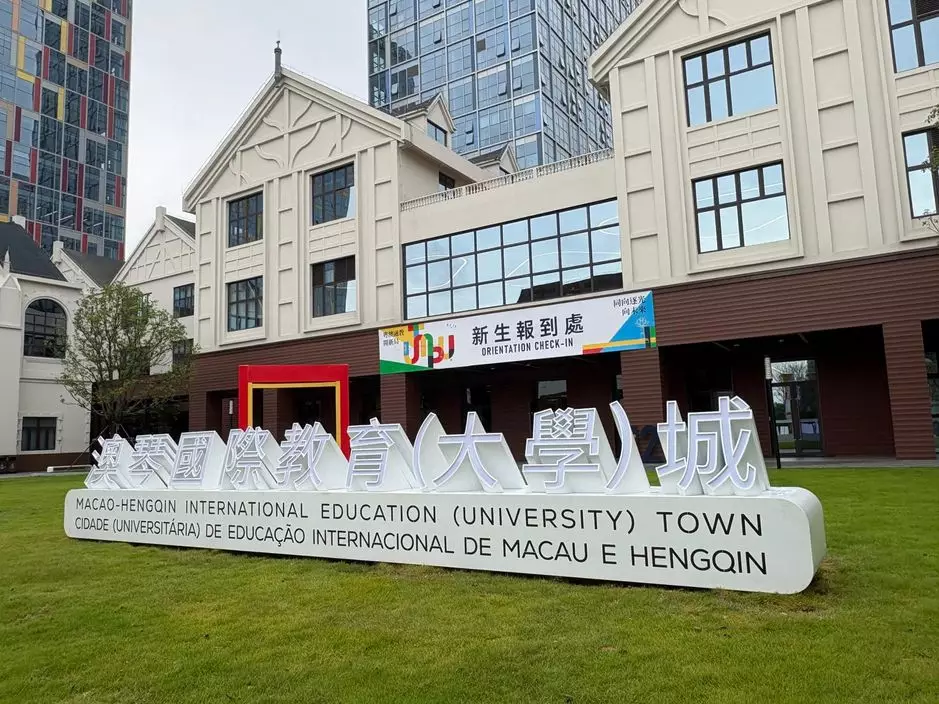
The Macao-Hengqin International Education (University) Town, Photo by Bastille Post
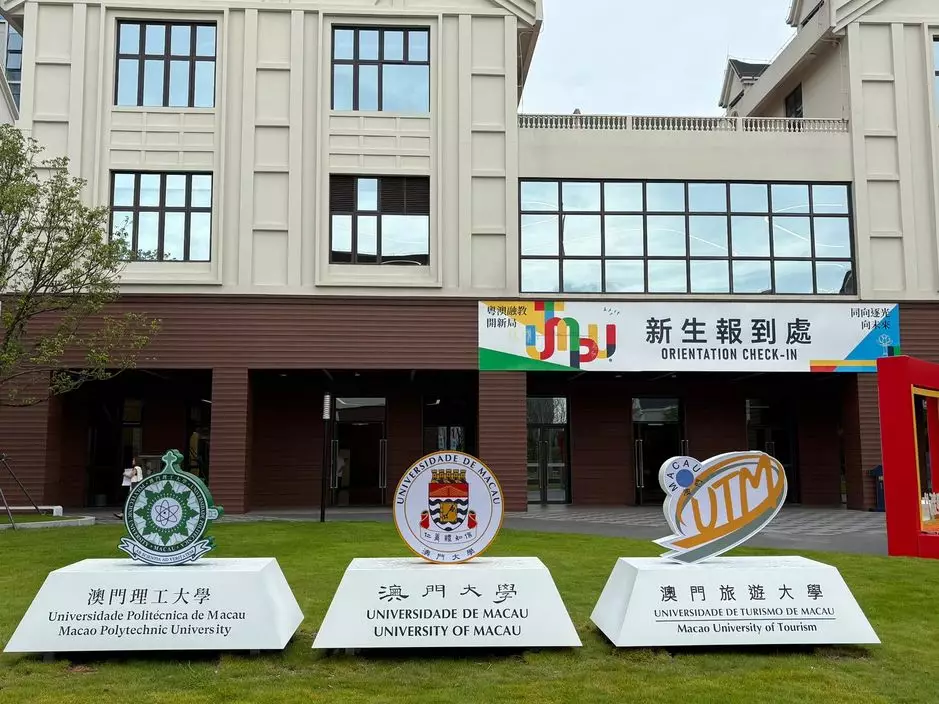
The Macao-Hengqin International Education (University) Town, Photo by Bastille Post

The National 15th Five-Year Plan states that the construction of the Macao-Hengqin International Education (University) Town should be promoted, and support should be given to Macao higher education institutions to extend their campuses in Hengqin. The University Town is being constructed in three phases. The first phase was put into use in August this year, and currently three public universities — the University of Macau, Macao Polytechnic University, and Macao University of Tourism — have moved in, with more than 1,400 students.

More Images
The Macao-Hengqin International Education (University) Town, Photo by Bastille Post

The Macao-Hengqin International Education (University) Town, Photo by Bastille Post

The first phase of the University Town was put into use in August this year, and currently three public universities — the University of Macau, Macao Polytechnic University, and Macao University of Tourism — have moved in, with more than 1,400 students. Photo by Bastille Post
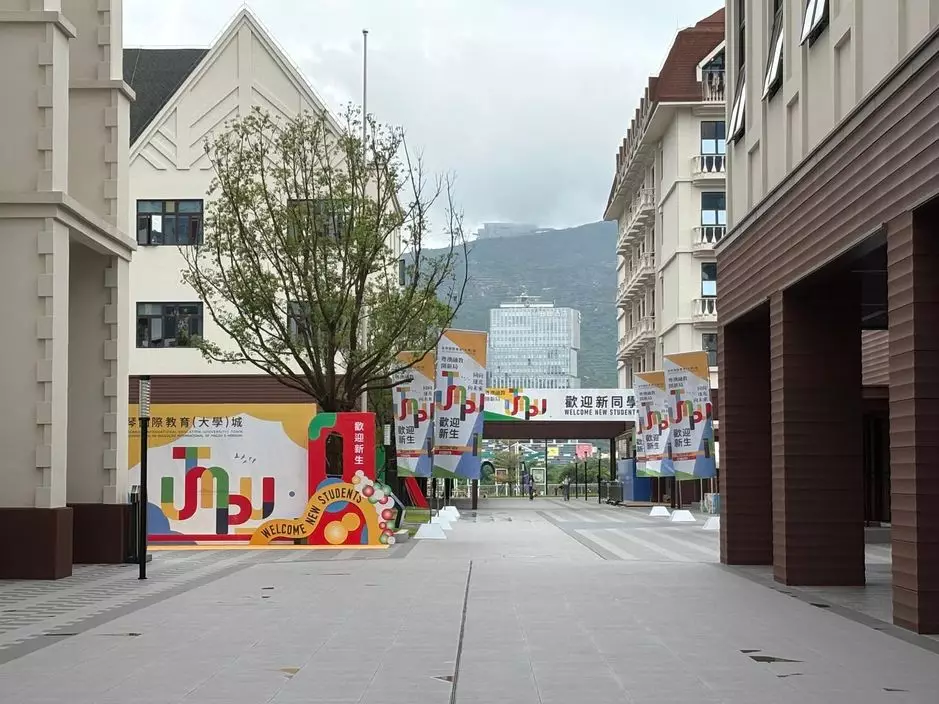
The first phase of the University Town was put into use in August this year, and currently three public universities — the University of Macau, Macao Polytechnic University, and Macao University of Tourism — have moved in, with more than 1,400 students. Photo by Bastille Post

The Macao-Hengqin International Education (University) Town, Photo by Bastille Post
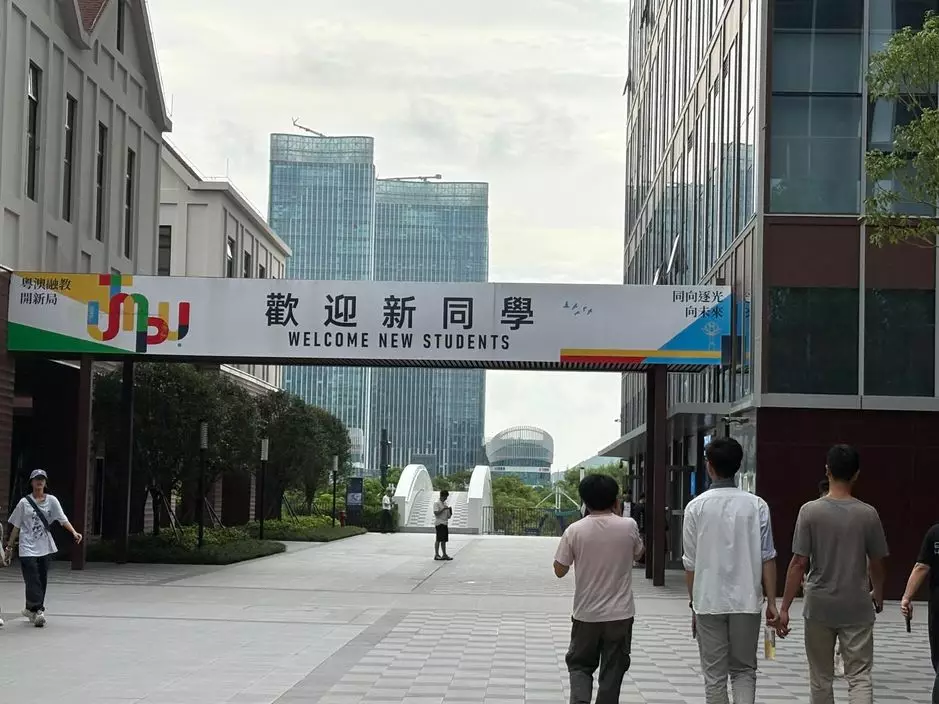
The Macao-Hengqin International Education (University) Town, Photo by Bastille Post
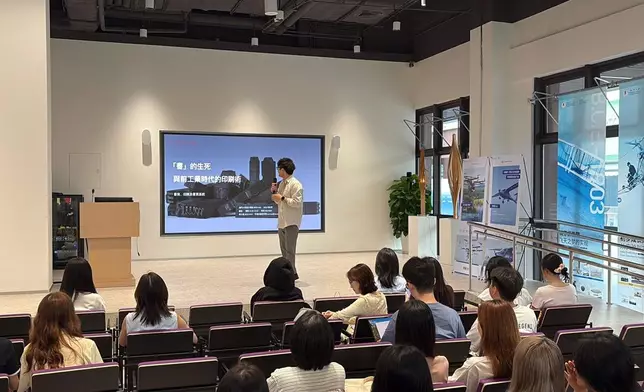
The Macao-Hengqin International Education (University) Town, Photo by Bastille Post

The Macao-Hengqin International Education (University) Town, Photo by Bastille Post

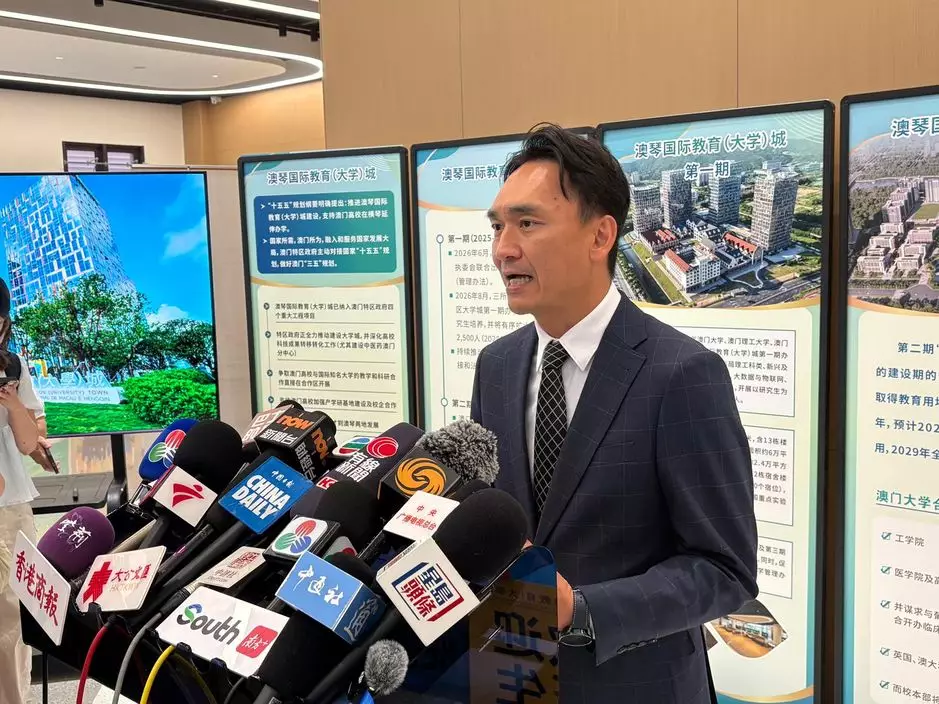
Kong Chi Meng, Director of the Education and Youth Development Bureau of Macao, Photo by Bastille Post
Kong Chi Meng, Director of the Education and Youth Development Bureau of Macao, Photo by Bastille Post

The Macao-Hengqin International Education (University) Town, Photo by Bastille Post
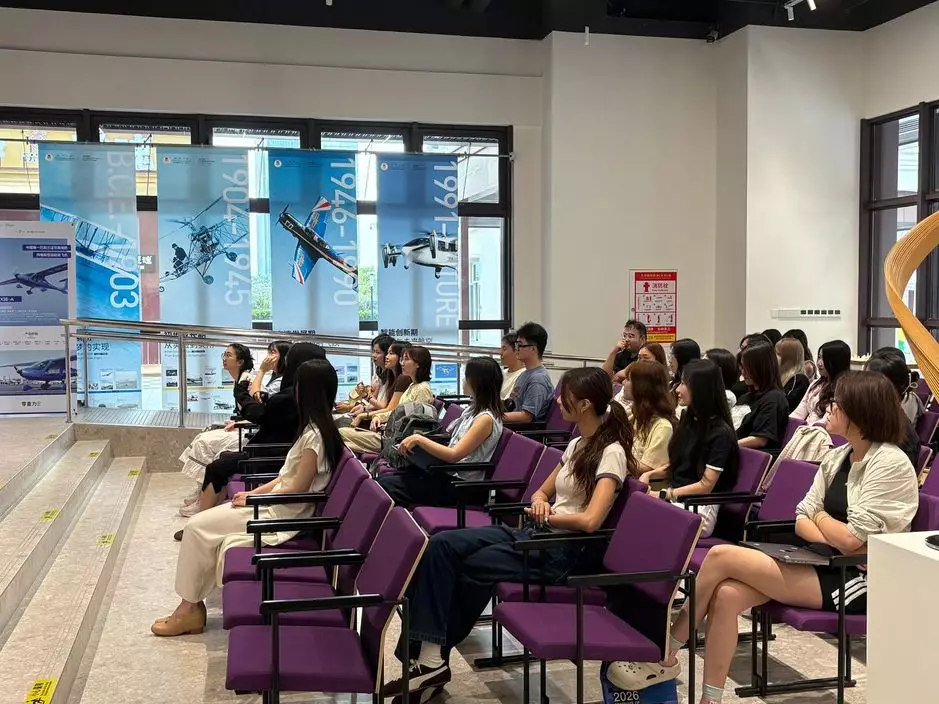
The Macao-Hengqin International Education (University) Town, Photo by Bastille Post
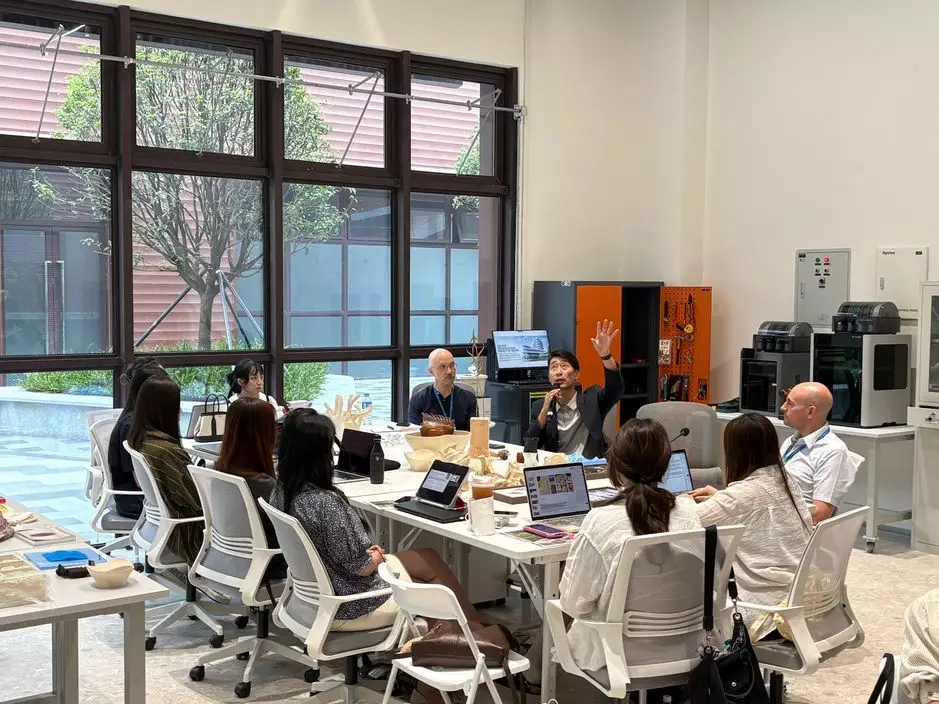
The Macao-Hengqin International Education (University) Town, Photo by Bastille Post
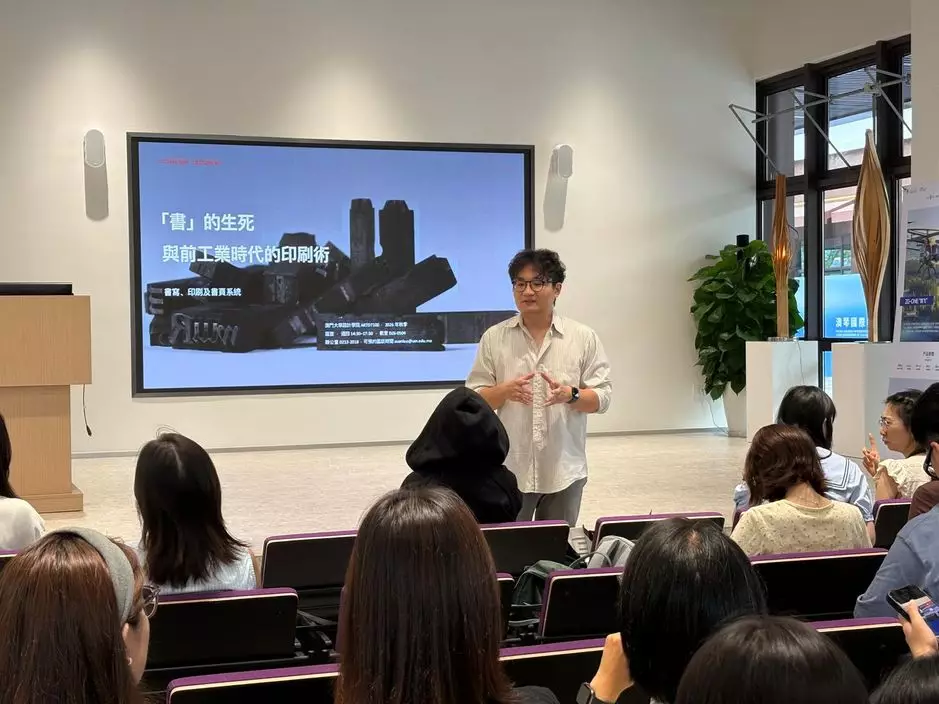
The Macao-Hengqin International Education (University) Town, Photo by Bastille Post
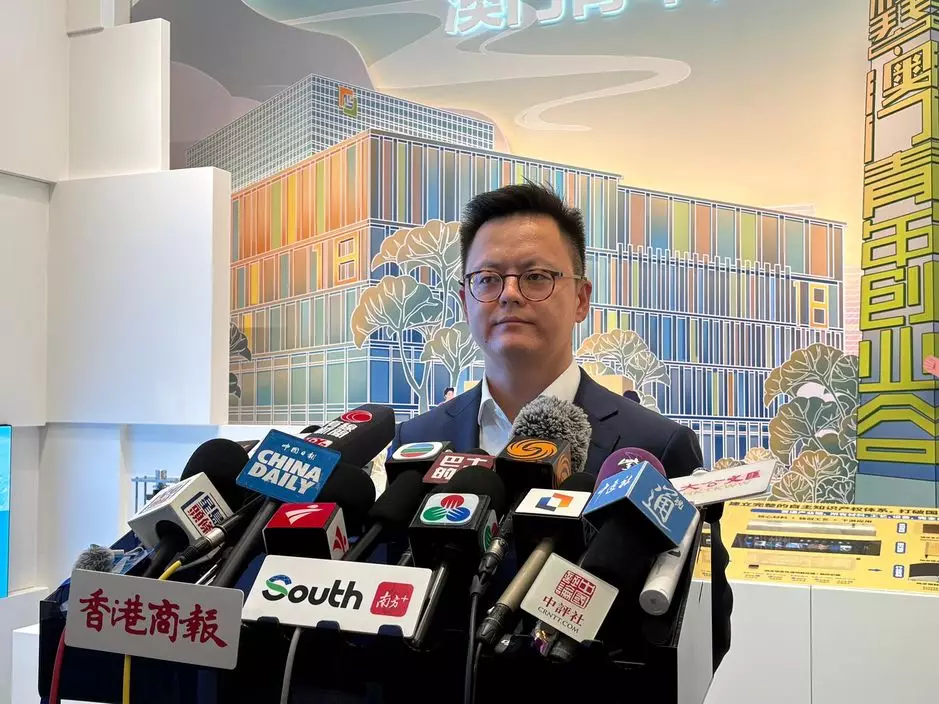
The Macao-Hengqin International Education (University) Town, Photo by Bastille Post

The Macao-Hengqin International Education (University) Town, Photo by Bastille Post

The Macao-Hengqin International Education (University) Town, Photo by Bastille Post

The Macao-Hengqin International Education (University) Town, Photo by Bastille Post

Sun Lin, Deputy Director of the Talent Development and Social Security Bureau of the Guangdong-Macao In-Depth Cooperation Zone in Hengqin, Photo by Bastille Post
Sun Lin, Deputy Director of the Talent Development and Social Security Bureau of the Guangdong-Macao In-Depth Cooperation Zone in Hengqin, Photo by Bastille Post

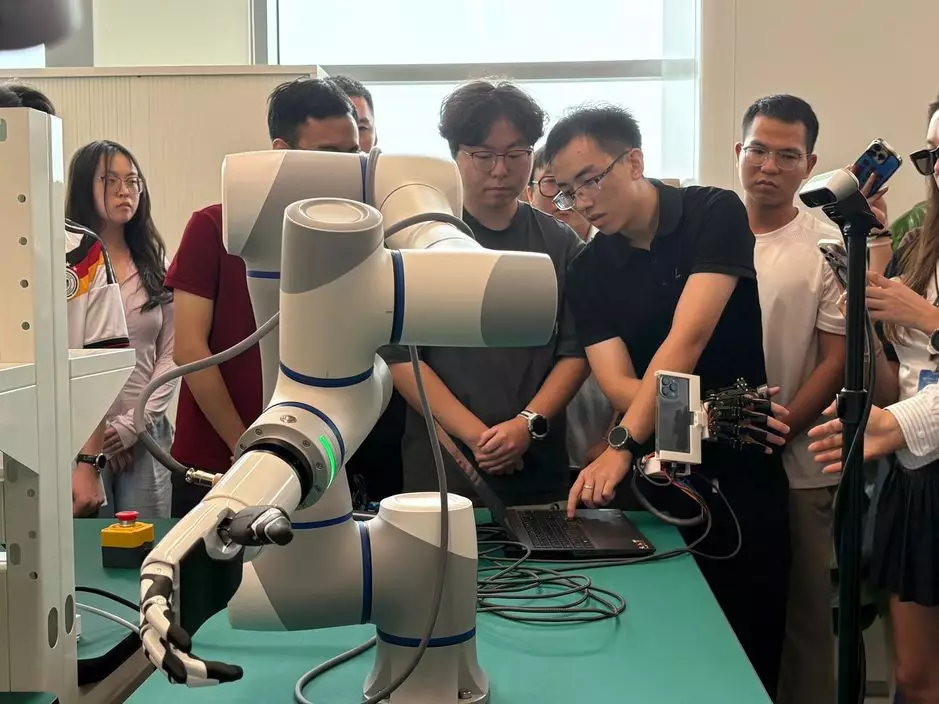
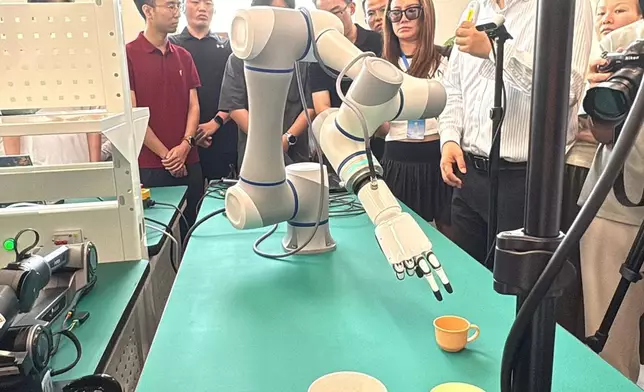
The mechanical engineering laboratory at the University Town, Photo by Bastille Post
The mechanical engineering laboratory at the University Town, Photo by Bastille Post
The mechanical engineering laboratory at the University Town, Photo by Bastille Post

The mechanical engineering laboratory at the University Town, Photo by Bastille Post

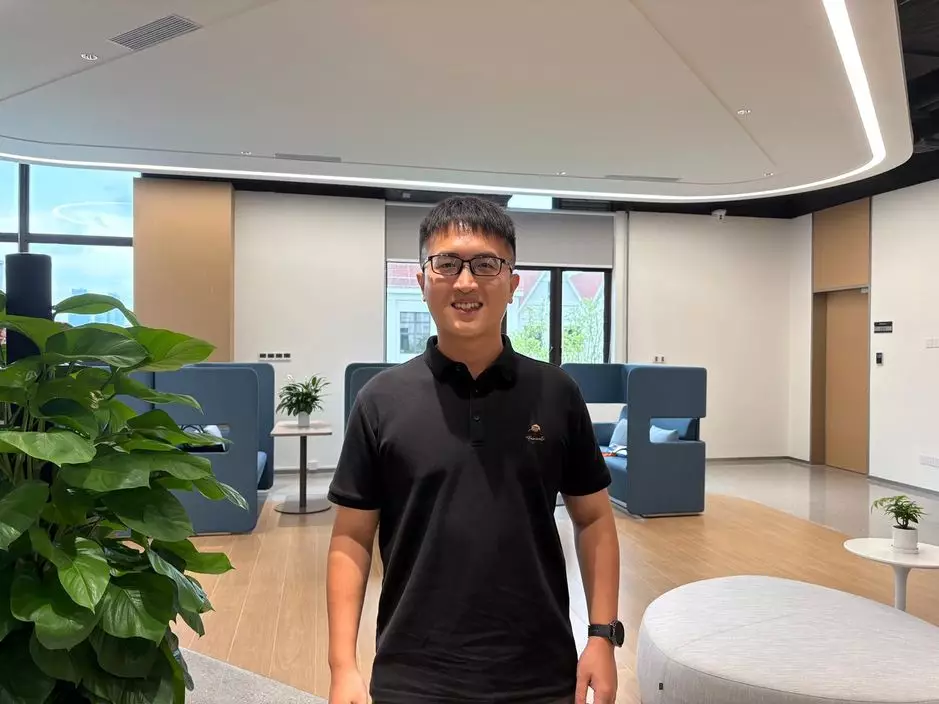
Pan Yong, a PhD student in Electromechanical Engineering at the University of Macau, Photo by Bastille Post
Pan Yong, a PhD student in Electromechanical Engineering at the University of Macau, Photo by Bastille Post

The Laboratory of Intelligent Micro-Display and Advanced Light Sources at the Zhuhai M.U.S.T. Science and Technology Research Institute in Hengqin, Photo by Bastille Post
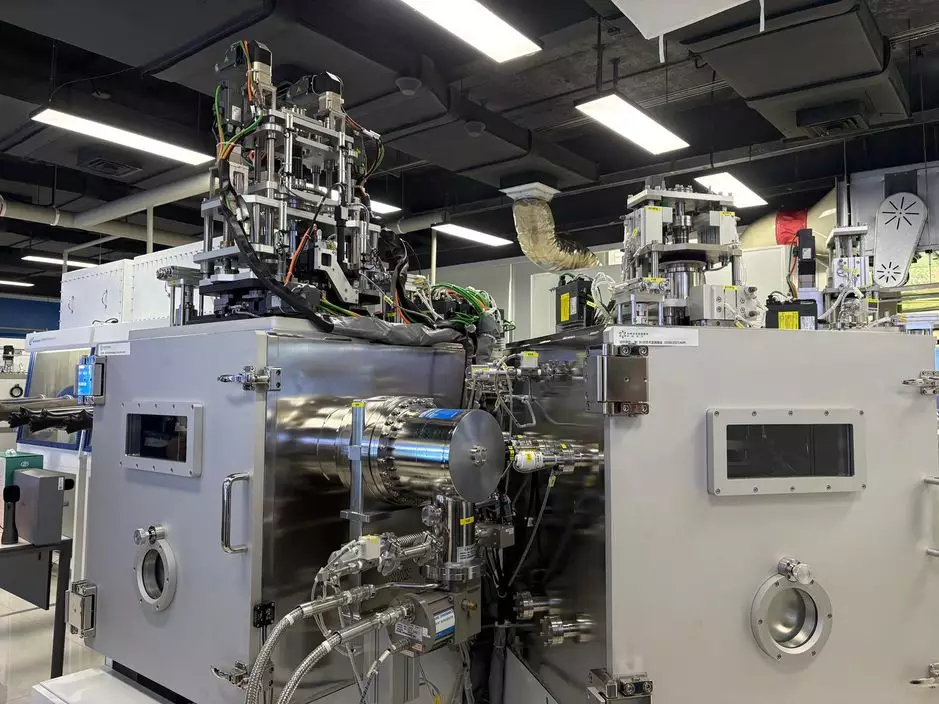
The Laboratory of Intelligent Micro-Display and Advanced Light Sources at the Zhuhai M.U.S.T. Science and Technology Research Institute in Hengqin, Photo by Bastille Post
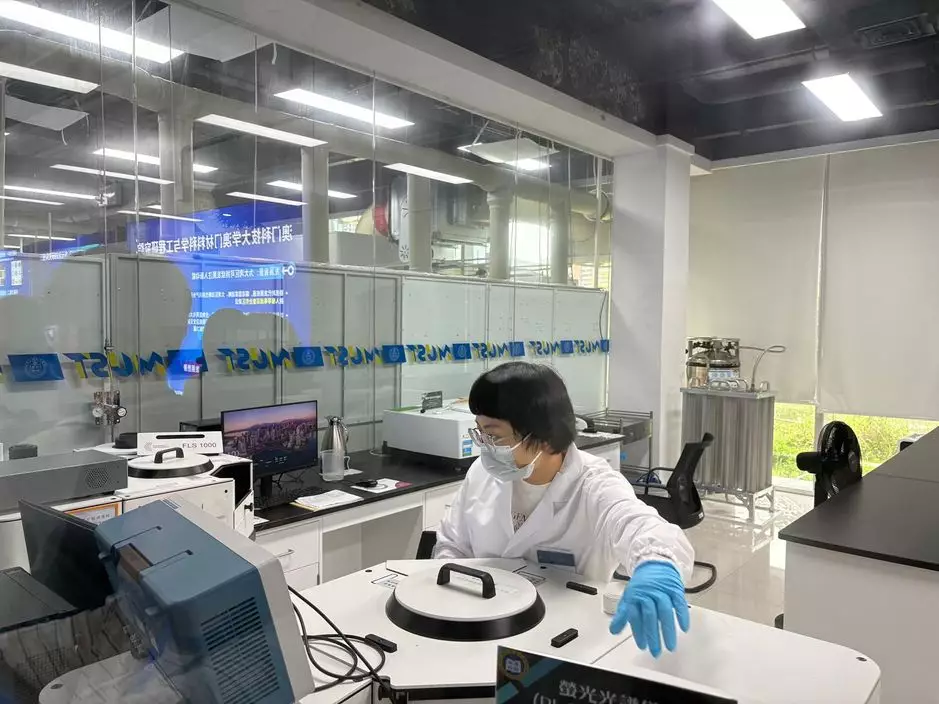
The Laboratory of Intelligent Micro-Display and Advanced Light Sources at the Zhuhai M.U.S.T. Science and Technology Research Institute in Hengqin, Photo by Bastille Post
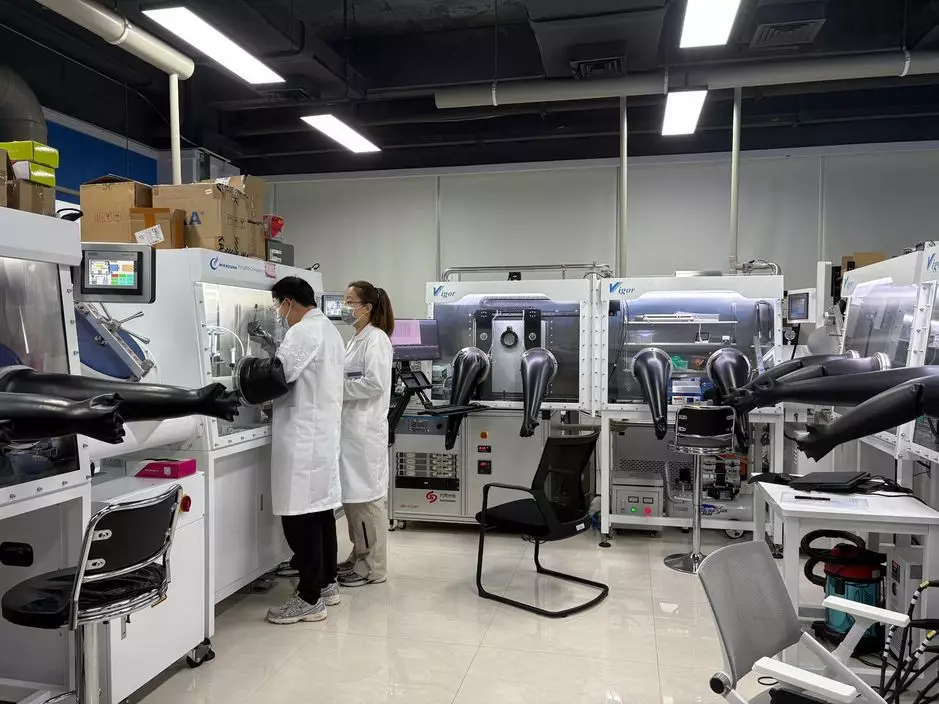
The Laboratory of Intelligent Micro-Display and Advanced Light Sources at the Zhuhai M.U.S.T. Science and Technology Research Institute in Hengqin, Photo by Bastille Post
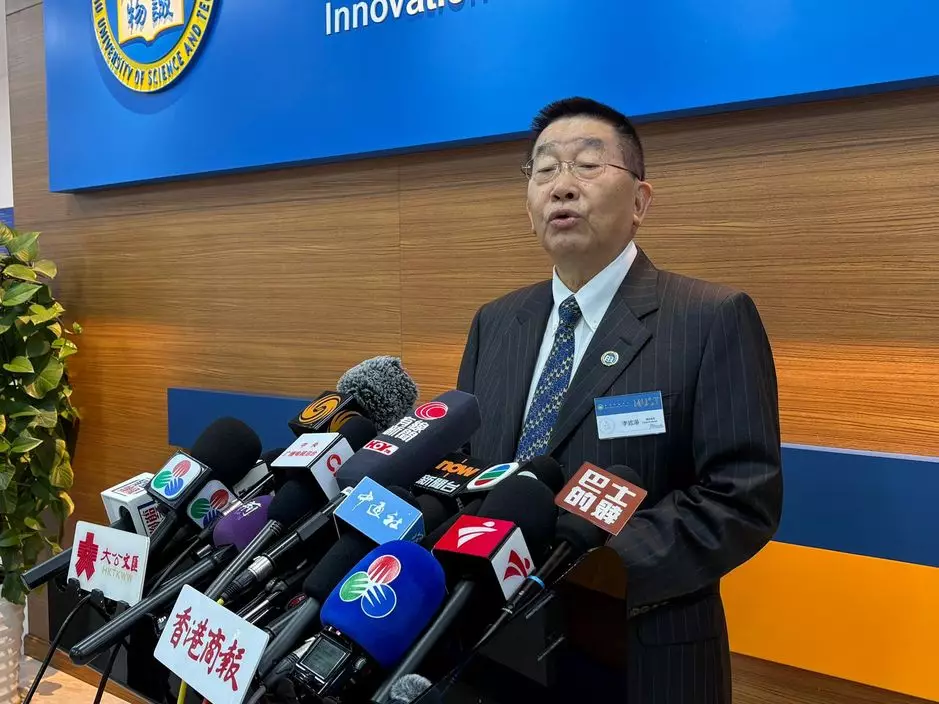
The Laboratory of Intelligent Micro-Display and Advanced Light Sources at the Zhuhai M.U.S.T. Science and Technology Research Institute in Hengqin, Photo by Bastille Post

The Laboratory of Intelligent Micro-Display and Advanced Light Sources at the Zhuhai M.U.S.T. Science and Technology Research Institute in Hengqin, Photo by Bastille Post

The Laboratory of Intelligent Micro-Display and Advanced Light Sources at the Zhuhai M.U.S.T. Science and Technology Research Institute in Hengqin, Photo by Bastille Post

The Laboratory of Intelligent Micro-Display and Advanced Light Sources at the Zhuhai M.U.S.T. Science and Technology Research Institute in Hengqin, Photo by Bastille Post

Lee Shuit-Tong, Dean of the Macao Institute of Materials Science and Engineering at Macau University of Science and Technology and Academician of the Chinese Academy of Sciences, Photo by Bastille Post
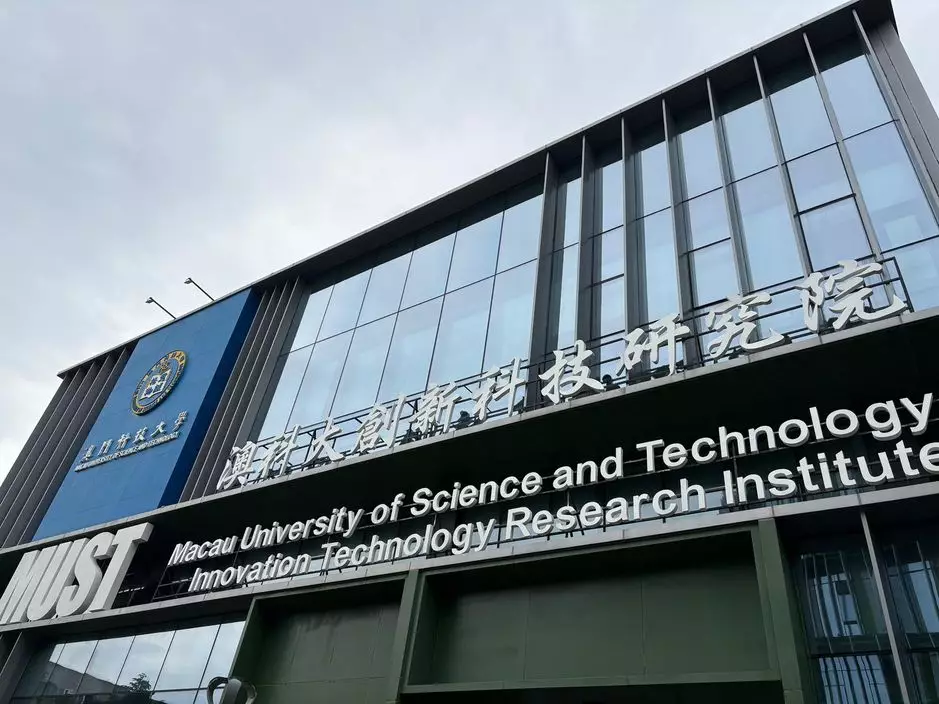
Lee Shuit-Tong, Dean of the Macao Institute of Materials Science and Engineering at Macau University of Science and Technology and Academician of the Chinese Academy of Sciences, Photo by Bastille Post

The Zhuhai M.U.S.T. Science and Technology Research Institute in Hengqin, Photo by Bastille Post

The Zhuhai M.U.S.T. Science and Technology Research Institute in Hengqin, Photo by Bastille Post

The first phase of the University Town was put into use in August this year, and currently three public universities — the University of Macau, Macao Polytechnic University, and Macao University of Tourism — have moved in, with more than 1,400 students. Photo by Bastille Post

The first phase of the University Town was put into use in August this year, and currently three public universities — the University of Macau, Macao Polytechnic University, and Macao University of Tourism — have moved in, with more than 1,400 students. Photo by Bastille Post

The Macao-Hengqin International Education (University) Town, Photo by Bastille Post

The Macao-Hengqin International Education (University) Town, Photo by Bastille Post

The Macao-Hengqin International Education (University) Town, Photo by Bastille Post

The Macao-Hengqin International Education (University) Town, Photo by Bastille Post

Macao Closely Monitoring the Northern Metropolis University Town Construction

Kong Chi Meng, Director of the Education and Youth Development Bureau of Macao, revealed that the first to third phases of the University Town construction will progressively cover more higher education institutions. The second phase, expected to be fully completed in 2029, will be led by the University of Macau; the third phase campus will be fully completed in 2030, led by Macao University of Tourism and Macao Polytechnic University.

Kong Chi Meng, Director of the Education and Youth Development Bureau of Macao, Photo by Bastille Post

Kong Chi Meng, Director of the Education and Youth Development Bureau of Macao, Photo by Bastille Post

The University Town will continue the existing internationalised education system of Macao’s higher education institutions, with network access conditions consistent with Macao, achieving a “soft connectivity” demonstration. Faculty and students will also be able to move freely within the cooperation zone, and a unified academic system will be adopted.
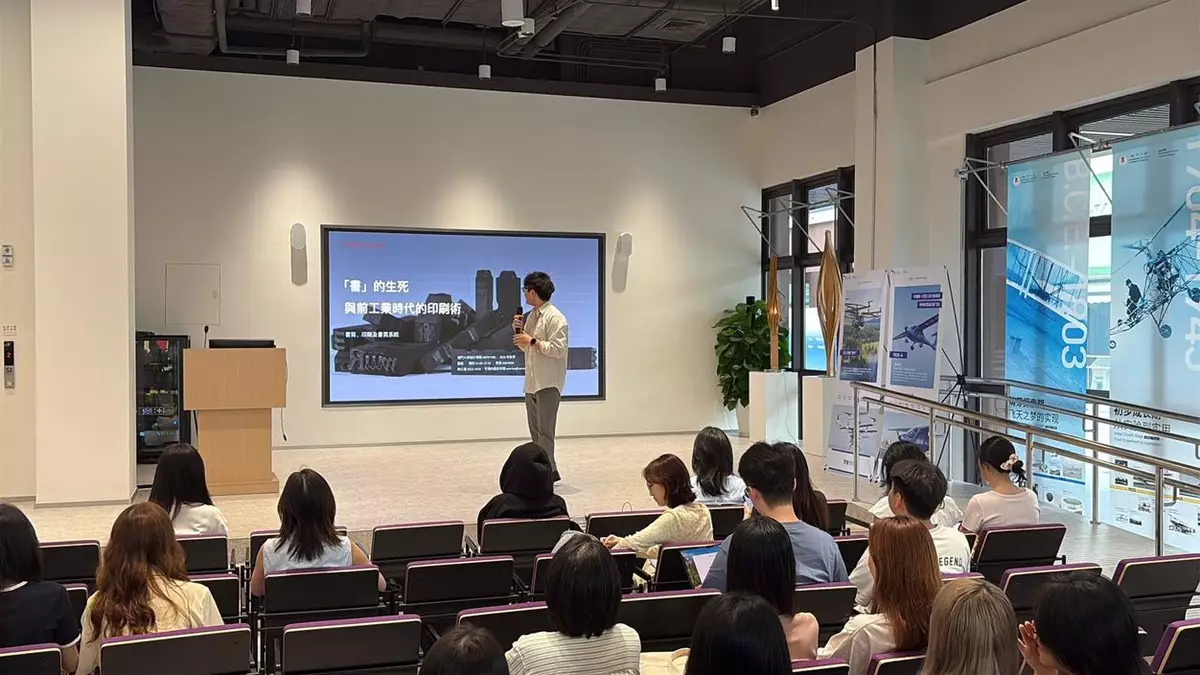
The Macao-Hengqin International Education (University) Town, Photo by Bastille Post

The Macao-Hengqin International Education (University) Town, Photo by Bastille Post

The Macao-Hengqin International Education (University) Town, Photo by Bastille Post

The Macao-Hengqin International Education (University) Town, Photo by Bastille Post

Since the HKSAR Government is also preparing for the construction of the Northern Metropolis University Town, Kong Chi Meng said he believes the two university towns each have their own advantages, and the Guangdong-Hong Kong-Macao University Alliance has also carried out multiple joint research projects and seminars, providing a good foundation for cooperation between the two. The Northern Metropolis University Town is still in the planning stage, and Macao is closely monitoring the situation and is willing to share its experience with Hong Kong.

The Macao-Hengqin International Education (University) Town, Photo by Bastille Post

The Macao-Hengqin International Education (University) Town, Photo by Bastille Post

The Macao-Hengqin International Education (University) Town, Photo by Bastille Post

The Macao-Hengqin International Education (University) Town, Photo by Bastille Post

“A Classroom for Macao Higher Education Institutions in Hengqin”

Sun Lin, Deputy Director of the Talent Development and Social Security Bureau of the Guangdong-Macao In-Depth Cooperation Zone in Hengqin, said that the University Town operates under the state-approved "Extended Schooling" Policy, and the extended education units are not branch campuses or campuses, but rather “a classroom for Macao higher education institutions in Hengqin.” The majors offered at the University Town campus are all in fields that the three universities have not previously offered in Macao, such as medicine, artificial intelligence, and robotics manufacturing.

Sun Lin, Deputy Director of the Talent Development and Social Security Bureau of the Guangdong-Macao In-Depth Cooperation Zone in Hengqin, Photo by Bastille Post

Sun Lin, Deputy Director of the Talent Development and Social Security Bureau of the Guangdong-Macao In-Depth Cooperation Zone in Hengqin, Photo by Bastille Post

In the new semester, students at the University Town campus can already take courses across universities, and in the next academic year, the three universities will each offer some “micro-major” courses for students to select and take across schools, with credits counted simultaneously.

The mechanical engineering laboratory at the University Town, Photo by Bastille Post
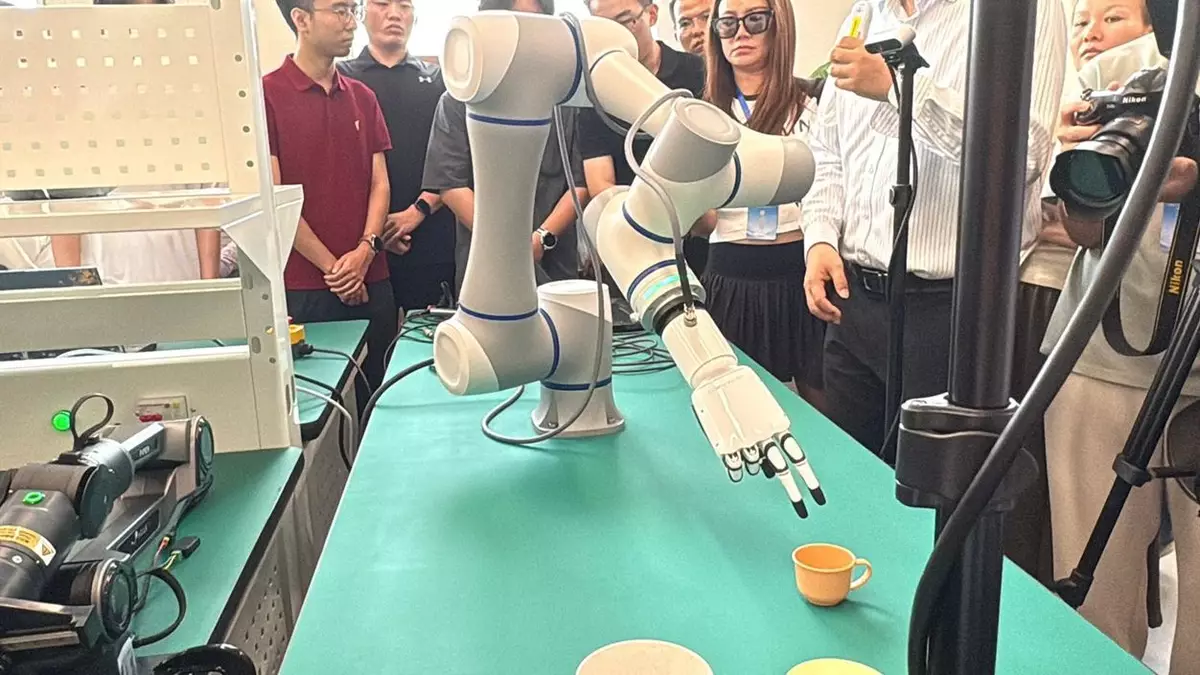
The mechanical engineering laboratory at the University Town, Photo by Bastille Post

The mechanical engineering laboratory at the University Town, Photo by Bastille Post

The mechanical engineering laboratory at the University Town, Photo by Bastille Post

Pan Yong, a PhD student in Electromechanical Engineering at the University of Macau, said that being in Hengqin, many start-ups have formed partnerships with the university, allowing students to personally understand the entire process from robot production to equipment manufacturing. “This is very helpful for our progress. Although we are in school, we are not disconnected from the industry — this is our advantage.”

Pan Yong, a PhD student in Electromechanical Engineering at the University of Macau, Photo by Bastille Post

Pan Yong, a PhD student in Electromechanical Engineering at the University of Macau, Photo by Bastille Post

HK's Multiple Advantages in Science and Technology Innovation

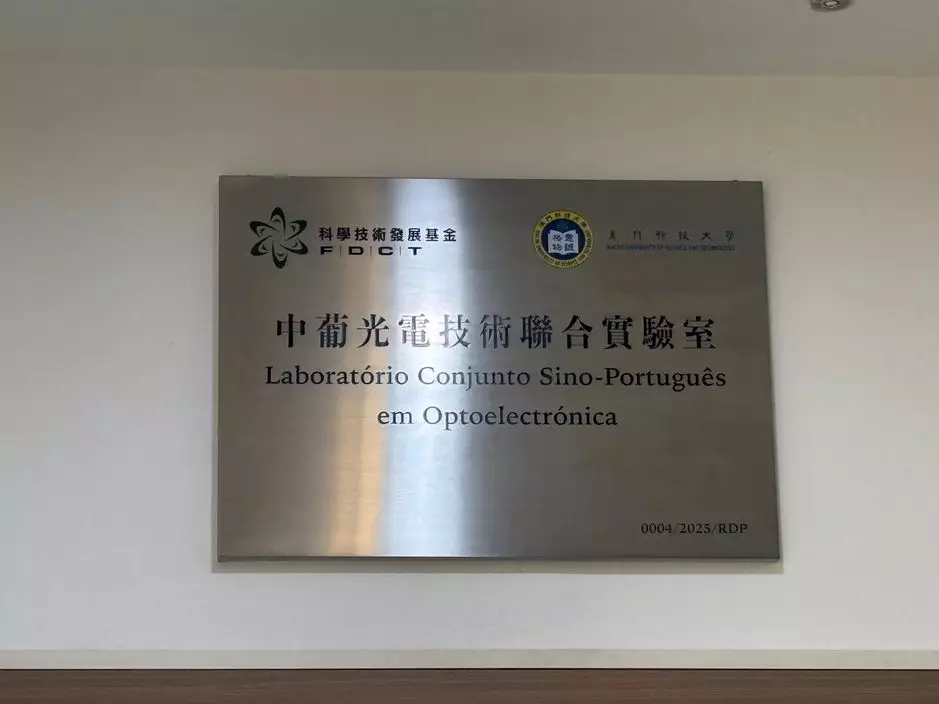
The delegation then visited the Laboratory of Intelligent Micro-Display and Advanced Light Sources at the Zhuhai M.U.S.T. Science and Technology Research Institute in Hengqin. The laboratory focuses on the manufacturing of organic light-emitting diode (OLED) devices, dedicated to OLED device production and development.

The Laboratory of Intelligent Micro-Display and Advanced Light Sources at the Zhuhai M.U.S.T. Science and Technology Research Institute in Hengqin, Photo by Bastille Post

The Laboratory of Intelligent Micro-Display and Advanced Light Sources at the Zhuhai M.U.S.T. Science and Technology Research Institute in Hengqin, Photo by Bastille Post

The Laboratory of Intelligent Micro-Display and Advanced Light Sources at the Zhuhai M.U.S.T. Science and Technology Research Institute in Hengqin, Photo by Bastille Post

The Laboratory of Intelligent Micro-Display and Advanced Light Sources at the Zhuhai M.U.S.T. Science and Technology Research Institute in Hengqin, Photo by Bastille Post

The Laboratory of Intelligent Micro-Display and Advanced Light Sources at the Zhuhai M.U.S.T. Science and Technology Research Institute in Hengqin, Photo by Bastille Post

The Laboratory of Intelligent Micro-Display and Advanced Light Sources at the Zhuhai M.U.S.T. Science and Technology Research Institute in Hengqin, Photo by Bastille Post

The Laboratory of Intelligent Micro-Display and Advanced Light Sources at the Zhuhai M.U.S.T. Science and Technology Research Institute in Hengqin, Photo by Bastille Post

The Laboratory of Intelligent Micro-Display and Advanced Light Sources at the Zhuhai M.U.S.T. Science and Technology Research Institute in Hengqin, Photo by Bastille Post

Lee Shuit-Tong, Dean of the Macao Institute of Materials Science and Engineering at Macau University of Science and Technology and Academician of the Chinese Academy of Sciences, said that China's scientific and technological development has shifted from “catching up” to “surpassing,” providing a broad stage for young people from Hong Kong and Macao.

Lee Shuit-Tong, Dean of the Macao Institute of Materials Science and Engineering at Macau University of Science and Technology and Academician of the Chinese Academy of Sciences, Photo by Bastille Post

Lee Shuit-Tong, Dean of the Macao Institute of Materials Science and Engineering at Macau University of Science and Technology and Academician of the Chinese Academy of Sciences, Photo by Bastille Post

In response to a question from Bastille Post, Lee Shuit-Tong pointed out that Hong Kong has many advantages in the development of science and technology innovation, such as its geographical location, international environment, and talent attraction. Macao and Hengqin can also absorb Hong Kong’s successful experience and avoid the unsuccessful aspects.

The Zhuhai M.U.S.T. Science and Technology Research Institute in Hengqin, Photo by Bastille Post

The Zhuhai M.U.S.T. Science and Technology Research Institute in Hengqin, Photo by Bastille Post
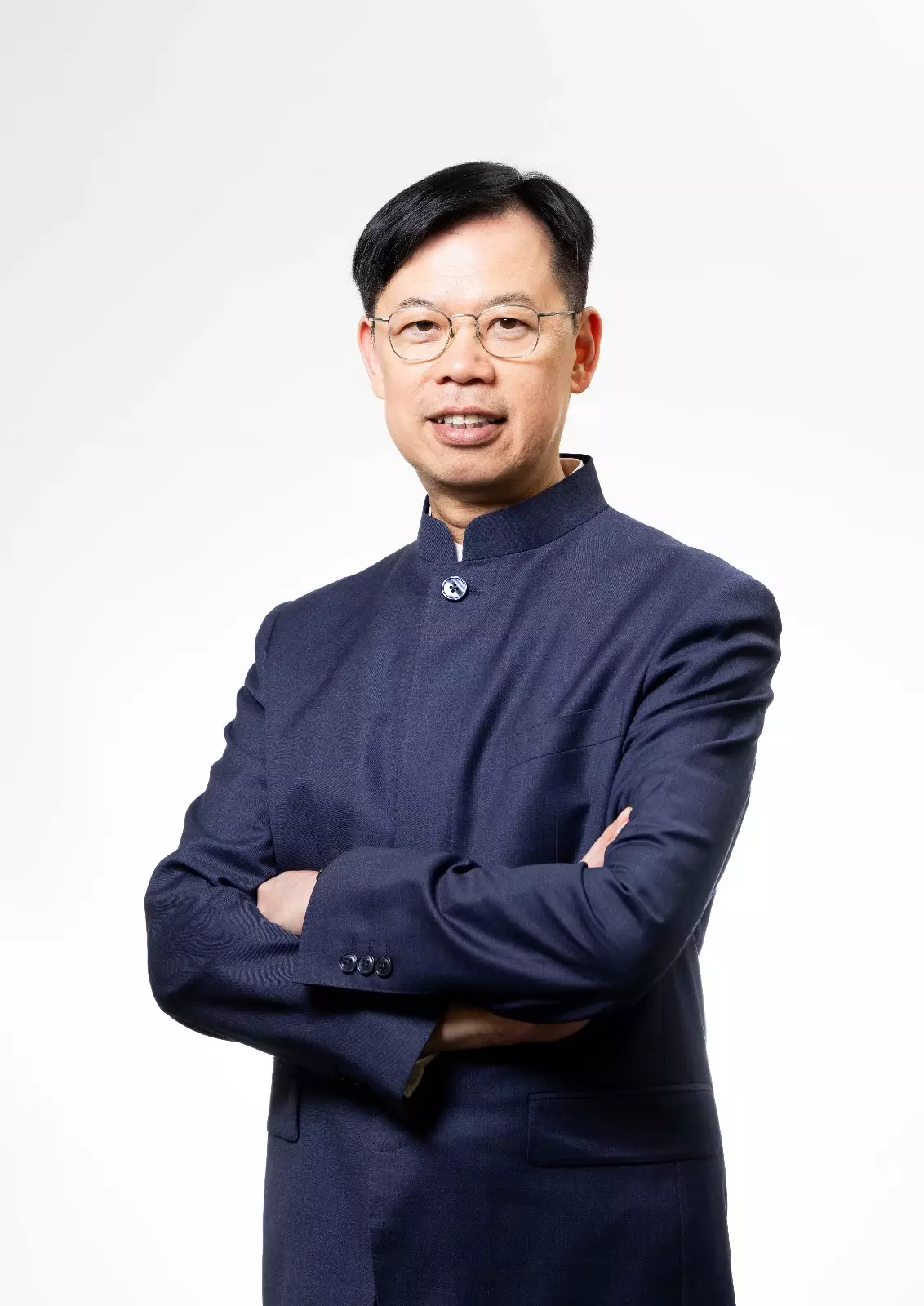
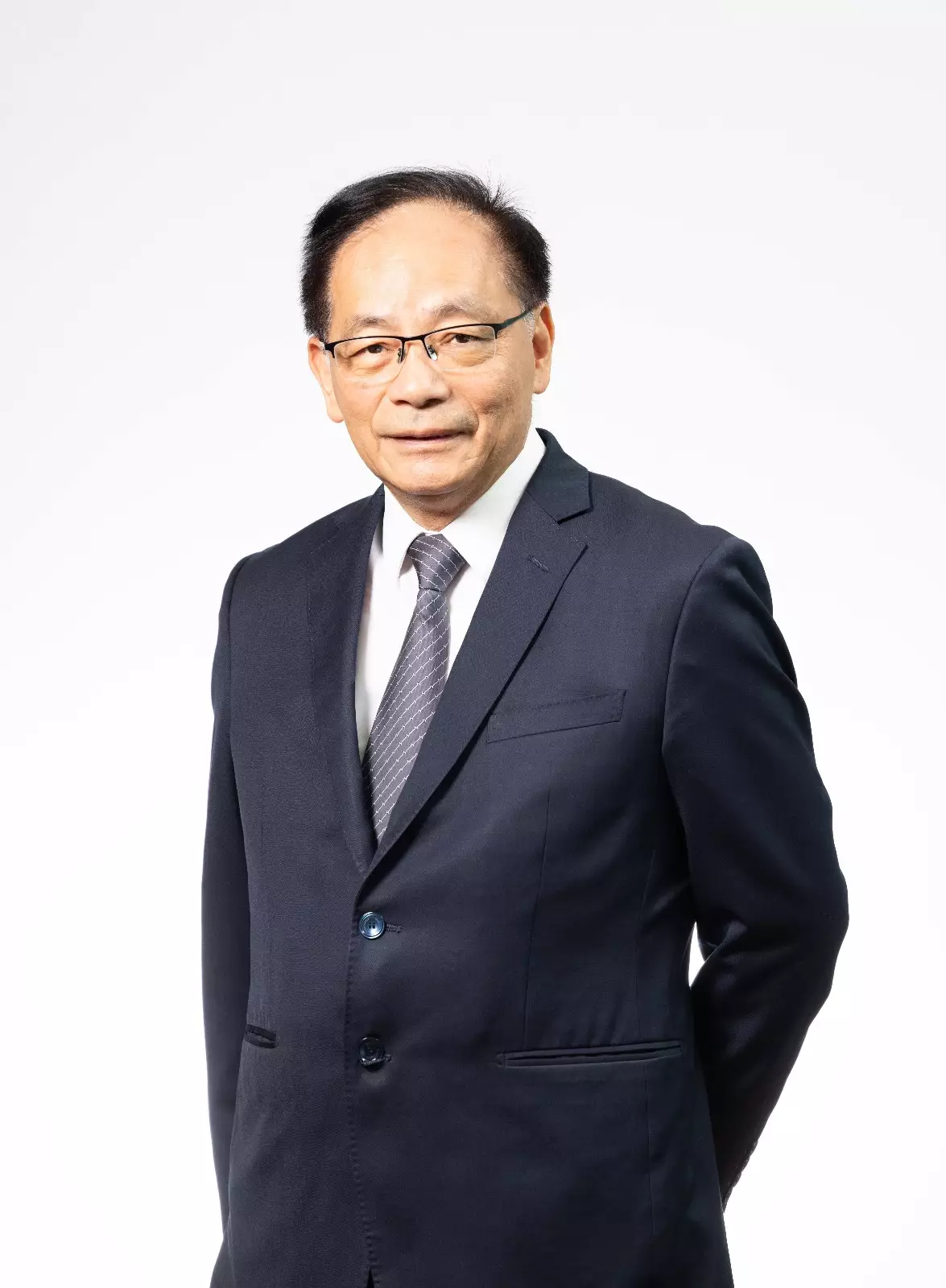
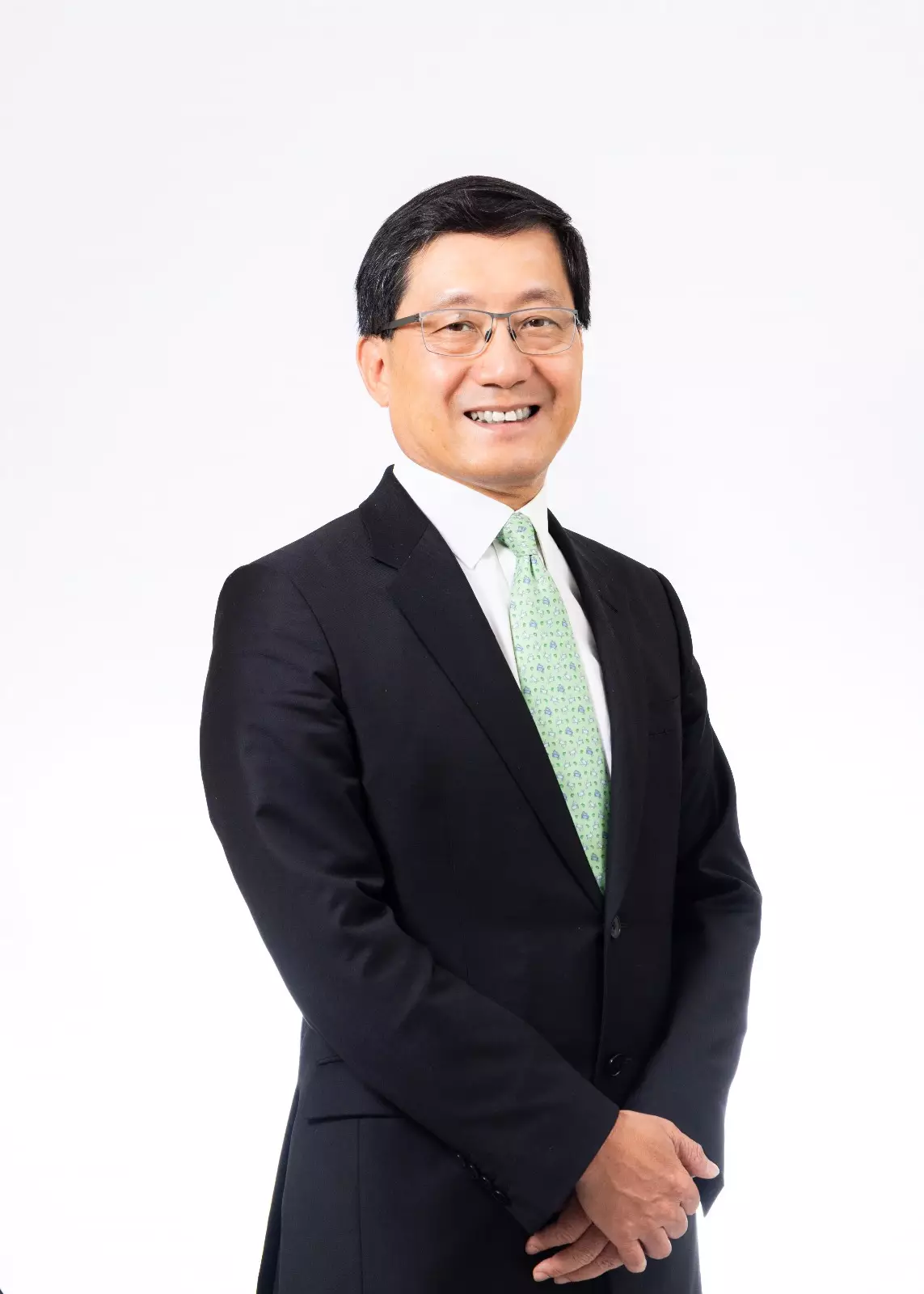
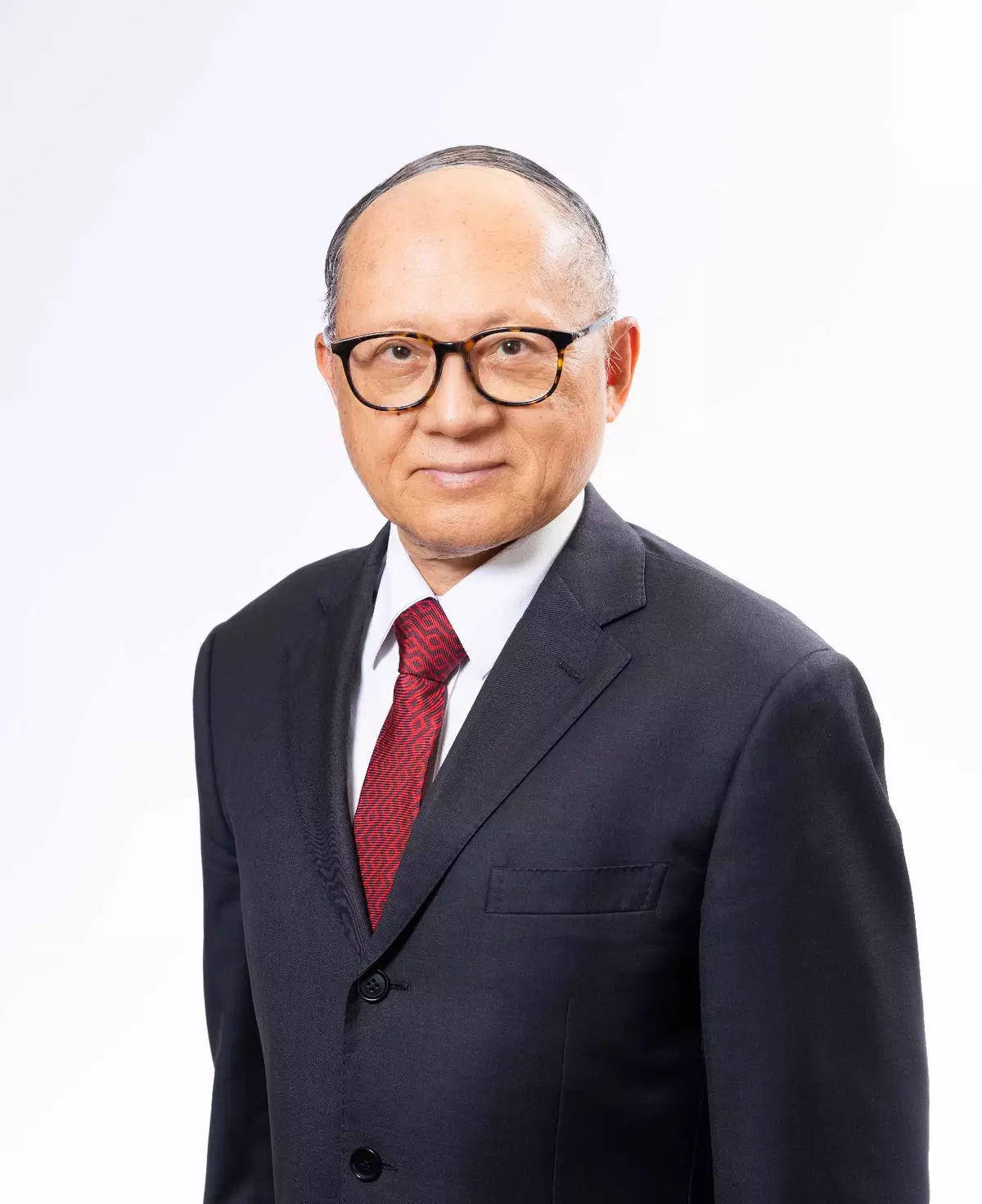
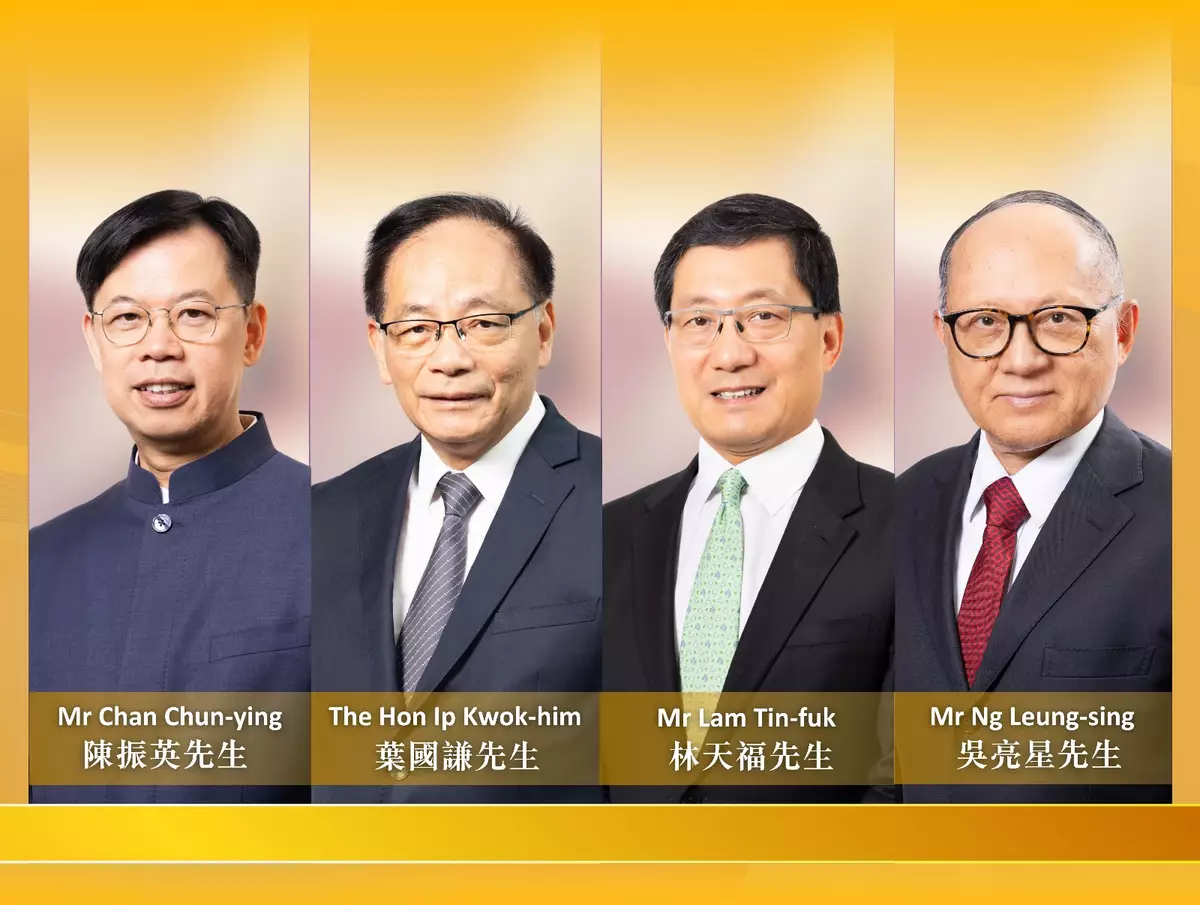
Lingnan University will confer four honorary fellowships, recognising the outstanding professional achievements and valuable contributions to the community and the education sector of the distinguished recipients, Mr Chan Chun-ying, BBS, JP; The Hon Ip Kwok-him, GBM, GBS, JP; Mr Lam Tin-fuk, GBS, JP; and Mr Ng Leung-sing, SBS, JP, whose biographies follow:

Mr Chan Chun-ying, BBS, JP

Mr Chan Chun-ying, BBS, JP

Mr Chan Chun-ying's ancestral roots are in Xinhui, Guangdong. After completing primary and secondary school, he went on studying and earned his Chartered Secretary qualification and a Master of Business Administration from Northeast Louisiana University (later renamed the University of Louisiana at Monroe) in the US. He is a long-serving Fellow of the Hong Kong Chartered Governance Institute.

After graduating, Mr Chan started work in the accounting department of the China Travel Service (CTS), conducting internal audits for its overseas branches. This was the beginning of his career with Hong Kong-based Chinese enterprises. Over the years, he received successive promotions, eventually rising to the position of Deputy General Manager of the CTS Overseas Department. In 1992, Mr Chan joined the Nanyang Commercial Bank, and was appointed as Deputy General Manager of the Bank in 2008. From 2011 to 2016, Mr Chan served as Board Secretary and Company Secretary to BOCHK Holdings Limited and the Bank of China (Hong Kong) Limited, and is currently an advisor to the latter.

Mr Chan has consistently sought to improve his expertise through continuous learning and practice. He has completed executive management programmes at the universities of Oxford, Cambridge, Columbia, Washington, Illinois, and Tsinghua. The year 2016 marked a turning point in his professional life, when he was elected a Legislative Council Member representing the Commercial functional constituency, and entered public office.

The Legislative Council was a decisive step in his commitment to giving back to society, and a major personal challenge. Guided by his absolute determination to serve citizens, Hong Kong, and the nation, Mr Chan overcame many obstacles and earned the trust of his fellow Council members. At the end of 2022, he was re-elected a member of the Seventh Legislative Council and, subsequently, Chairman of the Finance Committee, injecting and sustaining momentum into Hong Kong's journey "from stability to prosperity".

Mr Chan's personal integrity and professional experience align seamlessly with the deliberative spirit of the Legislative Council, making him a role model among leaders in Hong Kong society.

The Hon Ip Kwok-him, GBM, GBS, JP

The Hon Ip Kwok-him, GBM, GBS, JP

The Honourable Ip Kwok-him was born and grew up in Hong Kong, although his family was originally from Guangzhou, Guangdong Province. Mr Ip attended Hon Wah College in Hong Kong, and later graduated from South China Normal University. He then returned to Hon Wah College, where he taught for almost 20 years. Mr Ip entered politics in the 1980s, and engaged in community service with colleagues in the Central and Western District. In 1991, he was elected as a Central and Western District Councillor, embarking on an eventful decades-long career in District Council service.

In 1992, Mr Ip co-founded the Democratic Alliance for the Betterment of Hong Kong (later renamed the Democratic Alliance for the Betterment and Progress of Hong Kong, acronym DAB) to foster regional stability and development. He served as DAB vice-chairman from 1998 to 2009, establishing himself as a key figure in politics in the HKSAR.

Mr Ip was first elected to the Legislative Council in 1995, representing the Election Committee constituency in the final colonial legislature. During his legislative tenure, he was a member of the main public bodies, including the Urban Renewal Authority, and became known for his work organising and uniting the pro-establishment camp.

Mr Ip has served as an HKSAR Deputy to the National People's Congress for four consecutive terms (10th–13th), underscoring his central role not only in local governance but also as a bridge between the HKSAR and the central government. In 2016, he was appointed a non-official member of the Executive Council, where his extensive legislative experience and command of public affairs were valuable assets in policy discussions and in advising the government.

Besides his valuable service in the political arena, Mr Ip has demonstrated outstanding dedication to education, where he has played an important part in multiple levels of the sector including as Chairman of the Hon Wah Education Organisation, and School Superintendent of H.K.T.A. Shun Yeung Primary School. Mr Ip's contributions have been recognised with numerous prestigious awards, and in addition to being made a Justice of the Peace (JP), he received the Gold Bauhinia Star (GBS) in 2004 and the Grand Bauhinia Medal (GBM) in 2017, the highest honours conferred by the HKSAR.

Mr Lam Tin-fuk, GBS, JP

Mr Lam Tin-fuk, GBS, JP

Born and raised in Hong Kong, Mr Lam Tin-fuk completed his early education here before earning a Bachelor of Science degree in Computing Science from Imperial College, London. He began his life in public service as an Administrative Officer in the Hong Kong Government, and in 1986 he joined the Hong Kong Trade Development Council (HKTDC), embarking on a remarkable 28-year journey. Rising through the ranks to become Executive Director in 2004, he led an international team dedicated to creating opportunities for Hong Kong businesses.

In 2014, Mr Lam demonstrated his remarkable capacity for reinvention by making a direct transition to the role of Chief Executive Officer of the Airport Authority Hong Kong (AAHK). With the Hong Kong International Airport (HKIA) facing saturation, Mr Lam championed the Three-Runway System to secure Hong Kong SAR's future as an international aviation hub. He also introduced the transformative Airport City concept, which was given a new identity in January 2025 as SKYTOPIA, a brand designed to attract investment and talent. Recognising the importance of expertise, he also resolved to establish the Hong Kong International Aviation Academy in order to nurture the professionals who keep the skies safe and the economy vibrant.

When the COVID-19 pandemic brought unprecedented challenges, Mr Lam's leadership stood out. He motivated the airport community, ensuring resilience while actively preparing for recovery. His initiative in giving away 500,000 air tickets free created worldwide goodwill and kept Hong Kong on the global tourism map. In June 2024, he was appointed Chairman of the AAHK.

Mr Lam was awarded the Gold Bauhinia Star (GBS) by the HKSAR Government in recognition of his contribution to the development of the HKIA and aviation industry. Beyond these honours, Mr Lam is much admired for his integrity and for his core belief that great infrastructure must serve the community. His principles of being steadfast and responsible in every task are reflected in his dedication to the highest standards of safety, security, and environmental sustainability. This enthusiasm for responsible, value-creating modernisation resonates deeply with Lingnan University's liberal arts values and the University's commitment to serving society.

Mr Ng Leung-sing, SBS, JP

Mr Ng Leung-sing, SBS, JP

Mr Ng Leung-sing joined the Bank of China, Hong Kong Branch in 1967 and has spent 58 years in the financial sector, where he has dedicated his career to China through his financial and public service, and become a role model. His great expertise spans commercial banking, corporate strategy, and operational management, and has played a key role in the modernisation, consolidation, and presence of Chinese banks in Hong Kong. Mr Ng has been a director of the BOCHK Charitable Foundation since 1994 and, since 2009, Chairman of Bank of China (Hong Kong) Trustees Limited, demonstrating his talents and commitment as a leading figure in the banking industry.

Mr Ng's legislative service has been vital. Before and after Hong Kong's return to China, he served four terms as a Hong Kong deputy to the National People's Congress and four terms as a member of the Legislative Council. For over 20 years, he advised both the Chinese Mainland and Hong Kong, particularly on economic and financial policy. He chaired the Legislative Council's Finance Committee, overseeing government budget allocations for major infrastructure projects and fostering economic growth, but his diverse services have also included the Community Chest, the Hong Kong Housing Authority, the Hong Kong Council for Accreditation of Academic and Vocational Qualifications, and the Banking Advisory Committee. A passionate sportsman, Mr Ng was a torchbearer in the Hong Kong region for the 2008 Beijing Olympics.

Mr Ng has devoted his long career to education and served as a member of the Council and Court of Lingnan University, contributing significantly to the University's evolution with strategic foresight and a deep commitment to nurturing future generations, providing invaluable guidance during key phases of the University's development, and helping to steer its financial stability and academic growth. During his tenure as a director of the BOCHK Charitable Foundation, he promoted social welfare by advising on initiatives to fund education, healthcare, and community welfare. The Hong Kong SAR Government has made Mr Ng a Justice of the Peace and given him the Silver Bauhinia Star (SBS) in recognition of his contributions.

The four honorary fellowships that will be conferred by Lingnan University

The four honorary fellowships that will be conferred by Lingnan University

Recommended Articles