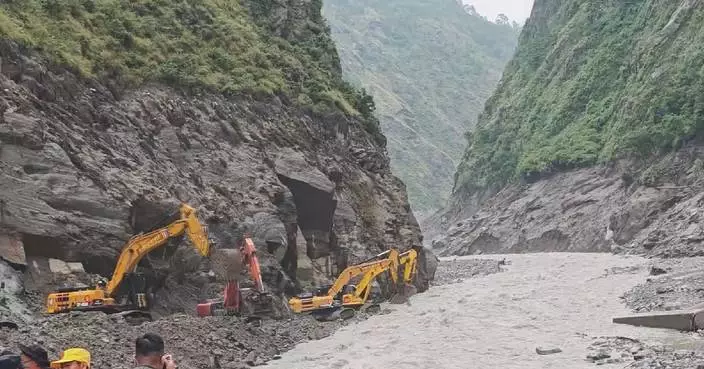
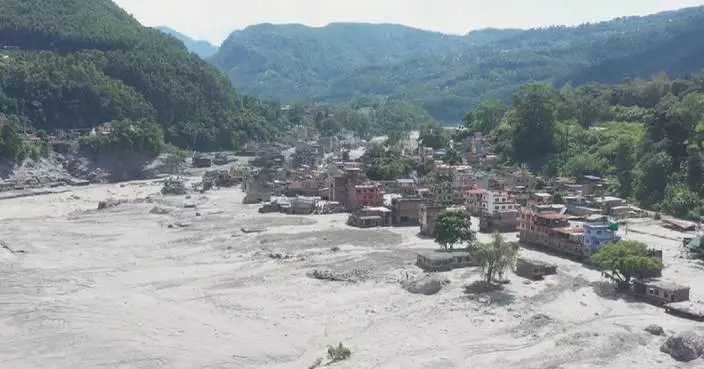
Rescuers are working around the clock to carry out grid-based search and road clearing operations at the core disaster area of the Gyirong Port on the China-Nepal border in southwest China's Xizang Autonomous Region following the mudslide that struck on Wednesday.
On Saturday morning, the China Rescue Team's Sichuan terrestrial search and rescue contingent, deployed by the Ministry of Emergency Management and the National Fire and Rescue Administration, continued search operations at the mudslide site in the Gyirong Port, conducting detailed inspections and grid-based searches, which is a rescue tactic that divides a disaster zone into small grid units, each assigned to specialized teams, to conduct thorough, coordinated searches to ensure that no area is overlooked.
Currently, roads and communication services at the Gyirong Port remain cut off. As of Friday night, through joint efforts of multiple rescue units, National Highway 216 has been restored to a point approximately 1.7 kilometers (straight-line distance) from the Gyirong Port. China Anneng, a state-owned engineering and rescue enterprise, has dispatched on Saturday more than 10 sets of heavy machinery to participate in road clearing operations, making every effort to accelerate the reopening of the access road to the port and speed up rescue progress. Meanwhile, communication repair work is also being expedited.
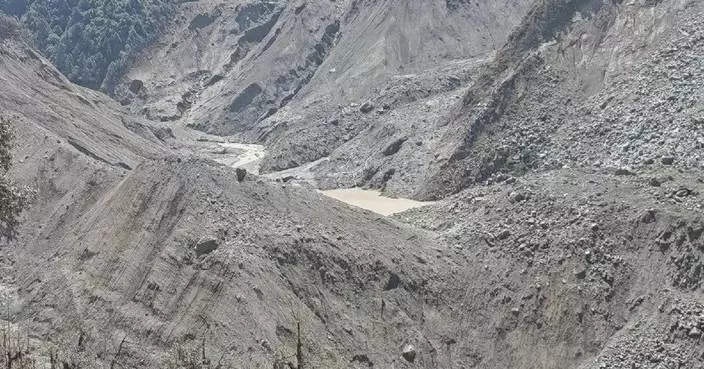
According to remote sensing monitoring data from China’s Ministry of Water Resources, as of 7:38 on Saturday, the water surface area of one of the barrier lakes upstream of the Gyirong Port measured 99,000 square meters, a decrease of 21,000 square meters compared to the day before yesterday. This indicates that the barrier lake has begun to overflow slowly, with water volume gradually receding.
In the early hours of Saturday, Gyirong County experienced heavy rainfall, posing challenges to search and rescue operations, with more rain forecast in the coming hours.
The mudslide struck the Gyirong Port, a major China-Nepal land border crossing in Xizang, on Wednesday morning, according to the region's emergency management department. The department also says that as of 1 a.m. on Saturday, seven people had been confirmed dead and 554 others remained missing. The massive mudslide was triggered by a high-altitude glacier collapse on the Nepalese side.
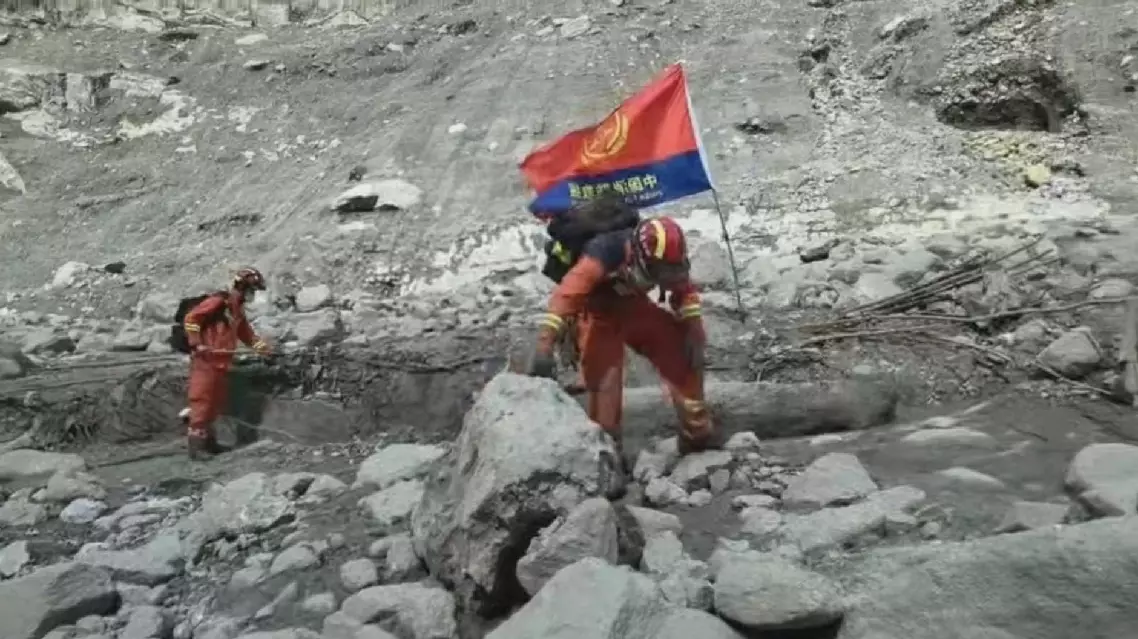
Search, rescue efforts intensified in core area after mudslide hits southwest China’s Xizang border