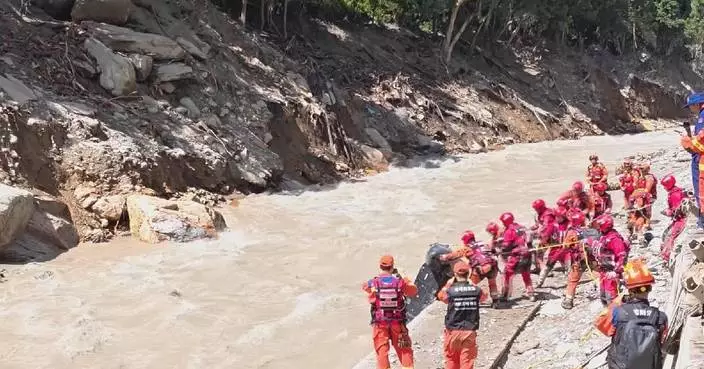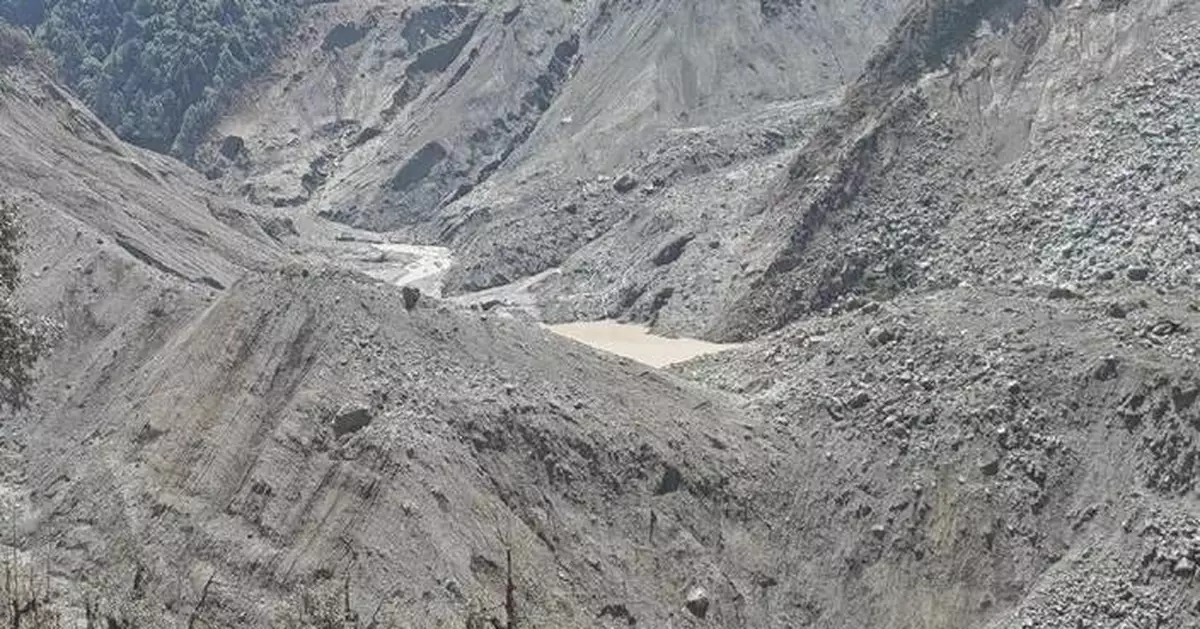
The natural overflow of the barrier lakes occurred at the confluence of two rivers between Nepal and China has significantly reduced the threat to the area, but rescue teams are continuing to closely monitor water levels and flow rates while stay prepared to take action should a secondary landslide cause the lake to become blocked again.
China Anneng, a state-owned engineering and rescue enterprise, has reached the lakes on Friday with reconnaissance drones, portable satellite stations and mobile surveillance cameras to conduct on-site surveys of the blockage and surrounding roads to provide accurate data for efforts to address the barrier lake.
"We have set up a fixed monitoring equipment at a stable monitoring point on the opposite bank to monitor the displacement and deformation of the landslide body. If a secondary collapse of the landslide occurs and causes another blockage, we will take appropriate measures to deal with it," said Chen Hanxiao, leader of the Detection Team at China Anneng Group Lhasa Base.
Since natural overflow has already occurred, their priority is to monitor the water level and flow rate. Meanwhile, in terms of the safety of personnel working in the border-port area, the level of risk has been significantly reduced, Chen added.
""The current risk level of this barrier lake, based on our assessment, is basically stable. The safety level and risk level currently remain largely unchanged. Both its stability and the incoming water volume are in a relatively stable state. As the reservoir capacity slowly declines, its risk may continue to decrease," said Zhou Zhidong, lead expert of China Anneng Third Bureau.
The reconnaissance team from China Anneng reached the core area of the barrier lake and carried communication and detection equipment such as surveillance drones and portable satellite stations. Their work focuses on surveying the barrier body and surrounding routes to provide crucial data for scientific decision-making.
Initial observations indicated a significant drop in the water level, approximately 10 meters, compared to the previous day. The inflow from the upper reaches and the outflow downstream have essentially reached a balance. However, weather conditions remain a concern, as rainfall is forecast for the next three days.
In addition to real-time monitoring, rescue teams are implementing emergency preparedness measures.
"First, we need to carry out real-time, uninterrupted monitoring and early warning work. Second, during the rescue process, we need to plan escape routes and conduct escape drills," said Wu Kun, deputy commander of the Lhasa Base of China Anneng.
A mudslide originated on Nepal's side of the China-Nepal border struck the border port of Gyirong in southwest China's Xizang Autonomous Region on Wednesday.
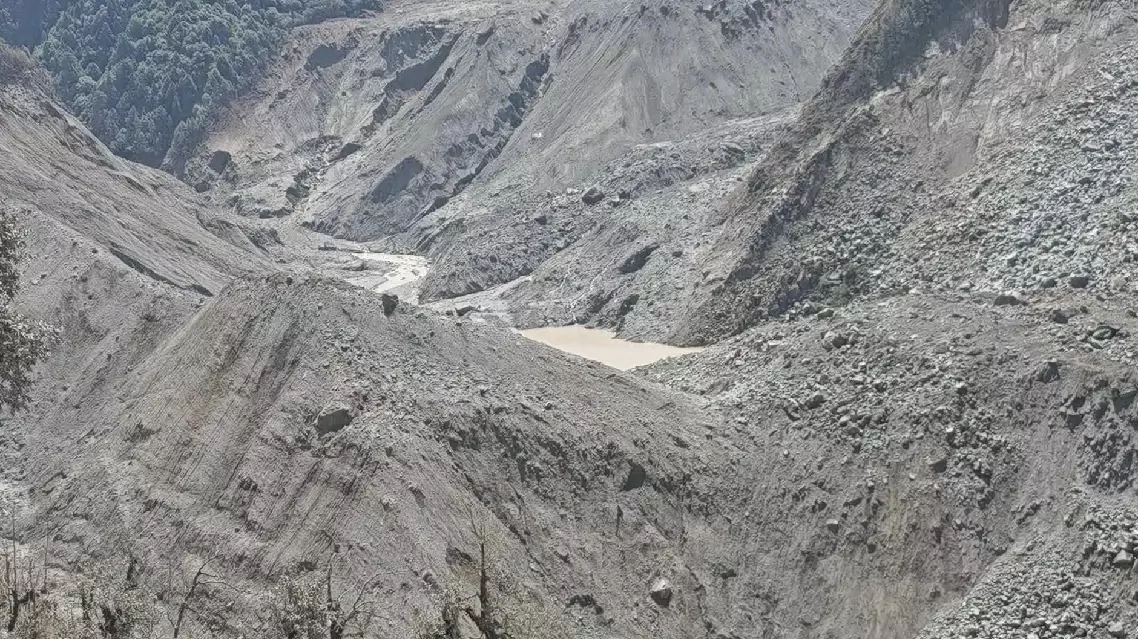
Natural overflow reduces threat as rescue teams continue monitoring