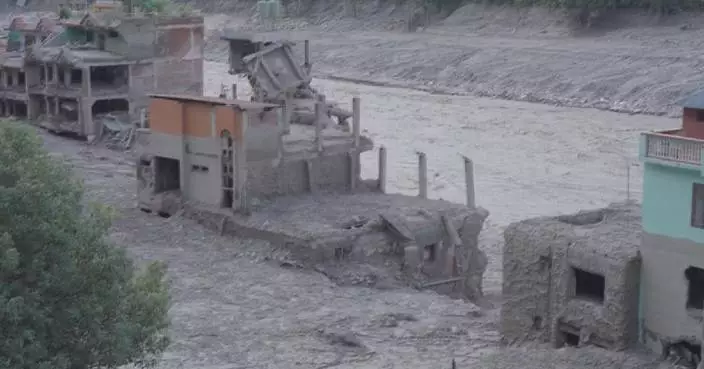
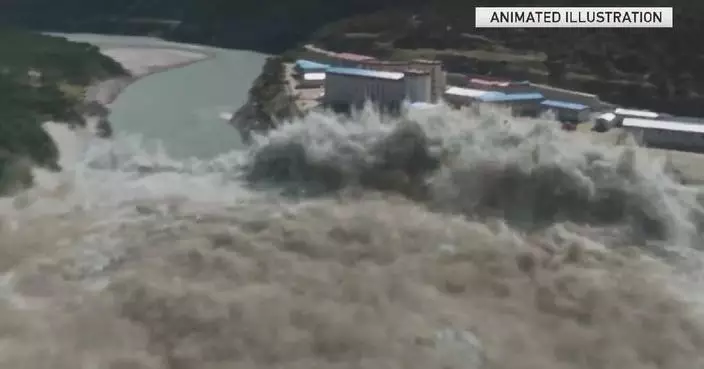
More and more large machinery has joined in clearing roads to the mudslide-hit Gyirong Port in southwest China's Xizang Autonomous Region.
The mudslide, which occurred on the Nepalese side, struck Gyirong Port on Wednesday morning. As of 01:00 on Saturday, seven people had been killed, and 554 others remained missing after the mudslide, according to the region's emergency management department.
As continued rains make geological and meteorological conditions improper to carry out search and rescue operations, rescuers from the People's Liberation Army (PLA) Xizang Military Command had to shift their focus onto clearing roads.
The machinery is racing to pave the road to the Gyirong Port by removing parts of mountains.
"When we arrived here today, we saw many large engineering vehicles, including those from China Anneng and those from our sister unit -- the firefighting department. The machines are constantly moving forward to clear the road. At present, I feel that the progress is already very fast. It is hopeful that the road will be reopened within the next two days," said Jampa Sonam, a serviceman from the Xigaze sub-district of the PLA Xizang Military Command.
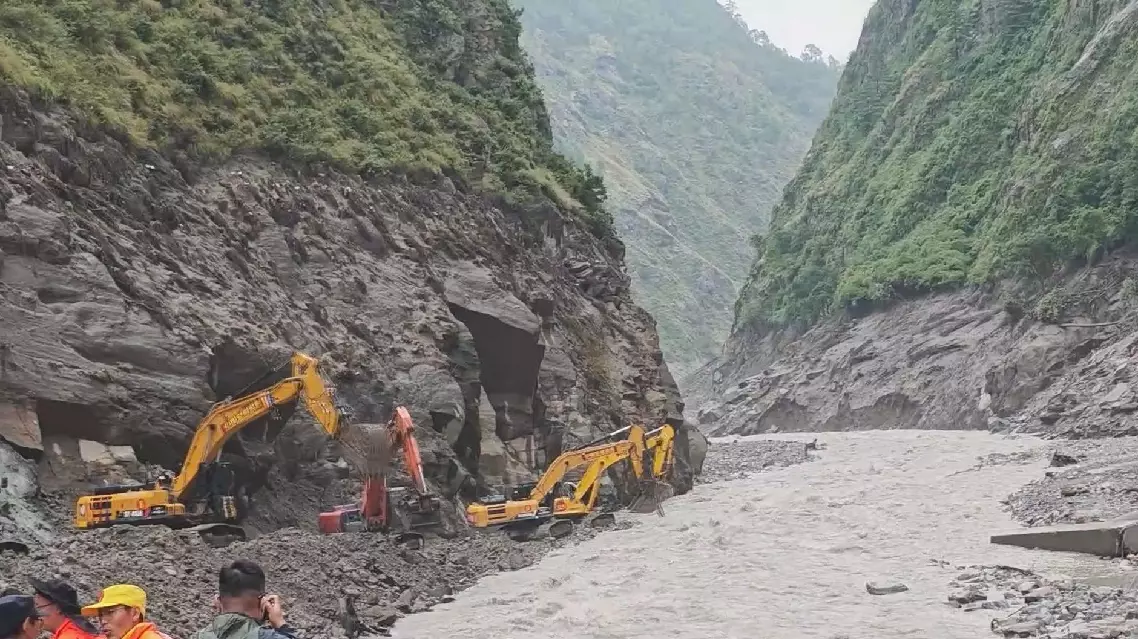
Large machinery joins in clearing road to Xizang's Gyirong Port
The challenges facing rescuers in clearing the last kilometer of roads to the mudslide-hit southwest China’s border port of Gyirong are ensuring the safety of rescue personnel and overcoming natural obstacles, said a member of the rescue team.
A mudslide that originated on Nepal's side of the China-Nepal border struck Gyirong in China's Xizang Autonomous Region on Wednesday.
A key task for the rescuers is to repair damaged roads that have been almost completely destroyed by the mudslides. This will allow heavy machinery and more rescuers better access to affected areas.
Jiang Wanqiang, a member of the Xigaze Detachment of the People's Armed Police, talked about the main challenges the team faced during key operations.
"We need to find ways to quickly clear the last kilometer that leads us to the core rescue area in Gyirong Town. The biggest challenge is ensuring the safety of our personnel during rescue operations. We currently face risks such as barrier lakes, dam breaches, mountain collapses, and avalanches, which could trigger further upstream landslides. This poses the greatest threat to our own safety," he said.
"Secondly, significant challenges exist for us to open up the rescue route. The final kilometer consists almost entirely of steep cliffs and rivers, with no existing road infrastructure. Clearing this section is extremely difficult. In the next phase, we may deploy some machinery—engineers and a large number of construction vehicles—which could help ensure the successful establishment of the final kilometer of the rescue road," Jiang said.
The troops moved to a site about two kilometers from Gyirong Port on Friday to carry out search-and-rescue and mud-clearing operations. Persistent overnight rain and the risk of secondary disasters, including further mudslides, mean the area is not safe for camping. The troops returned to Gyirong Town last night to rest, before setting out again for the rescue site at 08:00.
Equipped with life-detection devices, shovels and pickaxes, the troops conducted a systematic search for survivors on Saturday. They also cleared mud and rocks, and leveled the road surface to open up access routes.
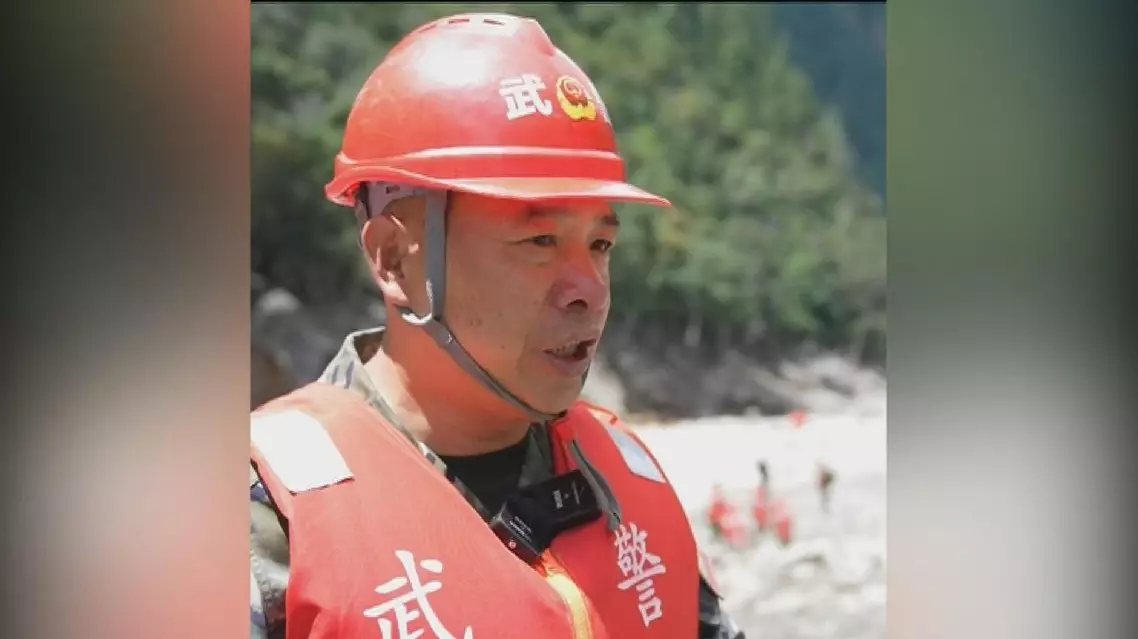
Safety concerns, natural barriers pose new challenges to rescuers in Xizang's Gyirong Port