Skip to Content Facebook Feature Image

CMG releases animation of glacier collapse triggering massive mudslide in Xizang border

China

China

China

CMG releases animation of glacier collapse triggering massive mudslide in Xizang border

2026-08-29 16:47 Last Updated At:17:47

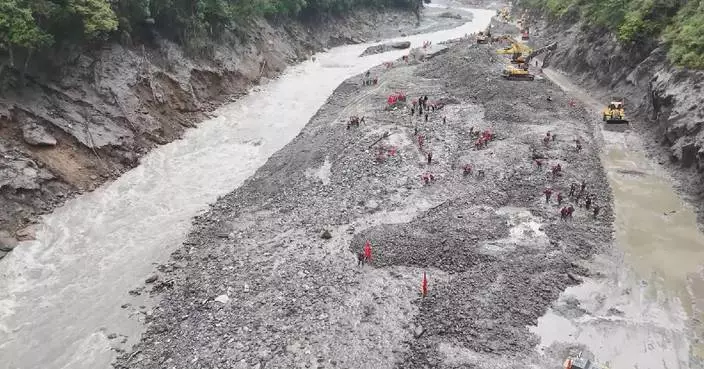
A newly released animation by China Media Group has illustrated how a glacier collapse on the Nepalese side triggered the massive mudslide that struck the Gyirong Port on the China-Nepal border in southwest China's Xizang Autonomous Region on Wednesday morning.

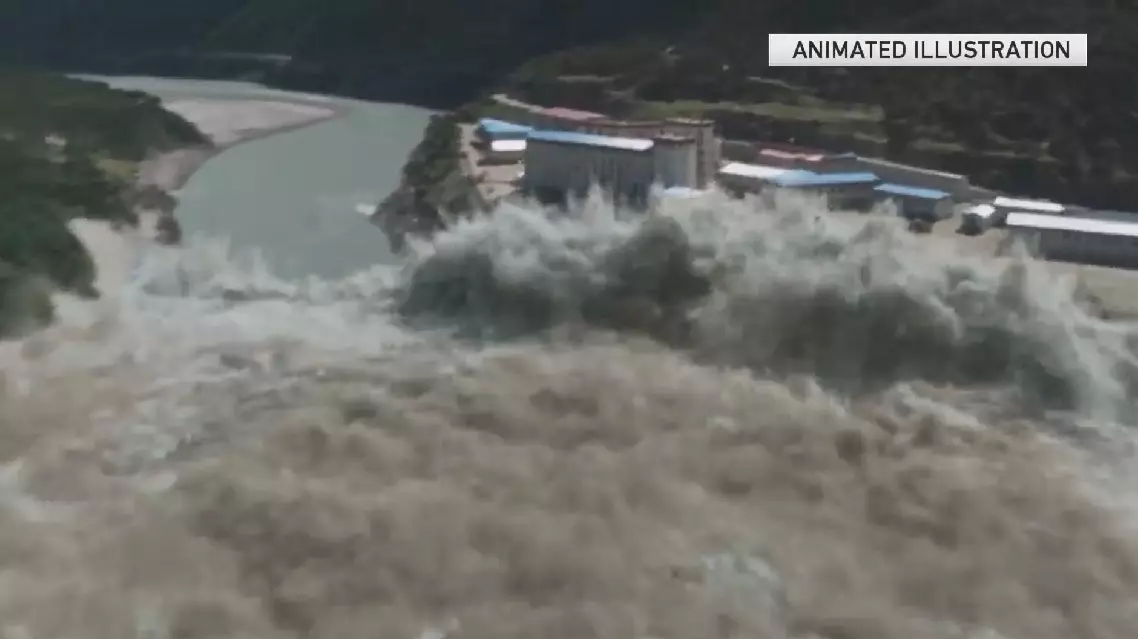
The event presents a classic disaster cascading effect. At an elevation of 5,140 meters, a glacier spanning 620,000 square meters located in the upper reaches of the Cuojian River broke off. The collapsing ice rapidly swept up loose rock and debris along its path, flowing into the Guobaxiaqu River, a boundary river between China and Nepal, before joining the Donglin Zangbo River.

Gathering mass and momentum as it moved downstream, it evolves into a powerful debris flow that ultimately devastated the Gyirong Port and downstream areas.

Plunging nearly 3,300 meters in elevation over a 20-kilometer run, the mudslide traveled toward the border port at an average velocity of 50 meters per second. From glacier collapse to the moment it struck the port, only seven minutes elapsed, leaving local residents virtually no time to seek safety.

Upon slamming into the Donglin Zangbo River, the high-speed debris flowed in two directions. One branch surged upstream for nearly three kilometers, while the other swept downstream into Nepal, affecting a swath of tens of kilometers.

On the Chinese side, seven people had been killed, and 554 others remained missing, while two local villagers had been rescued as of 1:00 on Saturday, according to Xizang's emergency management department.
CMG releases animation of glacier collapse triggering massive mudslide in Xizang border

CMG releases animation of glacier collapse triggering massive mudslide in Xizang border

The U.S. consumer sentiment in August fell about 6 percent from July and about 11 percent from a year ago as inflation concerns persisted, a survey showed Friday.

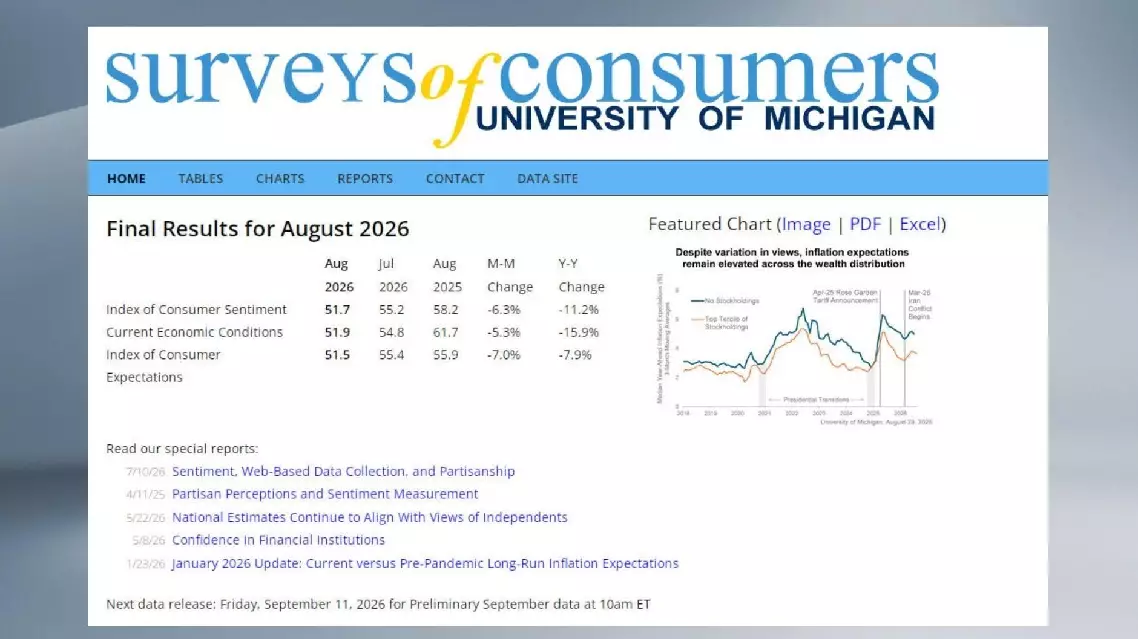
The Index of Consumer Sentiment released by the University of Michigan (UM) Surveys of Consumers slipped to 51.7 in the August 2026 survey, down from 55.2 in July and below last August's 58.2.

The Current Economic Conditions Index fell to 51.9, down from 54.8 in July and below last August's 61.7. The Index of Consumer Expectations dropped to 51.5, down from 55.4 in July and below last August's 55.9.

The survey found that groups who are typically less equipped to absorb increases in the cost of living also exhibited stronger decreases in sentiment, including older consumers, lower- and middle-income consumers, and those with no stock holdings.

Though year-ahead inflation expectations slipped from 4.2 percent in July to 4.0 percent, it still substantially exceeds 3.4 percent seen in February before the Iran war began. Long-run inflation expectations held steady at 3.3 percent for the third consecutive month, remaining higher than its 2024 range of 2.8-3.2 percent.

Survey findings indicate that consumers foresee continued increases in gasoline prices over both the near and long term, owing to persistent policy uncertainty and the conflict in the Middle East, while simultaneously voicing mounting anxiety over a potential slowdown in other areas of the economy.

U.S. consumer sentiment slips as inflation concerns persist

U.S. consumer sentiment slips as inflation concerns persist

Recommended Articles