China's six major state-owned banks on Friday announced they achieved growth in both operating income and net profit in the first half of 2026.
The six banks, namely the Industrial and Commercial Bank of China, Agricultural Bank of China, Bank of China, China Construction Bank, Bank of Communications, and Postal Savings Bank of China, issued their interim results in Beijing, showing their development tenacity is higher than market expectations.
In H1, the overall operating income of the six banks reached two trillion yuan (about 197 billion U.S. dollars), with attributable net profit exceeding 710 billion yuan.
Apart from that, four out of the six banks saw decline in non-performing loan ratios compared with those at the end of 2025.
Net interest income remained the main source of revenue, while the contribution from non-interest income continued to increase.
Their latest reports show that the net interest margins of the six banks have begun to recover.
"In the first half of 2026, Agricultural Bank of China's net interest margin was 1.28 percent, up 2 basis points from the first quarter, indicating signs of stabilization. The interest rate on deposits was 1.13 percent, down 21 basis points from the end of the previous year, while the cost of liabilities continued to improve," said Wang Zhiheng, president of the Agricultural Bank of China.
In the first six months, the dividend ratios of several major banks increased, which further enhanced shareholder returns.
"Since listing, we have distributed more than 1.4 trillion yuan in cumulative dividends. Over the past three years, annual dividends have exceeded 100 billion yuan. In recent years, we have maintained a dividend payout ratio at 30 percent. To further enhance returns for investors, we plan to raise the payout ratio to 31 percent in mid-2026," said Ji Zhihong, vice president of the China Construction Bank.

China’s state-owned banks report growth in operating income, net profit for H1
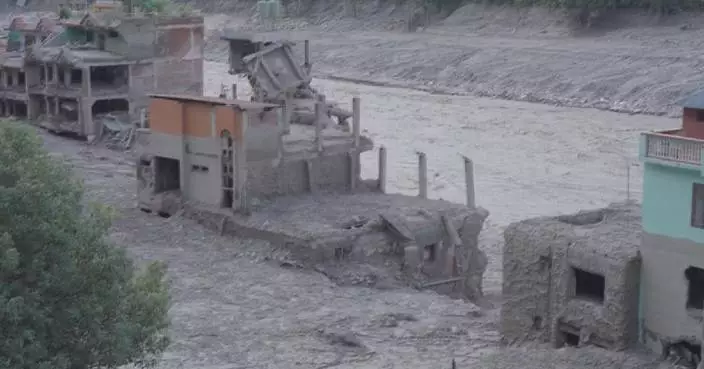
The challenges facing rescuers in clearing the last kilometer of roads to the mudslide-hit southwest China’s border port of Gyirong are ensuring the safety of rescue personnel and overcoming natural obstacles, said a member of the rescue team.
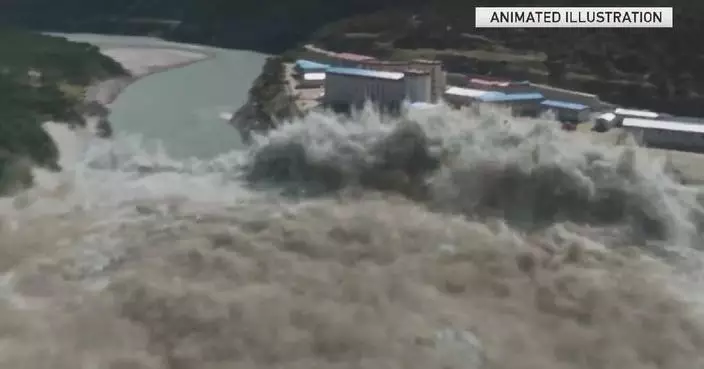
A mudslide that originated on Nepal's side of the China-Nepal border struck Gyirong in China's Xizang Autonomous Region on Wednesday.
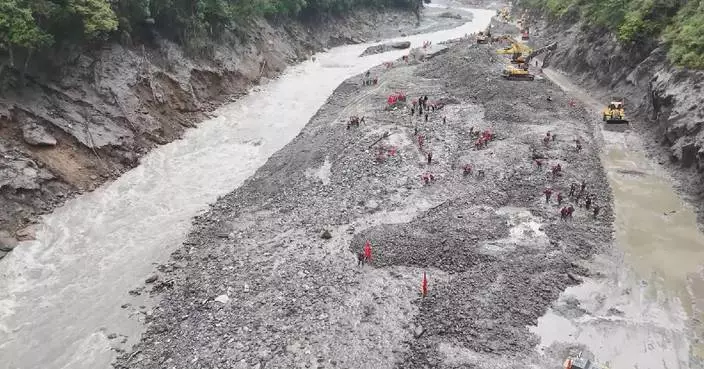
A key task for the rescuers is to repair damaged roads that have been almost completely destroyed by the mudslides. This will allow heavy machinery and more rescuers better access to affected areas.
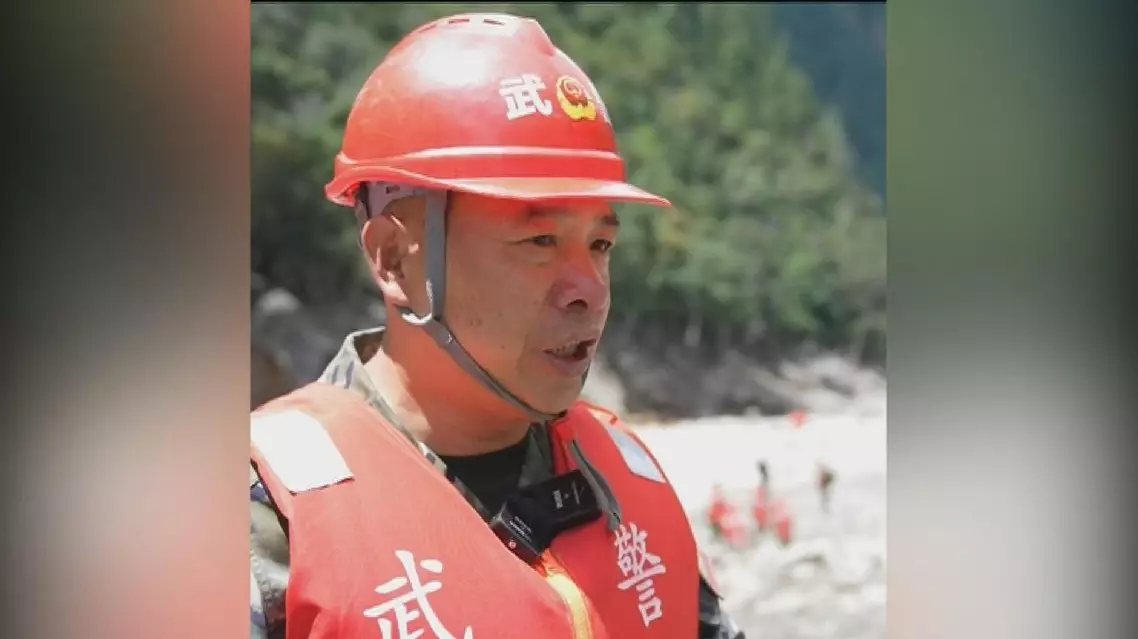
Jiang Wanqiang, a member of the Xigaze Detachment of the People's Armed Police, talked about the main challenges the team faced during key operations.
"We need to find ways to quickly clear the last kilometer that leads us to the core rescue area in Gyirong Town. The biggest challenge is ensuring the safety of our personnel during rescue operations. We currently face risks such as barrier lakes, dam breaches, mountain collapses, and avalanches, which could trigger further upstream landslides. This poses the greatest threat to our own safety," he said.
"Secondly, significant challenges exist for us to open up the rescue route. The final kilometer consists almost entirely of steep cliffs and rivers, with no existing road infrastructure. Clearing this section is extremely difficult. In the next phase, we may deploy some machinery—engineers and a large number of construction vehicles—which could help ensure the successful establishment of the final kilometer of the rescue road," Jiang said.
The troops moved to a site about two kilometers from Gyirong Port on Friday to carry out search-and-rescue and mud-clearing operations. Persistent overnight rain and the risk of secondary disasters, including further mudslides, mean the area is not safe for camping. The troops returned to Gyirong Town last night to rest, before setting out again for the rescue site at 08:00.
Equipped with life-detection devices, shovels and pickaxes, the troops conducted a systematic search for survivors on Saturday. They also cleared mud and rocks, and leveled the road surface to open up access routes.
Safety concerns, natural barriers pose new challenges to rescuers in Xizang's Gyirong Port