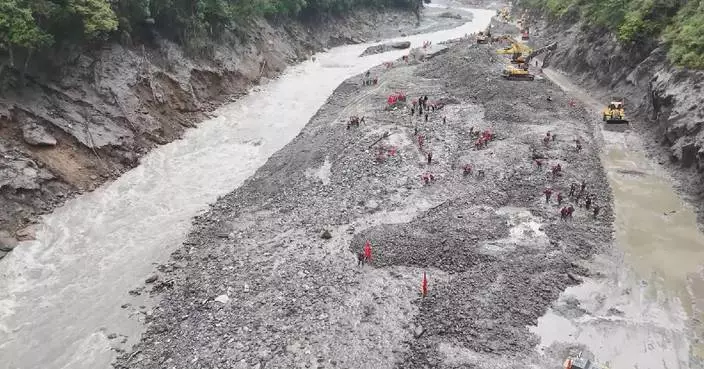
The challenges facing rescuers in clearing the last kilometer of roads to the mudslide-hit southwest China’s border port of Gyirong are ensuring the safety of rescue personnel and overcoming natural obstacles, said a member of the rescue team.
A mudslide that originated on Nepal's side of the China-Nepal border struck Gyirong in China's Xizang Autonomous Region on Wednesday.
A key task for the rescuers is to repair damaged roads that have been almost completely destroyed by the mudslides. This will allow heavy machinery and more rescuers better access to affected areas.
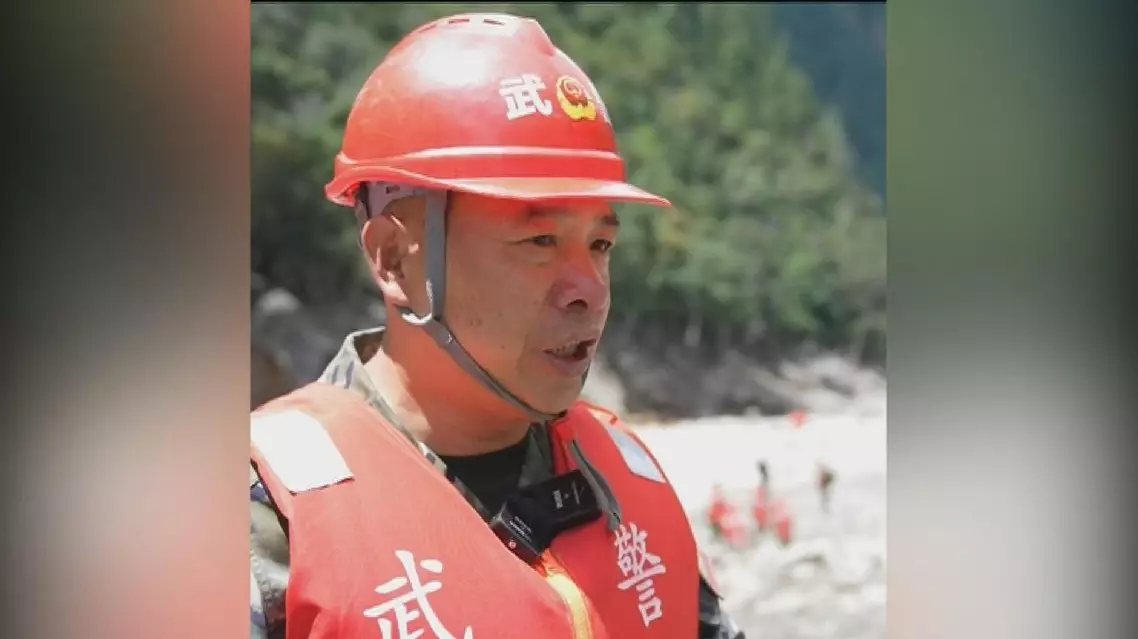
Jiang Wanqiang, a member of the Xigaze Detachment of the People's Armed Police, talked about the main challenges the team faced during key operations.
"We need to find ways to quickly clear the last kilometer that leads us to the core rescue area in Gyirong Town. The biggest challenge is ensuring the safety of our personnel during rescue operations. We currently face risks such as barrier lakes, dam breaches, mountain collapses, and avalanches, which could trigger further upstream landslides. This poses the greatest threat to our own safety," he said.
"Secondly, significant challenges exist for us to open up the rescue route. The final kilometer consists almost entirely of steep cliffs and rivers, with no existing road infrastructure. Clearing this section is extremely difficult. In the next phase, we may deploy some machinery—engineers and a large number of construction vehicles—which could help ensure the successful establishment of the final kilometer of the rescue road," Jiang said.
The troops moved to a site about two kilometers from Gyirong Port on Friday to carry out search-and-rescue and mud-clearing operations. Persistent overnight rain and the risk of secondary disasters, including further mudslides, mean the area is not safe for camping. The troops returned to Gyirong Town last night to rest, before setting out again for the rescue site at 08:00.
Equipped with life-detection devices, shovels and pickaxes, the troops conducted a systematic search for survivors on Saturday. They also cleared mud and rocks, and leveled the road surface to open up access routes.
Safety concerns, natural barriers pose new challenges to rescuers in Xizang's Gyirong Port
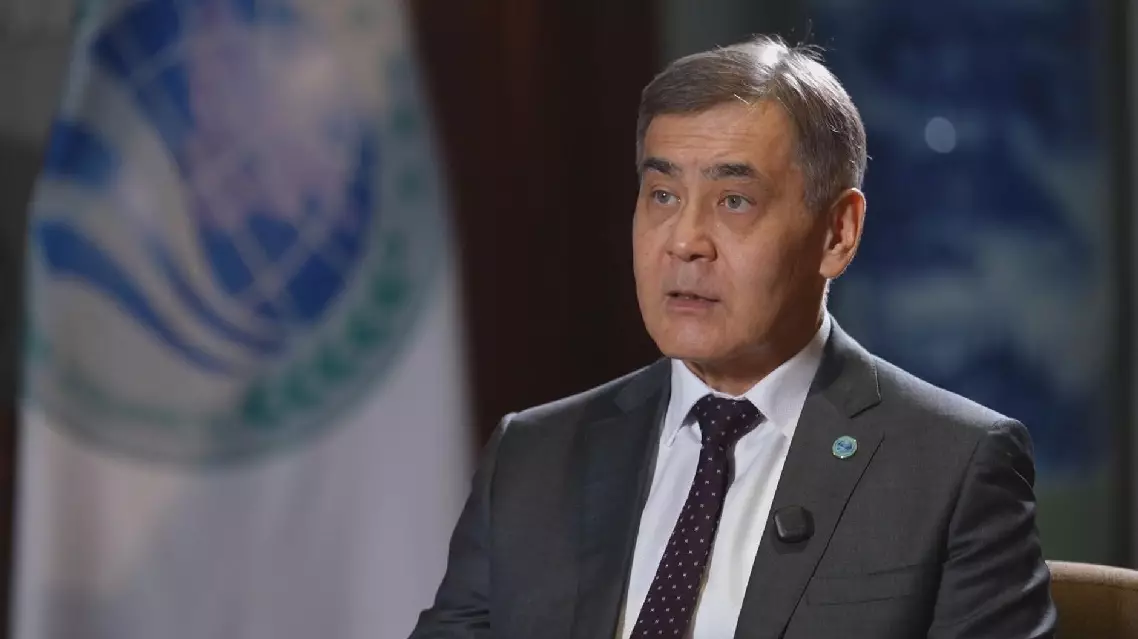
The Shanghai Cooperation Organization (SCO) is advocating its commitment to an equitable and multipolar world order that elevates the voices of developing nations, SCO Secretary-General Nurlan Yermekbayev said in Beijing, and also reaffirmed the organization's opposition to unilateral sanctions and power politics.
Speaking in an exclusive interview with China Media Group on Tuesday, Yermekbayev said a key outcome of the Meeting of the Council of the Ministers of Foreign Affairs of the Shanghai Cooperation Organization (SCO) Member States held in July was the release of a statement.
The statement detailed that the violation of the Charter of the United Nations by imposing unilateral sanctions is unacceptable and hinders cooperation among countries.
"All parties to the statement did indeed unanimously oppose the imposition of unilateral sanctions that violate the UN Charter and the norms of international law, and run counter to the Sustainable Development Goals. And this is not only aimed at trade or economic sanctions, but in a broader sense, it emphasizes that in contemporary international relations and in the process of resolving major international issues, pressure, power politics or issuing ultimatums should not be allowed. All issues should be settled through negotiation and consultation, namely, fully through diplomatic and political means. This is the core message of the statement," the secretary-general said.
Asked how the SCO plans to further use its platform to support global peace, stability and the rebuilding of international order, Yermekbayev said SCO member states have repeatedly advocated, including at the level of heads of state, building a world order that is more multipolar, fair, democratic, open and inclusive.
He said the goal is to broaden the range of countries participating in major global decision-making, with an emphasis on enabling developing countries to play a more significant role.
"At present, mechanisms such as the SCO, BRICS, and the Conference on Interaction and Confidence Building Measures in Asia are advancing and safeguarding the collective development of Global South countries. The SCO upholds the following philosophy that today's world should strictly abide by the principles of sovereign equality and equal dialogue, conduct consultations on any issue, and strive to reach a consensus," said Yermekbayev.
SCO chief calls for diplomacy and inclusive global order