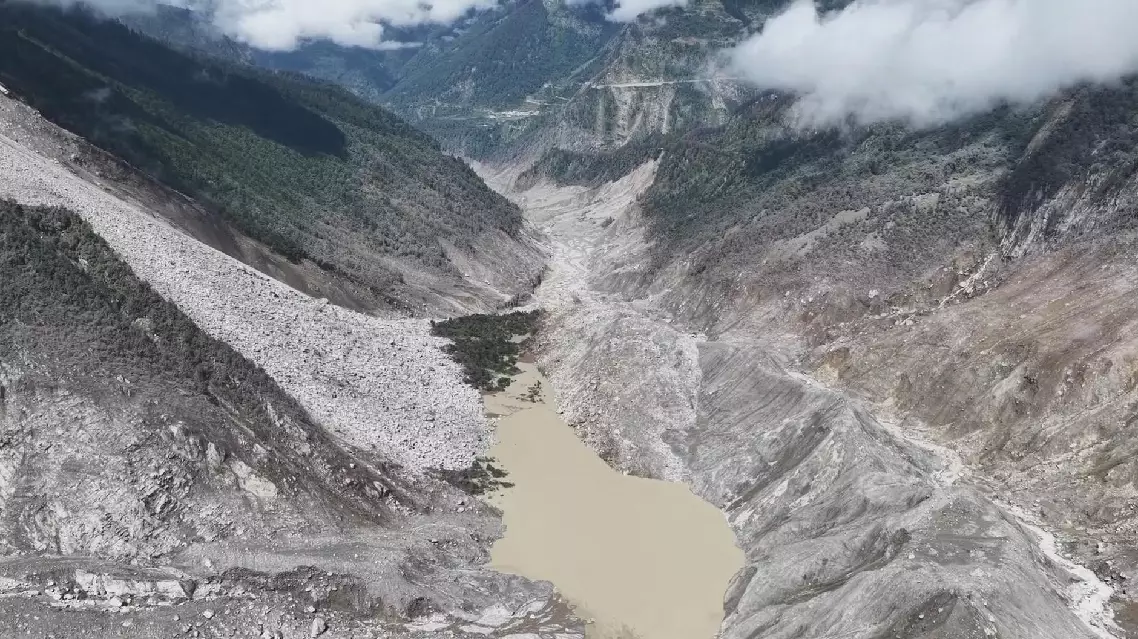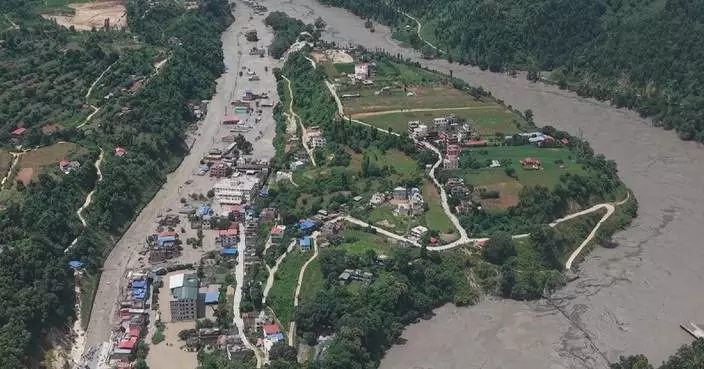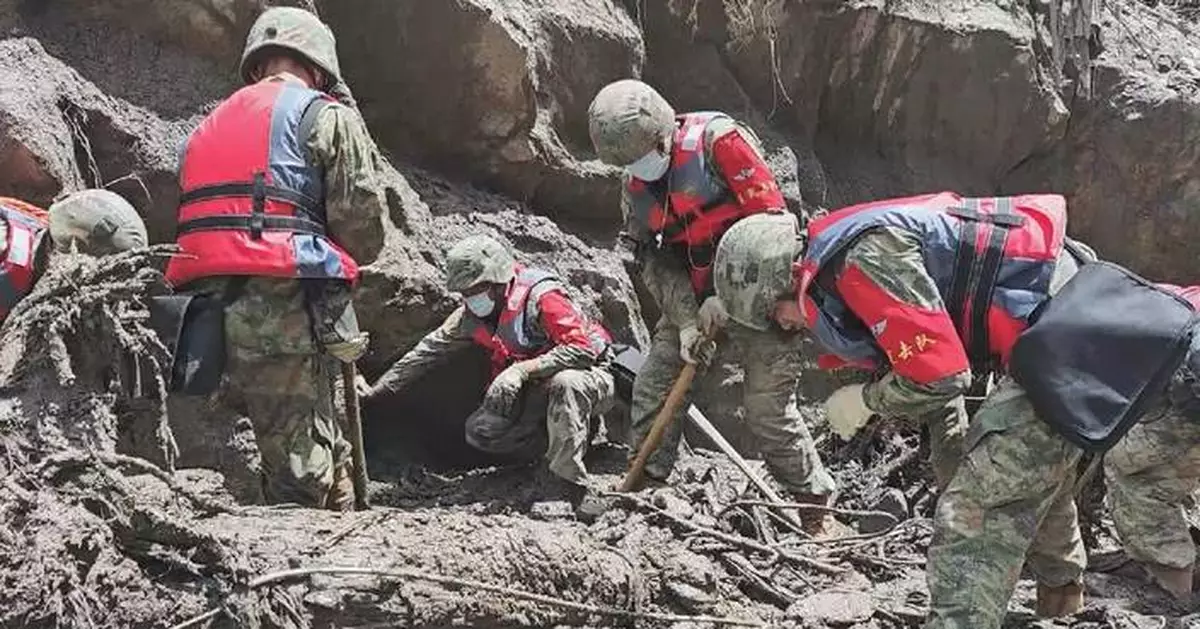
Rescue crews operating on multiple fronts entered their fourth day on Saturday in mudslide-stricken Gyirong County, southwest China's Xizang Autonomous Region, as firefighters and troops scoured steep cliffs for the missing, while engineers fought surging floodwater to reopen a critical road leading to the cut-off border port.
The deadly mudslide, triggered by a high-altitude glacier collapse on the Nepalese side, had left seven people dead and 554 others missing in Gyirong on the Chinese side, as of 01:00 Saturday, according to the region's emergency management department.
On Saturday, around 70 firefighters pushed into the core disaster zone and launched a sweeping ground search to locate those still missing. The rescue site was divided into three zones, with a 20-member team searching near the river valley below, and two other teams working along the cliffs above. Fresh rain made the terrain even more treacherous and muddy.
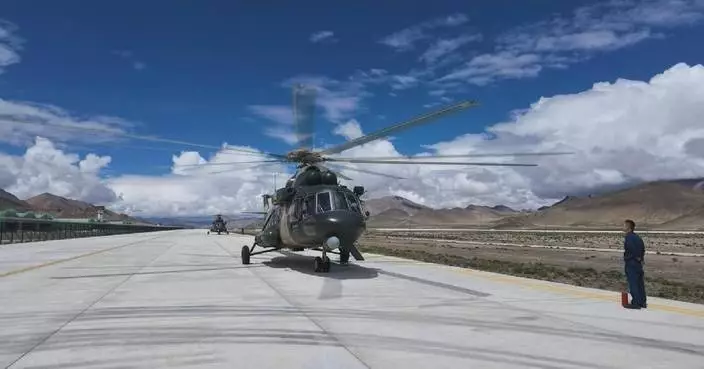
To support search operations in the core zone, multiple heavy-lift drones and helicopters were deployed from early Saturday to airdrop equipment and supplies to frontline rescue teams.
Around the port, rescue personnel conducted coordinated searches across designated sectors. Troops from the People's Liberation Army Xizang Military Command were dispatched with specialized equipment, including life-detection devices, drones, and BeiDou satellite terminals, to aid the search.
"Our main objective today is to continue searching for missing persons and gather any information that could be of use to the relevant authorities," said Champa Sonam, a PLA soldier.
The G216 national highway leading to Gyirong Port has been completely washed away, and emergency crews are racing to clear the final kilometer of the rescue route. However, the damaged section is characterized by narrow terrain and soft roadbeds, making it difficult for large machinery to operate.
On Saturday, state-owned China Anneng mobilized over 20 pieces of heavy equipment to accelerate road-clearing efforts.
With more rescue forces arriving at the site, the operation remains nonetheless challenging, as there is no longer any roadway left. The rushing water must first be tamed with steel gabions filled with large rocks before an emergency access road can be gradually rebuilt.
"The current is extremely strong. We have to transport large rocks from more than five kilometers away for filling the gabions and compaction. The narrow work site also forces us to use relay excavation methods and work around the clock to speed up the reopening of the G216 national highway," said Zhong Wenjun, a rescuer from China Anneng.
As of Saturday afternoon, more than 2.6 kilometers of damaged road had been restored.
Following Wednesday's mudslide, a barrier lake formed near the confluence of Nepal's Chhochen Khola River and China's Purepu Tsangpo River. According to the latest update from the Ministry of Water Resources, the lake was discharging naturally and the impounded water had largely subsided as of Saturday night.
At temporary shelters in Gyirong Town, medical teams continued door-to-door visits, providing treatment for common altitude-related illnesses and post-disaster diseases, while offering tailored psychological counseling to affected residents.
At the request of Nepalese authorities, the Chinese Ministry of Emergency Management dispatched tunnel rescue experts to Nepal on Saturday to assist in rescue operations at a hydropower plant tunnel.
Gyirong Port, Xizang's largest international land port, lies just 130 kilometers by road from Kathmandu, Nepal. Surrounded by peaks towering over 4,000 meters, the port sits at a relatively low elevation -- a rarity along the border, making it an irreplaceable trade corridor between China and Nepal for centuries.
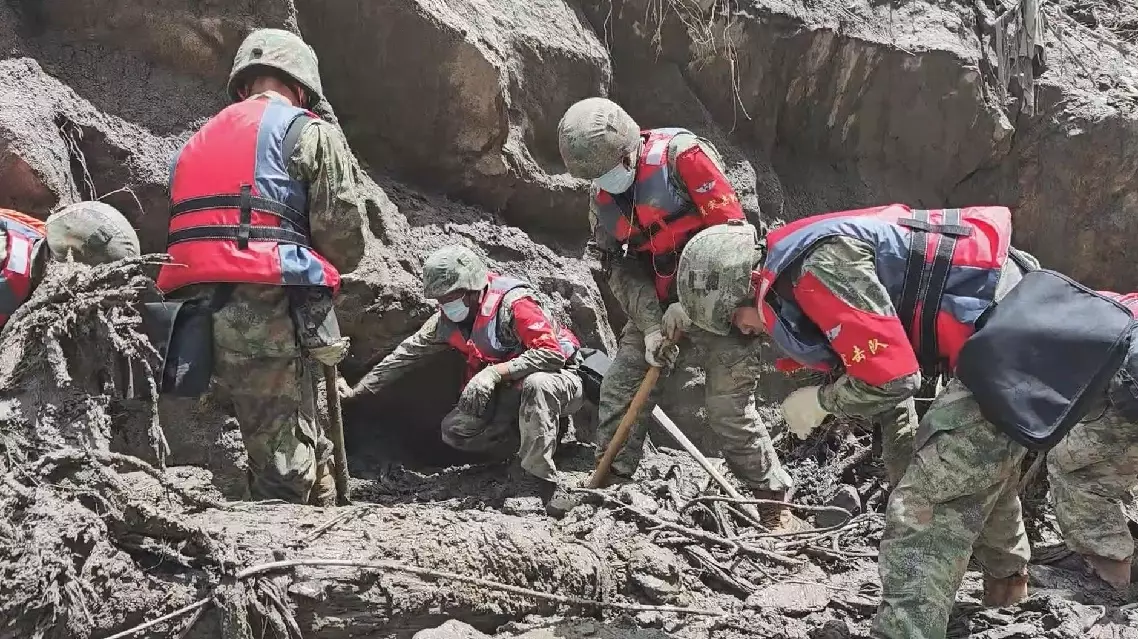
Rescuers battle tough terrain in final push to reach mudslide-hit border port