Public figures and experts from Kyrgyzstan and neighboring countries have praised a signed article by Chinese President Xi Jinping, saying it lays out a blueprint for future cooperation and injects fresh momentum into regional development.
Kyrgyz media outlets published Xi's signed article on Friday, ahead of his state visit to the Central Asian country.
In his article, titled "Jointly Opening Up New Prospects for High-Quality Development of China-Kyrgyzstan Relations," Xi called for opening a new chapter of high-quality development in bilateral relations. He also hailed the historic leap forward in China-Kyrgyzstan ties and urged both sides to consolidate the long-standing friendship between the two countries.
In Kyrgyzstan, political and academic figures said the article portrays China and Kyrgyzstan as steadfast neighbors, reliable partners and enduring friends bound by mutual trust, economic synergy, cultural affinity and common ideals.
"The article has profound content, full of philosophical spirit and guiding significance, and it takes a broad view of our bilateral relations as well as the overall relations between China and the Central Asian region," said Alikbek Jekshenkulov, a former Kyrgyz foreign minister.
"I want to specially highlight the Belt and Road Initiative, which is a continuation of the great Silk Road. We participate in the Belt and Road cooperation. It concerns the daily lives of all of us. We have witnessed the implementation of a series of projects, including highways and railways. Facts have proven that China is a responsible, reliable, and trustworthy partner. We look forward to the continued development of bilateral relations in the future, first and foremost in the fields including security and economic cooperation, as well as investment, cultural, and people-to-people exchanges, and cooperation in artificial intelligence," Jekshenkulov said.
Nurlan Nuraliev, head of the Department of Political Science at the International University of the Kyrgyz Republic, said the article highlights the friendly and increasingly strategic relationship between Kyrgyzstan and China, as well as the opportunities that closer ties with China offer ordinary Kyrgyz citizens, particularly young people.
"The article is overall very good. It emphasizes the good-neighborly and friendly relations between Kyrgyzstan and China. That is, we are not only friendly neighboring countries, but we are also developing strategic cooperation between our two nations. President Xi called on us not only to be partners, but also to be friends. For ordinary Kyrgyzstanis, this means that the door to China is wide open. For example, young people from all over Kyrgyzstan study at Confucius Institutes, Confucius Classrooms, and Lu Ban Workshops. From this perspective, for the people of Kyrgyzstan, China being a major country means broad prospects for our development," said Nuraliev.
Shirin Kostyuk, director of the Institute of Journalism and Communication at Kyrgyz National University, said the article reflects the steady strengthening of China-Kyrgyzstan relations and reinforces confidence in further advancing mutually beneficial cooperation between the two countries.
"In today's world, despite economic fluctuations or other challenges, China-Kyrgyzstan relations have maintained an upward trajectory. President Xi also quoted the Kyrgyz proverb, 'Drops of water gather to form a lake,' which echoes the ancient Chinese saying, 'Without small streams, there can be no rivers and seas.' Our bilateral relations are strengthening step by step, day by day, converging into an ocean of mutual understanding and mutually beneficial cooperation. This is truly very encouraging to us, giving us greater confidence to take new steps forward in the development of our bilateral relations," said Kostyuk.
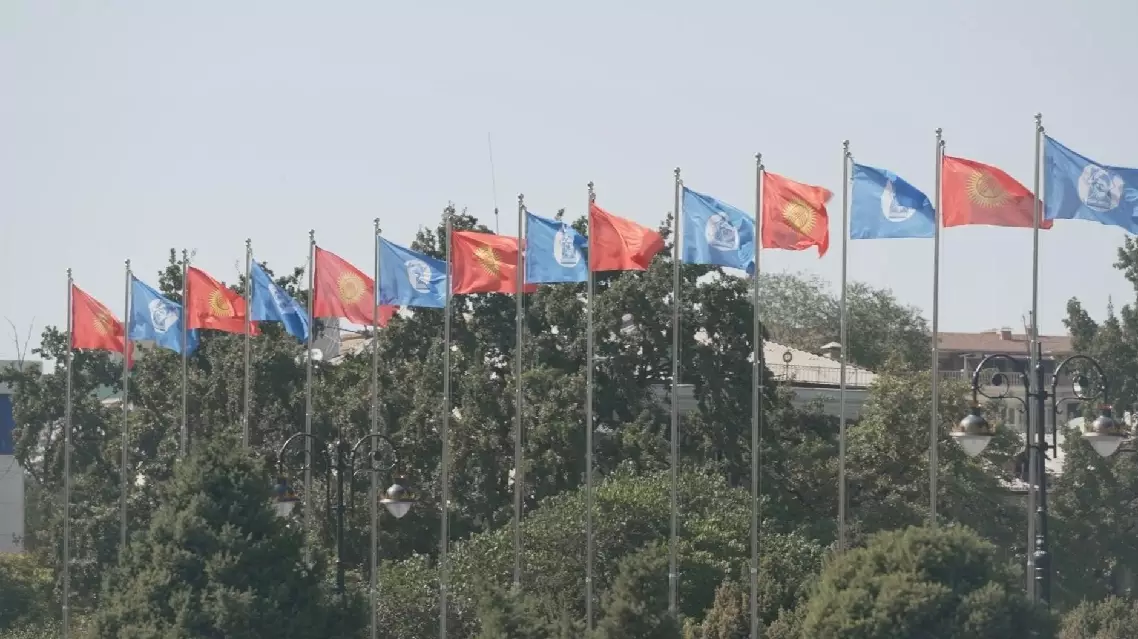
Xi's article also comes ahead of his attendance at the 2026 Shanghai Cooperation Organization (SCO) Summit in Bishkek, the capital of Kyrgyzstan.
In the article, Xi called for continued efforts to uphold and promote the "Shanghai Spirit." As the SCO marks its 25th anniversary, international observers said the article offers important guidance for the organization's future development.
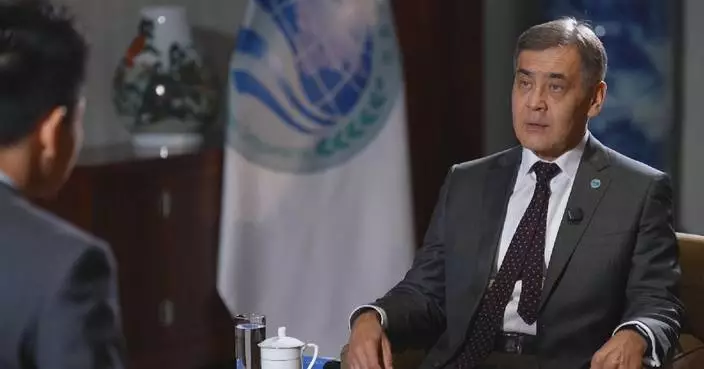
Echoing that theme, Sodiq Safoyev, first deputy chairman of the Senate of the Oliy Majlis of Uzbekistan, said the SCO has developed a distinctive model of multilateral cooperation based on the "Shanghai Spirit," and expressed hope that the upcoming Bishkek summit will further consolidate its role in promoting regional development.
"SCO was a collective response of the nations of this region to the challenges of contemporary world. From the beginning, SCO demonstrates absolutely new approach to the multilateral cooperation. We proudly call it the 'Shanghai Spirit' as a new way of cooperating between big countries and small countries. We're going to have the next summit of this organization in Bishkek. We hope that this tendency of transforming this organization as a full-fledged organization of regional development will be consolidated," Safoyev said.
"The Shanghai Spirit is based on mutual trust, mutual benefit, equality, consultation, respect for diverse civilizations, and the pursuit of common development. That is precisely why the SCO can be called a model of a new type of international relations. If the Bishkek summit reinforces this approach, the SCO can enter its second 25-year period, not only as a successful regional organization, but also as a more important participant in shaping a fair and balanced global governance system," said Emin Qasımov, director of Azerbaijan's Center for the Study of China's Global Initiatives, Development and Culture.
Xi's article lays out blueprint for China-Kyrgyzstan ties, SCO development: observers