A member of a Chinese rescue team working on the frontlines following Wednesday's deadly mudslide at the China-Nepal border has shared an update from the scene, describing the challenges posed by the "swamp-like mud" and difficult weather conditions as emergency work continues.
Guo Xiqing, a veteran member of the Chengdu Heavy-Duty Land Search and Rescue Team, has experienced several disaster situations over the years, including the 2022 Luding earthquake in southwest China's Sichuan Province, but said the current crisis is one of the most difficult and distressing he has ever encountered.
Sending in video footage to the China Global Television Network (CGTN) from the devastated disaster zone on Saturday, Guo detailed the grueling conditions which are hindering the operation as the rescue teams know they are in a race against the clock.
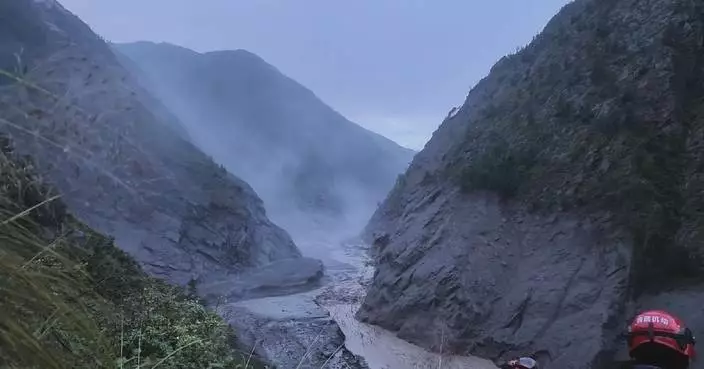
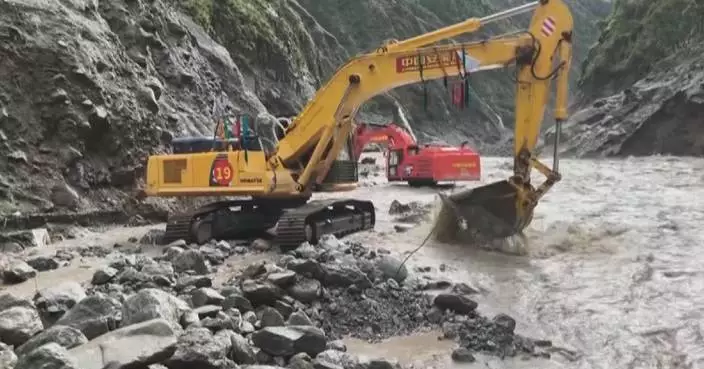
"I'm still in the core affected area at the Gyirong Port, and we're continuing the search and rescue operation. Right now, the biggest challenge is the mud. As we move forward with the search, we encounter large areas of mud that are almost like a swamp. With every step, our feet sink into it," said the rescuer.
"We're working in shifts, rotating every two to four hours. It's already getting foggy, and rain is expected tonight. Our team members are still out there continuing the search. Given the weather conditions, we need to speed up the search," Guo said.
The disaster struck on Wednesday morning when the devastating mudslide hit the Gyirong Port in southwest China's Xizang Autonomous Region, resulting in at least 16 deaths and leaving 546 people missing. Local authorities said Sunday that an ice-rock avalanche originating from a high-mountain glacier in Nepal has been identified as the cause of the catastrophe.
China has mobilized an extensive multi-agency response, deploying more than 2,000 rescuers, alongside hundreds of vehicles and specialized equipment to pierce through the isolated terrain via the water, land, and air, according to local authorities.
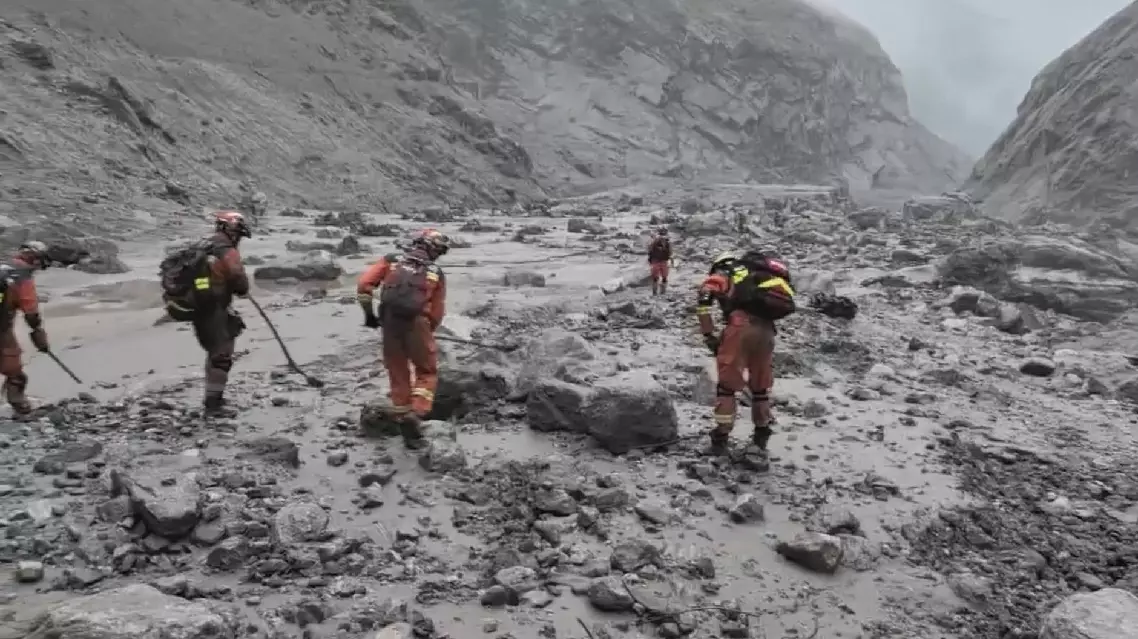
Rescuer shares update from frontlines of disaster site as 'swamp-like mud' poses biggest challenge