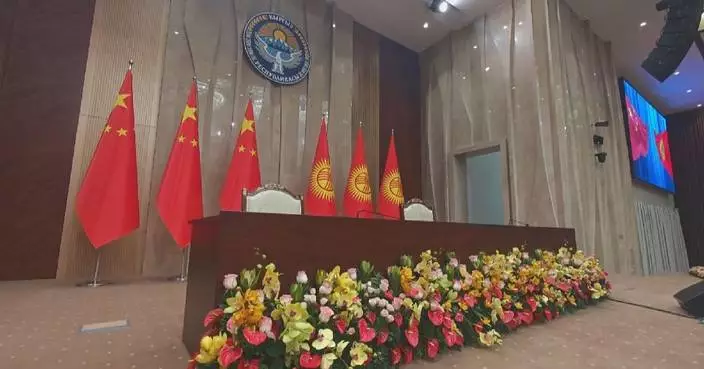
Residents and officials in Bishkek hailed Chinese President Xi Jinping's state visit to Kyrgyzstan on Sunday, expressing confidence that closer ties and stronger cooperation will follow his participation in the Shanghai Cooperation Organization Summit (SCO).
Xi’s trip, his first to Kyrgyzstan since 2019, comes at the invitation of President Sadyr Japarov and coincides with the 2026 SCO Summit in Bishkek. It is also his third visit to the country.
The two leaders met three times last year, and China's Foreign Ministry says their frequent exchanges have ushered bilateral cooperation into a "golden period" of rapid development.
"Kyrgyzstan and China are very close partners. Our countries have been working together for many years, and we really value this relationship," said Kanybek Koshonov, a resident in Bishkek.
"I think our relationship will only continue to grow stronger. Our governments support the friendship between our peoples, and we are fortunate to have China as such a close and friendly neighbor," said Rakhat Narymbekov, another resident.
In a written message delivered upon his arrival, Xi extended sincere greetings and best wishes to Japarov and the people of Kyrgyzstan on behalf of the Chinese government and people.
Noting that China and Kyrgyzstan share a time-honored traditional friendship, Xi said that the majestic Tianshan Mountains stands as witnesses to the millennia of friendly exchanges between their peoples.
"China and Kyrgyzstan are neighboring countries. Our economic and trade cooperation has always enjoyed a very good momentum. Further improvements to cross-border infrastructure will boost the flow of goods and people, and we believe the prospects between the two countries will continue to improve," said Liu Jiangping, Chinese ambassador to Kyrgyzstan.
President Xi will attend the 2026 SCO Summit in Bishkek from Monday to Tuesday.
This year marks the 25th anniversary of the founding of the SCO. Under the theme "25 Years of the SCO: Together Towards Sustainable Peace, Development, and Prosperity", this year's SCO Summit is expected to bring together leaders from more than 20 countries in the Kyrgyz capital.

Xi’s Kyrgyzstan trip greeted with hopes for deeper cooperation
China's factory activity showed improving signs in August, driven by the continuous expansion of new growth drivers, notably in high-tech and equipment manufacturing.
The purchasing managers' index (PMI) for the manufacturing sector stood at 49.8 in August, up 0.6 percentage points from the previous month, official data showed on Monday.
The PMI for equipment manufacturing registered at 51.4, while the high-tech manufacturing PMI reached 52.9, both remaining firmly in the expansion territory above the 50-point threshold that separates growth from contraction.
These metrics signal sustained momentum in advanced manufacturing and underscore an accelerating structural upgrade across the broader industrial sector.
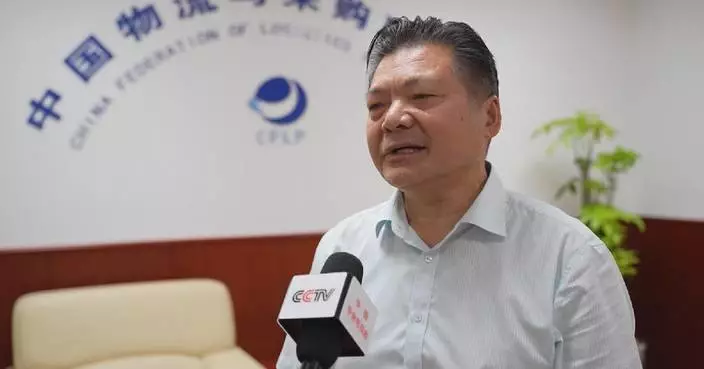
"The transition between old and new growth drivers in manufacturing is accelerating. New growth engines such as equipment manufacturing and high-tech manufacturing are expanding at a notably faster pace than traditional sectors like basic raw materials and consumer goods, providing an increasingly strong anchor for macroeconomic growth," said He Hui, vice president of the China Federation of Logistics and Purchasing.
By enterprise size, large manufacturing enterprises recorded a PMI of 50.6 in August, up 1.1 percentage points from July, reflecting a marked improvement in operations. Medium-sized enterprises saw a modest pullback in the business climate level, while small enterprises posted a slight uptick in activity.
Meanwhile, influenced by upward movements in global crude oil and non-ferrous metal prices, the purchasing price index for major raw materials and the ex-factory price index for manufacturing stood at 56.6 and 50.4, respectively, up 3.4 percentage points and 2.6 percentage points from the previous month.
Analysts noted that the rebound in output prices should help manufacturers offset rising input costs and improve their profit margins.
"From an industry perspective, both price indexes for non-ferrous metal smelting and processing climbed above 60, reflecting significant increases in both raw material procurement costs and finished product selling prices," said Huo Lihui, a chief statistician of the National Bureau of Statistics.
Looking ahead, as the disruptive effects of summer heat and heavy rainfall fade, analysts expect the manufacturing sector to see further improvements in September with a significant rebound in traditional peak-season demand for automobiles, computers, consumer electronics, and textiles.
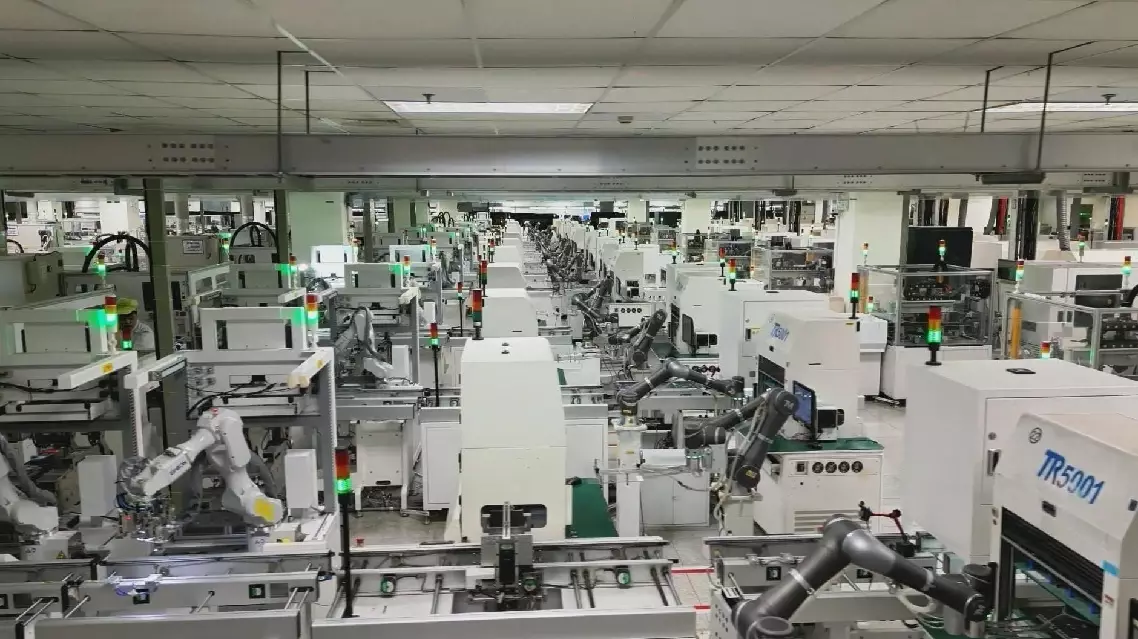
High-tech, equipment manufacturing drives improvement in China's August factory activity