BUNIA, Congo (AP) — Congo’s authorities said Monday that the fastest-growing Ebola outbreak in history has topped 6,000 cases with 2,911 deaths.
More than 1,360 people have recovered from the virus, in what authorities said was an “encouraging” development.
The outbreak in eastern Congo is spreading under extremely difficult conditions, fueled by insecurity, displacement, a health workers’ strike and intense population movements. The situation is particularly concerning at displacement sites, where residents already live in extremely precarious conditions.
Last week, the virus spilled into two new health zones in the region.
The World Health Organization has said that it remains out of control and is on track to surpass the 2014-2016 West Africa Ebola outbreak, the deadliest on record, which killed more than 11,000 people, primarily in Guinea, Liberia and Sierra Leone.
On Saturday, an Ebola response team was attacked on the outskirts of the town of Mambasa in Ituri province while responding to a call to secure a body. Young people armed with machetes stormed the site of the funeral, forcing the team to flee and injuring one member, a representative told The Associated Press.
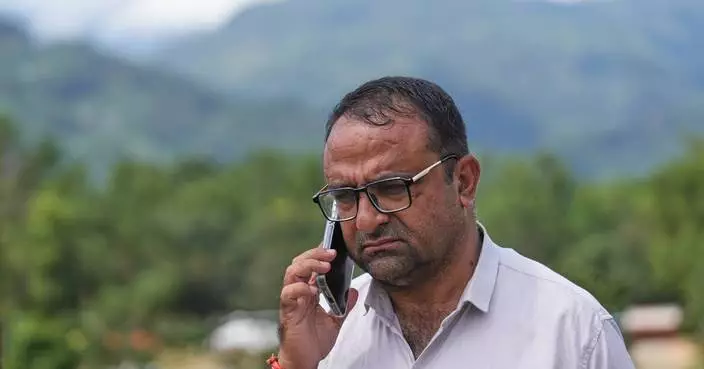
“We demand greater security so we can operate in the field and do our work without endangering our lives,” said Floribert Magene, a member of the response team.
The outbreak is caused by the Bundibugyo virus, a rare type of Ebola that has no approved vaccine or treatment.
Last week, Congo began vaccinating health and other front-line workers with the Ervebo vaccine that was effective in past Ebola outbreaks caused by a different, more common type called Zaire.
Clinical trials are underway to find a licensed vaccine for the Bundibugyo virus.
Although the current outbreak was declared in mid-May, officials believe it had been spreading since February. It has spread from three health zones to nearly 60, with most cases and deaths occurring outside the network of monitored contacts and within communities.
Efforts to bring the outbreak under control — from limited public gatherings to social distancing and airport closures — have disrupted life in the six provinces, particularly Ituri, which also has been ravaged by rebel violence.
The government has introduced some measures, including installing health and sanitary equipment at some locations, but advocacy groups say more needs to be done to build trust with the community.
While neighboring Uganda declared itself free of Ebola last month, the risk of further cross-border spread remains, the WHO said last week.
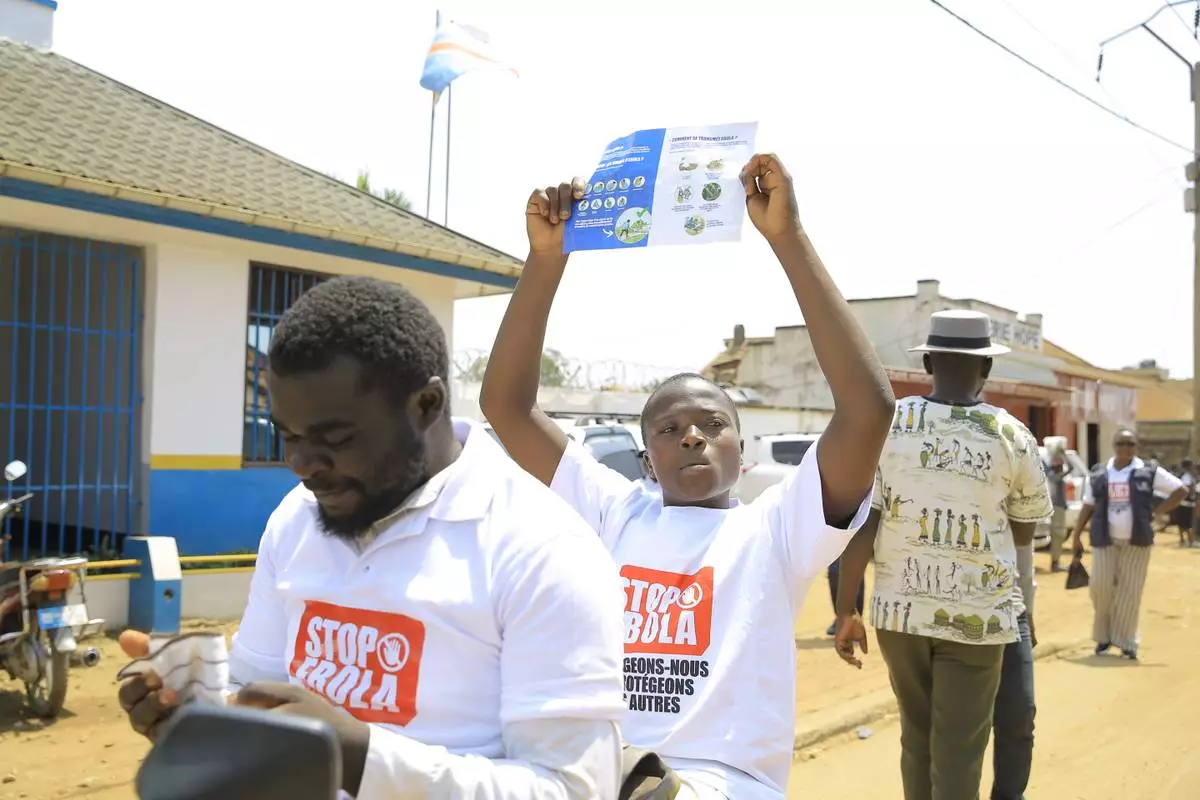
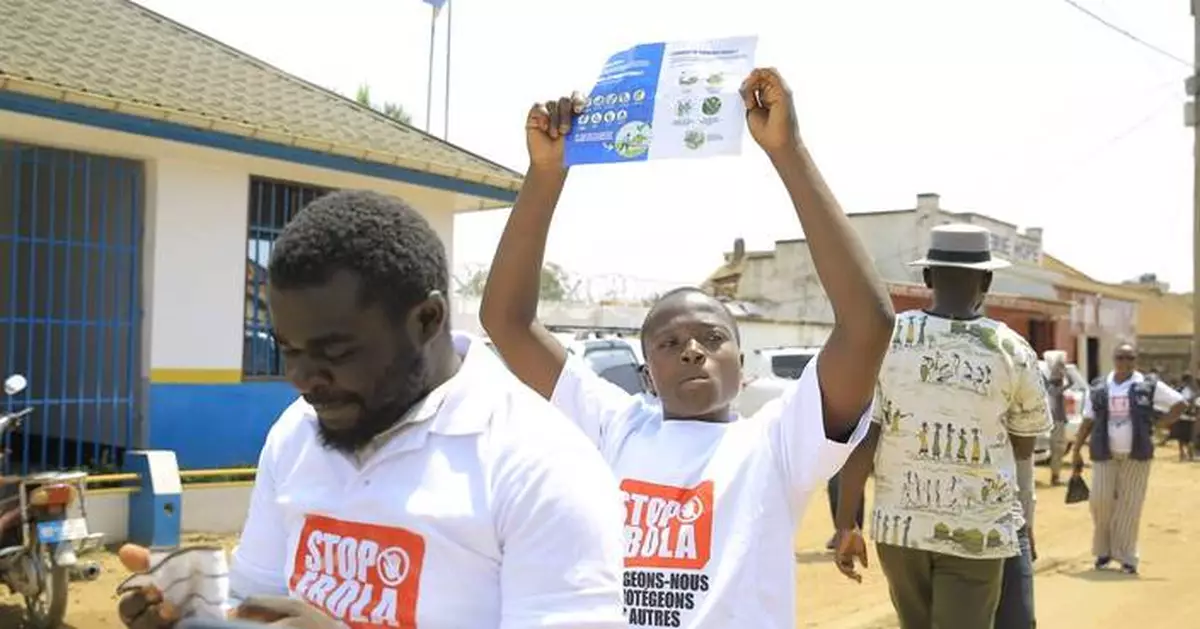
Residents and frontline workers embark on Ebola outbreak awareness campaign in Beni, North Kivu province, eastern Congo, Friday, Aug. 21, 2026. (AP Photo/Sebastien Kitsa Musayi)
DUBAI, United Arab Emirates (AP) — The United Arab Emirates said that it intercepted an Iranian drone over its waters Monday, an attack that comes after the United States and Iran exchanged fire over the weekend for the first time in a month.
Iranian officials said that two people were killed and several others wounded in the U.S. attack Sunday night on Larak Island in the Strait of Hormuz. Iran responded by launching missiles at U.S. sites in Jordan, which were intercepted.
During the lull in fighting, the U.S. has been ratcheting up economic pressure on Iran with the hope of forcing concessions out of Tehran, including reopening the Strait of Hormuz to shipping.
After the U.S. and Israel attacked Iran on Feb. 28, Iran established a chokehold on the vital strait, though which a fifth of the world's traded oil passed in peacetime, slowing ship traffic to a trickle. That has roiled the global economy, raising prices worldwide for energy and other goods.
As the fighting resumed, the price of Brent crude oil, the international standard, climbed above $90, up about 25% from the start of the war, presenting a growing problem for U.S. President Donald Trump before the midterm elections.
A return to open conflict would be dangerous for the region, where Iran has targeted U.S. military bases and infrastructure in Gulf countries since the war began.
In the wake of the renewed violence, Anwar Gargash, a diplomatic adviser to the UAE’s president, said on social media said “the state of neither war nor peace cannot be a sustainable solution."
He called for a political solution that would return normal navigation to the Strait of Hormuz, but also a “more realistic approach” than the June memo of understanding between Iran and the U.S. which, he said, “failed to outline a practical and acceptable" road map.
In a short statement earlier, the UAE Defense Ministry said that it “dealt with” an Iranian drone that was detected over its waters approaching from Iran. There were no reports of damage.
“This dangerous escalation constitutes a blatant violation of the UAE’s sovereignty, security, and stability, and a direct threat to the safety of its citizens and residents,” the Foreign Ministry said.
The Defense Ministry later issued a second statement denying a claim by the Iranian army that the Al Minhad Air Base in Dubai had been targeted, saying it was false.
In the wake of the U.S. attack on Sunday, Iran's Foreign Ministry said Monday that Iran would “not hesitate to exercise the inherent right of legitimate defense and will respond decisively to any military aggression.”
Before heading to attend the Shanghai Cooperation Organization's summit in Kyrgyzstan with Foreign Minister Abbas Araghchi, Iranian President Masoud Pezeshkian, who has favored a negotiated end to the conflict, stressed that Iran wasn't seeking war.
“But,” he said, “we will respond decisively to aggressors.”
The summit brings together a group billed as a counterweight to U.S. global influence, and includes Chinese President Xi Jinping, Russian President Vladimir Putin and Indian Prime Minister Narendra Modi. Pezeshkian was scheduled to meet with Putin on the sidelines on Tuesday.
Meantime, U.S. Treasury Secretary Scott Bessent was set to host meetings of the Group of 20 finance ministers in North Carolina on Monday and Tuesday, which come as Washington pressures other countries to help the U.S. economically isolate Iran.
The shifting strategy centers on threats to punish any country or entity that continues to conduct business with Tehran.
Two weeks ago, the UAE suspended all trade with Iran after saying it had come under renewed fire from Iran with two missiles fired at shipping traffic splashing down harmlessly in the Persian Gulf. Iran denied the attack.
Bessent later suggested it was pressure from Washington that led to the UAE decision.
Trump stressed last week that he is “not in a hurry” to get Iran back to the negotiating table, and he continues making the case that the Islamic Republic’s leadership is on the ropes.
Appointments to Iran’s senior security leadership in the past month, however, have signaled Tehran’s defiance after weathering decades of sanctions as well as a lack of tolerance for dissent at home.
On Sunday, U.S. Central Command said it had struck Iranian launchers after observing forces with Iran’s Revolutionary Guard Corps preparing to launch rockets with sea mines into the Strait of Hormuz. The U.S. military said last week that it had completed clearing sea mines from the waterway’s international shipping routes.
U.S. military officials disputed Iran’s claim that the latest American strikes were an act of aggression, calling them a “limited, precise action” against what they said were minelaying forces.
Iranian state television later showed what it said were ballistic missiles being fired at American bases in Jordan, and Jordan’s military said that it intercepted eight that had entered its airspace.
The last time the U.S. military confirmed targeting Iran was on July 29, when it announced a “heavy wave of strikes” on dozens of Revolutionary Guard targets including coastal surveillance and defense sites.
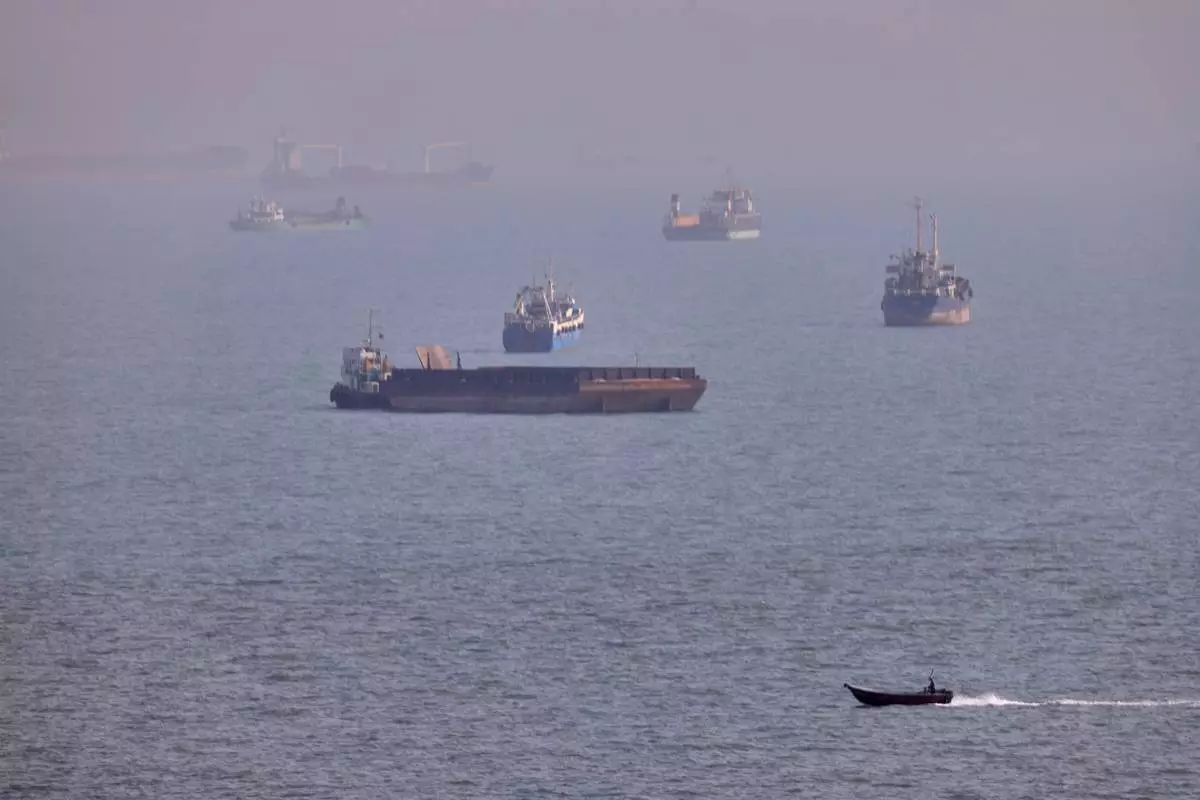
FILE - A small boat sails past cargo ships and other commercial vessels anchored in the Strait of Hormuz off Bandar Abbas, Iran, Wednesday, Aug. 5, 2026. (Amirhosein Khorgooi/ISNA via AP, File)