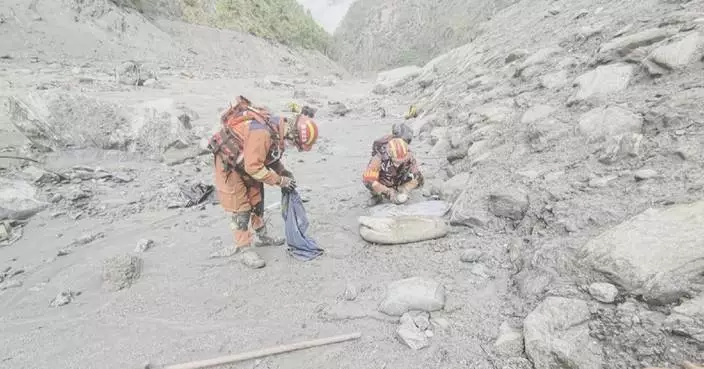
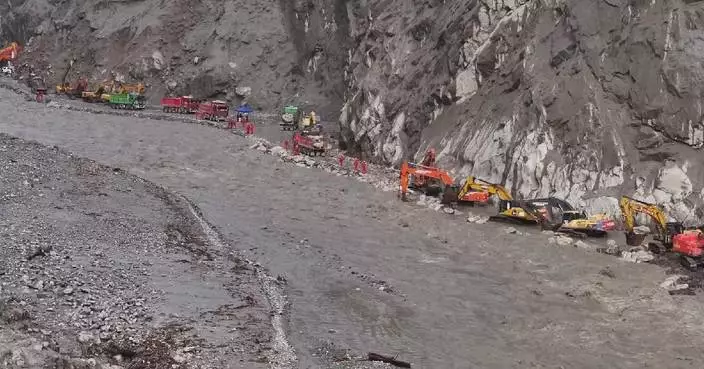
Rescue forces are carrying on with their critical work in the core area of the devastated Gyirong Port following last Wednesday's deadly mudslide in southwest China's Xizang Autonomous Region, as the search for the missing continues on the China-Nepal border.
The deadly mudslide, which was triggered by the collapse of a high-altitude glacier on the Nepalese side, has left at least 16 people dead and 546 others missing in Gyirong, according to the regional government.
As the search and rescue personnel reached the site of the border gate at the original location of the Gyirong Port, they found the basic foundation was all that remained of the nearly 20-meter-high building, with all other main structures left completely destroyed.
Of all the buildings previously located at the Gyirong Port, only a water tower remains. It appears to have survived the force of the ferocious mudslide as it stood at a relatively higher location on the mountainside.
Rescue personnel delivered by helicopters have been conducting intensive search and rescue operations at the scene. They primarily used life detection equipment to search for the missing victims in the area, while sniffer dogs have also been dispatched.
A huge swathe of land of where the port buildings once stood has been has been piled high with rocks and silt, while some vehicles are also believed to be buried deep within the mass of debris.
On Monday afternoon, helicopters landed frequently in this core search area, continuously bringing in a new batch of search and rescue personnel, along with much-needed relief supplies, so as to sustain the operations around the clock as the desperate search goes on.
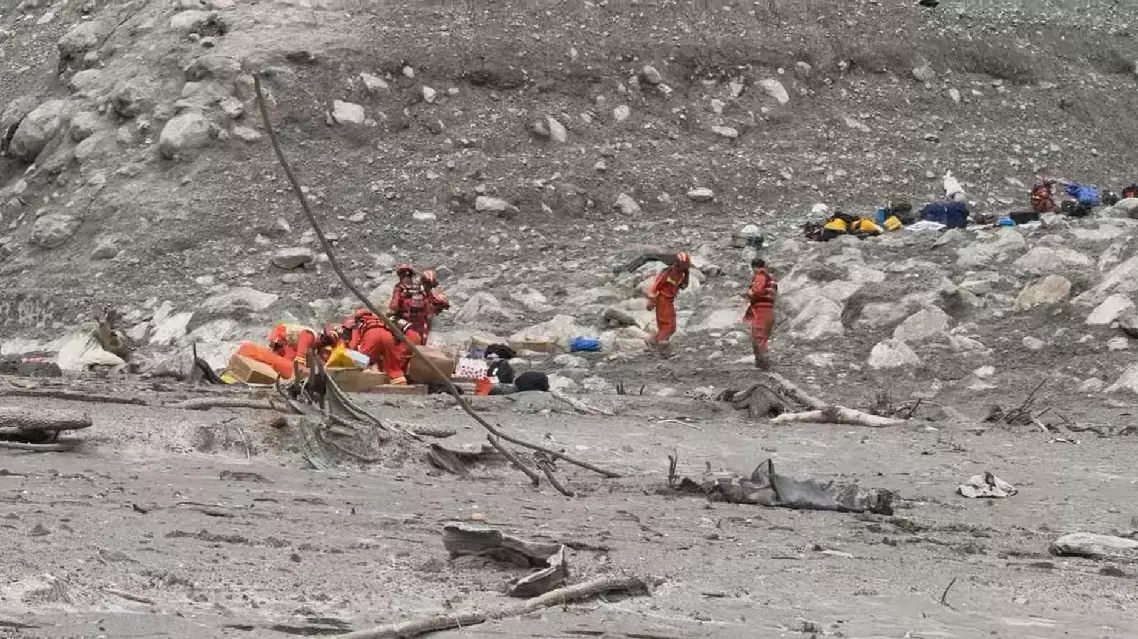
Rescue efforts continue at mudslide-hit Gyirong Port as extent of devastation becomes clearer
The Shanghai Cooperation Organization (SCO) is a "unique organization" focused on connectivity, pragmatism and independence, according to the former prime minister of Kyrgyzstan Djoomart Otorbaev.
This year's SCO summit, which marks the 25th anniversary of the organization's founding, is taking place in the Kyrgyz capital Bishkek from Monday to Tuesday.
Themed "25 Years of the SCO: Together Towards Sustainable Peace, Development, and Prosperity", the summit has brought together leaders from more than 20 countries.
Speaking in an interview with China Global Television Network (CGTN) on Sunday, Otorbaev said that SCO member states can look beyond differences in political systems and economic models and pursue win-win outcomes through dialogue, connectivity and pragmatism.
"It's a unique organization. Connectivity in SCO means that we are connected not only by railway, but in making dialogue with each other. Trade, investments, transport, energy, connectivity, moving very quickly. Without doubt, it’s China to Central Asian countries, we're doing very well. So, connectivity,” he said.
He also stressed that greater independence and self-reliance can help drive development and prosperity across the region.
"Number two is pragmatism. If you look to those 10 full members of the SCO, they are exploring different political systems, different economic models. But instead of arguing who is better, we are telling, let's get win-win, let's be pragmatic. If we will be pragmatic together, we will be delivering to our nations, to our people, better results. Then we have to look to the future - independence. We are not against anybody, but we say we will be stronger if we are independent from other models of economic and political development. In that respect, this is the key that we rely on our own strength. Only our own nations, our own people, will make us stronger and more prosperous." he said.

Connectivity, pragmatism, independence define SCO: Former Kyrgyz PM