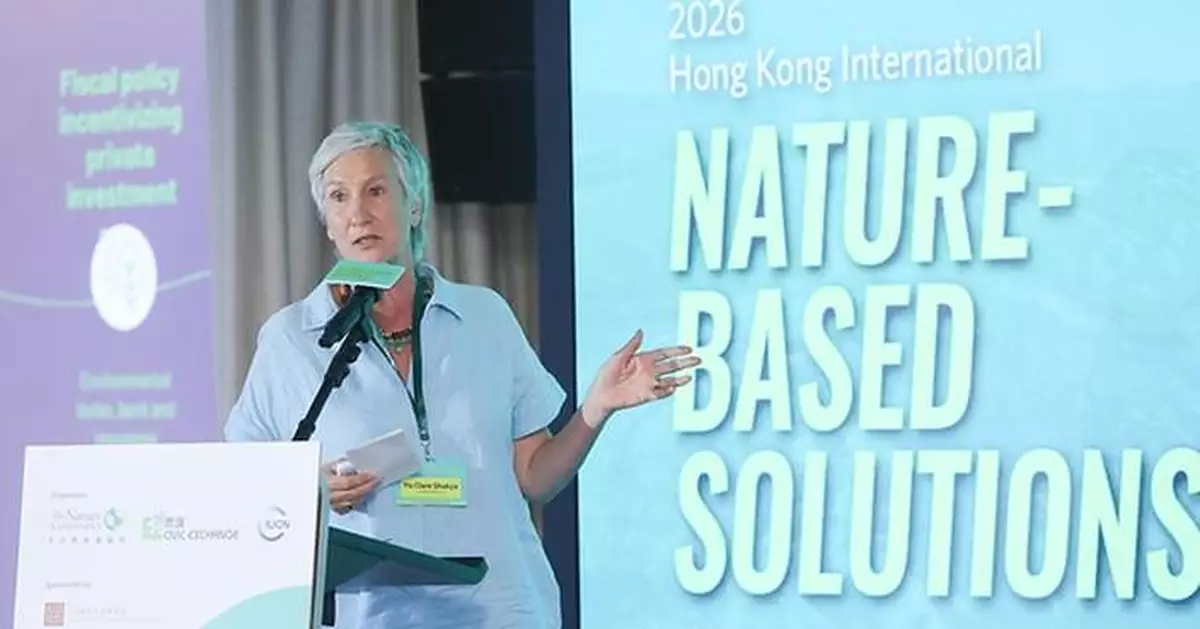
HONG KONG, Sept. 1, 2026 /PRNewswire/ -- As climate risks intensify across Asia, there is growing recognition that environmental challenges cannot be addressed in isolation. Governments, businesses, and communities are increasingly working together to explore nature-based solutions (NbS) that use natural systems not only to tackle climate impacts, but also to support economic resilience and long-term development. However, as Clare Shakya, Global Managing Director of Climate at The Nature Conservancy ("TNC"), emphasizes, the field remains at an early stage, with no standardized metrics yet established and financial products still under development. Among these solutions, several approaches are already gaining traction across the region.
Nature-Based Solutions
In cities like Hong Kong and across the Greater Bay Area, NbS are becoming increasingly relevant as urban density, coastal exposure, and climate risks such as flooding and extreme heat continue to rise. Among them, increasing tree cover has been highlighted by Clare. "Trees matter because vegetation reduces ambient and surface heat through shading and evapotranspiration. By blocking solar radiation and releasing cooling water vapor, trees can effectively reduce the impact of heat. They help mitigate severe impacts such as the urban heat island effect and provide tangible health benefits. Vegetation is an inexpensive and easy way to reduce heat, thereby lowering mortality in both cities and rural areas. Therefore, forest restoration must be promoted," remarked Clare.
Equally important ecosystems include mangroves, which help reduce the impact of storms in coastal areas by acting as powerful, natural breakwaters. Investors are beginning to track hectares restored and kilometers of coastline protected, alongside the inland economic activity and population shielded, metrics that shape government interest and structure financing packages. Together, they function as natural buffers that reduce wave energy, lessen storm-surge impacts, and help limit shoreline erosion. Coastal wetlands also play a crucial role in reducing flooding, functioning as vast, natural sponges and wave-energy dissipaters. As such, wetlands are usually seen as nature's front-line defense for coastal zones because they lower overall flood heights to protect vulnerable waterfront communities. The Gei Wai (1) projects in Hong Kong serve as a prime local example. Recently, experts have been reframing nature not just as something to protect, but as critical infrastructure that supports climate resilience, public health, and economic stability.
Carbon sequestration
Among the ecosystems that provide nature-based solutions for carbon sequestration, Clare drew attention to peatlands. Peatlands are terrestrial wetland ecosystems where waterlogged conditions prevent plant material from fully decomposing, resulting in the accumulation of peat. Although they cover merely 3% of the Earth's land surface, peatlands are the largest natural terrestrial carbon storage system, containing roughly twice as much carbon as all the world's forests combined. Clare highlights "Peatlands are critical for preventing and mitigating the effects of climate change. We must never overlook them, as they play a critical role in storing and locking in carbon, not to mention their significant flood resilience value. The Gei Wai system in Hong Kong is an emerging example of how existing landscapes can be adapted to support flood management and climate resilience, combining ecological function with local livelihoods," remarked Clare.
However, Marine Thomas, Associate Director of Conservation for TNC Hong Kong alongside Clare points out that it is still early days for NbS to realistically become a mainstream investment category in Asia. Clare notes that limits and delivery risks remain unclear due to early progress, with a ten-to-fifteen-year horizon needed to understand delivery mechanisms, stakeholder roles, and financing requirements. To combat this, they called for standardized metrics to draw in more investors.
"The process of setting up such metrics is developing. It's fully understandable that people want to quantify the effects before they invest money. Taking mangroves as an example, we can establish metrics by calculating the square footage of coastal and adjacent inland areas protected, alongside the number of people safeguarded. Investors need to know exactly how many economic assets, and how much of the economy, will be protected. Once the benefits are quantified, it becomes much easier to demonstrate the impacts of nature-based solutions to the commercial community and governments. We appreciate their results-based mindset, and we should provide results-related metrics to make further investment an easier sell. However, the field is still evolving, and continued innovation will be needed to address challenges such as measurement, delivery risks, and stakeholder alignment," Clare explained.
A significant barrier Clare identified is the mismatch between traditional development timelines and climate realities. Unexpected events, such as droughts affecting mangrove restoration, create pauses that conventional financing cannot accommodate. Innovative mechanisms are emerging, notably climate resilience clauses modeled after Asian Development Bank structures, which allow repayment relief when climate events disrupt project activities. Such clauses provide critical breathing room and could scale globally.
Hong Kong's Vital Role in NbS
Over the years, Hong Kong has successfully positioned itself as a green international finance hub, a role that allows it to mobilize capital for nature-based solutions across Asia. In recent years, Hong Kong is home to a robust green and sustainable finance ecosystem, effectively blending finance with environmental advocacy. The city is a leading hub for arranging international green and sustainable bonds in Asia, capturing more than a third of the regional market volume. Hong Kong's frameworks set strong foundations, but the government must establish clearer expectations for urban design and development stakeholders.
Clare noted that Hong Kong's role lies not just in providing capital, but in building confidence in new financial instruments for nature. This includes developing clearer metrics, assessing risks, and scaling mechanisms such as green bonds, blended finance, and carbon markets. However, durability risks persist, including clashes with local communities, unclear long-term ecosystem value, and insufficient understanding of heat and drought resilience beyond carbon storage. The most significant opportunity lies in quantifying stacked benefits, layering carbon sequestration, heat reduction, water management, and biodiversity outcomes to maximize value per dollar invested.
A notable recent transaction illustrates this potential: Hang Seng Bank and Henderson Land's Central Yards project, announced in mid-2026, represents Hong Kong's first biodiversity-linked financing. The project commits to measurable biodiversity outcomes for a major waterfront development, shifting from generic urban greenery to native species planting and pesticide avoidance, with explicit biodiversity increase targets. Hang Seng has established a dedicated biodiversity financing line, with expectations of preferential credit terms for verified outcomes. This signals market readiness for high-integrity NbS in Asia.
Moving Forward
The way forward is clear: environmental activists cannot fight alone. All sectors of society must work together to meaningfully save the Earth. "A whole-society approach is undoubtedly needed. In environmental protection, everything is interlinked. Project pipelines remain a challenge. Insufficient early-stage investment, limited innovation, and weak collaboration frameworks hamper development. These are deeply interlinked: inadequate finance restricts data collection, which limits ecosystem services quantification, which in turn constrains capital raising. Therefore, we must all work together to achieve our goals," said Marine. Both Clare and Marine emphasized the importance of "high-integrity" nature-based solutions, which ensure that projects deliver real, lasting outcomes through community engagement, sound science, and clear performance metrics.
** This press release is distributed by PR Newswire through automated distribution system, for which the client assumes full responsibility. **
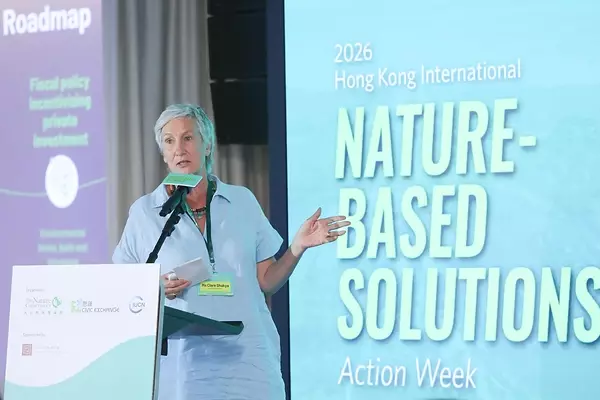
The Nature Conservancy explores nature-based solutions to tackle climate impacts and to support economic resilience and long-term development