Skip to Content Facebook Feature Image

Nepal flood survivors fear loss of culture and community

News

Nepal flood survivors fear loss of culture and community
News

News

Nepal flood survivors fear loss of culture and community

2026-09-01 16:45 Last Updated At:16:50

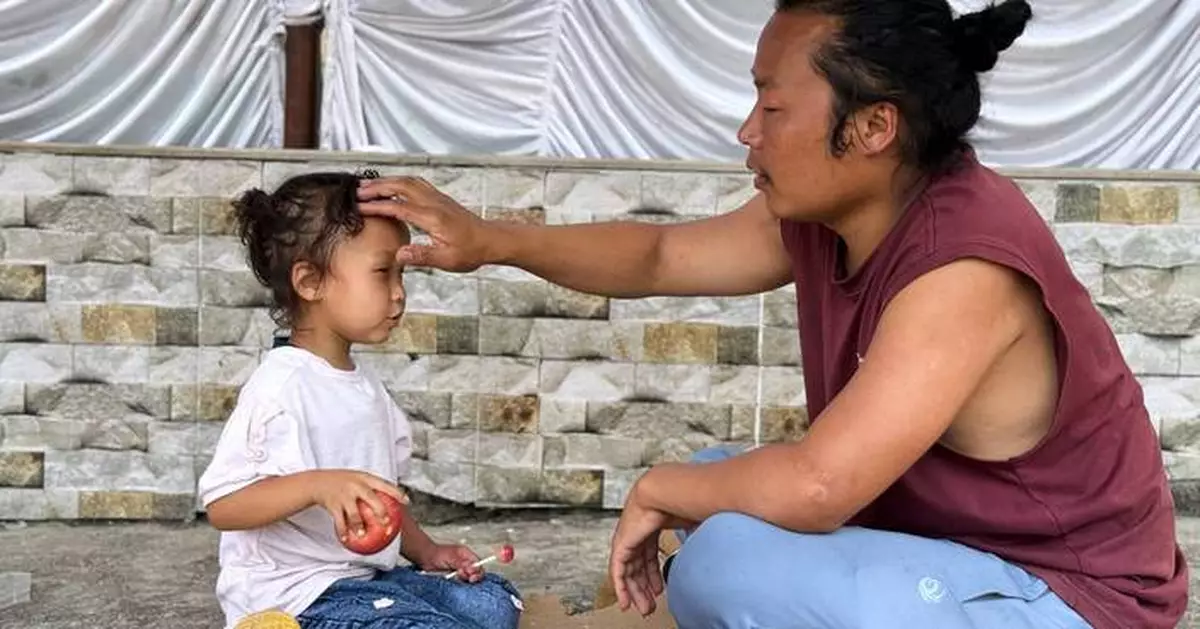
KATHMANDU, Nepal (AP) — In the days since Tsering Gelbu Lama’s wife was swept away by devastating floods along the Nepal-Tibet border, he hasn't managed to tell his 4-year-old daughter that her mother is dead.

Lama wiped away tears as he sat on the floor of a Buddhist monastery turned makeshift shelter for hundreds of others evacuated from remote villages to the capital, Kathmandu.

More Images
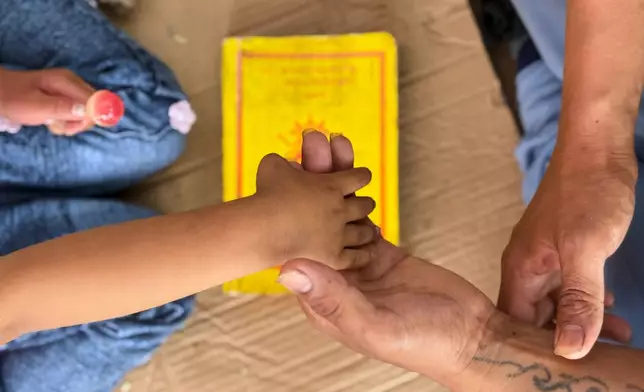
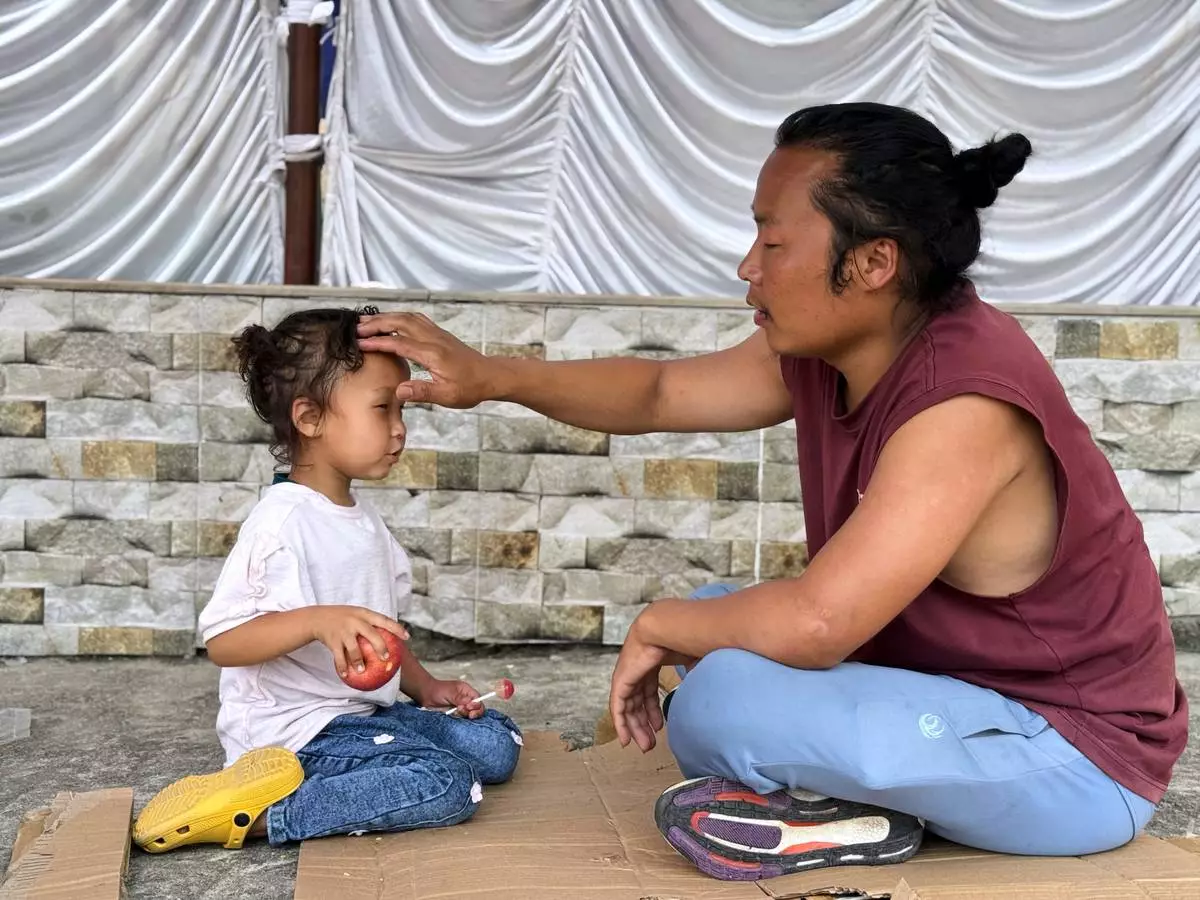
Survivor Tsering Gelbu Lama holds his daughter's hand as they spend time at a monastery where hundreds of survivors are seeking refuge in Kathmandu, Nepal, Monday, Aug. 31, 2026. (AP Photo/Niranjan Shrestha)
Survivor Tsering Gelbu Lama holds his daughter's hand as they spend time at a monastery where hundreds of survivors are seeking refuge in Kathmandu, Nepal, Monday, Aug. 31, 2026. (AP Photo/Niranjan Shrestha)

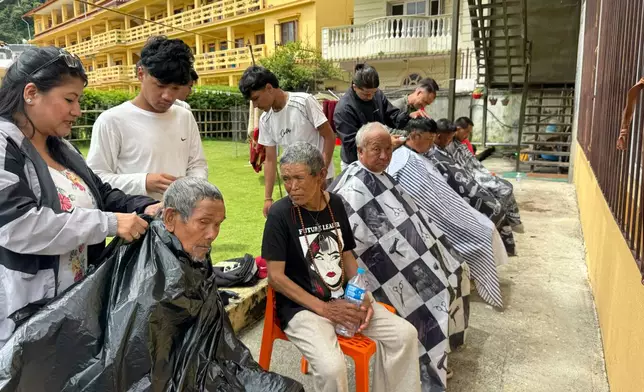
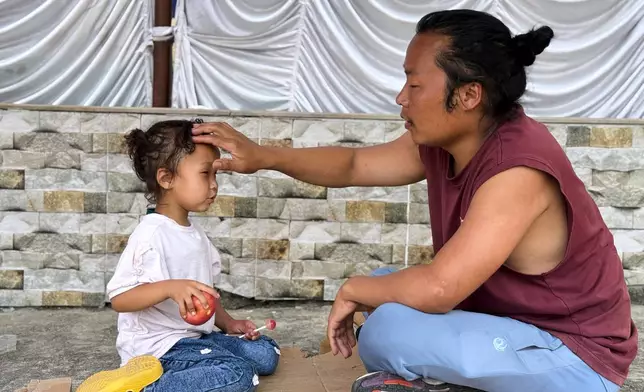
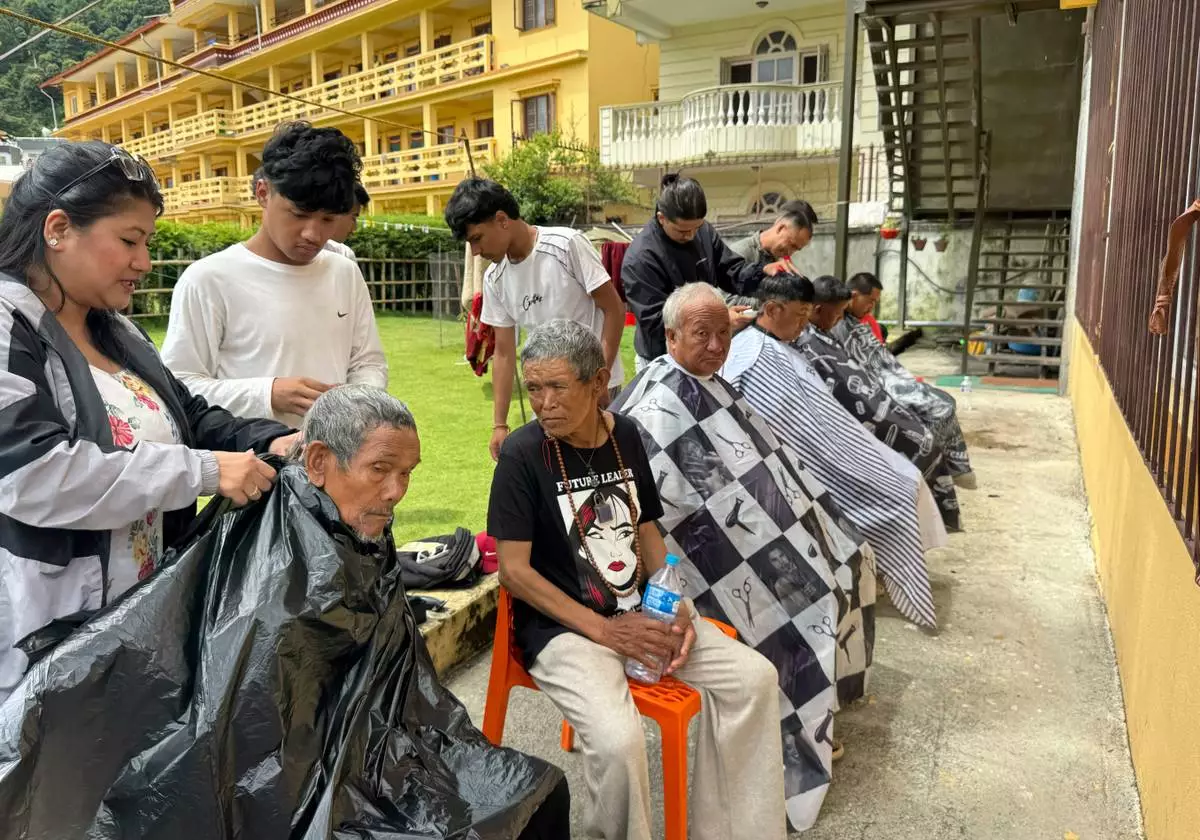
Survivors have their hair cut at a monastery where people are taking refuge in Kathmandu, Nepal, Monday, Aug. 31, 2026. (AP Photo/Niranjan Shrestha)
Survivors have their hair cut at a monastery where people are taking refuge in Kathmandu, Nepal, Monday, Aug. 31, 2026. (AP Photo/Niranjan Shrestha)

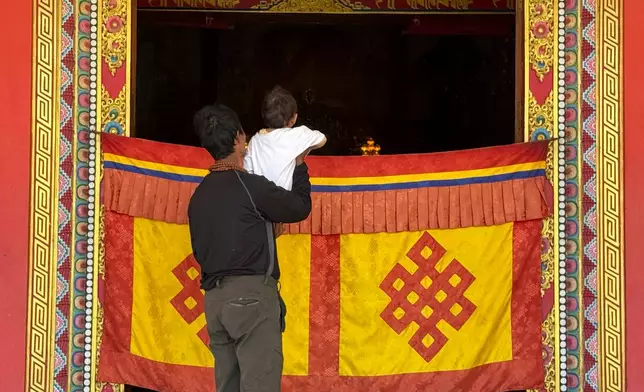
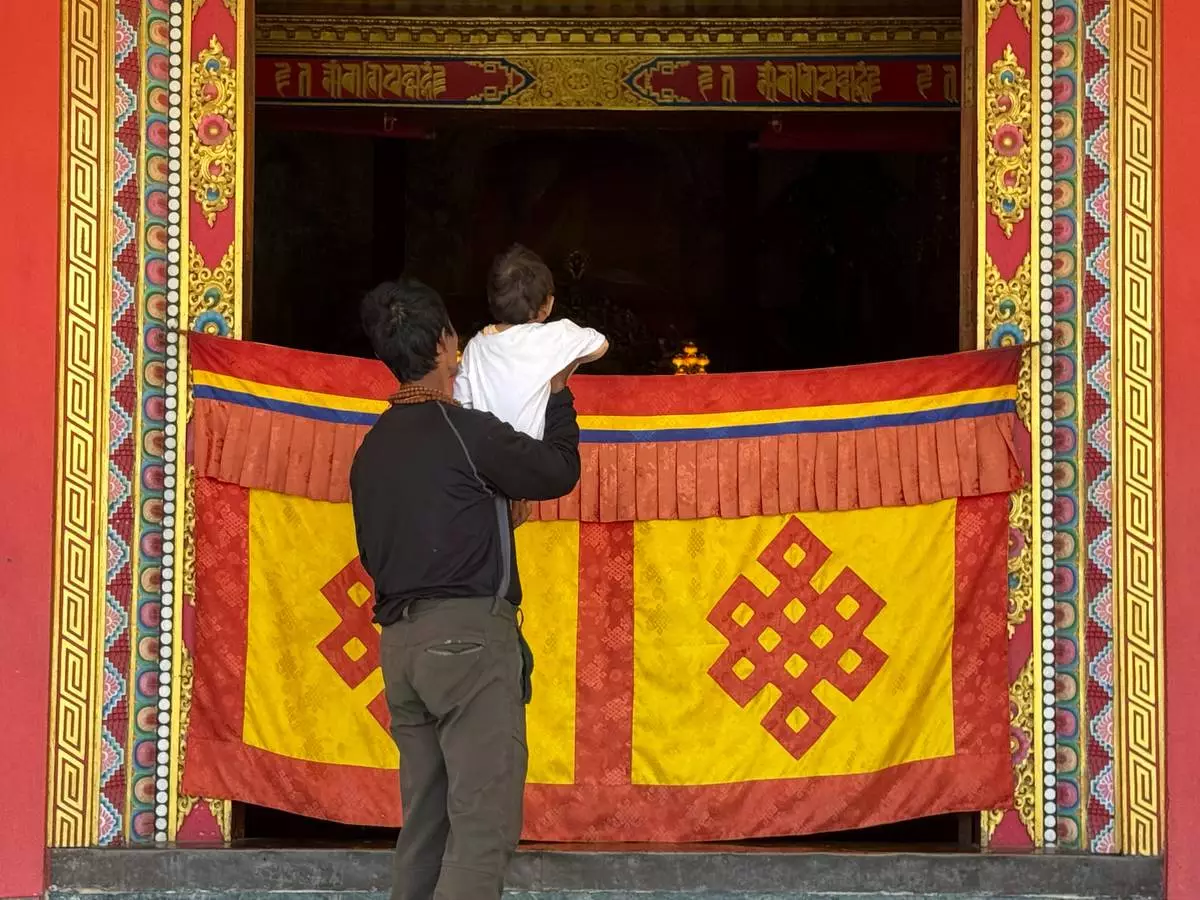
A survivor holds his child up at a monastery where survivors are seeking refuge in Kathmandu, Nepal, Monday, Aug. 31, 2026. (AP Photo/Niranjan Shrestha)
A survivor holds his child up at a monastery where survivors are seeking refuge in Kathmandu, Nepal, Monday, Aug. 31, 2026. (AP Photo/Niranjan Shrestha)

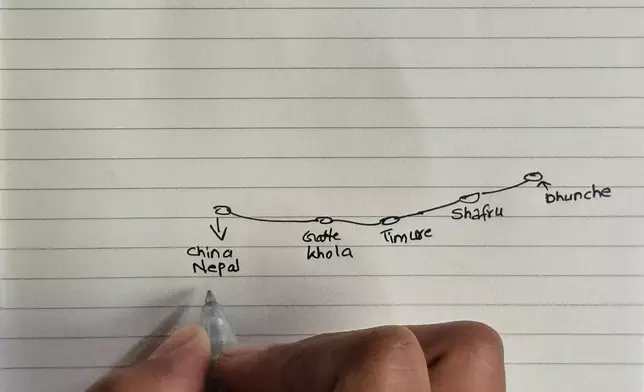
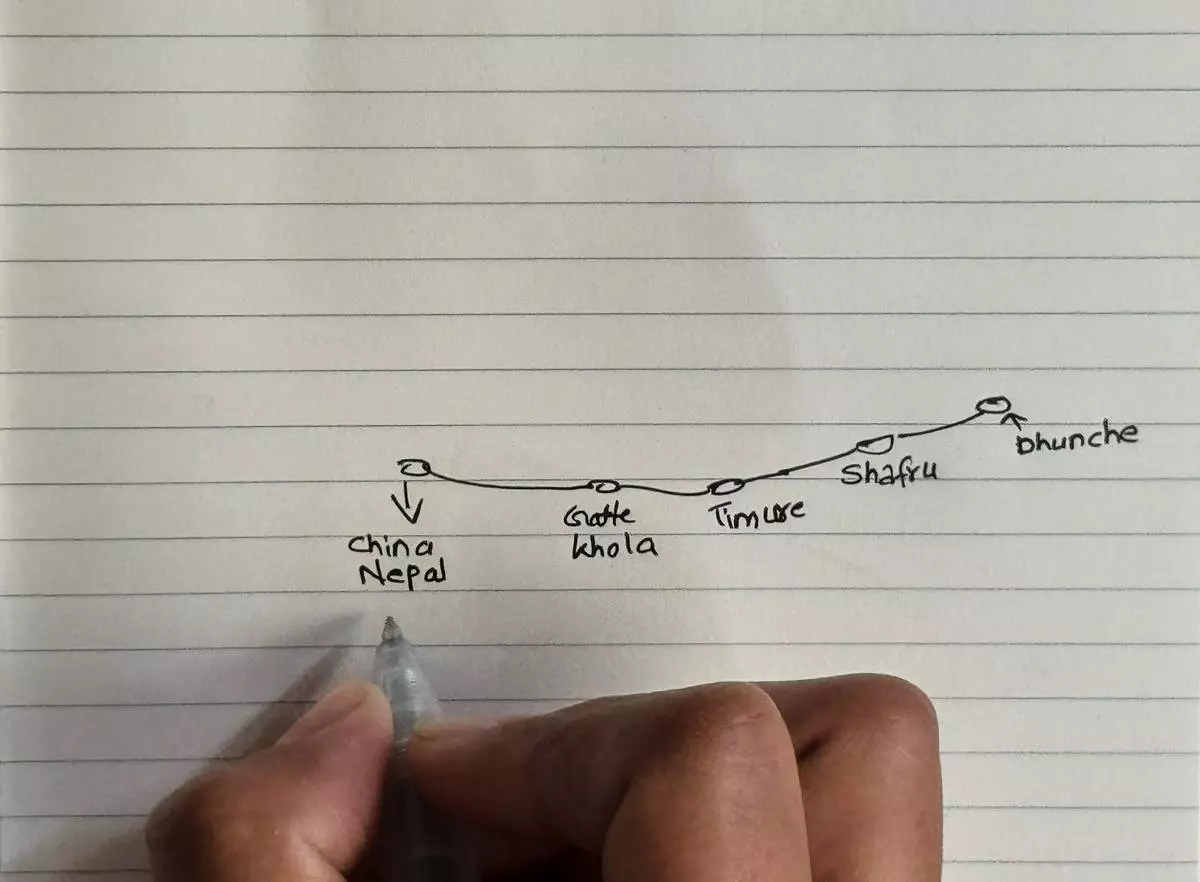
Survivor Tenzin Dolma Ghale, 20, draws the border area that was hard hit by flash floods, as she speaks with the Associated Press in Kathmandu, Nepal, Monday, Aug. 31, 2026. (AP Photo/Niranjan Shrestha)
Survivor Tenzin Dolma Ghale, 20, draws the border area that was hard hit by flash floods, as she speaks with the Associated Press in Kathmandu, Nepal, Monday, Aug. 31, 2026. (AP Photo/Niranjan Shrestha)

Survivor Tsering Gelbu Lama sits with his daughter at a monastery in Kathmandu, Nepal, Monday, Aug. 31, 2026. (AP Photo/Niranjan Shrestha)

Survivor Tsering Gelbu Lama sits with his daughter at a monastery in Kathmandu, Nepal, Monday, Aug. 31, 2026. (AP Photo/Niranjan Shrestha)

“I don’t know how I will pass on our culture to her,” he said as he coaxed a spoonful of rice into her mouth.

For Lama and a rising number of others displaced by the floods, the losses go beyond homes and belongings. Communities whose culture and practices, often tied to ancestral land, are eroding as young people leave for the city now worry if their sacred traditions can be preserved.

“We’ve become homeless not only because we’ve lost our land — we’ve become homeless with our culture and tradition,” said Tsering Sherpa, 36, from Rasuwa, as he sat on the monastery steps.

Nepal is home to more than 120 ethnic groups, with many preserving distinct languages, rituals and festivals that have been passed down for generations.

Rasuwa, a district in the Himalayas along the Nepal-Tibet border, is known for its distinct Buddhist culture and Indigenous communities. The Tamang Heritage Trail has become a popular trekking route for tourists looking to see Tibetan Buddhist culture.

Flood survivors now living in the monastery described their villages’ forests as thick with trees and filled with bears, deer and butterflies. Others showed pictures of steep, green hills along a river.

Survivors at the monastery also shared photos and videos of what life in their villages was like before the floods: Women chopping juniper together to make incense, making new decorations for a monastery being built, men and women wearing colorful traditional clothing and dancing during festivals.

“Now all of it is finished,” said Tenzin Dolma Ghale, a 20-year-old from Rasuwa.

Survivors described to The Associated Press how they fled the surging river water by climbing to the top of hills, seeking refuge in monasteries they had built just a year earlier, after the older ones were destroyed by a 2015 earthquake.

Many said they didn’t have time to take anything from their homes and are now left with only the clothes they wore when being evacuated by helicopter. Others spoke of losing important heirlooms that are usually passed down from generation to generation.

The loss came amid concerns that community traditions were already in decline as young people moved to cities for better education and employment, said Alina Lama, 26, a shelter volunteer from Rasuwa.

She said that they wanted to be "a little bit modern,” she said. “There are many little details about our culture that I don’t know, because I never got to spend time with my family.”

Several flood survivors sheltering in the monastery said that children who have become orphans during the floods are a particular concern.

“We don’t know who will teach them,” Alina Lama said.

Save the Children estimated that thousands of children need humanitarian assistance. No information is available on how many children have been orphaned during the floods.

With local monasteries destroyed and monks with highly localized knowledge gone, Sherpa expressed that important Buddhist autumn festivals would be an example of further loss of cultural practices.

“We used to celebrate these festivals in our monasteries. Right now we don’t even have a monastery,” he said. “Culture and tradition are passed generation to generation by practice. If I can’t follow the tradition now, how can I pass it on to the next generation?”

The Associated Press’ climate and environmental coverage receives financial support from multiple private foundations. AP is solely responsible for all content. Find AP’s standards for working with philanthropies, a list of supporters and funded coverage areas at AP.org.
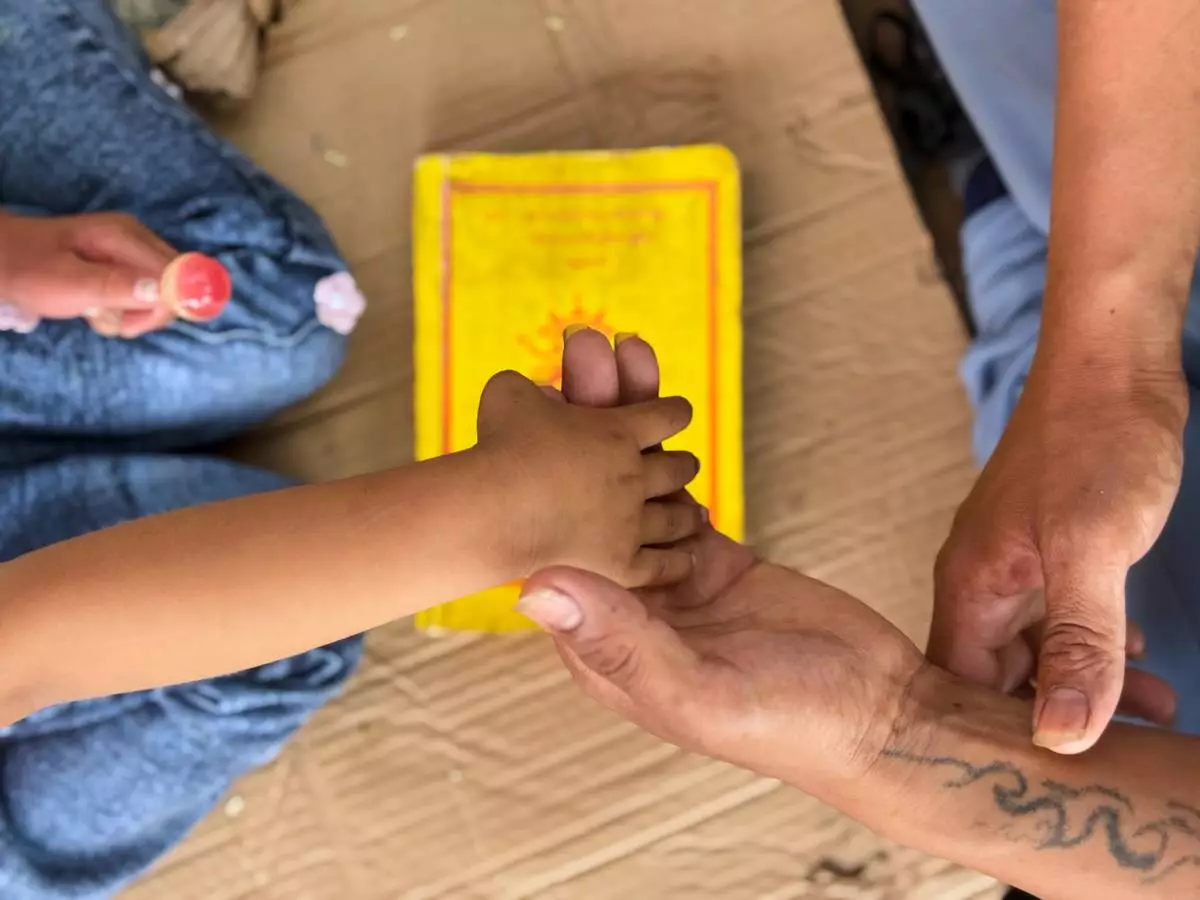
Survivor Tsering Gelbu Lama holds his daughter's hand as they spend time at a monastery where hundreds of survivors are seeking refuge in Kathmandu, Nepal, Monday, Aug. 31, 2026. (AP Photo/Niranjan Shrestha)
Survivor Tsering Gelbu Lama holds his daughter's hand as they spend time at a monastery where hundreds of survivors are seeking refuge in Kathmandu, Nepal, Monday, Aug. 31, 2026. (AP Photo/Niranjan Shrestha)

Survivors have their hair cut at a monastery where people are taking refuge in Kathmandu, Nepal, Monday, Aug. 31, 2026. (AP Photo/Niranjan Shrestha)
Survivors have their hair cut at a monastery where people are taking refuge in Kathmandu, Nepal, Monday, Aug. 31, 2026. (AP Photo/Niranjan Shrestha)

A survivor holds his child up at a monastery where survivors are seeking refuge in Kathmandu, Nepal, Monday, Aug. 31, 2026. (AP Photo/Niranjan Shrestha)
A survivor holds his child up at a monastery where survivors are seeking refuge in Kathmandu, Nepal, Monday, Aug. 31, 2026. (AP Photo/Niranjan Shrestha)

Survivor Tenzin Dolma Ghale, 20, draws the border area that was hard hit by flash floods, as she speaks with the Associated Press in Kathmandu, Nepal, Monday, Aug. 31, 2026. (AP Photo/Niranjan Shrestha)
Survivor Tenzin Dolma Ghale, 20, draws the border area that was hard hit by flash floods, as she speaks with the Associated Press in Kathmandu, Nepal, Monday, Aug. 31, 2026. (AP Photo/Niranjan Shrestha)

Survivor Tsering Gelbu Lama sits with his daughter at a monastery in Kathmandu, Nepal, Monday, Aug. 31, 2026. (AP Photo/Niranjan Shrestha)

Survivor Tsering Gelbu Lama sits with his daughter at a monastery in Kathmandu, Nepal, Monday, Aug. 31, 2026. (AP Photo/Niranjan Shrestha)
MADRID (AP) — In crowded subway cars and sun-drenched plazas, an old-fashioned accessory in Spain has been everywhere thanks to the blistering summer heat.

Small enough to fit into a purse, the traditional Spanish folding hand fan, or abanico, snaps open into a semicircle. With little more than a flick of the wrist, it creates a surprisingly strong breeze.

As successive heat waves in Western Europe pushed temperatures this summer to punishing levels, the accessory has become an essential, embraced by the young and old from Spain and elsewhere. Women — and a growing number of men — unfurl them on public transport, at concerts and at music festivals. In July, rainbow-colored abanicos were everywhere during Madrid’s raucous Pride celebrations.

On a recent August day, 20-year-old Ana Feliu blocked the sun with a paper abanico she was gifted during a Valencian festival. She carries it everywhere in the summer, she said.

“This one is my favorite, but I have many,” she told The Associated Press near Madrid’s Puerta del Sol square. Temperatures in the Spanish capital are forecast to climb to 39 degrees Celsius (102 Fahrenheit) on Thursday and Friday.

Also fanning himself was David González, whose abanico featured pinks, purples and reds.

“At first, I felt a little self-conscious, because it’s something that’s mainly associated with women, but I have to admit it serves a purpose — and it brightens my day,” said González, 53.

Historians believe the folding fan reached Europe through Portuguese maritime trade with Asia in the 15th and 16th centuries.

As early as the mid-17th century, the Spanish painter Diego Velázquez made his enigmatic "The Lady with a Fan," in which a woman, possibly French, poses with what appears to be a delicate wooden abanico.

As they grew fashionable in European courts, Spain developed a taste and industry of its own. Madrid became an important center of production, and by the 18th century, Valencia had emerged as the Spanish fan-making capital.

So embedded was the abanico in Spanish aristocratic society by the 1800s that women used them to discreetly express flirtation, interest or disapproval through what was called “the language of the fan.”

From Spain, the hand fan traveled to Latin America. In the 19th century, flamenco dancers began using the abanico as an expressive prop, as Cuban song and dance styles such as the guajira influenced the dance form. Over time, the fan’s association with flamenco helped turn it into a quintessential Spanish symbol.

“The fan is a perfect element because, on the one hand, it evokes the heat and humidity of Cuba — that heavy, oppressive feeling,” said Carmen Torres, a 44-year-old flamenco dancer in southern Spain. “And at the same time, it gives us a way to bring out the seductive, coquettish quality.”

For more than a century and a half, Javier Llerandi’s family has sold abanicos out of Casa de Diego, a wood-paneled shop in Madrid.

“We live from the heat,” Llerandi told the AP.

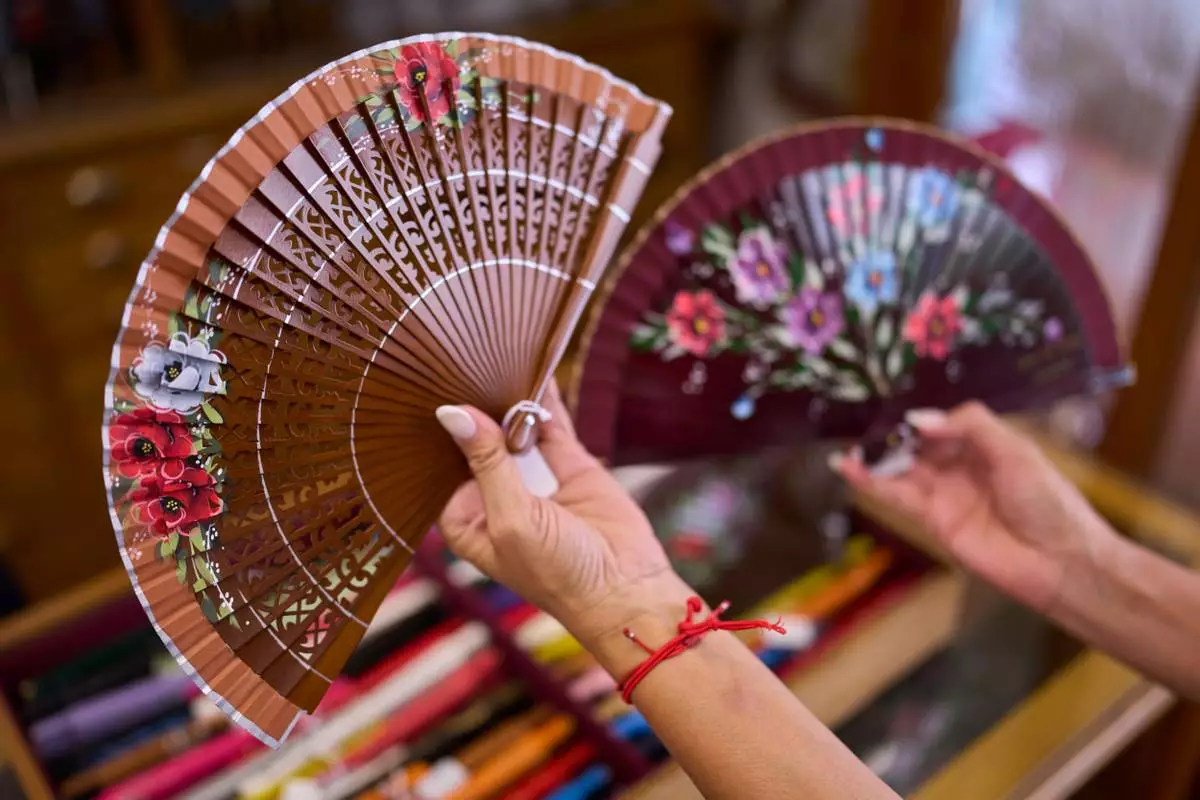
The fans at Casa de Diego are made in Spain and range from simple two-tone wooden ones to elaborate, hand-painted items crafted from mother-of-pearl with intricate floral patterns. They start around 30 euros ($35), while others cost 200 to 500 euros (up to $580) and some high-end pieces reach 6,000 euros (nearly $7,000). Prices vary based on the materials used and, even more so, the workmanship involved, he said.

As Madrid has grown into a tourist hotspot, foreign visitors are also snatching up his fans, which Llerandi notes are more reliable than their portable, electric counterparts.

“Battery-run items eventually run out of power, and always at the worst possible moment,” Llerandi said, adding with a smile: “Without a doubt, heat waves are good for this business.”

And for the less discerning customer, plastic fans with printed designs are sold for a few euros at souvenir kiosks, including one a couple hundred meters from Llerandi's store. There, too, a salesperson reported strong sales this summer.

Outside a towering bullfighting ring in Madrid, Juani Duran sells wooden hand fans with traditional floral designs for five euros apiece at a stall. Bullfights take place in open-air stadiums, and spectators traditionally dress up to attend them, making the elegant fans a fitting accessory.

“You’ll usually find a hand fan in any woman’s pocket — and in some men’s, too,” Duran said before a late-August bullfight.

“They're not the best quality,” she said, pointing at her stock, "but they'll get you through the summer."

AP photographer Laura León contributed from Seville, Spain.

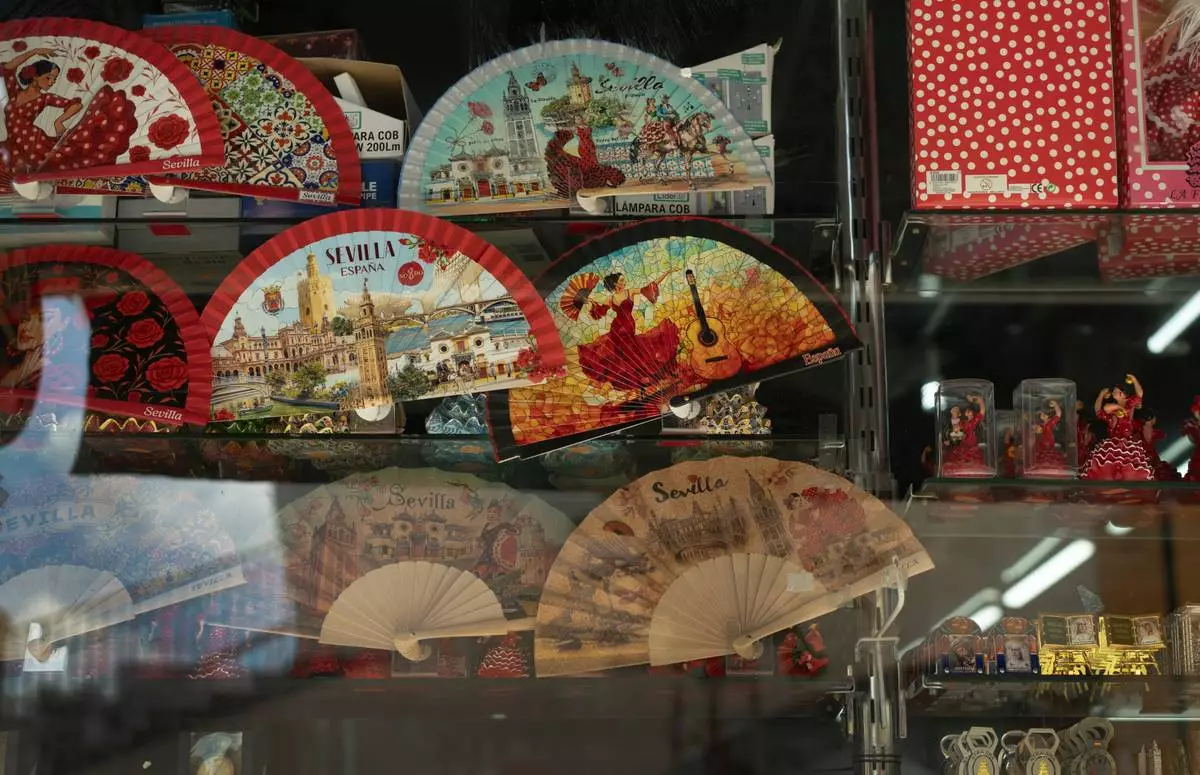
Mass-produced fans featuring tourist images of Seville are displayed in a shop window in Seville, Spain, on Aug. 25, 2026. (AP Photo/Laura Leon)

Mass-produced fans featuring tourist images of Seville are displayed in a shop window in Seville, Spain, on Aug. 25, 2026. (AP Photo/Laura Leon)

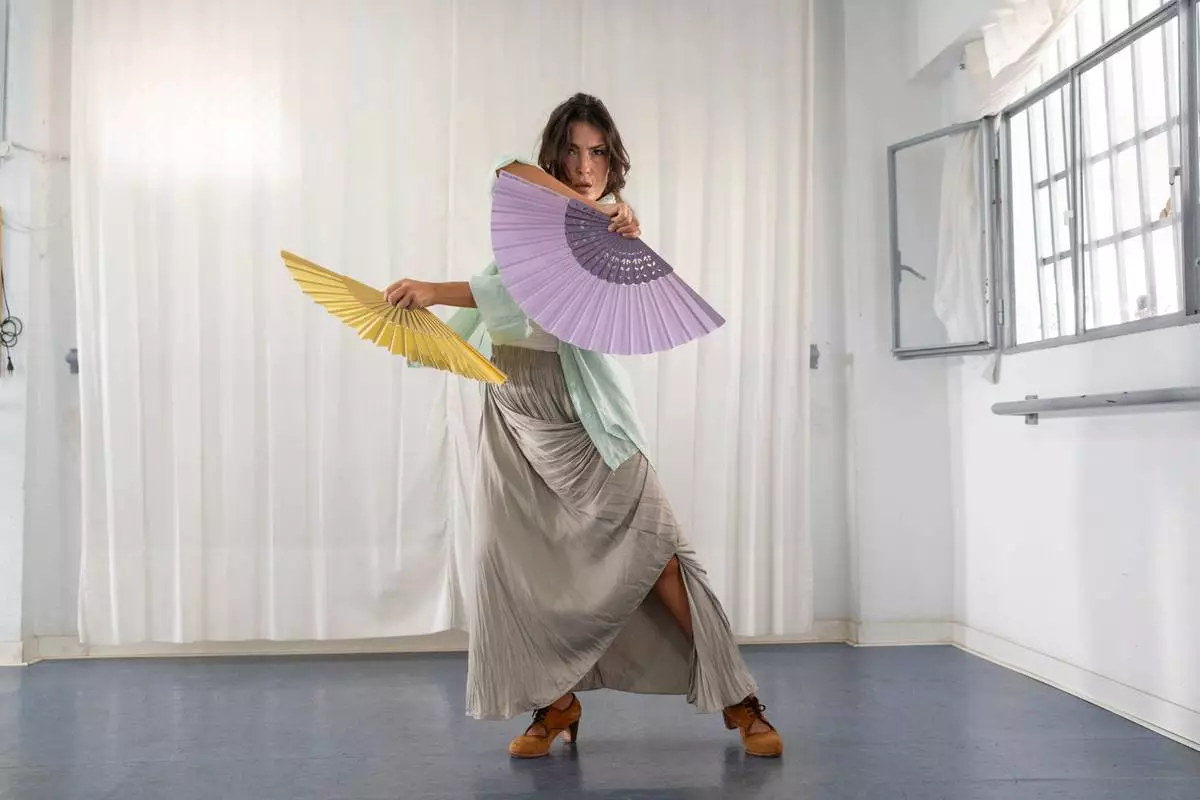
Carmen Torres, a professional flamenco dancer, rehearses a guajira, a flamenco style that traditionally incorporates the use of a fan, in Seville, Spain, on Aug. 27, 2026. (AP Photo/Laura Leon)

Carmen Torres, a professional flamenco dancer, rehearses a guajira, a flamenco style that traditionally incorporates the use of a fan, in Seville, Spain, on Aug. 27, 2026. (AP Photo/Laura Leon)

Fans are displayed at Casa Diego, a fan shop in Madrid, Spain, on Aug. 18, 2026. (AP Photo/Manu Fernandez)

Fans are displayed at Casa Diego, a fan shop in Madrid, Spain, on Aug. 18, 2026. (AP Photo/Manu Fernandez)

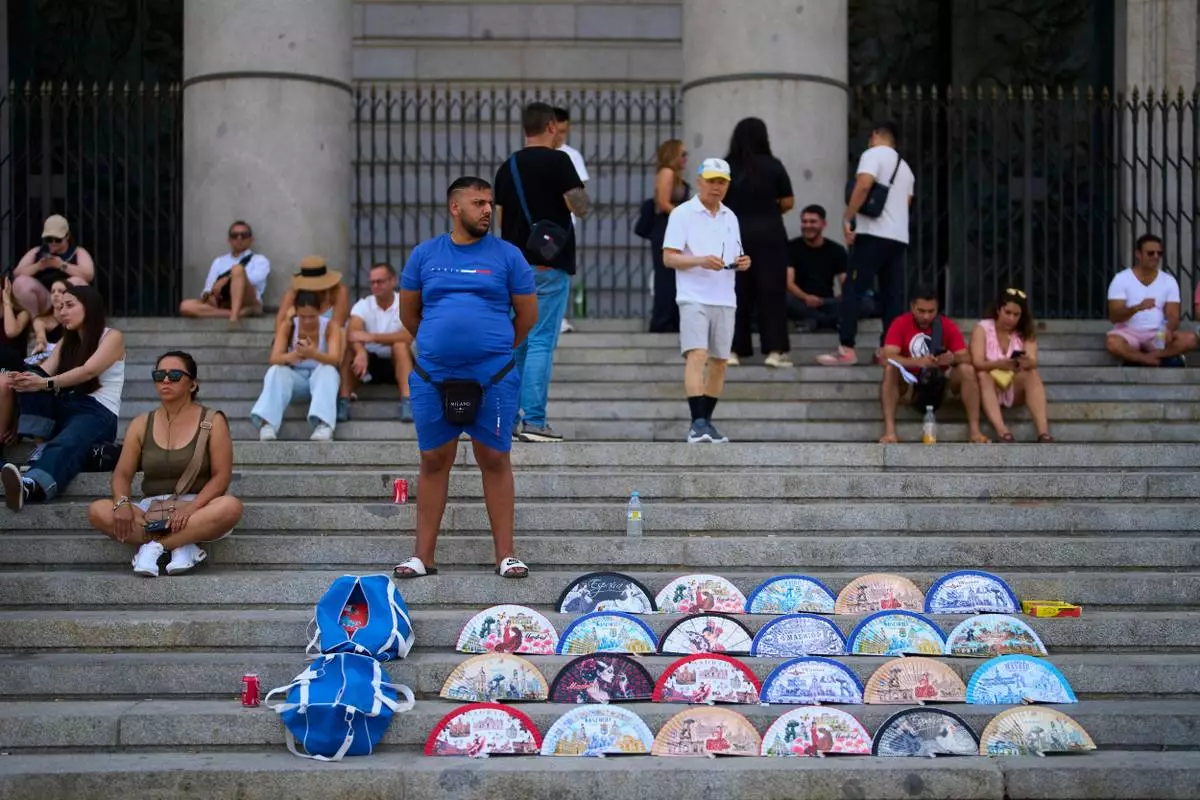
A street vendor sells fans near the Royal Palace in Madrid, Spain, on Aug. 20, 2026. (AP Photo/Manu Fernandez)

A street vendor sells fans near the Royal Palace in Madrid, Spain, on Aug. 20, 2026. (AP Photo/Manu Fernandez)

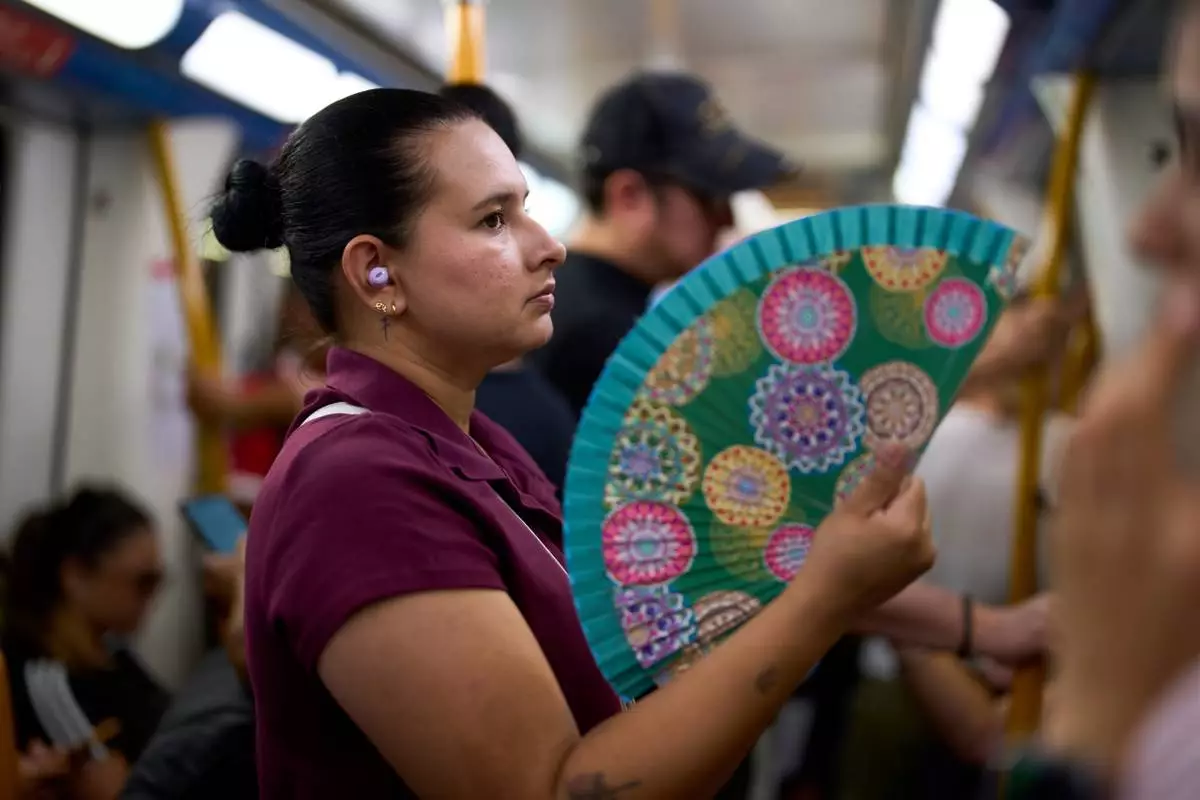
A woman uses a fan to cool herself on the subway in Madrid, Spain, on Aug. 18, 2026. (AP Photo/Manu Fernandez)

A woman uses a fan to cool herself on the subway in Madrid, Spain, on Aug. 18, 2026. (AP Photo/Manu Fernandez)

Recommended Articles