MANILA, Philippines--(BUSINESS WIRE)--Sep 1, 2026--
The Philippine Payments Management, Inc. (PPMI) and Ant International's unified wallet gateway, Alipay+, have officially enabled Alipay+ on QR Ph, seamlessly connecting the nation's digital payments ecosystem with global commerce. This milestone is in alignment with and supports the Bangko Sentral ng Pilipinas' (BSP) digital payments transformation goals.
This press release features multimedia. View the full release here: https://www.businesswire.com/news/home/20260901759507/en/
According to the BSP’s 2025 Report on E-Payments Measurement, digital payments now account for 64.69% of retail transaction volume in the Philippines, while QR Ph transactions surged more than 13 times in 2025.
By connecting this rapidly growing national QR network to Alipay+'s global ecosystem, international consumers can use their home e-wallets and banking apps to scan and pay directly at any QR Ph-accepting merchants nationwide. Merchants can now receive payments from Alipay+ partner users through their existing QR Ph codes, enabling local businesses, particularly micro, small and medium enterprises (MSMEs), to participate in cross-border commerce and benefit from the growing flow of international travelers and digital consumers.
From digital payments to cross-border commerce
For Filipino SMEs, digital payments are increasingly more than a way to collect money. They can be a gateway to new customers, new markets and new sources of growth, demonstrating how local digital payment networks can become gateways to wider global digital economy.
"QR Ph has played an important role in advancing a more connected and interoperable digital payments ecosystem in the Philippines, making digital payments more accessible and convenient for businesses and consumers. Through our partnership with Alipay+, we are extending that connectivity beyond our borders, enabling Filipino merchants — particularly SMEs — to serve international customers more seamlessly. This is an important step in bringing the benefits of digitalisation into everyday commerce, while creating new opportunities for Filipino businesses to participate and grow in the global digital economy," said Carmelita “Melit” Araneta, General Manager of Philippine Payments Management Inc.
By connecting Alipay+ to QR Ph, that digital transformation can extend beyond the Philippines’ borders, bringing international payment connectivity to the same digital payment ecosystem already used by Filipino consumers and businesses.
“Our role is to make it as easy as possible for a customer to pay with the mobile app they already use, while helping the merchant participate in a much bigger marketplace. The Philippines has built a strong digital payments ecosystem through QR Ph, and by connecting that ecosystem with Alipay+, we are helping bring the benefits of digitalisation to the next level, giving Filipino businesses a more seamless way to serve consumers from around the world,” said Danny Chung, General Manager of Alipay+ Global Growth Center, Ant International.
The partnership also reflects Alipay+’s broader strategy of working with national payment schemes to expand interoperable mobile payments across markets. Alipay+ is now connected to 10+ national QR schemes across Asia, Middle East and Latin America, bringing cross-border payment capabilities into local payment ecosystems.
Alipay+ currently connects more than 2 billion consumer accounts, over 50 mobile payment providers, including leading e-wallets and bank apps, 10+ national switches, and QR and NFC merchants globally across 220+ markets. Beyond driving payments interoperability, Alipay+ is also expanding its suite of AI solutions to help mobile payment providers and merchants transform for the next chapter of mobile and digital commerce.
About PPMI
Established in 2017 under Republic Act No. 11127 or the National Payment Systems Act (NPSA), the Philippine Payments Management Inc. (PPMI) collaborates with the Bangko Sentral ng Pilipinas Supervised Financial Institutions (BSFIs) to advance accessibility and competitiveness in the Philippine payments system through digital payments initiatives.
Designated by the Bangko Sentral ng Pilipinas (BSP) as the Payments System Management Body (PSMB) in 2018 under BSP Circular 980 on the National Retail Payment System (NRPS), PPMI drives the transition from cash-heavy to cash-lite payment transactions, offering faster, safer and more convenient digital financial services.
PPMI is guided by a Board of Directors composed of CEO-representatives from banks (universal, commercial, thrift and rural banks), non-bank E-money issuers (NB-EMIs), and independent executives. Under the Board leadership, PPMI fosters scalable and reliable innovations in digital payments.
All members participate in both or at least one Automated Clearing House (ACH) namely PESONet for batch electronic transfers and InstaPay for instant electronic transfers.
About Alipay+
Ant International's Alipay+ is a unified wallet gateway with cross-border payment and digitisation services that help connect global merchants to consumers. Consumers enjoy seamless payments a broad choice of deals and the convenience of digital services using their preferred payment app/e-wallet while travelling abroad. Many small and medium-sized businesses already use Alipay+ digital tools to enhance efficiency and achieve omni-channel growth.
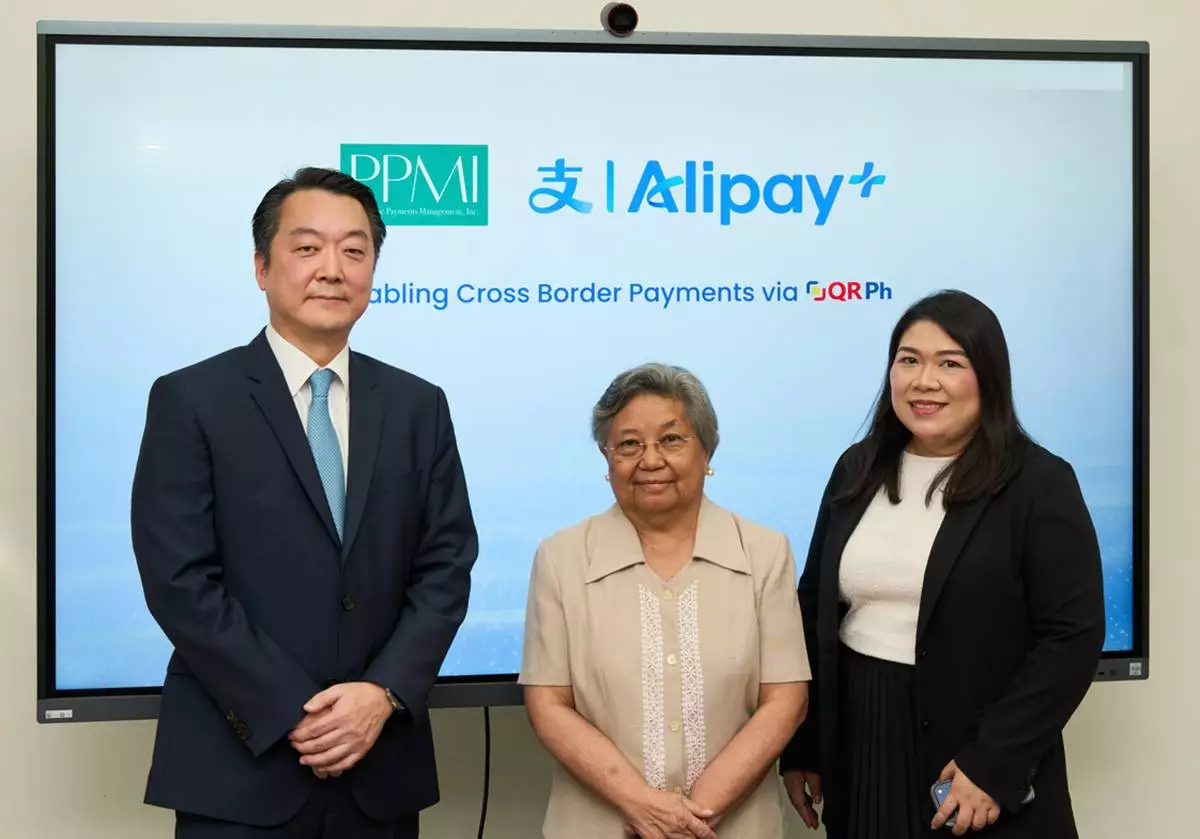
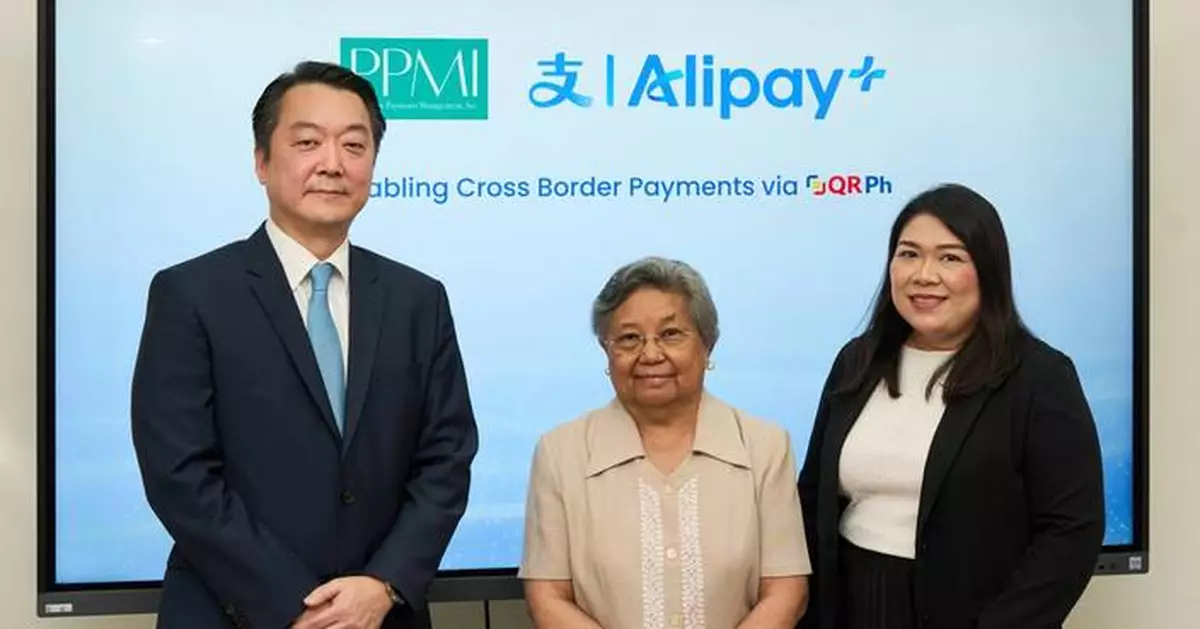
(L-R) Danny Chung, General Manager of Alipay+ Global Growth Center, Ant International; Carmelita “Melit” Araneta, General Manager of Philippine Payments Management Inc.; Atty. Bridget Rose M. Mesina-Romero, Director, Payments Policy and Development Department, Bangko Sentral ng Philipinas