Skip to Content Facebook Feature Image

'No hollow or empty space': A drone operator reveals difficulties in Nepal's tunnel rescue efforts

News

'No hollow or empty space': A drone operator reveals difficulties in Nepal's tunnel rescue efforts
News

News

'No hollow or empty space': A drone operator reveals difficulties in Nepal's tunnel rescue efforts

2026-09-01 18:19 Last Updated At:18:20

KATHMANDU, Nepal (AP) — Filmmaker and drone pilot Manish Maharjan crossed into Nepal from China’s Tibet through Rasuwagadhi, a border crossing closest to where last week's catastrophic flooding began, two days before the disaster. Returning home, little did he know he would be using his professional skills to help with rescue efforts along a route he has known intimately from years of travel for work.

As authorities mobilized dozens of rescue and relief teams, Maharjan joined the Nepal Army’s rescue efforts a day after the flash floods, which have since killed more than 1,000 people and left thousands missing in Nepal and China.

Maharjan has been operating thermal drones to assist rescue teams, focused on locating and finding at least 900 workers who are still missing from 12 hydropower projects buried under mud and debris. About 500 of them are believed to be trapped inside power plant tunnels.

He said drones were effective in locating people who were stranded on hillsides and in isolated places, including caves.

“We used microphone speakers to call out to them. In some places, we even played songs and then waited for a response. That worked in a few cases and helped us locate people,” Maharjan said.

While drones have helped him rescue some stranded people in open areas, the tunnels present an entirely different challenge, he said.

“We found tunnels were filled with mud like toothpaste in a tube,” Maharjan said. “There was no hollow or empty space inside.”

The Aug. 26 flash floods started after a glacial collapse high in the Himalayan region. Scientists who studied satellite images said bedrock underneath a glacier high in the Himalayan region had collapsed, taking part of the glacier with it. The rockfall was so extreme that it registered as a magnitude 5.2 seismic event.

The rocks and melted water then swelled the rivers in the valleys below, causing a torrent of water in Tibet and Nepal and causing widespread damage to critical infrastructure, including hydropower plants, roads, buildings and bridges in the region.

Some workers in the power plant tunnels managed to call for help when the disaster struck, and others who managed to flee reported their colleagues were still in the tunnels, according to Mohan Kumar Dangi, president of the Independent Power Producers’ Association. It was unclear whether rescuers have had any contact with the trapped workers since the initial calls for help.

As time slips away, rescuers are finding it increasingly difficult to locate these missing people. Experts say the first 72 hours are critical as the chances of survival drop without access to clean water. Access to breathable air is another key to survival.

Maharjan said the tunnel searches were challenging because of their difficult access and the absence of any empty space.

“I can only fly drones in tunnels that are long and straight,” he said. “Once there are bends, turns or zigzags, it becomes much harder to operate and search effectively.”

At the Rasuwagadhi hydropower project, Maharjan managed to send a drone to search deep inside and all the way to the end of the tunnel but found no sign of any life.

“We checked repeatedly but it was filled with mud and debris,” he said. “Looking at it, I could only imagine the force of the flood.”

Hussain reported from New Delhi.
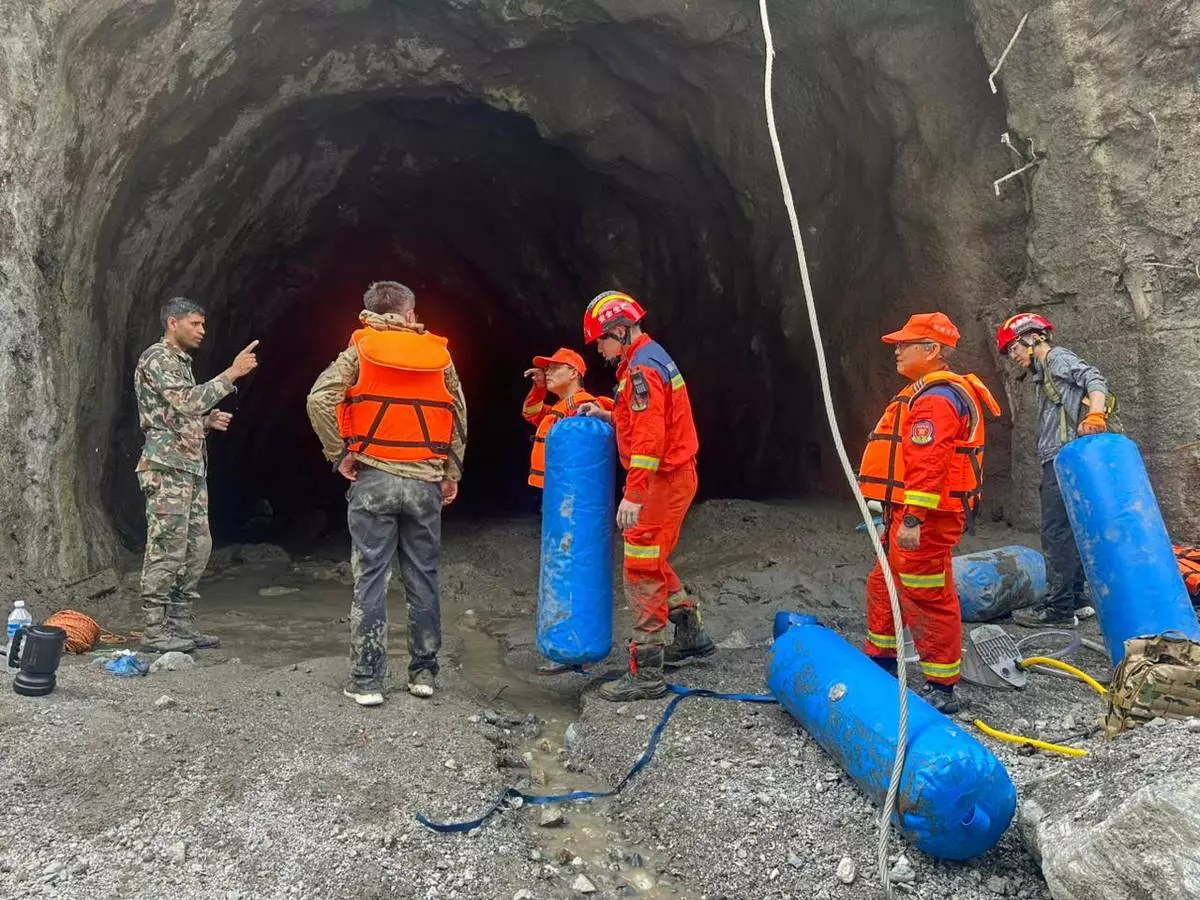
This photo provided by the Nepal Army, shows Nepal army soldiers undertake rescue operation at the site of a hydropower project in Upper Trishuli, Nepal, Monday, Aug. 31, 2026. (Nepal Army via AP)

This photo provided by the Nepal Army, shows Nepal army soldiers undertake rescue operation at the site of a hydropower project in Upper Trishuli, Nepal, Monday, Aug. 31, 2026. (Nepal Army via AP)

REDMOND, Wash.--(BUSINESS WIRE)--Sep 1, 2026--

The Fermi Explorer Mission, a new nonprofit, unveiled today its roadmap to launch humanity’s first spacecraft to another star system by 2029.

This press release features multimedia. View the full release here: https://www.businesswire.com/news/home/20260901669444/en/

Instead of needing billions of dollars, or propulsion breakthroughs that may take generations to develop, the nonprofit is designing around flight-proven electric propulsion and the constraints of what can be built today. Fermi Explorer aims to launch by the end of 2029, and the journey toward Alpha Centauri is expected to span roughly 80,000 years (as shown in the concept video ).

That timeline is not an argument against the mission. It is the reason to begin.

“We hope to be both the first to leave and the last to arrive at Alpha Centauri. None of us will be here when this journey ends, and that is the point. It's about taking the first achievable step and inspiring future generations to keep pushing beyond the limits we inherited.”
-Philip Johnston, Co-Founder & President of The Fermi Explorer Mission

Satellite manufacturers will be invited to bid on the mission with the following 4 goals:

The Fermi Explorer team has designed a feasible mission profile as detailed here, though they are open to new ideas from the satellite manufacturers. The team also worked with a new physical AI lab called PSI - Physical Super Intelligence, which conducted a feasibility study and devised the final ‘perihelion pump’ maneuver, as detailed in their report here.

There will soon be a three-month solicitation period for proposals for scientific and artistic payloads to be added to the mission. The mission also plans to include a copy of the Golden Record, as well as messages from children around the world for future civilizations.

Fermi Explorer plans to open-source its research, analysis, data, and simulation tools so scientists, engineers, educators, students, and curious contributors can test assumptions, improve the mission, and propose useful science for the journey. A child who discovers the project today should be able to learn from it, contribute to it, and watch it launch before graduating from high school.

The mission has picked up some early supporters, including Rob Meyerson, former President of Blue Origin, and Alex Wissner-Gross, MIT physicist and investor. The organization is inviting people to participate by either donating to the mission and/or contributing research and technical expertise, scientific and artistic proposals.

“The most inspiring part of this mission is that people do not have to wait for permission or perfect conditions,” said Garrett Jameson, former US Air Force officer who leads day-to-day execution. “We can embrace the constraints, build what is possible now, and give the next generation something meaningful to build upon.”

Learn more, contribute, or follow the mission at fermiexplorer.org.

About Fermi Explorer

Fermi Explorer Mission is a 501c3 nonprofit organization that will launch humanity’s first spacecraft to another star.

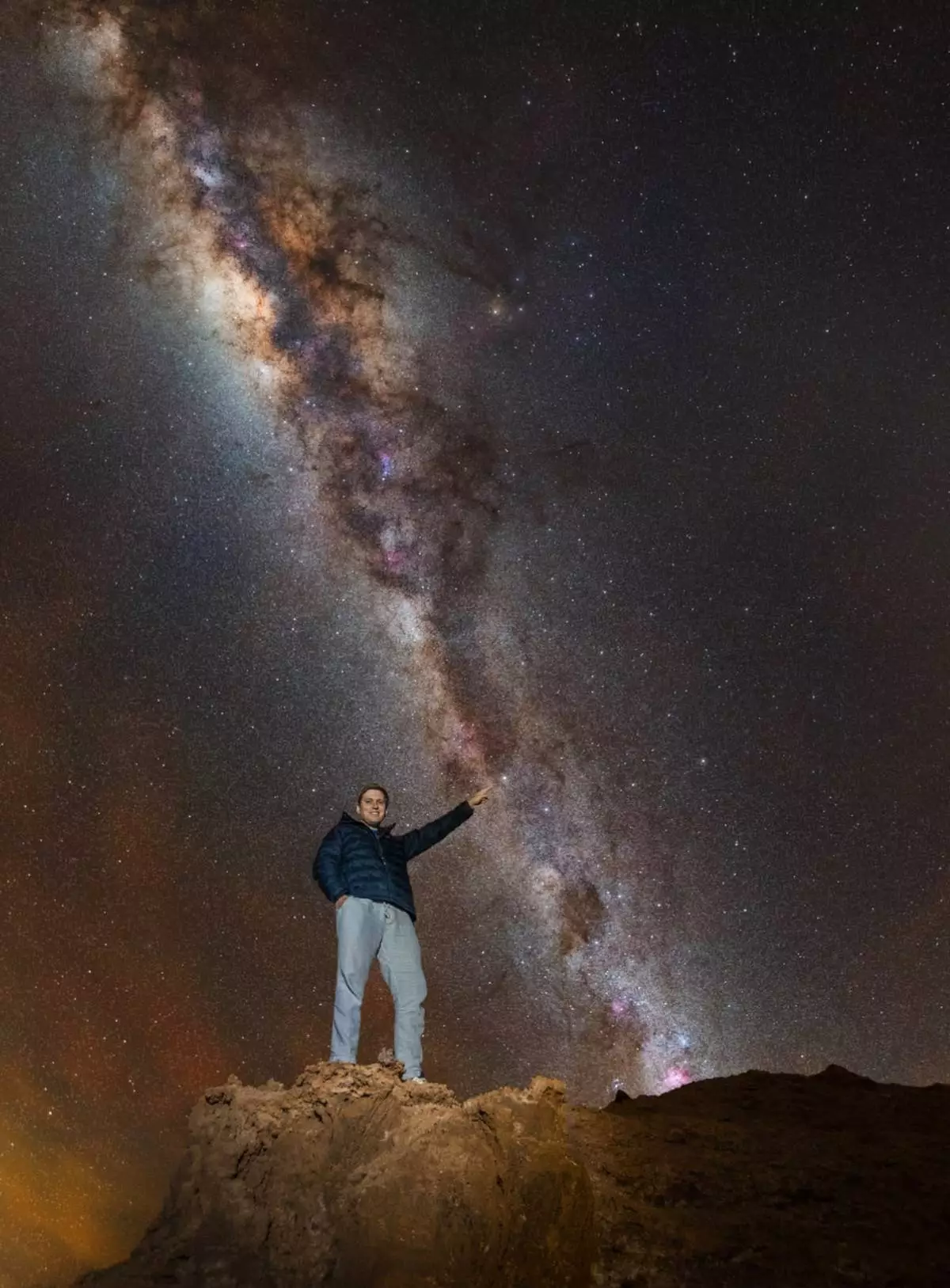
Fermi Explorer Co-Founder & President, Philip Johnston, pointing at the exact star, Alpha Centauri, the target of the mission, with the Milky Way in view. Taken July, 2026 by astrophotographer, Alexis Trigo, in the Atacama Desert, Chile, with 20-second exposure.

Fermi Explorer Co-Founder & President, Philip Johnston, pointing at the exact star, Alpha Centauri, the target of the mission, with the Milky Way in view. Taken July, 2026 by astrophotographer, Alexis Trigo, in the Atacama Desert, Chile, with 20-second exposure.

Recommended Articles