PARIS (AP) — With the end of France's summer vacation season, the election campaign to replace Emmanuel Macron as president next May is bursting to life.
An unusually large and broad field of candidates is forming to lead the European Union’s largest country, its second-largest economy and only nuclear-armed power, their appetites whetted by the fact that Macron is constitutionally barred from seeking a third consecutive presidential term himself.
Click to Gallery
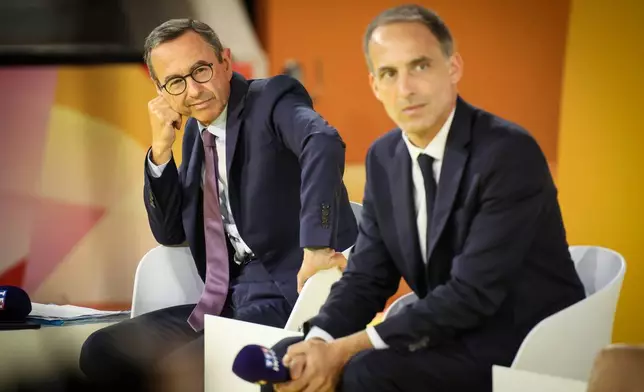
FILE - French conservative Party Les Republicains Bruno Retailleau, left, and co-president of French centre-left party, Place Publique Raphael Glucksmann, candidates at presidential election attend the business meeting organized by the French business organization (MEDEF) in Paris, Thursday, Aug. 27, 2026. (AP Photo/Thomas Padilla, File)
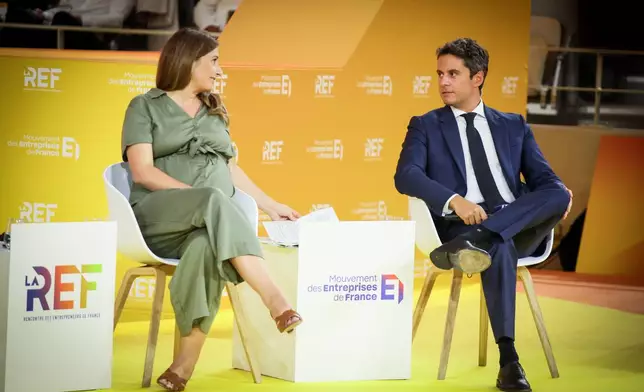
FILE - French Green Party leader Marine Tondelier, left, and Former French Prime minister Gabriel Attal, candidates at presidential election attends the business meeting organized by the French business organization (MEDEF) in Paris, Thursday, Aug. 27, 2026. (AP Photo/Thomas Padilla, File)
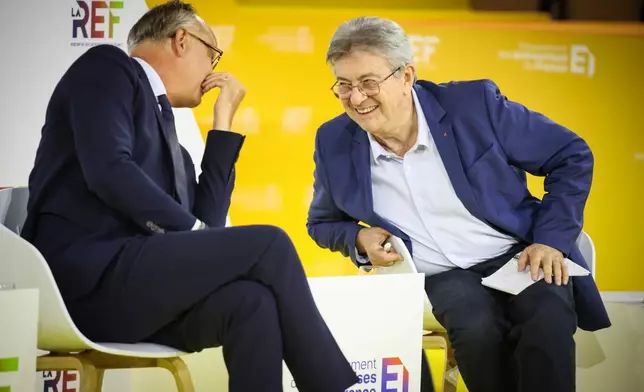
FILE - Former French Prime Minister and head of Horizons political party Edouard Philippe and French far-left leader Jean-Luc Melenchon, right, candidates at presidential election attend the business meeting organized by the French business organization (MEDEF) in Paris, Thursday, Aug. 27, 2026. (AP Photo/Thomas Padilla, File)
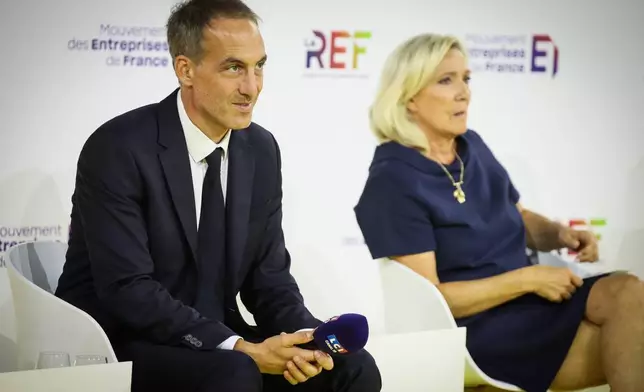
FILE - Co-president of French centre-left party, Place Publique Raphael Glucksmann and Far-right leader Marine Le Pen, candidates at presidential election attend a business meeting organized by the French business organization (MEDEF) in Paris, Thursday, Aug. 27, 2026. (AP Photo/Thomas Padilla, File)
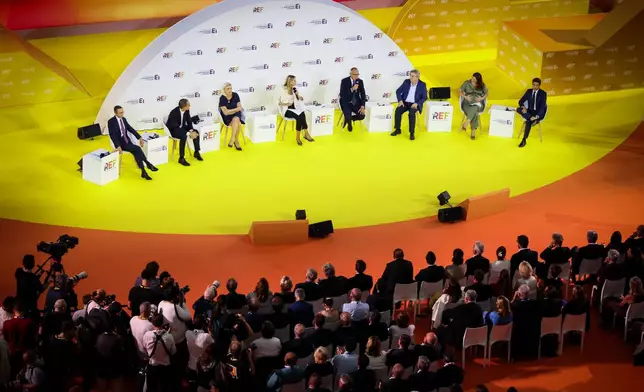
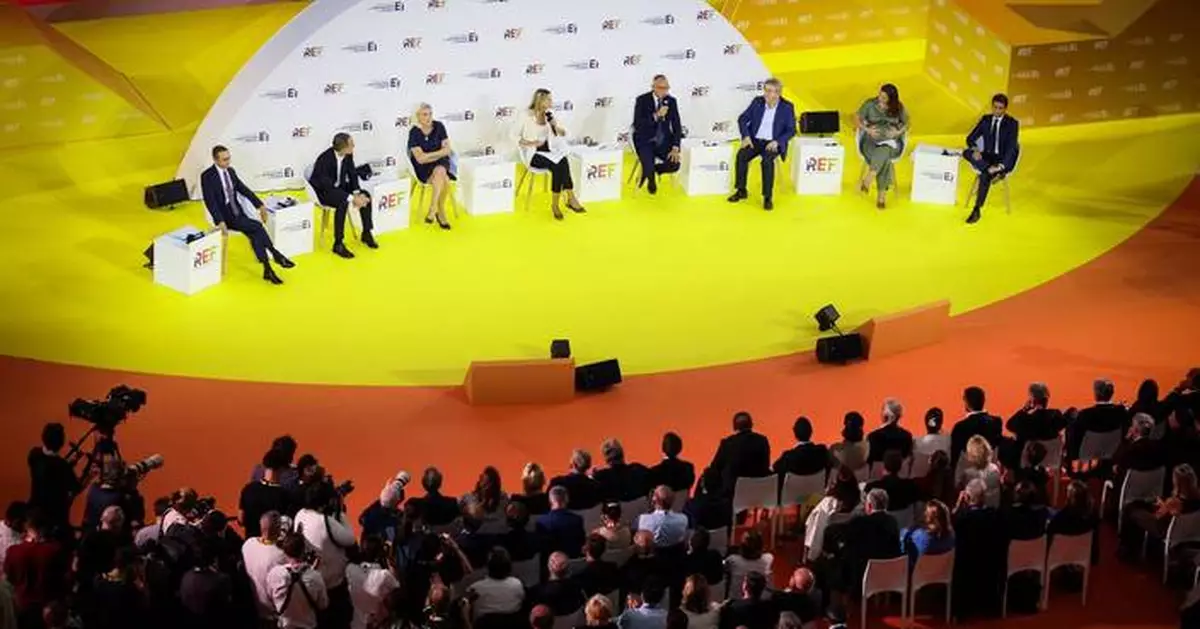
FILE - From left, French conservative Party Les Republicains Bruno Retailleau, co-president of French centre-left party, Place Publique Raphael Glucksmann, Far-right leader Marine Le Pen, Former French Prime Minister and head of Horizons political party Edouard Philippe, French far-left leader Jean-Luc Melenchon, French Green Party leader Marine Tondelier and Former French Prime minister Gabriel Attal, candidates at presidential election participate at a business meeting organized by the French business organization (MEDEF) in Paris, Thursday, Aug. 27, 2026. (AP Photo/Thomas Padilla, File)
Some won’t get the support they will need from sponsors and their political camps to be on the starting line when the first round of voting is held on April 18.
Still, a crowded field could boost far-right candidate Marine Le Pen — just as it did for Jean-Marie Le Pen, her father, in 2002. The record 16 candidates splintered the first-round vote, creating an electoral earthquake when the elder Le Pen qualified for the decisive second round.
Socialist Party leader Olivier Faure became the latest to declare his candidacy this weekend. He joined more than two dozen others who say that they intend to stand or are contemplating a run in 2027.
Here’s what to know at these early stages of what promises to be among the most consequential leadership votes anywhere in the world next year, and which comes as France is grappling with multiple challenges, including the disruptions of Donald Trump's presidency.
After decades of trying, first by her father and then her, Marine Le Pen's fourth campaign for the French presidency is already shaping up as the strongest opportunity for her nationalist, anti-immigration National Rally party to take power.
Such an outcome would rock the European Union, putting a politician who has long been hostile to the bloc of 27 nations and many of their collective rules and policies in charge of one of the EU’s most important countries.
“It’s clearly a crucial election, just because the far right might win this one and it never was the case before,” said Gilles Ivaldi, a researcher at the Paris-based Sciences Po university who specializes in populism and radical right-wing politics.
“With Le Pen as president, we know that the EU will be weakened. To what extent we don’t know, but we know she’s against the EU,” he said. “This would create a lot of instability.”
Polls have for months suggested that Le Pen is the front-runner and could possibly sail into the winner-takes-all runoff on May 2 as the first-round vote leader, which would be a first for her. She trailed Macron in the 2017 and 2022 first-round voting and then lost decisively to him in round two.
It was a giant upset when her father qualified in 2002 for round two. His associations with people who collaborated with France’s Nazi occupiers in World II and his multiple hate-speech convictions, including Holocaust denial, made him anathema to many voters.
This time, it would a giant upset if his 58-year-old daughter doesn't advance. Marine Le Pen has worked for years to distance herself from his extremism. She's already begun reaping the fruits at the ballot box: Since 2024, her National Rally has become the largest party in parliament's powerful lower house.
She got another boost in July when a Paris appeals court cleared her path for another presidential campaign, by shortening a ban on seeking elected office that a lower court had handed down to Le Pen for embezzlement.
With Le Pen widely expected to secure one of the spots in the decisive second-round duel, the battle for the other is becoming hard fought, its outcome highly uncertain.
For now, Le Pen's strongest opponents include veteran far-left and anti-capitalist firebrand Jean-Luc Mélenchon, who hopes to make his first runoff after placing third in 2022 and fourth in 2017 and 2012, and two former prime ministers under Macron — Edouard Philippe and Gabriel Attal, both centrists.
Other prominent possibilities include conservative former Interior Minister Bruno Retailleau and multiple figures from the mainstream left, including European Parliament lawmaker Raphaël Glucksmann and Ecologists leader Marine Tondelier, campaigning before the expected birth within weeks of her second child.
Those seven took part in a debate last week at the storied Roland Garros tennis arena in Paris. In what served as an unofficial starting gun for the campaign, they batted around proposals for fixing some of France's economic problems. Some took shots at Le Pen, which she hit back.
The potential scenario of a Le Pen-Mélenchon second-round duel that polls suggest could end with a Le Pen victory could ultimately prompt some candidates to drop out, to concentrate votes behind mainstream alternatives.
“What we don’t know is who’s going to be against her” in a possible second-round matchup, Ivaldi said. “The more the fragmentation, the more the chances that Mélenchon will be that person.”
No French presidential election campaign this century has taken place in such choppy waters.
The Iran war has hit France's stagnating economy with higher energy costs. The war in Ukraine has Paris worrying that Russia might next target one of France's NATO allies, a potential path to wider conflict.
Trump's presidency is rattling French faith in the trans-Atlantic alliance. The manufacturing and exporting might of China and the artificial intelligence revolution are heightening concerns of France being left behind economically and technologically.
But France's mounting and increasingly expensive public debt is narrowing the financial room for maneuver that Macron's successor will inherit.
Many voters also blame Macron for France's woes and took their anger to the streets during his two-term presidency.
Ultimately, the election may hinge on whether voters want to upset the established order by propelling Le Pen and Mélenchon into a duel of the right and left extremes, or will back a more mainstream candidate, as a possibly safer option.
“It will be quite interesting to see which of these two forces will win in the end,” Ivaldi said. “These are two different forces, two antagonistic forces that are playing against one another.”
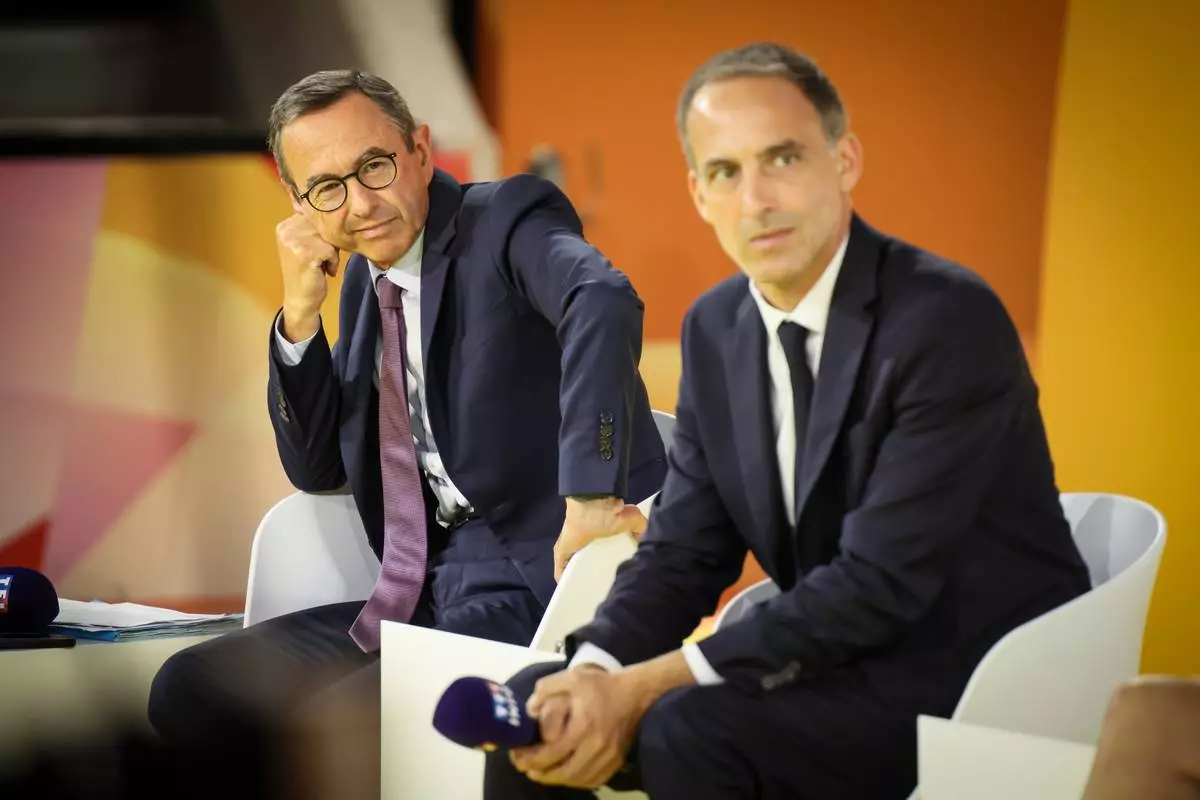
FILE - French conservative Party Les Republicains Bruno Retailleau, left, and co-president of French centre-left party, Place Publique Raphael Glucksmann, candidates at presidential election attend the business meeting organized by the French business organization (MEDEF) in Paris, Thursday, Aug. 27, 2026. (AP Photo/Thomas Padilla, File)
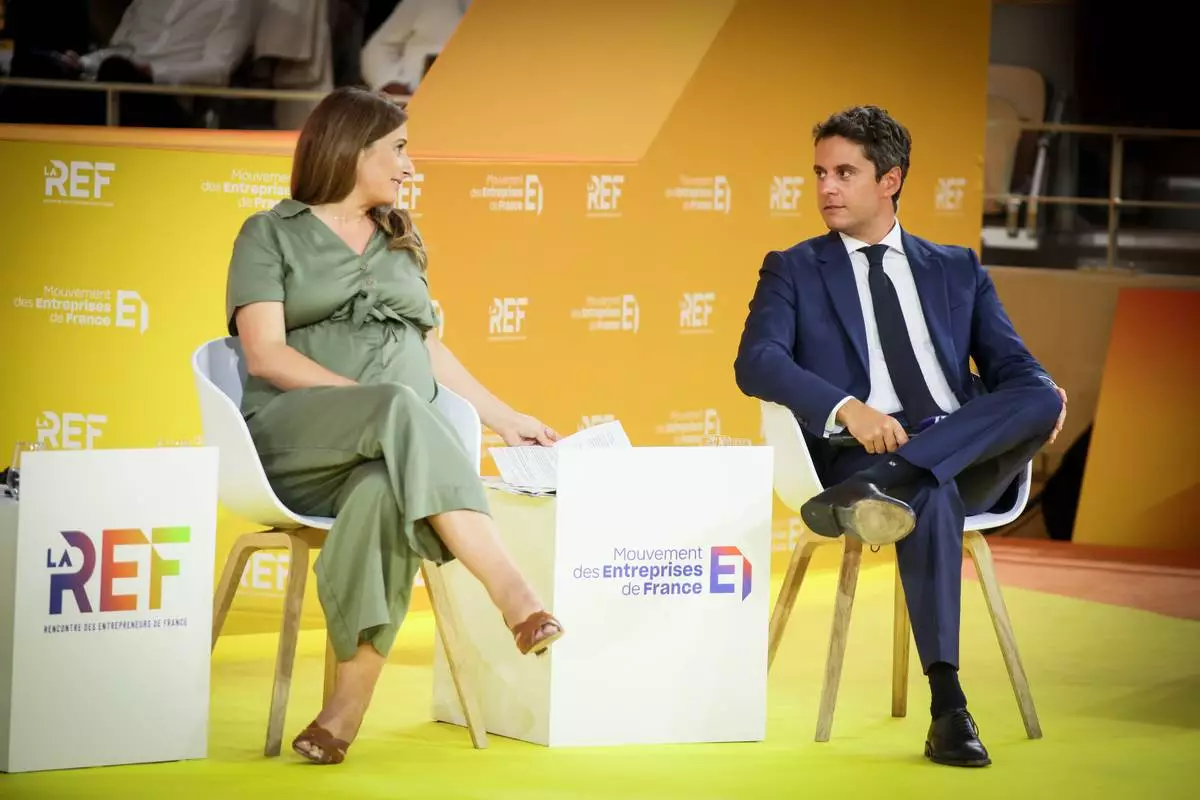
FILE - French Green Party leader Marine Tondelier, left, and Former French Prime minister Gabriel Attal, candidates at presidential election attends the business meeting organized by the French business organization (MEDEF) in Paris, Thursday, Aug. 27, 2026. (AP Photo/Thomas Padilla, File)
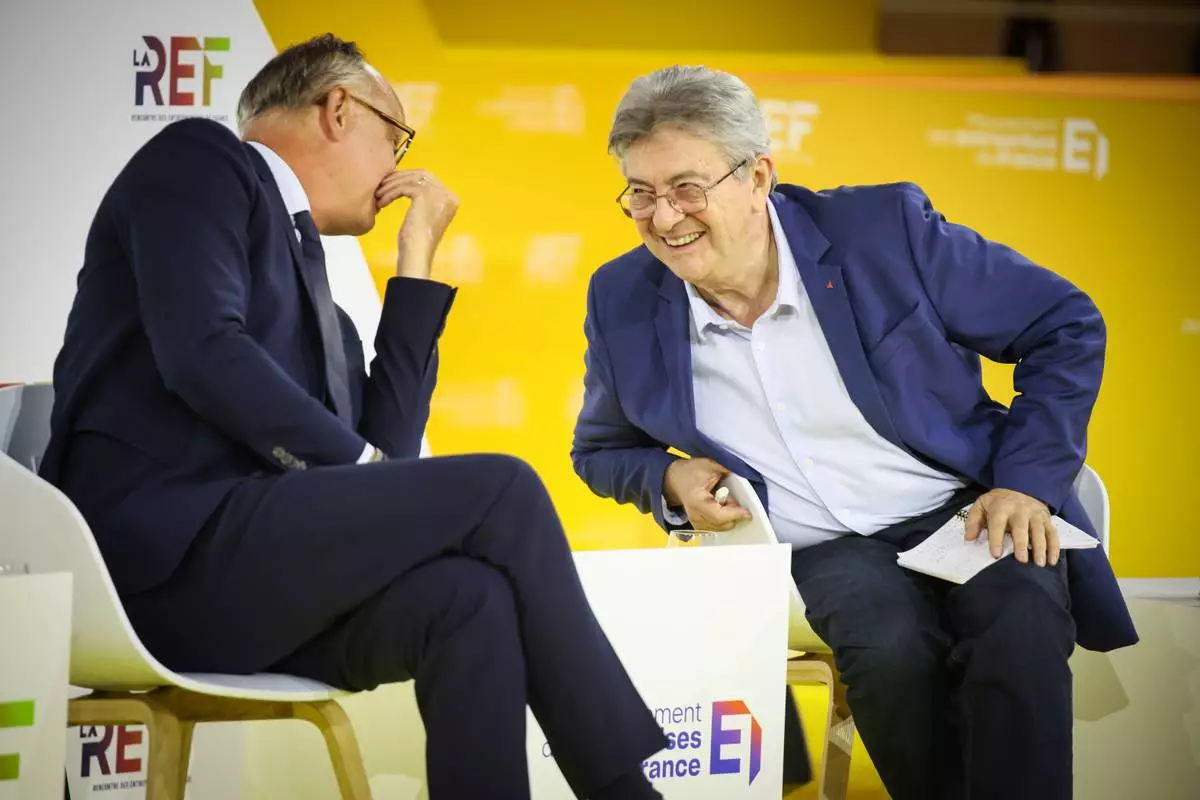
FILE - Former French Prime Minister and head of Horizons political party Edouard Philippe and French far-left leader Jean-Luc Melenchon, right, candidates at presidential election attend the business meeting organized by the French business organization (MEDEF) in Paris, Thursday, Aug. 27, 2026. (AP Photo/Thomas Padilla, File)
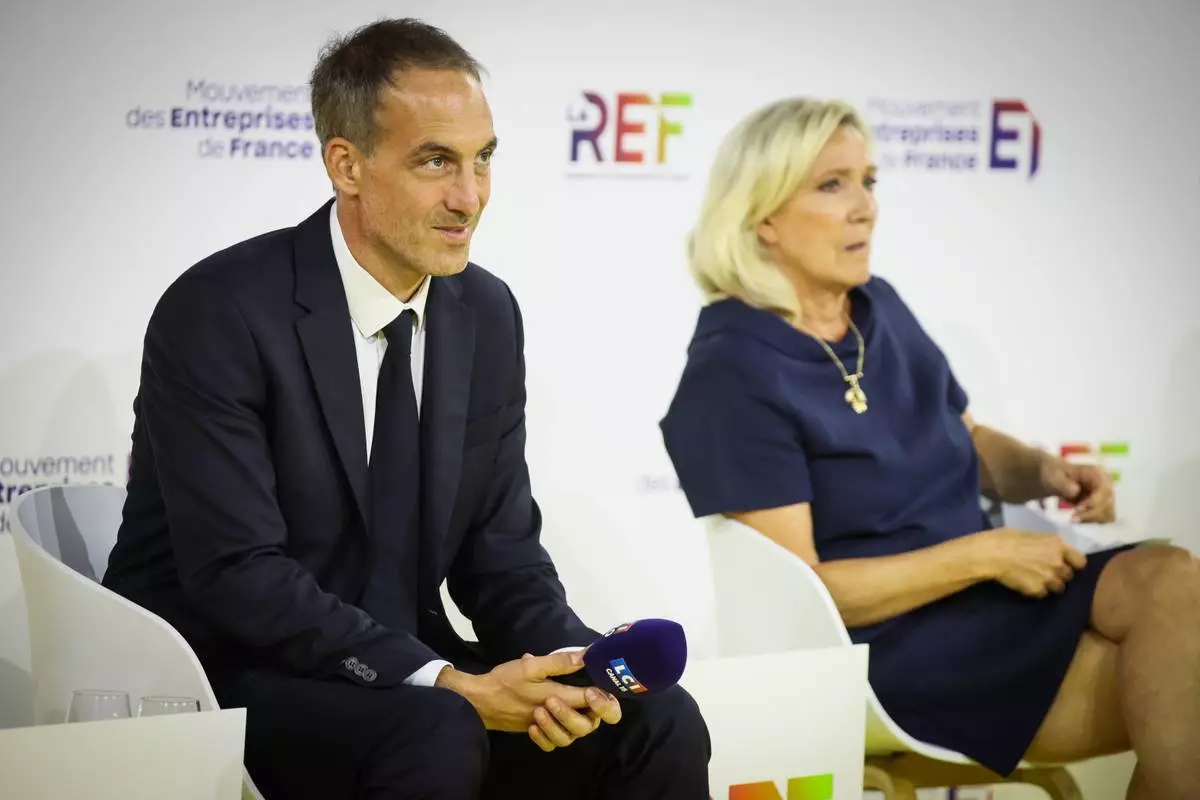
FILE - Co-president of French centre-left party, Place Publique Raphael Glucksmann and Far-right leader Marine Le Pen, candidates at presidential election attend a business meeting organized by the French business organization (MEDEF) in Paris, Thursday, Aug. 27, 2026. (AP Photo/Thomas Padilla, File)
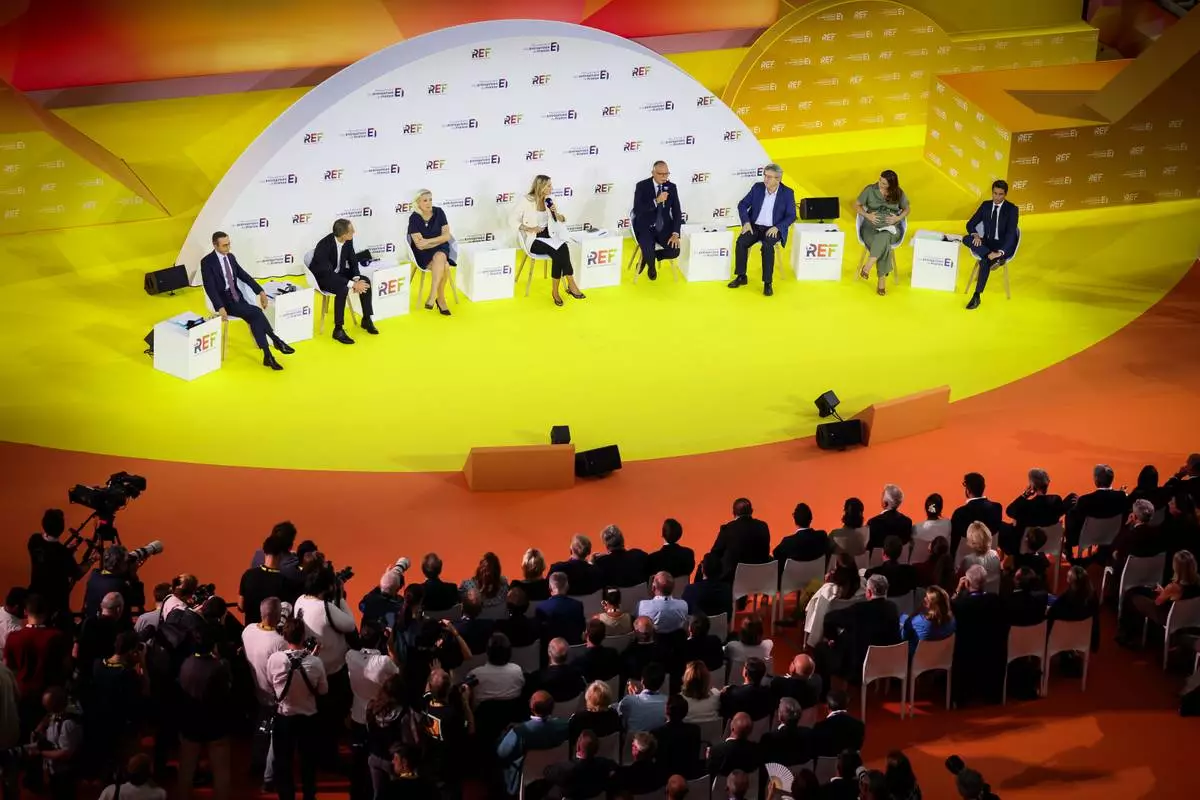
FILE - From left, French conservative Party Les Republicains Bruno Retailleau, co-president of French centre-left party, Place Publique Raphael Glucksmann, Far-right leader Marine Le Pen, Former French Prime Minister and head of Horizons political party Edouard Philippe, French far-left leader Jean-Luc Melenchon, French Green Party leader Marine Tondelier and Former French Prime minister Gabriel Attal, candidates at presidential election participate at a business meeting organized by the French business organization (MEDEF) in Paris, Thursday, Aug. 27, 2026. (AP Photo/Thomas Padilla, File)