LONDON (AP) — Prime Minister Andy Burnham will face lawmakers in the House of Commons on Tuesday for the first time since becoming U.K. leader six weeks ago, with wars in Europe and the Middle East weighing on his promise to kick-start the economy and ease the cost of living.
Since taking office on July 20, Burnham has traveled around the country promising to deliver renewed national optimism after the downbeat two-year tenure of predecessor Keir Starmer.
Burnham has announced a series of modest money-saving measures aimed at giving “breathing space” to people and businesses, including a tax cut on domestic energy bills and a lowering of levies on pubs and nightclubs.
But neither opponents nor his own Labour Party legislators have been able to grill him on the details of pledges made against the tough backdrop of mounting security challenges and economic pressure from the Iran war.
Conservative leader Kemi Badenoch, who shook up her top team on Monday by appointing new economy and foreign affairs spokespeople, finally gets a chance to grill Burnham on Tuesday when Parliament returns from its summer break.
Burnham, a former lawmaker who was elected to Parliament in June after almost a decade away as mayor of Greater Manchester, is set to make a statement in the House of Commons setting out his vision of a more active but less centralized state.
The prime minister’s office said that Burnham will set out “a clear plan for how we turn things round.” He is expected to say that greater public control over water, energy and transportation can drive economic growth and ease households’ financial burden, though it’s unclear how far he plans to reverse decades of privatization of key pillars of the economy.
Opponents have plenty of questions, including about No. 10 North, a second prime minister’s office in Manchester. Burnham says it will help drive plans to give local leaders more powers and spread economic growth around the country. Critics call it an expensive gimmick.
Burnham also faces pressure over Britain’s overcrowded prisons, after being forced to water down plans to release some offenders early, following calls from the widow of a police officer who died in a hit-and-run to keep his killers in jail.
In his first foreign trip as U.K. leader, Burnham visited Kyiv last month to underscore Britain’s support for Ukraine. Like other European countries, the United Kingdom is under pressure to spend more on the military in response to challenges from Russia and the Trump administration, whose priorities lie elsewhere.
Burnham’s government will have to provide details in the coming weeks of where it plans to find the money to reach NATO’s target of 3.5% of gross domestic product by 2035.
Burnham also faces a contentious decision on whether to greenlight more oil and gas production in the North Sea, a move supported by U.S. President Donald Trump that faces opposition from advocates of clean energy.

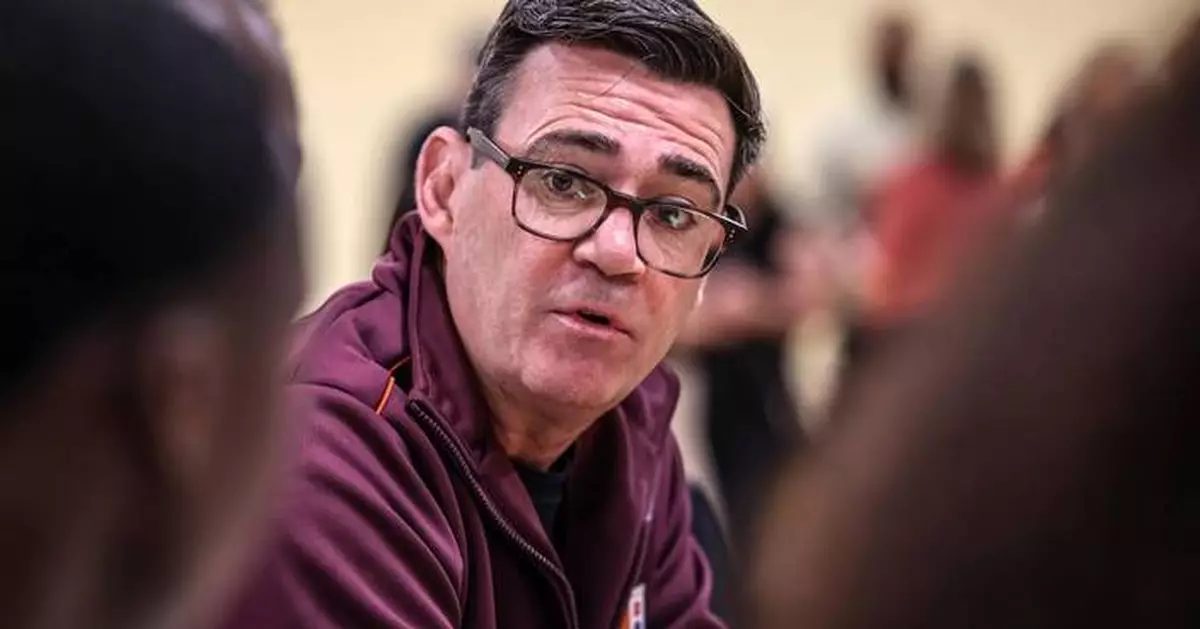
Britain's Prime Minister Andy Burnham talks with staff during a visit to a supermarket in London, Wednesday, Aug. 26, 2026, highlighting the government’s commitment to working with businesses to help young people gain experience, build confidence, and prepare for work. (Richard Pohle/Pool Photo via AP)
KATHMANDU, Nepal (AP) — Filmmaker and drone pilot Manish Maharjan crossed into Nepal from China’s Tibet through Rasuwagadhi, a border crossing closest to where last week's catastrophic flooding began, two days before the disaster. Returning home, little did he know he would be using his professional skills to help with rescue efforts along a route he has known intimately from years of travel for work.
As authorities mobilized dozens of rescue and relief teams, Maharjan joined the Nepal Army’s rescue efforts a day after the flash floods, which have since killed more than 1,000 people and left thousands missing in Nepal and China.
Maharjan has been operating thermal drones to assist rescue teams, focused on locating and finding at least 900 workers who are still missing from 12 hydropower projects buried under mud and debris. About 500 of them are believed to be trapped inside power plant tunnels.
He said drones were effective in locating people who were stranded on hillsides and in isolated places, including caves.
“We used microphone speakers to call out to them. In some places, we even played songs and then waited for a response. That worked in a few cases and helped us locate people,” Maharjan said.
While drones have helped him rescue some stranded people in open areas, the tunnels present an entirely different challenge, he said.
“We found tunnels were filled with mud like toothpaste in a tube,” Maharjan said. “There was no hollow or empty space inside.”
The Aug. 26 flash floods started after a glacial collapse high in the Himalayan region. Scientists who studied satellite images said bedrock underneath a glacier high in the Himalayan region had collapsed, taking part of the glacier with it. The rockfall was so extreme that it registered as a magnitude 5.2 seismic event.
The rocks and melted water then swelled the rivers in the valleys below, causing a torrent of water in Tibet and Nepal and causing widespread damage to critical infrastructure, including hydropower plants, roads, buildings and bridges in the region.
Some workers in the power plant tunnels managed to call for help when the disaster struck, and others who managed to flee reported their colleagues were still in the tunnels, according to Mohan Kumar Dangi, president of the Independent Power Producers’ Association. It was unclear whether rescuers have had any contact with the trapped workers since the initial calls for help.
As time slips away, rescuers are finding it increasingly difficult to locate these missing people. Experts say the first 72 hours are critical as the chances of survival drop without access to clean water. Access to breathable air is another key to survival.
Maharjan said the tunnel searches were challenging because of their difficult access and the absence of any empty space.
“I can only fly drones in tunnels that are long and straight,” he said. “Once there are bends, turns or zigzags, it becomes much harder to operate and search effectively.”
At the Rasuwagadhi hydropower project, Maharjan managed to send a drone to search deep inside and all the way to the end of the tunnel but found no sign of any life.
“We checked repeatedly but it was filled with mud and debris,” he said. “Looking at it, I could only imagine the force of the flood.”
Hussain reported from New Delhi.
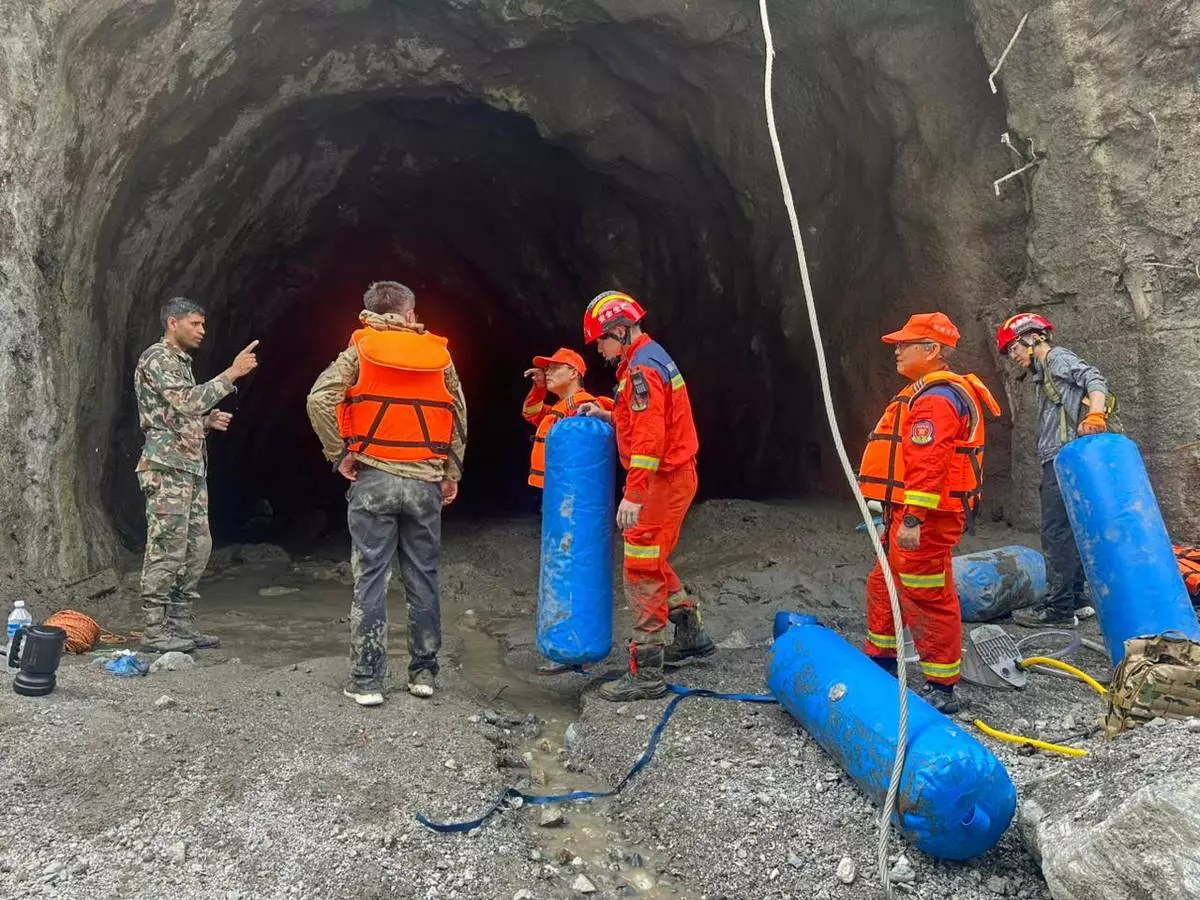
This photo provided by the Nepal Army, shows Nepal army soldiers undertake rescue operation at the site of a hydropower project in Upper Trishuli, Nepal, Monday, Aug. 31, 2026. (Nepal Army via AP)