Skip to Content Facebook Feature Image

23rd China-ASEAN Expo to take place in September in Nanning with innovative features

China

China

China

23rd China-ASEAN Expo to take place in September in Nanning with innovative features

2026-09-01 17:27 Last Updated At:09-02 12:00

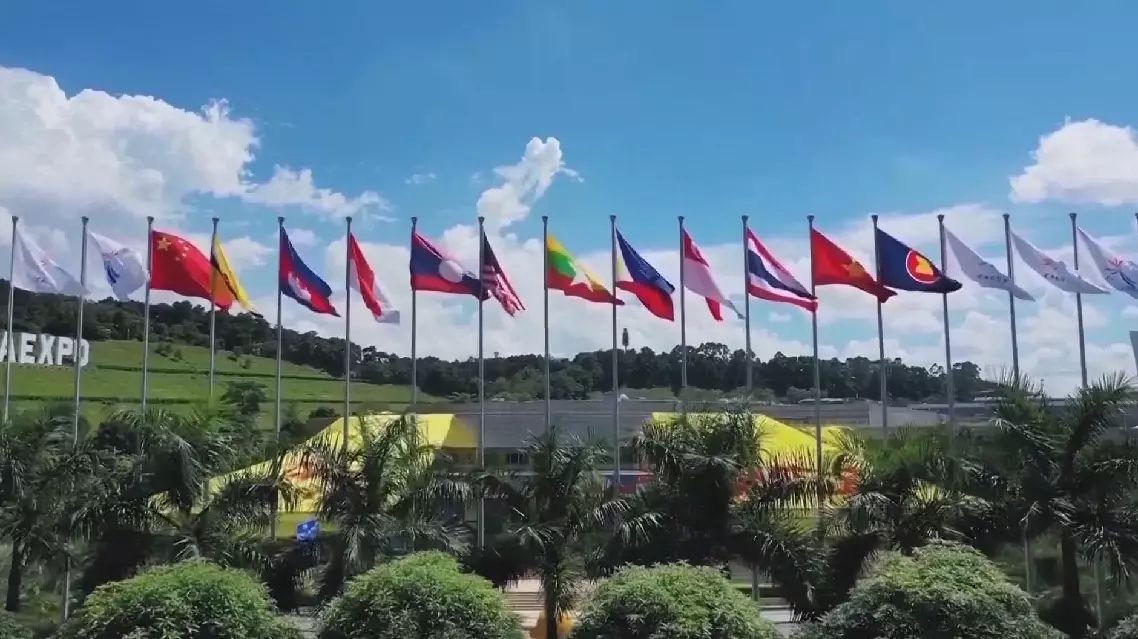
The 23rd China-ASEAN Expo will be held in Nanning, south China's Guangxi Zhuang Autonomous Region, from September 17 to 21, featuring multiple innovative measures with a focus on trade, enterprises and applications, a Chinese official said on Tuesday.

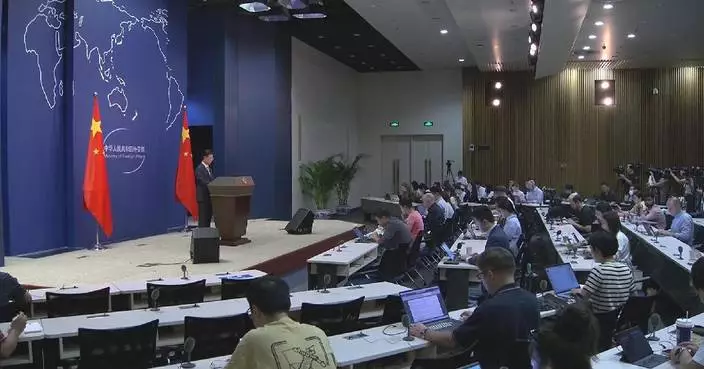
Speaking at a press conference in Beijing, Lu Xinning, vice governor of Guangxi Zhuang Autonomous Region, briefed the media on the key highlights and innovative arrangements of this year's expo.

This year, Timor-Leste will make its debut as a co-organizer, marking the first time all 11 ASEAN countries have gathered together in Nanning following the group's expansion.

A future space pavilion and a sci-tech innovation and entrepreneurship pavilion will be set up for the first time at the expo, with an upgraded AI section showcasing cutting-edge AI technologies and applications from consumer, enterprise, government and international perspectives.

"AI glasses, smart watches, AI home robots, rehabilitation care robots and photovoltaic cleaning robots can all be seen and tried on site. We have set up an 'AI marketplace' for the first time, selecting 60 companies with products suitable for ASEAN enterprises, offering more than 400 products that can all be experienced on site and ordered directly. This year's expo is not only a major platform for economic and trade exchanges, but also an experience venue for cutting-edge technologies," said Lu.

This year's expo will feature an upgraded ASEAN exhibition zone covering around 20,000 square meters, with comprehensive improvements in exhibition product structure, scale of participating countries and industrial cooperation levels, showcasing new achievements of China-ASEAN economic and trade cooperation, according to the expo secretariat.

To address exhibitors' biggest concerns about markets and orders, the expo has set up pavilions for ASEAN demands for the first time, showcasing the technological and application needs of ASEAN countries to help Chinese enterprises achieve precise connections.

The expo will also debut a model in which leading companies bring small and medium-sized enterprises (SMEs) to the event. Industry leaders will exhibit together with their upstream and downstream partners, helping SMEs expand their markets.

For ordinary visitors, this year's expo offers a richer product lineup and opportunities to experience high-tech products up close.
23rd China-ASEAN Expo to take place in September in Nanning with innovative features


23rd China-ASEAN Expo to take place in September in Nanning with innovative features
Engineers in China are turning to a new generation of homegrown electronics to tackle the challenge of transporting power across thousands of kilometers to cities across the country as it expands renewable energy generation in its western regions.

At a converter station in eastern China's Zhejiang Province, the electricity coming into this station has traveled more than 2,000 kilometers from northwest China's Gansu Province, across deserts and vast stretches of wilderness.

To transmit such a large amount of electricity over such a long distance without too much loss, it needs to raise the DC transmission voltage to ±800 kilovolts.

But compared with other projects of a similar scale, this one comes with an additional challenge -- the electricity is coming from renewable sources.

The wind blows when it wants to, and the sun can disappear behind a cloud, so renewable power can fluctuate dramatically. And if wind and solar output in Gansu changes too quickly, those fluctuations can put serious stress on the power grid. Managing that variability has been one of the biggest challenges facing renewable energy for decades.

Now there is a way to deal with it. The key lies in one of the high-tech components. It is called the IGBT, a semiconductor device about the size of a fingernail.

It essentially works like a high-speed electrical switch. By switching on and off at high frequency, it can help stabilize the voltage within milliseconds, even when the grid is hit by a lightning strike or experiences sudden fluctuations.

But this "switch" is extremely demanding. In the past, limitations in materials and manufacturing meant it could only operate under relatively low current loads. But this project operates at ±800 kilovolts. The voltage and current that each tiny device has to handle can be enough to cause it to fail.

Now, Chinese-made IGBTs have reached the performance standards required for an application of this kind. And deploying this technology on a project of this scale is a world first.

"With domestically produced components, converter valves and transformers, costs will fall further, enabling wider applications," said Zhang Mingjia, an engineering technology management specialist at State Grid Zhejiang Construction Company.

New homegrown electronics help stabilize long-distance power transmission

New homegrown electronics help stabilize long-distance power transmission

Recommended Articles