Skip to Content Facebook Feature Image

Global Governance Initiative key for shaping fairer int'l order: Russian official

China

China

China

Global Governance Initiative key for shaping fairer int'l order: Russian official

2026-09-01 20:01 Last Updated At:20:07

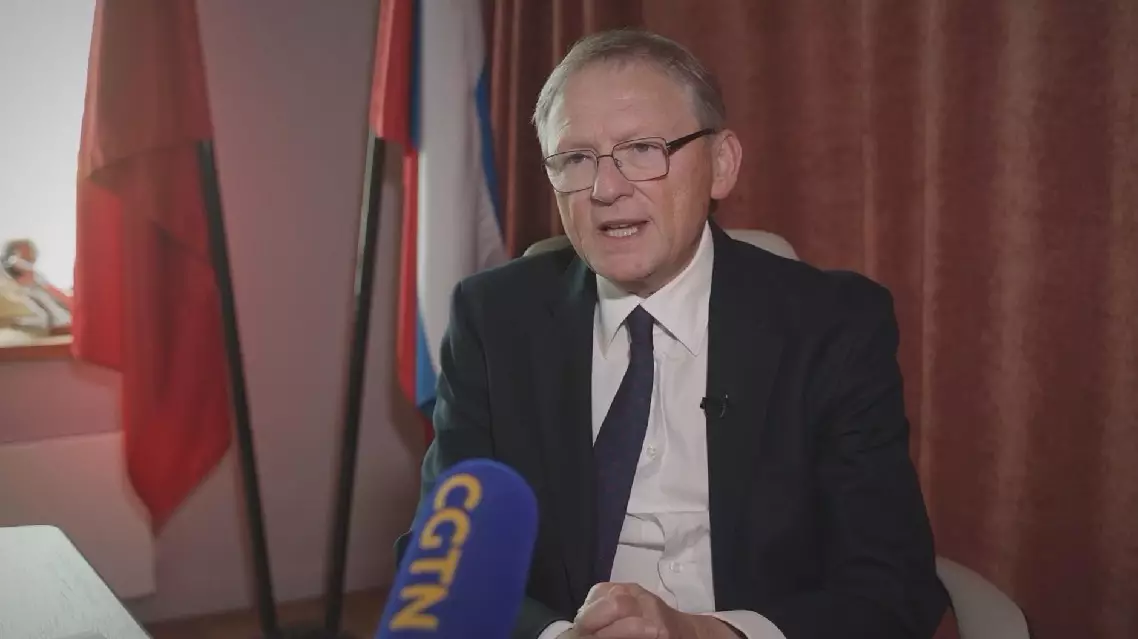
The Global Governance Initiative (GGI) proposed by Chinese President Xi Jinping offers a pivotal framework for shaping "a fair, honest, and mutually beneficial" international order, a Russian presidential special envoy said.

Boris Titov, Russia’s presidential special representative for relations with international organizations on achieving the Sustainable Development Goals (SDGs), highlighted the importance of the GGI. He shared the insights in a recent interview with China Global Television Network (CGTN). The interview took place as leaders from the 27-nation Shanghai Cooperation Organization (SCO) family gather in the Kyrgyz capital Bishkek from Monday to Tuesday to discuss global governance, multilateralism, and other pressing issues.

At the SCO Plus meeting in north China's Tianjin Municipality in 2025, President Xi proposed the GGI. The initiative aims to uphold multilateralism, promote world peace and security, advance the implementation of the United Nations' SDGs, reform and improve the global governance system, and further the development and progress of humanity.

Designed to be a shared blueprint for peace and prosperity for people and the planet by the year 2030, the SDGs refer to a collection of 17 interconnected goals that address global challenges ranging from poverty and hunger to climate action and strong institutions.

"Chinese President Xi Jinping's initiative, called the Global Governance Initiative, is very important for the development of the entire global space. And it essentially encompasses all the main goals of SDG 17, which is called 'Partnership for Sustainable Development,'" the Russian official said.

"Indeed, it's impossible for one country to resolve all the issues facing humanity, the challenges and the risks facing the community. Within the framework of these programs, we need to discuss what the global architecture will look like in the near future. Because many changes have occurred since World War II, today, completely different relations have emerged between countries, which, unfortunately, often lead to conflict. For the world to appear more sustainable, it must have sustainable global governance," he said.

Noting that only about 17 percent of the SDGs are currently on track to be met by 2030, Titov said Russia had proposed forming an Astana Group to advance the critical agenda ahead of UN talks on the post-2030 development framework, which is slated to take place next year.

"We formed the so-called Astana Group on Sustainable Development, and together with our partners, we propose formulating the foundations of the architecture of new Sustainable Development Goals for the future within the UN. Therefore, we very much hope that the SCO, China, and Russia will be able to offer the world a new world order that will be fair, honest, and mutually beneficial for all," he said.
Global Governance Initiative key for shaping fairer int'l order: Russian official

Global Governance Initiative key for shaping fairer int'l order: Russian official
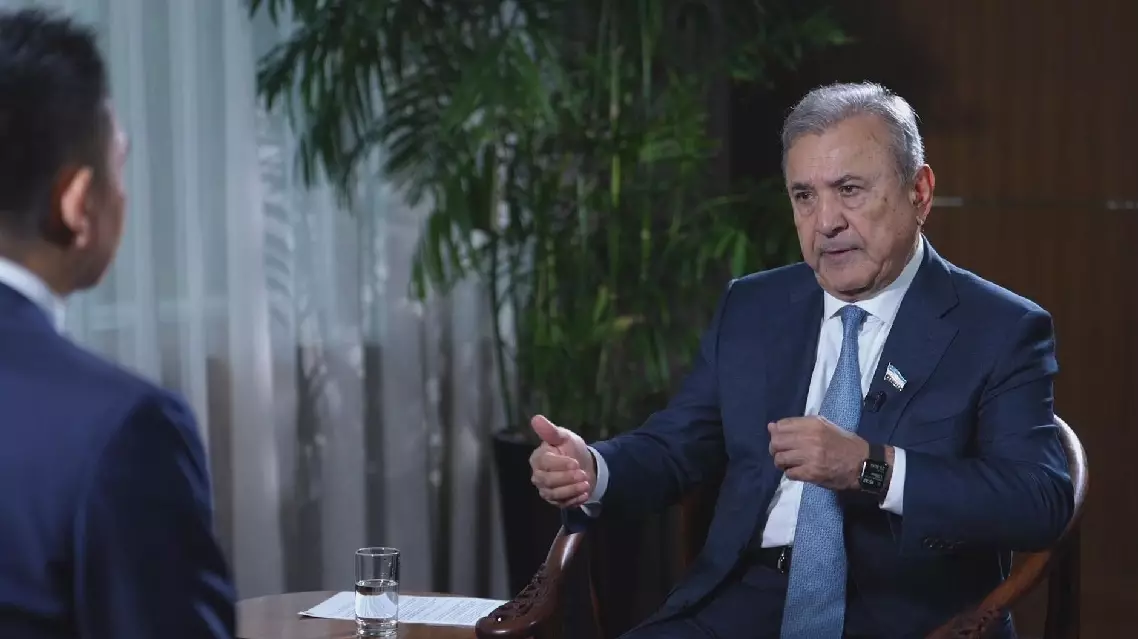
The Shanghai Cooperation Organization (SCO) has transformed from a border security bloc into a multi‑faceted regional body with global relevance, said a senior Uzbek official as leaders meet in the Kyrgyz capital Bishkek for the group’s 25th anniversary summit.

Sodiq Safoyev, first deputy chairman of Uzbekistan’s Senate, told China Media Group that the organization’s evolution reflects its expanding agenda and rising profile across Eurasia, as member states gather to discuss security, economic and regional cooperation.

"In the beginning, it was about fixing borders and fighting transnational threats to peace and stability. But then it has been realized that without addressing social and economic issues, you cannot achieve deep security. Security first of all, should rely on social and economic development. And that's why the Shanghai (Cooperation) Organization has been transformed to the organization of regional development," said Safoyev.

Safoyev said the SCO rests on two main pillars -- security and economic development -- but has steadily broadened its agenda to include cultural diplomacy, education and ecological cooperation. He added that this wider scope is a key reason the organization has begun to attract greater international attention.

"By its essence, by it's character functioning, it started to attract the attention of other countries. In the beginning, it was six countries only, China, Russia and Central Asian countries. Today there are 10 members of the organization," said the Uzbek official.

Safoyev also urged that parliamentarians be drawn into the SCO’s work, stressing that their involvement is vital to turning summit agreements into legislation and building public support.

"We hope, as parliamentarians, that parliamentarian dimension also will be added to the activity of this organization. Because in today's world, without parliamentarians, it's difficult to achieve full-fledged partnership. It's them who might transform the agreements achieved by leaders of state to the legislation and to create the legal foundation for cooperation. It's up to them to create the public support. And I hope that Bishkek will demonstrate involvement of parliamentary diplomacy as well," he said.

The summit, held Monday and Tuesday in Bishkek, is themed "25 Years of the SCO: Together Towards Sustainable Peace, Development, and Prosperity" is expected to bring together leaders from more than 20 countries.

Uzbek official highlights SCO’s expanded role amid 25th anniversary summit

Uzbek official highlights SCO’s expanded role amid 25th anniversary summit

Recommended Articles