China's PALLAS-1 Y1 carrier rocket eyes on the middle-weight deployment of low-orbit satellite constellations, said a Chinese expert after its successful launch on Tuesday from Dongfeng commercial space innovation pilot zone in northwest China.
The mission marked the maiden flight of PALLAS-1, a medium-sized, two-stage liquid carrier rocket independently developed by Galactic Energy, a Chinese private space launch enterprise.
The rocket is 52 meters long and has a core-stage diameter of 3.35 meters, a liftoff mass of 283 tons and a liftoff thrust of 350 tons. Designed to be re-used at least 25 times, it can carry five to seven tons to low Earth orbit.
"We used to see many models in the four-to-five-ton payload class, then some other models' payload capacity jumped straight to around 20 tons. The five-to-seven-ton range, even up to eight tons, remains relatively few. That is exactly the niche PALLAS-1 is built for," said Liu Baiqi, chairman of Galactic Energy.
PALLAS-1 is Galactic Energy's first product in the liquid rocket field, following the company's solid-fuel Ceres (Gushenxing) series.
Its successful debut means the company now runs two parallel product lines side by side, marking a new phase of development as it sets its sights on the large-scale constellation deployment market.
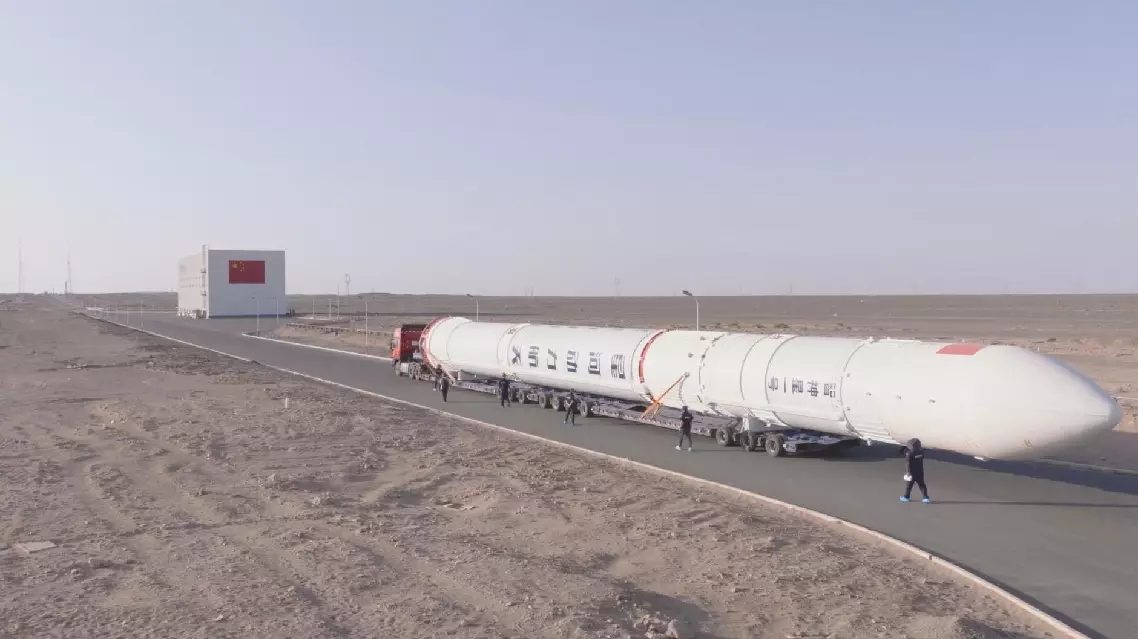
PALLAS-1 Y1 eyes on middle-weight low earth orbit
The Global Governance Initiative (GGI) proposed by Chinese President Xi Jinping offers a pivotal framework for shaping "a fair, honest, and mutually beneficial" international order, a Russian presidential special envoy said.
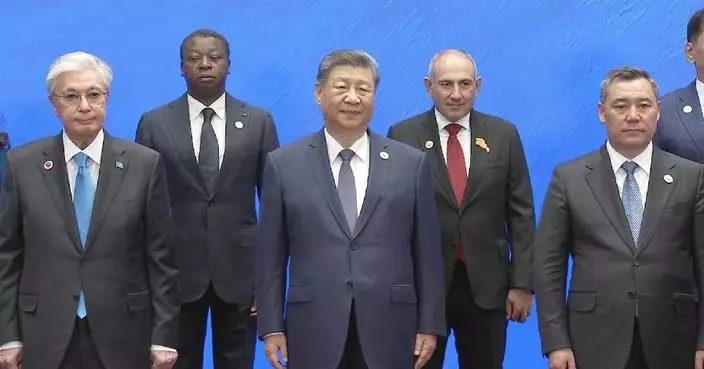
Boris Titov, Russia’s presidential special representative for relations with international organizations on achieving the Sustainable Development Goals (SDGs), highlighted the importance of the GGI. He shared the insights in a recent interview with China Global Television Network (CGTN). The interview took place as leaders from the 27-nation Shanghai Cooperation Organization (SCO) family gather in the Kyrgyz capital Bishkek from Monday to Tuesday to discuss global governance, multilateralism, and other pressing issues.
At the SCO Plus meeting in north China's Tianjin Municipality in 2025, President Xi proposed the GGI. The initiative aims to uphold multilateralism, promote world peace and security, advance the implementation of the United Nations' SDGs, reform and improve the global governance system, and further the development and progress of humanity.
Designed to be a shared blueprint for peace and prosperity for people and the planet by the year 2030, the SDGs refer to a collection of 17 interconnected goals that address global challenges ranging from poverty and hunger to climate action and strong institutions.
"Chinese President Xi Jinping's initiative, called the Global Governance Initiative, is very important for the development of the entire global space. And it essentially encompasses all the main goals of SDG 17, which is called 'Partnership for Sustainable Development,'" the Russian official said.
"Indeed, it's impossible for one country to resolve all the issues facing humanity, the challenges and the risks facing the community. Within the framework of these programs, we need to discuss what the global architecture will look like in the near future. Because many changes have occurred since World War II, today, completely different relations have emerged between countries, which, unfortunately, often lead to conflict. For the world to appear more sustainable, it must have sustainable global governance," he said.
Noting that only about 17 percent of the SDGs are currently on track to be met by 2030, Titov said Russia had proposed forming an Astana Group to advance the critical agenda ahead of UN talks on the post-2030 development framework, which is slated to take place next year.
"We formed the so-called Astana Group on Sustainable Development, and together with our partners, we propose formulating the foundations of the architecture of new Sustainable Development Goals for the future within the UN. Therefore, we very much hope that the SCO, China, and Russia will be able to offer the world a new world order that will be fair, honest, and mutually beneficial for all," he said.
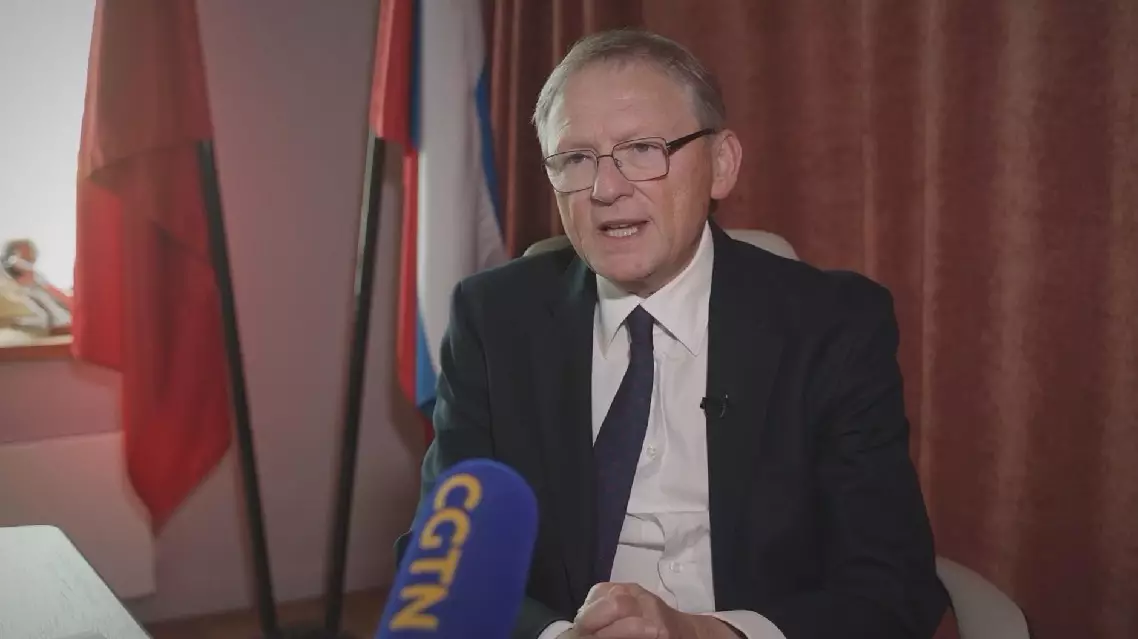
Global Governance Initiative key for shaping fairer int'l order: Russian official