The Pinglu Canal's first command and management vessel, "Pinglu 001," which integrates functions of waterway patrol, navigation dispatching, and emergency response, was officially delivered and put into service on Monday.
"Pinglu 001", an intelligent command vessel with a total length of 39.20 meters and an endurance of no less than 600 kilometers, has been classed by the China Classification Society (CCS) and is certified for safe navigation in coastal areas as well as Class A and B inland waters of the Pinglu Canal.
Accommodating seven crew members and up to 50 operational personnel with life‑saving equipment for 57 people, the vessel not only fulfills command functions but also provides rapid personnel transport and comprehensive on-site emergency support.
The vessel is equipped with advanced systems including BeiDou positioning, electronic charts, radar and echo sounder, and is fitted with a shipborne shore‑power unit.
The vessel has arrived at the Qinzhou integrated water service area. Its smart navigation system will undergo comprehensive joint commissioning with the canal's shore‑based facilities, enabling smart functions such as data integration, remote sensing and decision support.
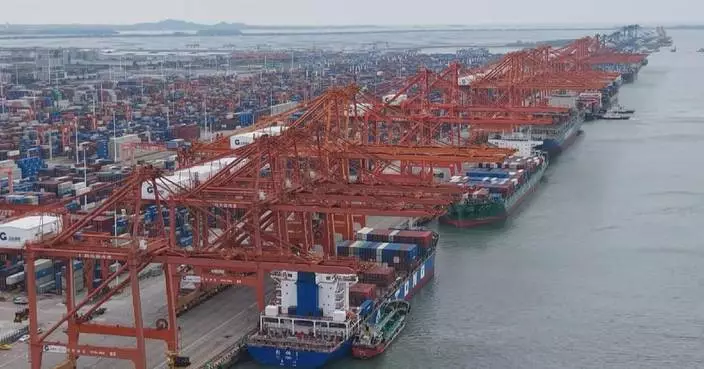
The 134.2-km Pinglu Canal is a major project along the country's New International Land-Sea Trade Corridor, a strategic route linking China's inland regions with members of the Association of Southeast Asian Nations and other global markets. The project began construction on Aug 28, 2022, and is expected to become operational this month.

First command vessel delivered for Pinglu Canal
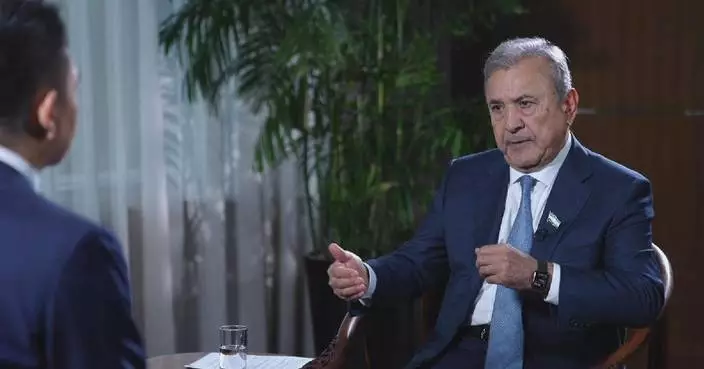
The Global Governance Initiative (GGI) proposed by Chinese President Xi Jinping offers a pivotal framework for shaping "a fair, honest, and mutually beneficial" international order, a Russian presidential special envoy said.
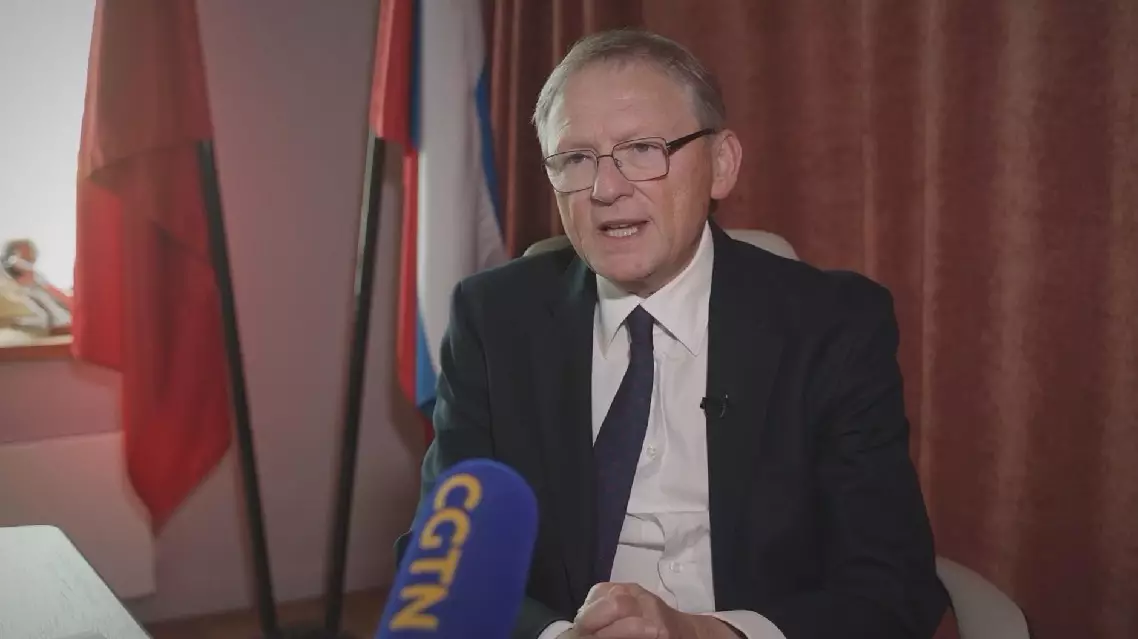
Boris Titov, Russia’s presidential special representative for relations with international organizations on achieving the Sustainable Development Goals (SDGs), highlighted the importance of the GGI. He shared the insights in a recent interview with China Global Television Network (CGTN). The interview took place as leaders from the 27-nation Shanghai Cooperation Organization (SCO) family gather in the Kyrgyz capital Bishkek from Monday to Tuesday to discuss global governance, multilateralism, and other pressing issues.
At the SCO Plus meeting in north China's Tianjin Municipality in 2025, President Xi proposed the GGI. The initiative aims to uphold multilateralism, promote world peace and security, advance the implementation of the United Nations' SDGs, reform and improve the global governance system, and further the development and progress of humanity.
Designed to be a shared blueprint for peace and prosperity for people and the planet by the year 2030, the SDGs refer to a collection of 17 interconnected goals that address global challenges ranging from poverty and hunger to climate action and strong institutions.
"Chinese President Xi Jinping's initiative, called the Global Governance Initiative, is very important for the development of the entire global space. And it essentially encompasses all the main goals of SDG 17, which is called 'Partnership for Sustainable Development,'" the Russian official said.
"Indeed, it's impossible for one country to resolve all the issues facing humanity, the challenges and the risks facing the community. Within the framework of these programs, we need to discuss what the global architecture will look like in the near future. Because many changes have occurred since World War II, today, completely different relations have emerged between countries, which, unfortunately, often lead to conflict. For the world to appear more sustainable, it must have sustainable global governance," he said.
Noting that only about 17 percent of the SDGs are currently on track to be met by 2030, Titov said Russia had proposed forming an Astana Group to advance the critical agenda ahead of UN talks on the post-2030 development framework, which is slated to take place next year.
"We formed the so-called Astana Group on Sustainable Development, and together with our partners, we propose formulating the foundations of the architecture of new Sustainable Development Goals for the future within the UN. Therefore, we very much hope that the SCO, China, and Russia will be able to offer the world a new world order that will be fair, honest, and mutually beneficial for all," he said.
Global Governance Initiative key for shaping fairer int'l order: Russian official