ASHEVILLE, N.C. (AP) — Treasury Secretary Scott Bessent says he's urging some of his G20 counterparts to take a page from the Trump administration's playbook of using tariffs and other measures to crack down on trade imbalances.
Bessent told reporters that he had warned other nations at the beginning of President Donald Trump ’s second term that the new U.S. “tariff wall” would mean that Chinese goods would flood their markets.
“And unfortunately, I was right,” Bessent told reporters on the sidelines of the G20 finance minister meetings. “The rest of the world probably needs to take a hard look at what they should be doing to protect their citizens’ jobs, their manufacturing base, so that everything they do doesn’t get offshored.”
The Trump administration's tariff policies have been criticized by economists and politicians for raising costs for U.S. consumers and, in many cases, for punishing allies. The Tax Foundation, an independent think tank, found that the tariffs imposed by the Trump administration throughout 2025 raised the overall retail price of imported consumer goods by roughly 7% relative to pre-tariff trends.
Ultimately, the U.S. Supreme Court in February decided that the sweeping global tariffs that Trump imposed under an emergency powers law during his second term in office were unconstitutional. The Trump administration has been overhauling its approach, and is eyeing an additional 7.5% tariff on Chinese imports after investigating alleged Chinese excess industrial capacity and forced-labor regulations.
Bessent met with his counterparts from China at the summit, though he did not provide details of how those talks went.
“I often say in our trade discussions with China that we do not want to pull apart from them, but we have to de-risk,” Bessent said during a conversation on Tuesday with Fox Business commentator Larry Kudlow, who was a top economic adviser to Trump in his first term.
“We have more in common with the Chinese on Iran than we disagree on," Bessent said. "The Chinese agree Iran cannot have a nuclear weapon. The Chinese agree that there should be freedom of navigation in the Strait of Hormuz.”
Bessent has said China's trade surplus, which reached a record-high $1.2 trillion in 2025, is a barrier to global economic growth — as well as what he calls excessive regulation.
Global debt has reached a record high of $353 trillion, with the U.S. debt reaching a record $40 trillion in August. Markets have been concerned about a sell-off in U.S. government bonds, but Bessent told reporters “I don't think we’re in any kind of dire situation” on bond markets.
Meanwhile, the presence of Russian Finance Minister Anton Siluanov, has continued to agitate attendees of the conference hosted by the U.S. Siluanov met with Bessent on Monday on the sidelines of the meeting, but was not included in the traditional “family photo” of ministers.
Canadian Finance Minister François-Philippe Champagne said Russia’s attendance at the G20 finance meeting “created a lot of discomfort around the table, not only from Canada, but from colleagues around the table.”
“We have made sure our discomfort is being heard by colleagues with respect to who is in attendance at the meeting,” Champagne said.
European commissioner for the Economy, Valdis Dombrovskis, said during a press conference with reporters Tuesday that it is not the time to “normalize” relations with Russia.
Associated Press reporter Rob Gillies in Toronto contributed to this report.
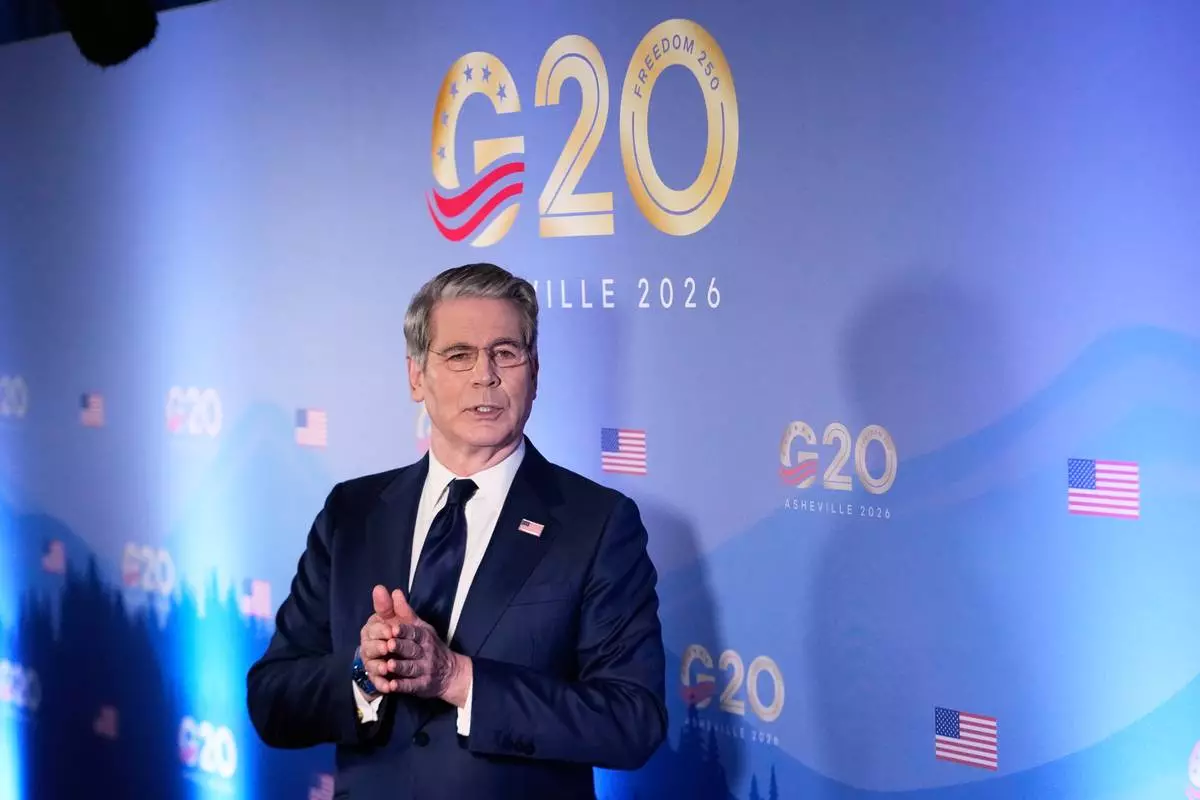
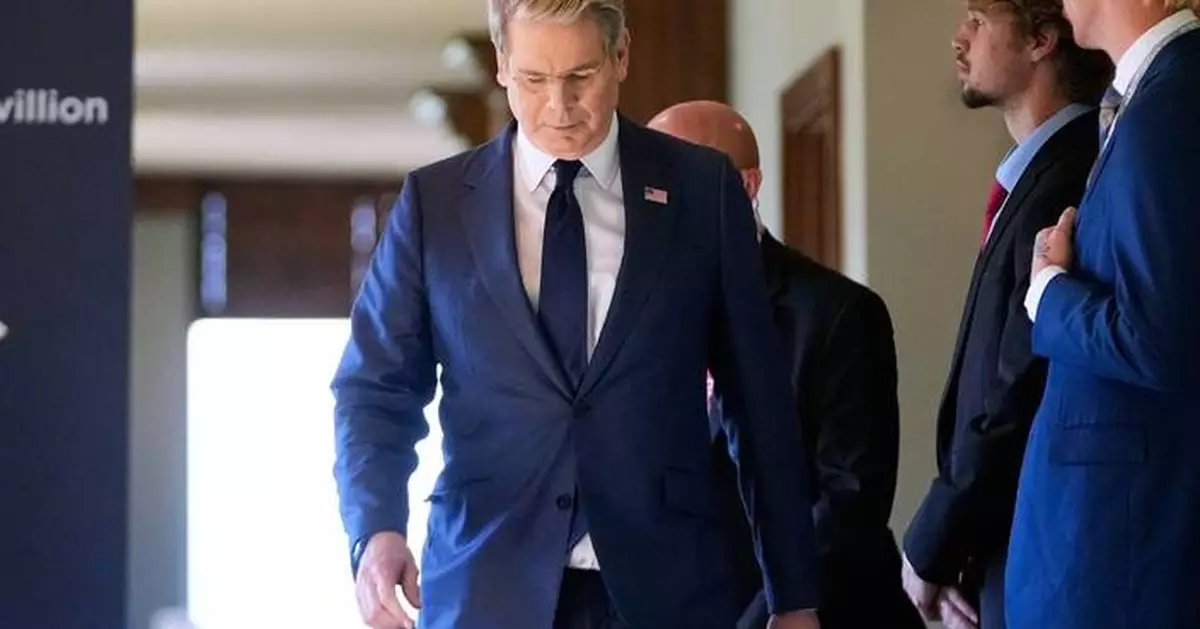
Treasury Secretary Scott Bessent speaks to reporters at the G20 Finance Ministerial in Asheville, N.C., Tuesday, Sept. 1, 2026.(AP Photo/Gerald Herbert)
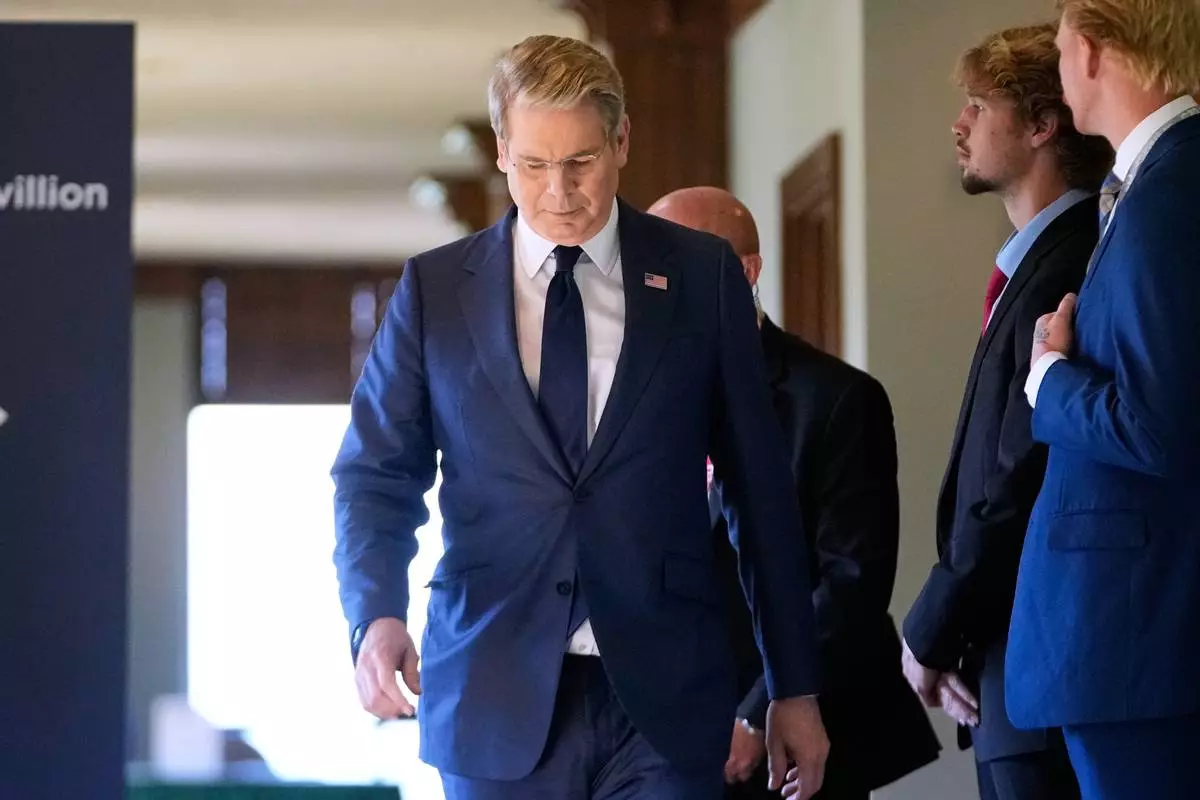
Treasury Secretary Scott Bessent speaks to reporters at the G20 Finance Ministerial in Asheville, N.C., Tuesday, Sept. 1, 2026. (AP Photo/Gerald Herbert)
WASHINGTON (AP) — The U.S. military hit targets in Iran on Tuesday and Tehran fired missiles and drones in response as hostilities flare once again in an intermittent war that has lasted more than six months. One U.S. strike hit a home hosting a wedding, killing two people and wounding dozens, local officials said.
The U.S. strikes followed others on Sunday that abruptly ended a month without military action and threatened to fully reignite a conflict that has spiked global oil prices and posed political problems for Republicans in November's midterm congressional elections. The renewed fighting comes after President Donald Trump had appeared to pivot toward trying to bend Iran to his will through economic sanctions.
“If the failed Nation of Iran retaliates for this very justified attack, they will be hit again at a much harder and higher level, but it will not be the biggest attack of them all, that is waiting in the wings,” Trump warned on social media.
U.S. Central Command said the latest strikes were in response to Tehran trying to attack commercial ships and American forces in the Middle East. Trump offered an additional explanation, telling Fox News in a phone call that U.S. forces struck Iran's radars.
“They tried to rebuild their radar because they can’t see anything,” Trump told Fox. “We waited until it was almost built and then we hit it."
Iranian state media reported that the U.S. had bombed civilian sites along Iran's southern coast and hit a civilian airport. A U.S. strike hit a home where a wedding ceremony was being held in Kuhestak in southern Iran, killing two people and wounding at least 50 others, Ahmad Nafisi, Hormozgan Province’s deputy governor, told Iranian state television in a phone call. Red Crescent rescue officials in the province said the death toll had risen to four, including a child.
U.S. Central Command did not immediately respond to an email seeking comment on those reports.
Iran’s Armed Forces General Staff and its joint military command said the armed forces would deliver what they described as “crushing and devastating blows” against the United States. The state-run IRNA news agency cited a statement by Iran’s paramilitary Revolutionary Guard, which warned that the attacks have only strengthened the Islamic Republic’s resolve and tightened Iran’s effective closure of the Strait of Hormuz, through which 20% of the world’s oil normally flows.
Explosions were reported across several southern Iranian coastal areas, including the port city of Bandar Abbas that is home to naval and air force facilities as well as Qeshm Island in the Strait of Hormuz. Witnesses in Bandar Abbas told The Associated Press that the explosions were stronger than those on Sunday and said they saw smoke rising from the eastern part of the city on the strait.
Iranian state television said U.S. strikes hit a fishmeal factory on Qeshm Island and several civilian sites in Hormozgan province. It said a fishing pier and a Ports and Maritime Organization tower in Sirik were among the locations struck.
State TV also reported that the U.S. military struck the civilian Jiroft Airport in central Iran's Kerman province, saying a projectile struck an area outside the runway and caused no casualties or damage to airport infrastructure.
The U.S. and Iran are both seeking control over the Strait of Hormuz, a narrow waterway off Iran's coast that is a vital oil shipping corridor. Tehran effectively closed it after the war began.
Oil prices have moved sharply higher this week with renewed clashes between Iran and the United States. Crude, already up about 7% this week, continued to rise following the strikes on Tuesday.
The price of crude has jumped more than 50% this year and it’s dragged the cost of gasoline upward with it. The cost for a gallon of regular gasoline in the U.S. ticked higher again overnight to $4.10, according to AAA. Last year at this time, a gallon cost $3.19.
Before military action began again, the Trump administration had argued that hitting the right economic target in a campaign of financial isolation would get Tehran to its breaking point. Now, strikes are renewing even as U.S. stockpiles of advanced interceptors have been diminishing and the war has been unpopular among many Americans.
A return to open conflict would be dangerous for the region, where Iran has targeted U.S. military bases and infrastructure in Gulf countries since the war began.
Iranian President Masoud Pezeshkian said earlier Tuesday before the latest strikes that the Islamic Republic is ready to return to the interim ceasefire deal reached with the U.S. in June if Washington does the same.
“If the U.S. returns to its commitments in the memorandum of understanding, the Islamic Republic of Iran will immediately reciprocate,” Iranian state media cited Pezeshkian as saying at the Shanghai Cooperation Organization summit in Kyrgyzstan.
The June interim deal called for an immediate ceasefire and started a 60-day period for negotiations aimed at reaching a wider agreement, but crumbled soon afterward.
In the previous strikes on Sunday, U.S. Central Command said its forces struck Iranian rocket launchers that would launch sea mines into the strait.
Iran responded to Sunday's attacks by launching missiles at U.S. sites in Jordan, which were intercepted, while the United Arab Emirates said it stopped an Iranian drone over its waters. Trump acknowledged Monday that more strikes might be necessary.
The American military in recent days has cast the renewed fighting as limited, though Trump had acknowledged Monday that more strikes might be necessary.
U.S. Central Command said Monday on X that its attacks on Iranian targets on Sunday were narrowly focused.
“U.S. forces took limited, precise action against IRGC minelaying forces posing an imminent threat in the Strait of Hormuz,” U.S. Central Command said. “In essence, Iran created the threat and the U.S. military eliminated it to protect civilian mariners, commercial shipping, and the free flow of global commerce.”
Central Command reiterated Tuesday that its attacks followed Iranian aggression against commercial vessels and American troops in the region.
Associated Press writers Aamer Madhani and Michelle L. Price in Washington and Charles Sheehan in New York contributed to this report.
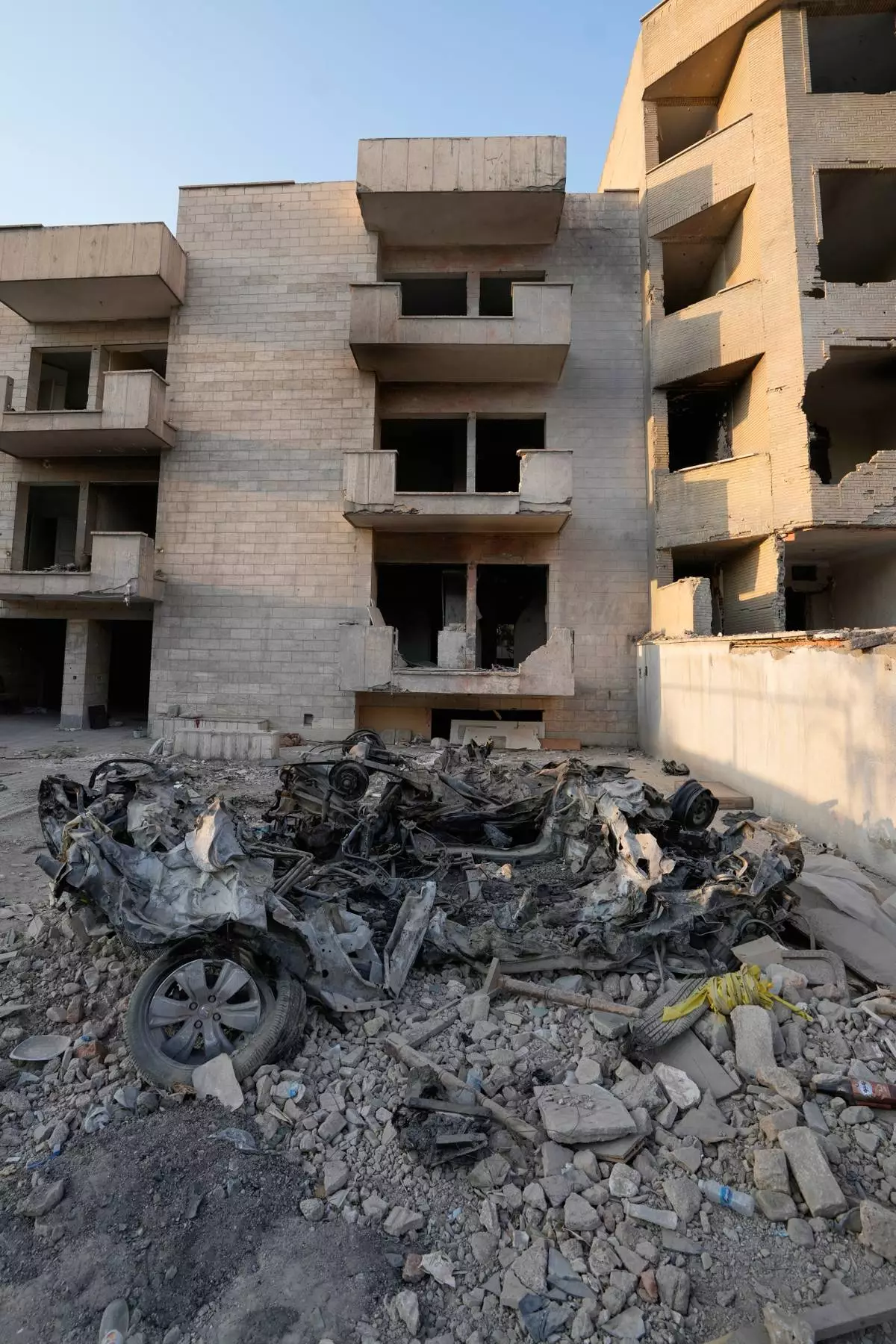
Cars and residential buildings damaged in a U.S.-Israeli strike on March 8 remain in ruins in Tehran, Iran, Thursday, Aug. 27, 2026. (AP Photo/Vahid Salemi)
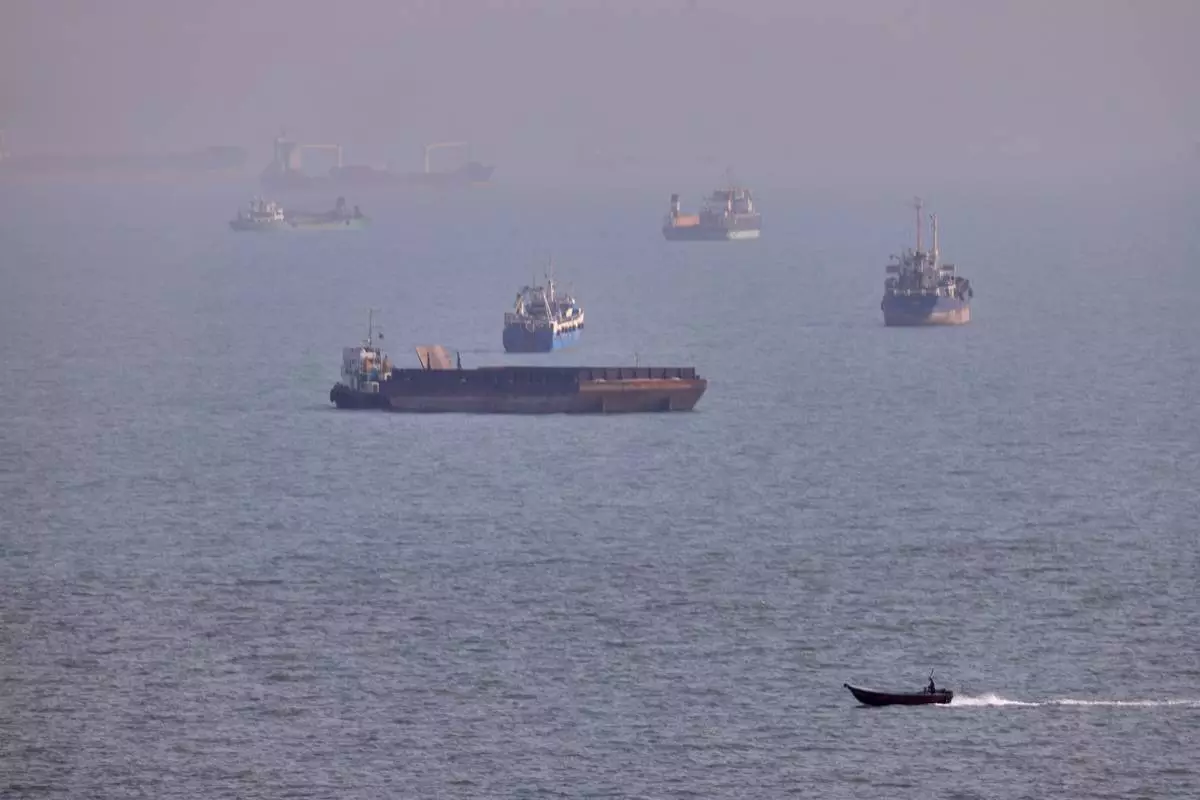
FILE - A small boat sails past cargo ships and other commercial vessels anchored in the Strait of Hormuz off Bandar Abbas, Iran, Wednesday, Aug. 5, 2026. (Amirhosein Khorgooi/ISNA via AP, File)
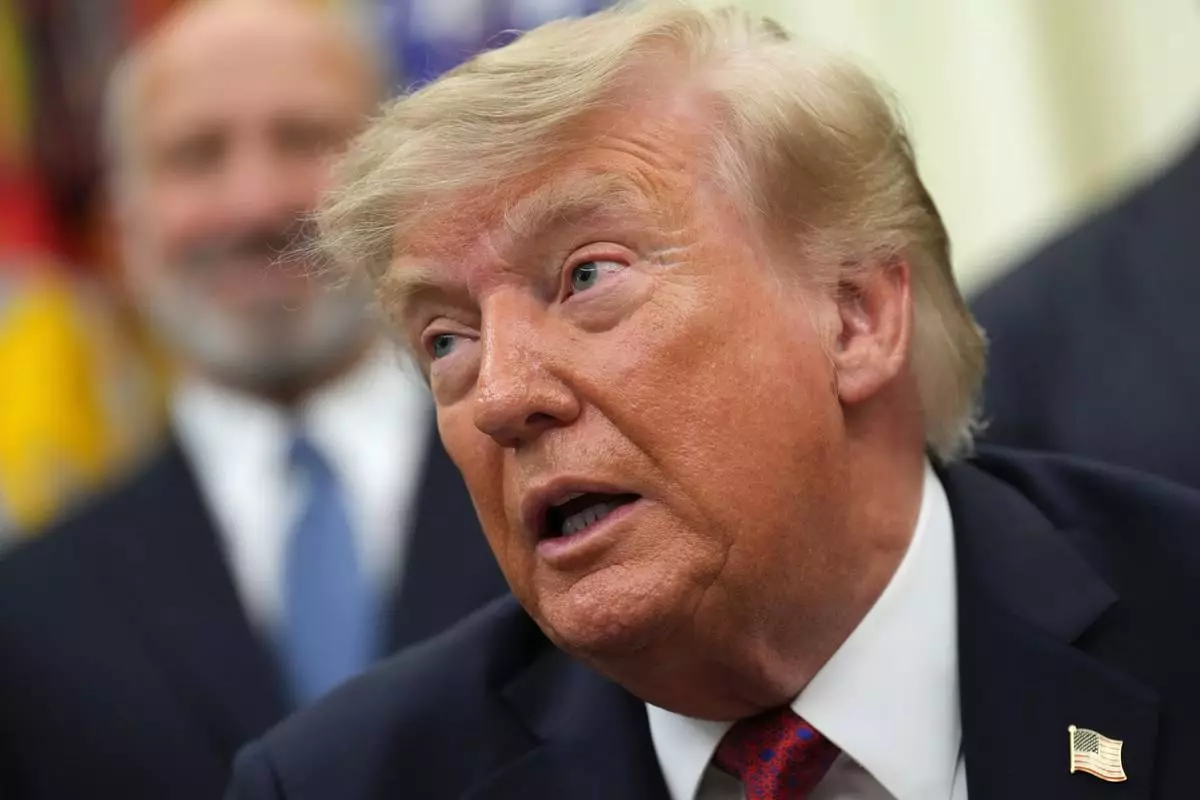
President Donald Trump speaks in the Oval Office of the White House, Monday, Aug. 31, 2026, in Washington. (AP Photo/Jacquelyn Martin)