Skip to Content Facebook Feature Image

HIMS DEADLINE ALERT: Faruqi & Faruqi, LLP Reminds Hims Investors of Securities Class Action Lawsuit Deadline on November 2, 2026

Business

HIMS DEADLINE ALERT: Faruqi & Faruqi, LLP Reminds Hims Investors of Securities Class Action Lawsuit Deadline on November 2, 2026
Business

Business

HIMS DEADLINE ALERT: Faruqi & Faruqi, LLP Reminds Hims Investors of Securities Class Action Lawsuit Deadline on November 2, 2026

2026-09-02 05:23 Last Updated At:05:40

NEW YORK--(BUSINESS WIRE)--Sep 1, 2026--

Faruqi & Faruqi, LLP, a leading national securities law firm, is investigating potential claims against Hims & Hers Health, Inc. (“Hims” or the “Company”) (NASDAQ: HIMS) and reminds investors of the November 2, 2026 deadline to seek the role of lead plaintiff in a federal securities class action that has been filed against the Company.

This press release features multimedia. View the full release here: https://www.businesswire.com/news/home/20260901880368/en/

Faruqi & Faruqi is a leading national securities law firm with offices in New York, Pennsylvania, California and Georgia. The firm has recovered hundreds of millions of dollars for investors since its founding in 1995. See www.faruqilaw.com.

As detailed below, the complaint alleges that the Company and its executives violated federal securities laws by making false and/or misleading statements and/or failing to disclose that: (1) the Company shared consumers' health information with third-party advertising platforms; (2) the Company charges consumers for prescriptions almost immediately after they submit an intake form, despite telling consumers that they will be able to consult with a medical provider to find a treatment that is "right for them;" (3) the foregoing conduct subjected the Company to regulatory scrutiny; (4) as a result of the foregoing, the Company was reasonably likely to incur fees and penalties; and (5) as a result of the foregoing, Defendants' positive statements about the Company's business, operations, and prospects were materially misleading and/or lacked a reasonable basis.

On July 29, 2026, during market hours, the Federal Trade Commission announced it had filed a lawsuit against Hims "alleging that the telehealth provider shared consumers' sensitive health information about medical conditions with third-party advertising platforms despite claiming its services maintain consumers' privacy and deceives users about its billing and cancellation practices." On this news, Hims's stock price fell $4.32, or 14.73%, to close at $25.00 per share on July 29, 2026, on unusually heavy trading volume.

The court-appointed lead plaintiff is the investor with the largest financial interest in the relief sought by the class who is adequate and typical of class members who directs and oversees the litigation on behalf of the putative class. Any member of the putative class may move the Court to serve as lead plaintiff through counsel of their choice, or may choose to do nothing and remain an absent class member. Your ability to share in any recovery is not affected by the decision to serve as a lead plaintiff or not.

Faruqi & Faruqi, LLP also encourages anyone with information regarding Hims’s conduct to contact the firm, including whistleblowers, former employees, shareholders and others.

To learn more about the Hims class action, go to www.faruqilaw.com/HIMS or call Faruqi & Faruqi partner Josh Wilson directly at 877-247-4292 or 212-983-9330 (Ext. 1310).

Follow us for updates on LinkedIn, on X, or on Facebook.

Frequently Asked Questions (FAQ) for Investors Regarding the Hims Securities Class Action Lawsuit:

What is the Hims securities fraud lawsuit about?

Faruqi & Faruqi, LLP has filed a securities class action lawsuit alleging that Hims & Hers Health, Inc. (NASDAQ: HIMS) made materially false and misleading statements to investors during the Class Period. The complaint alleges that the Company shared consumers' sensitive health information with third-party advertising platforms despite representing that its services maintain consumer privacy, and that the Company allegedly charged consumers for prescriptions almost immediately after intake form submission while telling consumers they would first be able to consult with a medical provider. The lawsuit further alleges that this conduct subjected Hims to regulatory scrutiny and made the Company reasonably likely to incur fees and penalties. On July 29, 2026, the Federal Trade Commission announced it had filed a lawsuit against Hims alleging these practices, and on that news Hims's stock price allegedly fell $4.32, or approximately 14.73%, to close at $25.00 per share on unusually heavy trading volume. As a result of the foregoing, the complaint alleges that Defendants' positive statements about the Company's business, operations, and prospects were materially misleading and/or lacked a reasonable basis.

Who may be eligible to participate in the lawsuit?

Investors who purchased or otherwise acquired securities of Hims & Hers Health, Inc. (NASDAQ: HIMS) on the NASDAQ exchange between August 4, 2025 and July 29, 2026, inclusive, may be eligible to participate in this class action lawsuit. Eligibility to participate in any potential recovery is not limited to investors who seek appointment as lead plaintiff; any investor who purchased Hims securities during the Class Period may be a class member. Eligible investors are encouraged to review their trading records to determine whether their purchases fall within the defined Class Period. Investors with questions about their eligibility may wish to consult with counsel to better understand their rights and options in connection with this litigation.

What is a lead plaintiff, and how can I seek appointment?

A lead plaintiff is a court-appointed representative who serves on behalf of all class members and plays an active role in directing the litigation, including working with counsel on case strategy and settlement decisions. Any investor who purchased Hims securities during the Class Period and suffered a loss may move the court for appointment as lead plaintiff, provided that motion is filed no later than November 2, 2026. Courts typically appoint the investor or group of investors with the largest financial interest in the litigation who also satisfy the requirements of Federal Rule of Civil Procedure 23 as lead plaintiff. Importantly, an investor need not seek appointment as lead plaintiff in order to participate in or share in any recovery that may result from the litigation. Investors who do not seek lead plaintiff status retain the right to remain members of the class and benefit from any judgment or settlement.

Why should investors contact Faruqi & Faruqi, LLP?

Faruqi & Faruqi, LLP has represented investors in securities litigation for decades and has recovered hundreds of millions of dollars for shareholders. Investors who purchased Hims securities during the Class Period may contact the firm to discuss their legal rights, potential claims, and the lead plaintiff process at no cost or obligation.

Attorney Advertising. The law firm responsible for this advertisement is Faruqi & Faruqi, LLP ( www.faruqilaw.com ). Prior results do not guarantee or predict a similar outcome with respect to any future matter. We welcome the opportunity to discuss your particular case. All communications will be treated in a confidential manner.

HIMS DEADLINE ALERT: Faruqi & Faruqi, LLP Reminds Hims Investors of Securities Class Action Lawsuit Deadline on November 2, 2026


HIMS DEADLINE ALERT: Faruqi & Faruqi, LLP Reminds Hims Investors of Securities Class Action Lawsuit Deadline on November 2, 2026
SACRAMENTO, Calif. (AP) — The California Assembly opted not to vote Tuesday on legislation meant to help wildfire victims, deciding at the last minute to push back a decision on a bill that some Democrats, including Gov. Gavin Newsom, said wouldn't meaningfully address the financial challenges caused by catastrophic blazes.

Lawmakers introduced the legislation over the weekend after they rejected an ambitious proposal by Newsom that would have limited electric companies’ financial liability for fires sparked by their equipment.

After deciding not to vote Tuesday, Assembly Speaker Robert Rivas said lawmakers would revisit the issue this fall.

“The proposal before us does not yet deliver the relief, accountability or meaningful reform that Californians deserve,” the Democrat said in a statement. “So, we are going back to work — and we will not stop until we have done everything in our power to deliver real results.”

Newsom's plan that was rejected over the weekend would have reduced the amount utilities had to pay some victims and barred insurance companies from suing electrical companies to get reimbursed for damages paid out to homeowners.

The governor said the last-minute compromise he made with lawmakers would have had some benefits for wildfire victims, such as getting paid faster, but that it failed to make necessary, sweeping changes to tackle the question of who covers the cost of fires ignited by utility equipment.

"We need comprehensive structural reform to protect the state from catastrophic fires, prioritize wildfire survivors, hold utility executives accountable, and provide reliable, affordable power to all Californians,” Newsom said in a statement.

Monique Limón, the president pro tempore of the state Senate, said she was disappointed that the deal wasn't passed Tuesday.

“Thousands of survivors made their voices clear — they needed reform to ensure the next wildfire does not continue to cause the mental and financial stress that recent disasters have placed on Californians,” the Democrat said in a statement.

Newsom's failure to get his full plan passed by the end of the session marked a rare loss for the governor, who has often found support for his policy wishes in the Democratic-led Legislature. It comes as he wraps his final session before leaving office in January.

Fire victims heavily criticized his proposal, even protesting outside the governor's mansion in Sacramento last week. They argued Newsom’s plan would have placed the needs of utilities over those of victims, while insurance companies said shifting more of the cost of damage onto them would have required them to raise rates for policyholders.

Joy Chen, executive director of Every Fire Survivor’s Network, a group of victims of the 2025 Los Angeles-area fires, said the deal was a win for them.

“Survivors from across California came to Sacramento and asked our elected representatives to stand with the people whose homes, communities and lives have been devastated,” she said in a statement. “They listened.”

Newsom hoped his plan would help stabilize the state's notoriously high electricity rates by protecting utilities from the full financial impacts of wildfires. Utilities have raised rates to pay for wildfire prevention and recovery as climate change has made the blazes more intense and frequent. Under California law, utilities have to pay damages for fires ignited by their equipment, even if a judge doesn’t find them negligent.

The question of who should cover the cost of utility-sparked fires has persisted throughout Newsom’s tenure, which began after the most destructive wildfire in state history. He signed a law in 2019 — his first year in office — that created a $21 billion fund, paid for by utility shareholders and ratepayers, to help utilities pay for wildfire damages if they take certain safety measures. He and lawmakers agreed last year to supplement the pot of money with another $18 billion fund.

Newsom unveiled his latest proposal as Southern California Edison faces claims from the state’s second-most destructive blaze, a 2025 fire that killed 19 people outside of Los Angeles.

The bill lawmakers were slated to vote on would have created a program to ensure that fire victims get paid more quickly, banned hedge funds from profiting from wildfire claims and barred utility executives from receiving bonuses if their company's equipment sparked a blaze that ends up damaging or destroying more than 500 buildings.

The California Catastrophe Response Council, which oversees the wildfire fund, would have to appoint an administrator to create a process to resolve victim claims more quickly.

Pacific Gas & Electric, which filed for bankruptcy in 2019 after it faced claims from a devastating Northern California blaze started by the utility's equipment, and Edison International, Southern California Edison's parent company, were disappointed with the deal. They said in a letter to lawmakers that the bill would fail to stabilize rates for Californians and wouldn't provide “durable, long-term solutions” for compensating victims, sustaining the state's wildfire fund, or managing utilities' financial risk.

Assemblymember Rick Zbur, a Democrat, called it a “disaster” that lawmakers couldn't agree on making more sweeping reforms.

“We’re nibbling around the edges, and we’re not dealing with the structural issues,” he said at a hearing on the bill.

Katelyn Roedner Sutter, of the Environmental Defense Fund, was also underwhelmed with the proposal, saying it wouldn't go far enough to lower the risk of fires and stabilize electricity and insurance rates.

“The best I can say about this bill is it's fine,” she said after the hearing.

Lawmakers also passed a bill Monday that would create the nation’s first standards for testing and cleaning up lead, asbestos and other toxic contaminants inside homes after a wildfire.

Assemblymember John Harabedian, a Democrat who wrote the bill, said it was borne out of the deadly 2025 Eaton Fire that swept through Altadena, which he represents. He said it’s important for lawmakers to “figure out very quickly how to protect wildfire survivors and rebuild communities,” and the bill is one way to do that.

Associated Press reporter Dorany Pineda in Los Angeles contributed to this report.

FILE - California Gov. Gavin Newsom attends the National Association of Latino Elected and Appointed Officials conference in Los Angeles, July 14, 2026. (AP Photo/Jae C. Hong, File)

FILE - California Gov. Gavin Newsom attends the National Association of Latino Elected and Appointed Officials conference in Los Angeles, July 14, 2026. (AP Photo/Jae C. Hong, File)

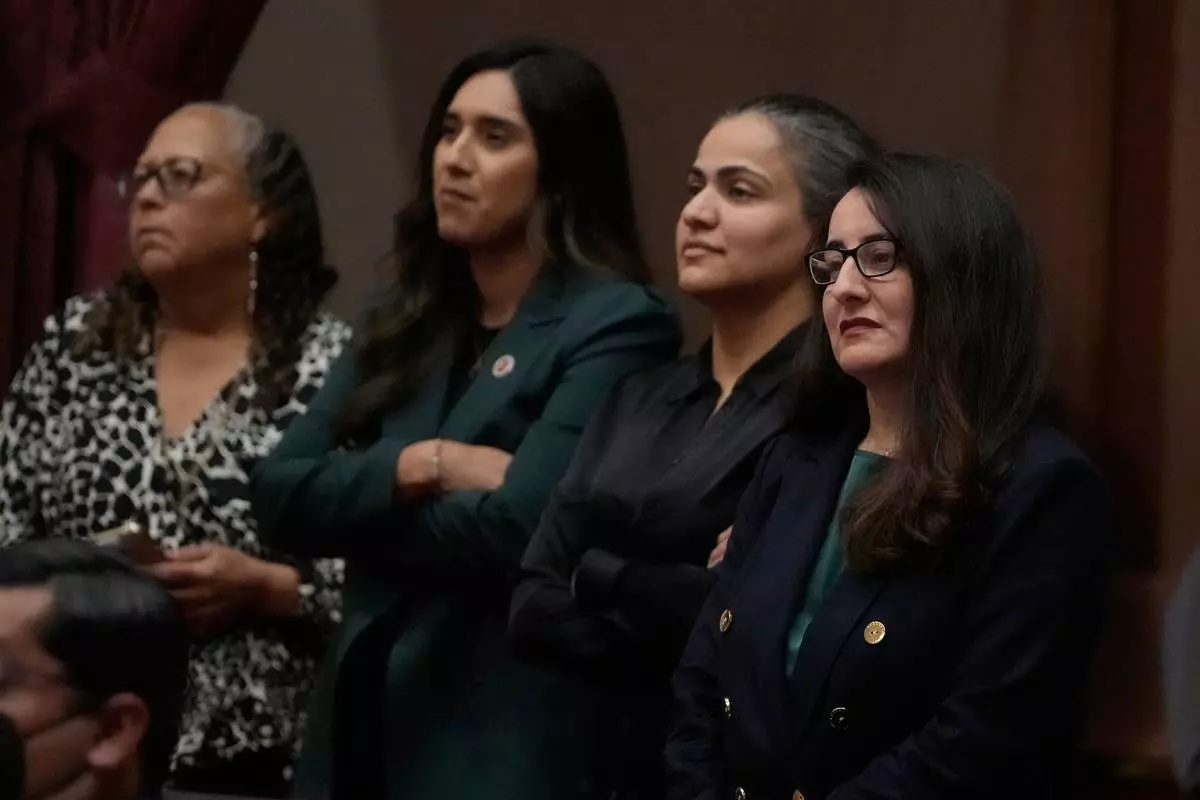
Senate President pro Tempore Monique Limón, right, listens to speakers with, from right, state Senators Aisha Wahab, Sabrina Cervantes and Laura Richardson during a floor session in the Senate Chambers at the Capitol, Monday, Aug. 31, 2026, in Sacramento, Calif. (AP Photo/Jeff Chiu)

Senate President pro Tempore Monique Limón, right, listens to speakers with, from right, state Senators Aisha Wahab, Sabrina Cervantes and Laura Richardson during a floor session in the Senate Chambers at the Capitol, Monday, Aug. 31, 2026, in Sacramento, Calif. (AP Photo/Jeff Chiu)

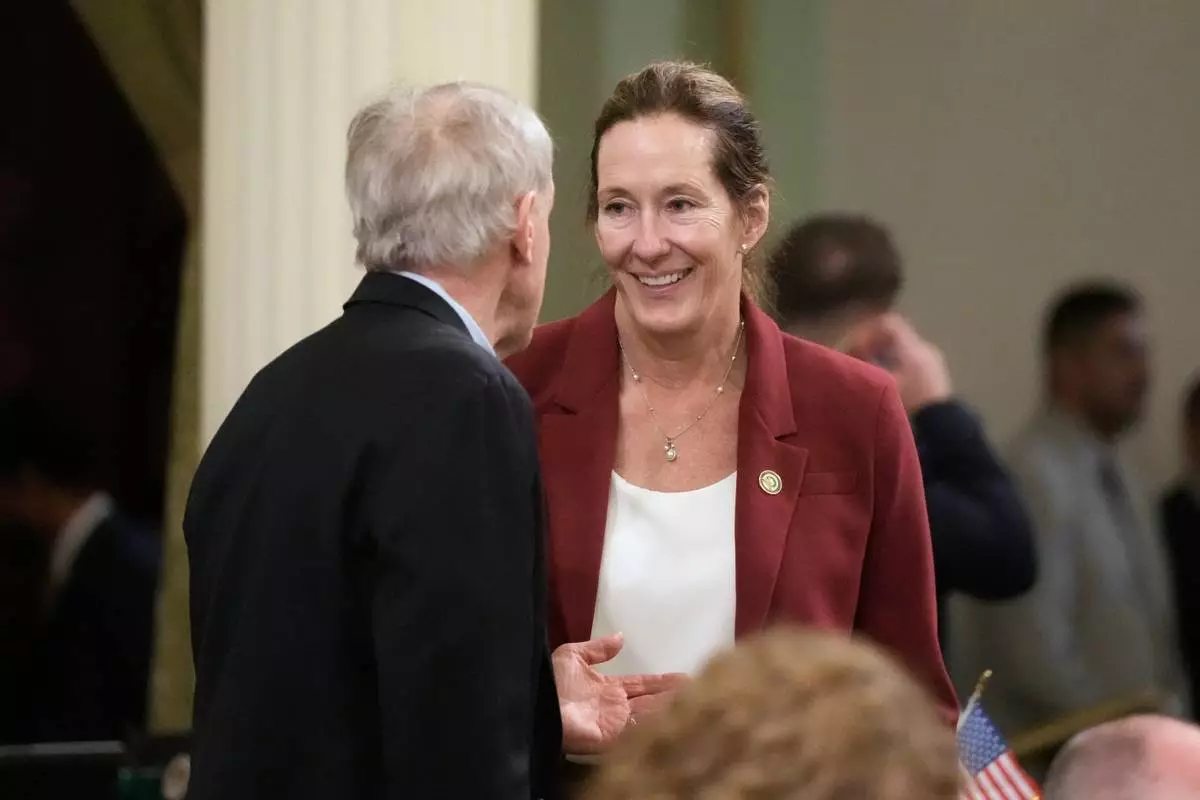
Assemblymember Jacqui Irwin, right, talks with Assemblymember Steve Bennett during an Assembly session at the Capitol, Monday, Aug. 31, 2026, in Sacramento, Calif. (AP Photo/Jeff Chiu)

Assemblymember Jacqui Irwin, right, talks with Assemblymember Steve Bennett during an Assembly session at the Capitol, Monday, Aug. 31, 2026, in Sacramento, Calif. (AP Photo/Jeff Chiu)

Recommended Articles