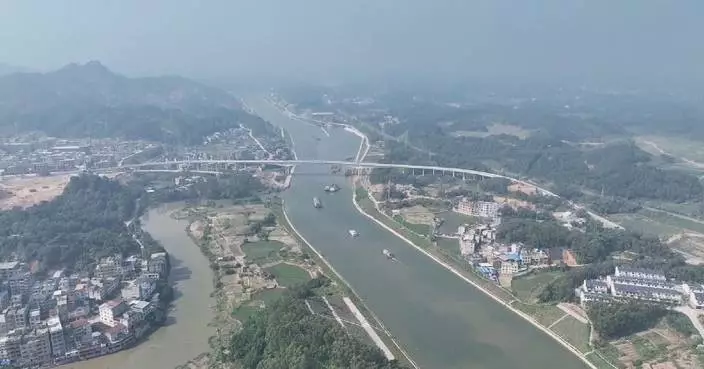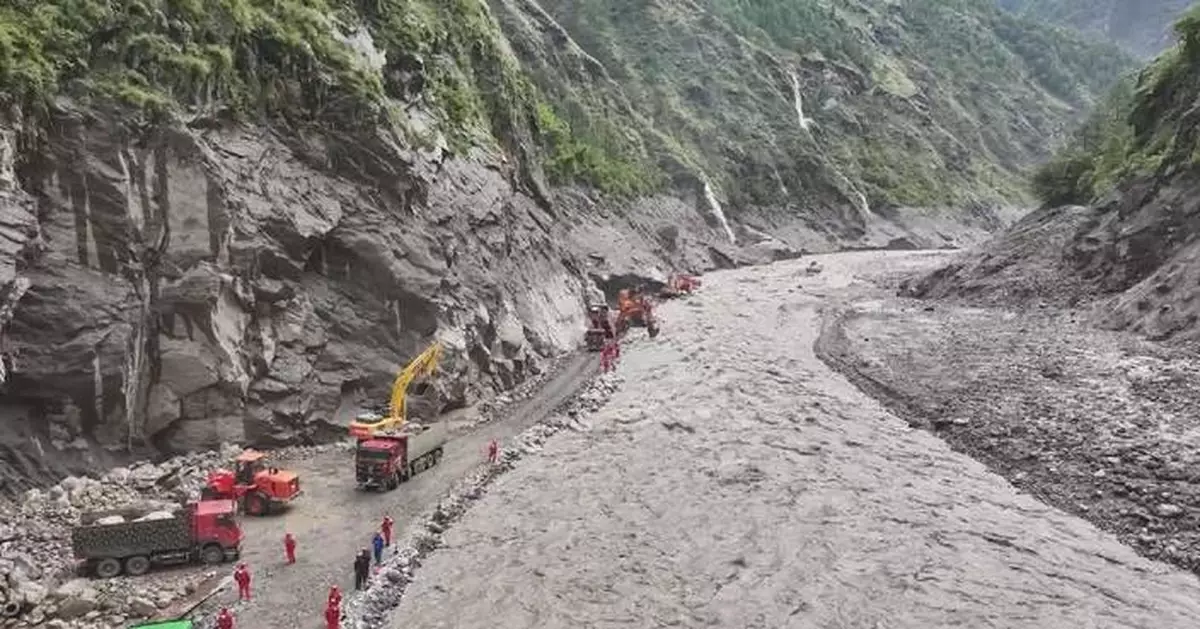
The rescue and relief operation at the mudslide-hit Gyirong Port in southwest China's Xizang Autonomous Region entered its seventh day on Tuesday as more personnel and equipment were sent to search for survivors, repair roads, set up communication base stations and restore power lines.
Memorial services were also held on Tuesday morning in Gyirong County to mourn the victims of the August 26 mudslide.
The disaster, triggered by a high-altitude glacier collapse in Nepal, killed 16 people and left 546 others missing, according to the regional government's latest update.
Among the missing, authorities confirmed that 261 foreign nationals from 23 countries have been identified as unaccounted for.
More than 2,000 personnel have joined the search and rescue operations, including from the People's Liberation Army, the People's Armed Police Force and China Anneng, a state-owned engineering and rescue enterprise.
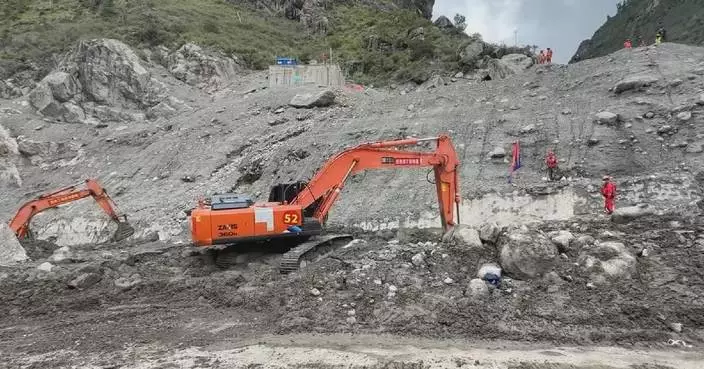
At Gyirong Port, the center of the devastation, rescue teams deployed enhanced radar life detectors, trace-gas detection devices and other specialized equipment to conduct grid-based searches.
The search perimeter has been expanded to the banks of the Kyirong Tsangpo River. Air-dropped supplies continued to reinforce personnel and equipment in the area.
"We are scheduling multiple flight missions based on weather conditions to accelerate the rescue progress," said Liu Delong, an official from the Department of Rescue Coordination and Contingency Planning with the Chinese Ministry of Emergency Management.
Clearing the blocked National Highway G216, the key land route to the port, has entered its most critical phase. Only about 700 meters of the road remained to be cleared on Tuesday afternoon, with power and communication services also being restored simultaneously.
"Today's land-route project is the most technically difficult and workload-intensive. We must get this section open. In total, we have deployed over 700 personnel and more than 300 pieces of equipment to push forward at full strength," said Norbu Tsering, deputy commander of the mudslide emergency rescue headquarters.
To guard against secondary disasters, national emergency rescue teams have formed a joint barrier lake monitoring group at Gyirong Port. Equipped with slope radar and other specialized gear, the teams are conducting round-the-clock surveillance of the barrier lake dam.
Relief efforts for displaced residents are progressing in Xizang with sufficient relief supplies at all resettlement sites. Medical personnel are providing daily health checkups and psychological counseling for affected residents.
Meanwhile, China sent a second batch of aid materials for Nepal, including drones, genetic testing equipment, lighting and water-purification devices on Tuesday.
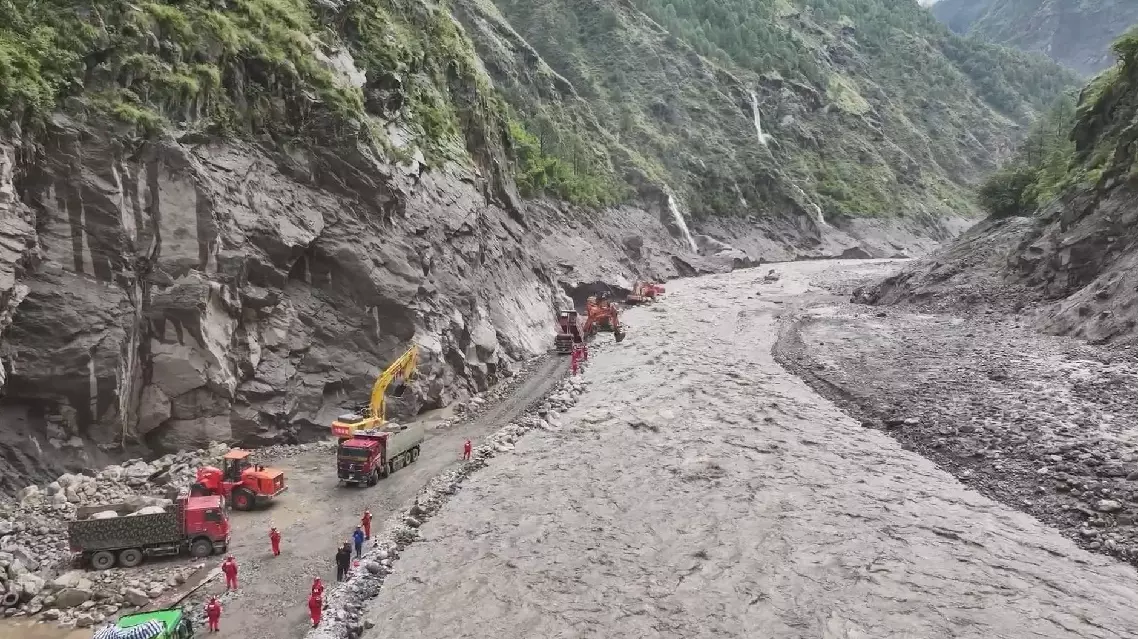
Rescue operations enter seventh day as Xizang mourns mudslide victim