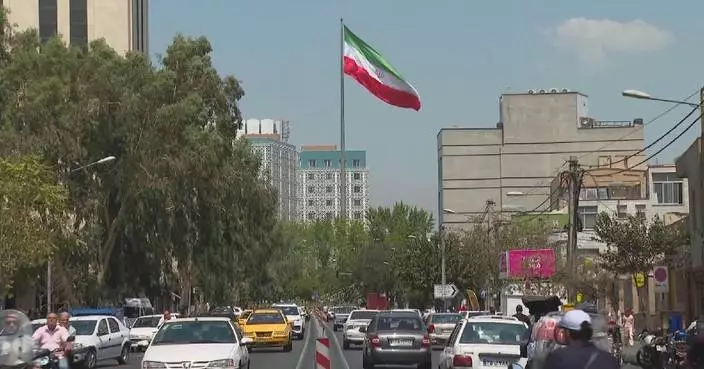
Typhoon Saudel, the 18th typhoon of this year, has re intensified into a tropical storm and continues to bring heavy rain and strong winds to coastal areas in southern China.
The storm was centered about 190 kilometers southeast of Shanwei, Guangdong, at 05:00 on Wednesday, with maximum sustained winds of Force 8 near its center.
The National Meteorological Center maintained a blue typhoon alert at 06:00 on Wednesday.
After making landfall, Typhoon Saudel traveled across six provinces and regions, including Zhejiang, Fujian, Jiangxi, Hunan, Guangxi, and Guangdong, before heading back out to sea, a path that is relatively rare for storms in the region.
On Tuesday, heavy downpours hit parts of Fuzhou, Wenzhou, Shantou, Kaohsiung, and Sanya, with some areas in northeastern Fujian recording 250 to 280 millimeters of rain, as the typhoon interacted with the monsoon trough and a cold front.
On Wednesday, the rain belt shifts slightly to the south, bringing heavy to torrential rain to Fujian, central and eastern Guangdong, and Taiwan. By Thursday, parts of southern Fujian, eastern Guangdong, and Taiwan will still see heavy rain.
The revival of Saudel after being downgraded was driven by favorable environmental conditions, according to the National Meteorological Center.
"After entering the South China Sea, Saudel regained strength mainly due to the abundant moisture and energy supplied by the strong monsoon. At the same time, sea surface temperatures above 28 degrees Celsius in the northern part of the South China Sea also provided favorable conditions for its intensification. In the coming days, Saudel's intensity is expected to remain largely unchanged, staying at tropical storm strength. It will then merge with a tropical disturbance over the northeastern South China Sea and linger in the area for several days," said Liu Longsheng, a senior engineer at the National Meteorological Center.

Typhoon Saudel strengthens again as winds, rain persist

Typhoon Saudel strengthens again as winds, rain persist
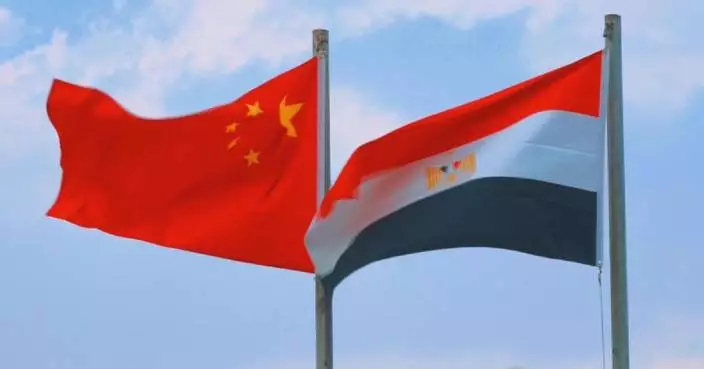
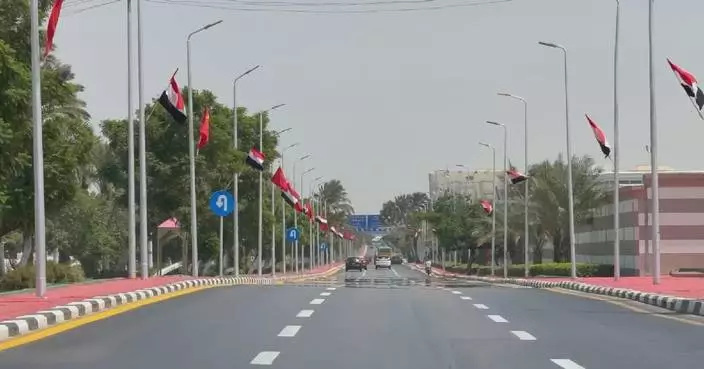
As China and Egypt mark 70 years of diplomatic relations, a former Egyptian cabinet minister has commended China's extraordinary development achievements and Belt and Road cooperation outcomes in Egypt, voicing high hopes for deepening industrial partnership between the two nations.
In an exclusive interview with China Global Television Network (CGTN), former Egyptian Minister of Trade and Industry Mounir Fakhry Abdel‑Nour said he was struck by the scale and speed of China's transformation.
"What I've seen in China during the several trips I took when I was Minister of Industry is impressive. I mean, the whole country is impressive, and the development and the rapidity of this development is extremely impressive. And our industrial relations with China have grown tremendously, especially since 2013 with the Belt and Road Initiative, where the Suez Canal has a very important presence within the structure of that initiative," he said.
The former minister said bilateral cooperation extends beyond strategic consensus, producing landmark results on the ground. Flagship industrial projects, he noted, have provided clear gains and added momentum to Egypt's economic growth.
"The physical proof of the cooperation is in the development of the industrial zone, the Chinese industrial zone, in the Suez Canal area near Sukhna. And the developer is the Chinese company called TEDA that is now, that has grown over a plot of land of approximately 10 square kilometers, where direct Chinese investments have invested approximately 4 billion U.S. dollars, 200 companies, mainly industrial and service companies," he stated.
Against the backdrop of Egypt's push to upgrade its industrial system and optimize economic structure, Mounir Fakhry Abdel-Nour stressed the significance of continued Chinese support, especially technological empowerment, to help the country hit its industrial development targets.
"Today, industry represents approximately 17, 18 percent of the GDP. We have to increase that percentage to become 24, 25, 26 percent of GDP. And we will never be able to reach that percentage unless we have the support of major industrial countries. And in fact, China is extremely generous in this respect. In fact, we're very hopeful that as a result of the visit of President Xi Jinping, we will be able to sign a few agreements that will allow us to benefit from the transfer of technology," he said.
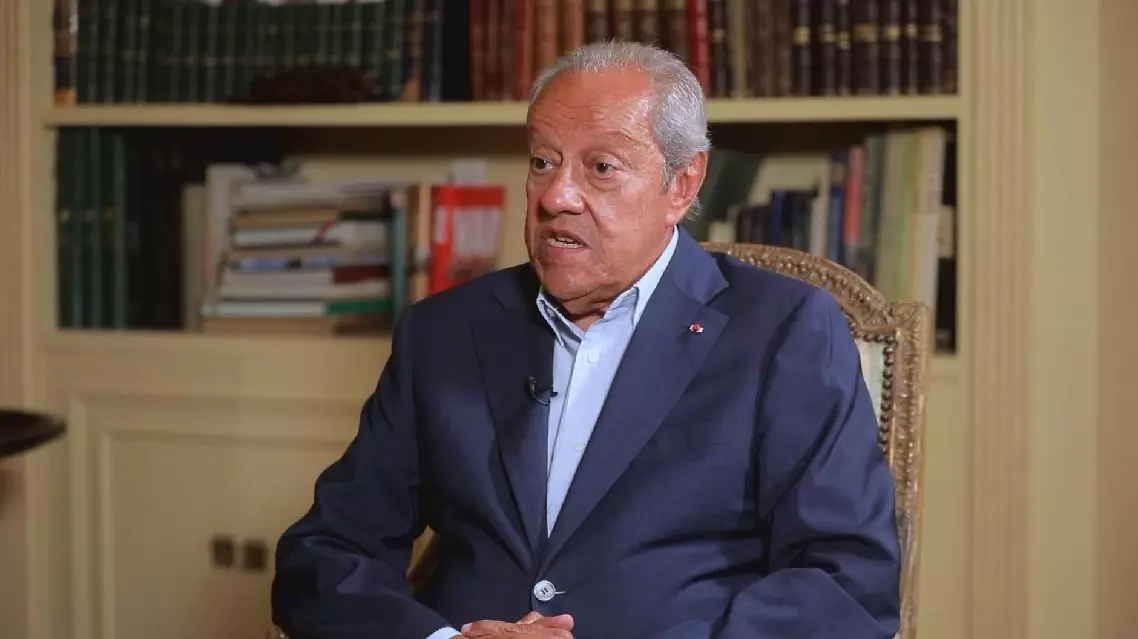
Former Egyptian minister hails China’s rapid development, BRI gains