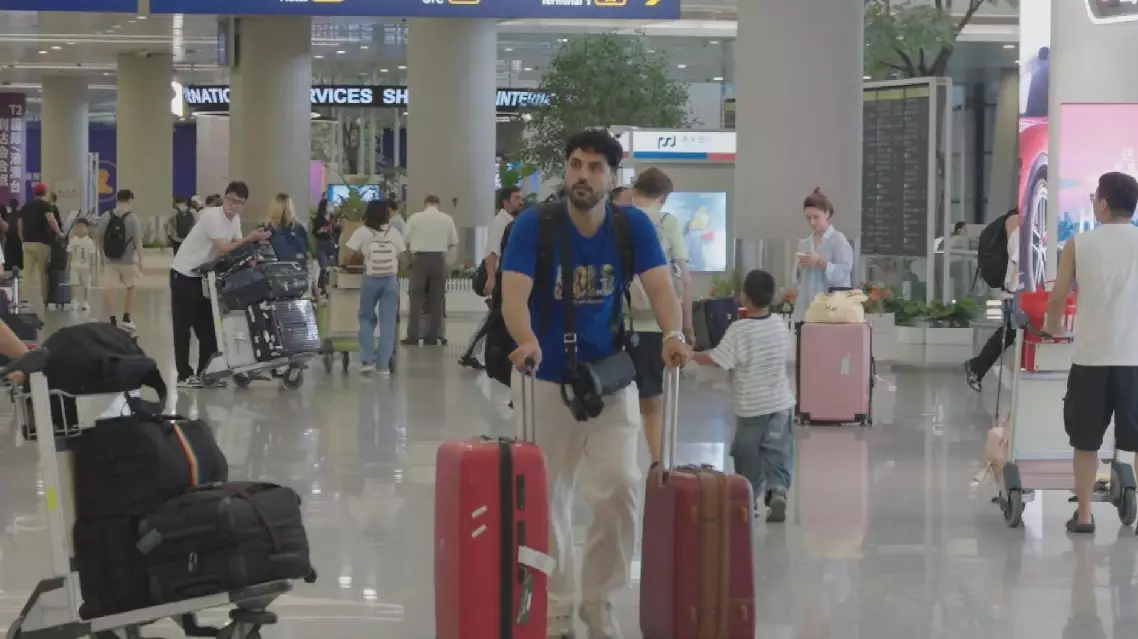
An increasing number of international flights and tourist-friendly, visa-free entry policies have fueled the growth of inbound tourism to China over the summer holiday period.
China has expanded visa-free policies in recent years, allowing longer stays and wider travel for tourists, while also introducing additional incentives such as instant tax refunds for departing visitors.
During the summer travel peak, Seoul, Bangkok, and Singapore ranked among the top source markets for inbound travelers to China.
Meanwhile, Europe emerged as a fast-growing source region for visitors, with data from Umetrip, a Chinese aviation and travel service platform, showing passenger traffic on inbound flights from Europe surpassing 1.41 million between July 1 and August 25, up more than 25 percent year on year.
"I got a direct flight from Air China, from Munich to here. It was like 10 (and a half) hours.It was a good flight, so no problem at all. I would say China [is] getting more popular, more important for the whole world," said Fabien, a foreign tourist.
To meet the growing demand for cross-border travel, Chinese airlines have further expanded their international route networks during the summer travel season.
"During the summer travel season, our international flight capacity grew by 6.2 percent year on year, with routes to Europe and Southeast Asia seeing increases of more than 20 percent," said Yang Chunfei, deputy general manager of the marketing department at China Eastern Airlines.
Additional flights, visa-free policies fuel inbound summer tourism to China