The iconic venue is the first in Indonesia to deploy Sennheiser Spectera
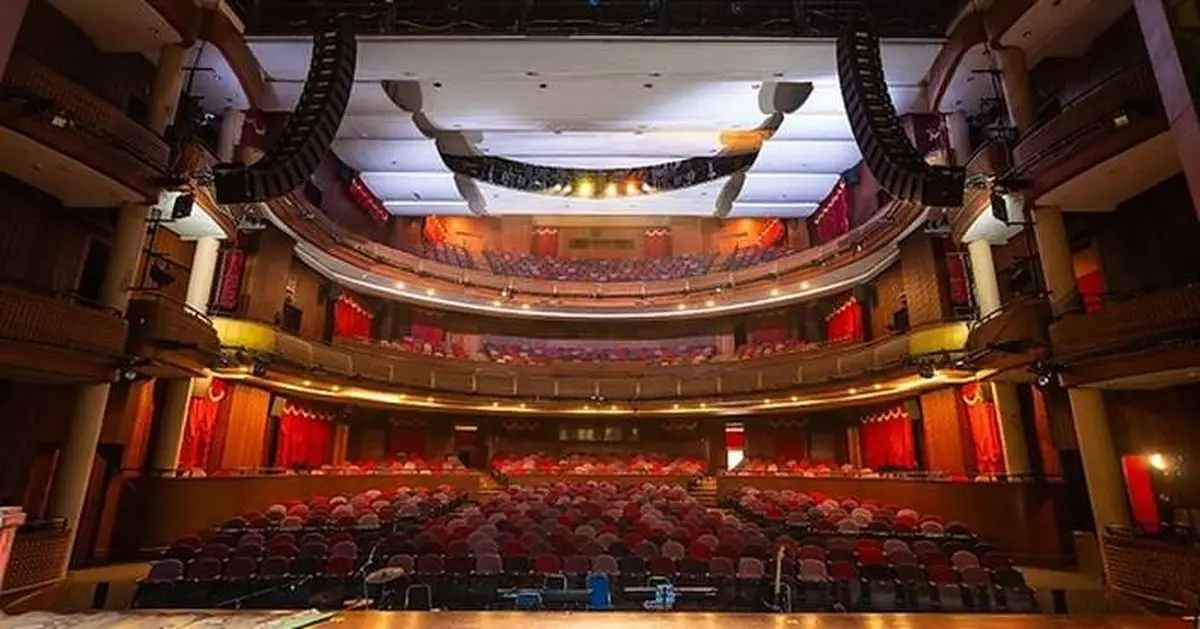
JAKARTA, Indonesia, Sept. 3, 2026 /PRNewswire/ -- As the largest performance venue within Jakarta's Taman Ismail Marzuki arts and cultural complex, Teater Besar is a 1,200-seat theatre designed for large-scale productions. Its stage and production infrastructure support theatre, musicals, concerts and other cultural performances, with each production having its own technical requirements. To support these demands, Teater Besar has become the first venue in Indonesia to deploy Sennheiser Spectera, the world's first wideband, bidirectional wireless ecosystem.
Click to Gallery
TEATER BESAR TAMAN ISMAIL MARZUKI SIMPLIFIES WIRELESS WORKFLOWS WITH SENNHEISER SPECTERA
TEATER BESAR TAMAN ISMAIL MARZUKI SIMPLIFIES WIRELESS WORKFLOWS WITH SENNHEISER SPECTERA
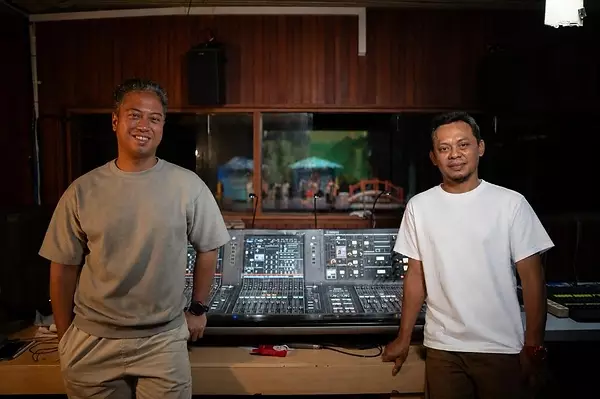
TEATER BESAR TAMAN ISMAIL MARZUKI SIMPLIFIES WIRELESS WORKFLOWS WITH SENNHEISER SPECTERA
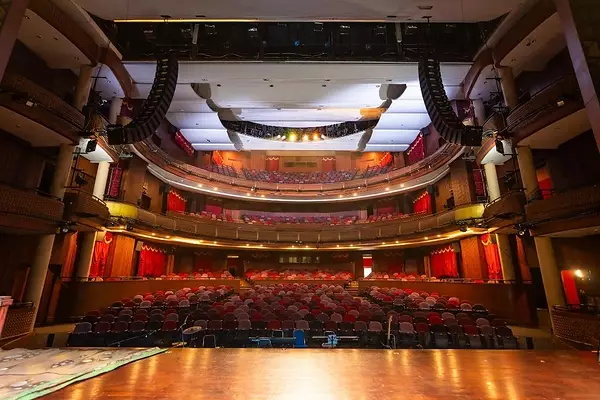
TEATER BESAR TAMAN ISMAIL MARZUKI SIMPLIFIES WIRELESS WORKFLOWS WITH SENNHEISER SPECTERA
Hosting a diverse programme means no two productions at Teater Besar are exactly alike. Different production companies, technical crews, stage layouts and wireless requirements mean that the venue's technical team has to prepare and configure the audio system for every performance.
In 2016, the venue began planning a major upgrade to its audio system, moving from an analogue to a digital setup. The new system was introduced in 2018, with Albeta, the venue's system integrator, overseeing its implementation. As production requirements evolved, however, the growing number of wireless microphones created new challenges around RF coordination, setup time and equipment footprint.
For the venue's technical team, the priority was a wireless system that could make day-to-day operations easier without limiting future possibilities.
"What we're looking for is basically a system that is simple, easy to set up, doesn't take up too much space and has a fuss-free installation process," said Dwi Winarno, Technical Audio Specialist at Teater Besar. "At the same time, it needs to have room to grow as our future requirements evolve."
Rather than replacing the venue's existing audio infrastructure, the project focused on expanding its wireless capabilities as production requirements continued to evolve.
Meeting the demands of modern live productions
Large-scale theatre productions can require dozens of wireless microphones operating simultaneously, creating complex RF environments.
"One of our biggest challenges was RF interference," said Dwi. "Previously, we used a traditional one-device-to-one-receiver architecture, where frequency clashes became common whenever 40 to 50 wireless microphones were operating simultaneously. These clashes created noise and unwanted interference, which could seriously disrupt large-scale theatre productions."
The venue itself also presents acoustic challenges. Architectural features and the behaviour of sound within the room can affect audio performance, making careful preparation an important part of every production.
Before Spectera, Teater Besar's conventional wireless architecture meant that the number of receivers and supporting equipment grew with the number of microphones required. For productions using 32 wireless channels, this meant large equipment racks and additional time for loading, setup and installation.
For the venue's technical team, the challenge was therefore not simply to accommodate more microphones, but to find a more efficient way of managing an increasingly complex wireless environment.
A new approach to wireless audio
Teater Besar became the first venue in Indonesia to deploy Spectera, introducing the platform while it was still relatively new to the market.
"When I first presented Spectera to Mas Dwi, my understanding was based largely on product presentations and discussions with the Sennheiser team," said Yosafat. "I had seen the system being tested, but I hadn't yet experienced it being used in a major live production."
The compact architecture was one of the first aspects to stand out during the demonstration.
"Previously, when using 32 separate units, we had to prepare very large racks to accommodate all the equipment," Dwi explained. "With this system, a single compact unit can accommodate everything. Most of those large racks have now been removed."
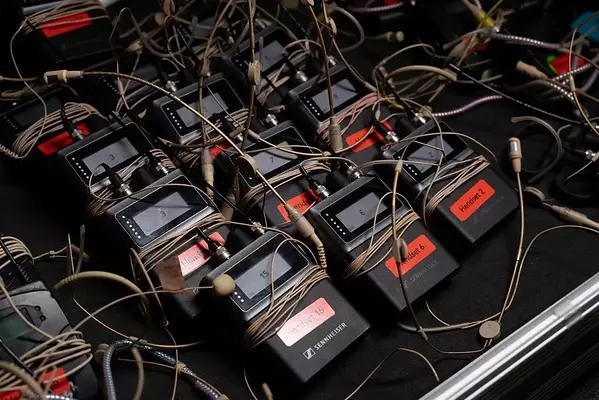
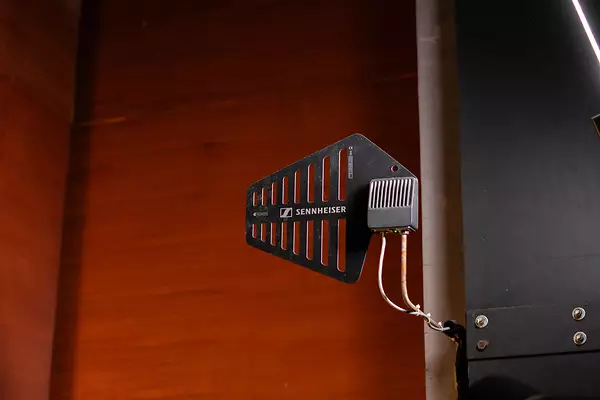
Today, the deployment includes a Sennheiser Spectera Base Station, 2 DAD antennas, 15 bidirectional body packs and Sennheiser HSP 4 headset microphones. The system primarily supports theatre productions and musicals, while also being used for corporate events, talk shows, panel discussions and similar productions.
Simplifying wireless operations and RF management
Around 70 percent of productions requiring wireless systems at the venue now use Spectera, with a typical setup involving around 15 wireless channels. Since its deployment, the system has supported approximately eight to ten productions at Teater Besar.
The reduction in equipment has made a tangible difference to the venue's workflow.
"The difference compared to our previous analogue system is significant," said Dwi. "It is much more compact and efficient, both in terms of time and space."
RF management has also become more measurable. Before each event, the technical team can power on the devices being used and analyse the RF environment through the Spectera WebUI. The system displays RF activity visually, allowing engineers to identify frequencies with lower interference and select the most suitable options for the production.
"Previously, we had no way of visualising the RF environment like this," Dwi explained. "Now, RF performance is visible and we can analyse it directly through the monitoring software before an event begins."
The Spectera WebUI also provides visibility into signal quality, device status and battery condition during operation.
"The biggest source of confidence is the Spectera WebUI. It gives us detailed, real-time visibility into the RF environment throughout the performance."
The ability to monitor RF conditions in this level of detail gives the technical team greater visibility before and during a production.
Confidence, behind the scenes
The value of Spectera at Teater Besar is ultimately reflected in how the technical team works during a production. With full visibility of device status such as volume, latency, battery levels and RF health in real time, the team can spend less time dealing with wireless infrastructure and more time focusing on the performance itself.
Having been with Teater Besar since 2018, Dwi has experienced several generations of audio technology at the venue. His assessment of Spectera is grounded in that experience and in its day-to-day use across productions.
"Since we began using Spectera, I haven't encountered any interference or technical issues," Dwi said. "As long as the system has been set up correctly and everything is connected properly, we simply monitor its performance through the software during the event."
For Teater Besar, that reliability and visibility are becoming part of a more streamlined approach to wireless production, one that can adapt as the venue's technical requirements continue to evolve.
"Up until now, there really hasn't been another system quite like this."
For a venue hosting production of different scales and formats throughout the year, the right wireless system is one that can support the complexity of each production while remaining unobtrusive to the people delivering it.
** This press release is distributed by PR Newswire through automated distribution system, for which the client assumes full responsibility. **
TEATER BESAR TAMAN ISMAIL MARZUKI SIMPLIFIES WIRELESS WORKFLOWS WITH SENNHEISER SPECTERA
TEATER BESAR TAMAN ISMAIL MARZUKI SIMPLIFIES WIRELESS WORKFLOWS WITH SENNHEISER SPECTERA
TEATER BESAR TAMAN ISMAIL MARZUKI SIMPLIFIES WIRELESS WORKFLOWS WITH SENNHEISER SPECTERA
TEATER BESAR TAMAN ISMAIL MARZUKI SIMPLIFIES WIRELESS WORKFLOWS WITH SENNHEISER SPECTERA