JOHANNESBURG (AP) — The first throwback rugby tour between New Zealand and South Africa in 30 years has lived up to the hype for new All Blacks coach Dave Rennie.
The All Blacks usually zip in and out of the republic in two weeks. They have been in Springboks country for five weeks, and counting.
They have been reacquainted with provincial opponents who withdrew from Super Rugby after 2020, enjoyed outstanding hospitality, and amazing support from travelling Kiwis and even many locals.
“Been brilliant, everything we thought it would be,” Rennie said of the tour on Thursday.
The test series has been as intense and compelling as the very first one in 1921 but both teams are going into uncharted territory. It's the first series to go back-to-back-to-back-to-back on four consecutive Saturdays with a 13,000-kilometer flight over the Atlantic tacked on in the last week. They've played three straight Saturdays, once, during the last tour in 1996.
Most pre-tour predictions were for South Africa to win 4-0 or 3-1, and the latter may yet happen. Springboks coach Rassie Erasmus said this week they never thought about a sweep but Rennie admitted on Thursday that, with the series 1-1 after two tests, if he'd been offered that beforehand he'd have taken it.
For the crunch third test on Saturday at FNB Stadium, he plumped for fresh legs in the pack and an unchanged backline.
Hooker Asafo Aumua and flanker Peter Lakai are starting after their considerable impacts off the bench, and lock Sam Darry will make his first appearance in the series.
Dropped altogether was 111-cap hooker Codie Taylor, the most experienced player in the team beside captain Ardie Savea, and to the reserves went lock Fabian Holland, world breakthrough player of 2025. Hooker Samisoni Taukei'aho and flanker Wallace Sititi were added to the bench.
“I've said that it's going to take more than 23 players to win the series here,” Rennie said. “This is as much about sharing the load.”
Darry's engine was “handy” for their game plan at altitude. Told the All Blacks have won eight out of their last 10 tests at altitude in South Africa over the last 10 years, Rennie said, “I like that stat. We don't see it as a negative playing up here.”
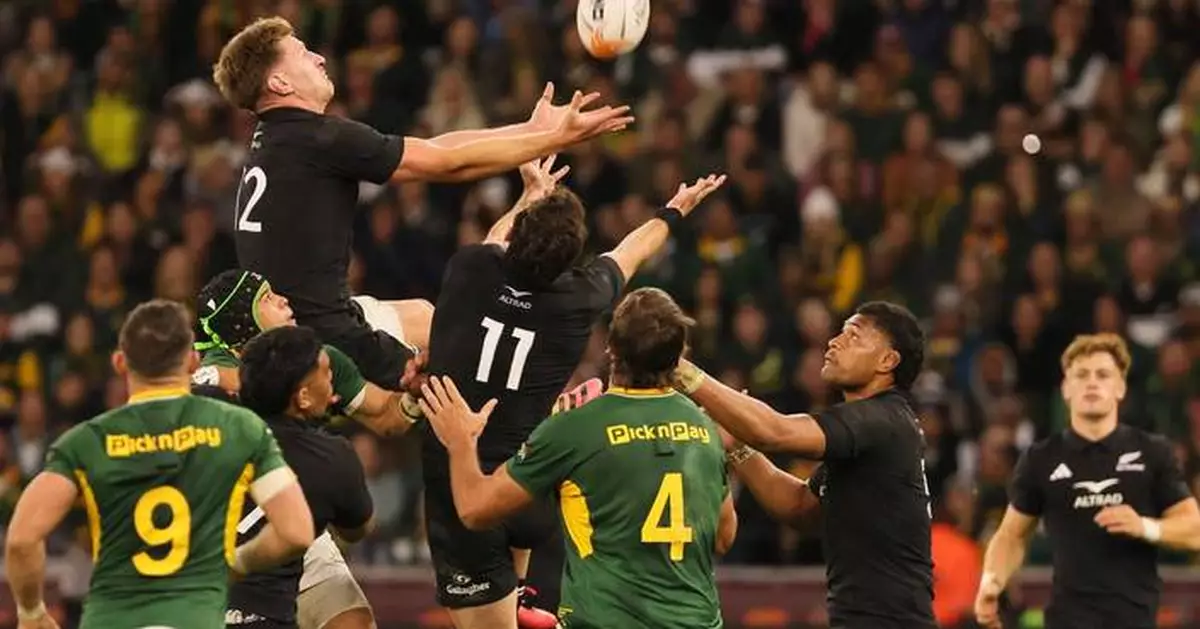
He expects better from the All Blacks in lineouts and the aerial contestables, issues for them in the 33-26 second test defeat in Cape Town, plus not allowing South Africa another fast start.
Rennie was keen to move on from talking about scrums; his claims of South Africa walking around drew vehement protests from Erasmus.
“It's funny our game, eh? What one guy sees on one side of a ruck another sees something different,” Rennie said. “There's a lot on the line but I don't see it as a war of words. He said a couple of things, I've said a couple of things, and that's footy.”
He added he and Erasmus had beers together after each test. They will also be sitting near each other on Sunday morning when the teams fly out of Johannesburg on a charter flight to Baltimore for the fourth test.
“Rassie joked about it last week because someone's going to be grumpy getting on the plane,” Rennie said. “Not sure we're sitting together but there’s a huge amount of respect amongst their players and our players. What you tend to find is both sides are trying to rip their heads off for 80 minutes but when they connect they have a few beers. There's a lot of goodwill there. It'll be good travelling together.”
Erasmus said they're used to sharing flights with opponents, having done it with Argentina for their return match.
“It's kind of a weird thing to do,” Erasmus said on Monday. “Yesterday we were coming hard at each other and now we're sitting on a plane together for 12, 15 hours. It's an interesting one.”
South Africa named its team on Monday, replacing injured fullback Damian Willemse with Cheslin Kolbe and filling the vacant wing with Kurt-Lee Arendse.
New Zealand: Damian McKenzie, Will Jordan, Quinn Tupaea, Jordie Barrett, Leroy Carter, Ruben Love, Cam Roigard; Ardie Savea (captain), Luke Jacobson, Peter Lakai, Sam Darry, Tupou Vaa'i, Tyrel Lomax, Asafo Aumua, George Bower. Reserves: Samisoni Taukei'aho, Xavier Numia, Fletcher Newell, Fabian Holland, Wallace Sititi, Kyle Preston, Anton Lienert-Brown, Josh Moorby.
See AP’s full rugby coverage here
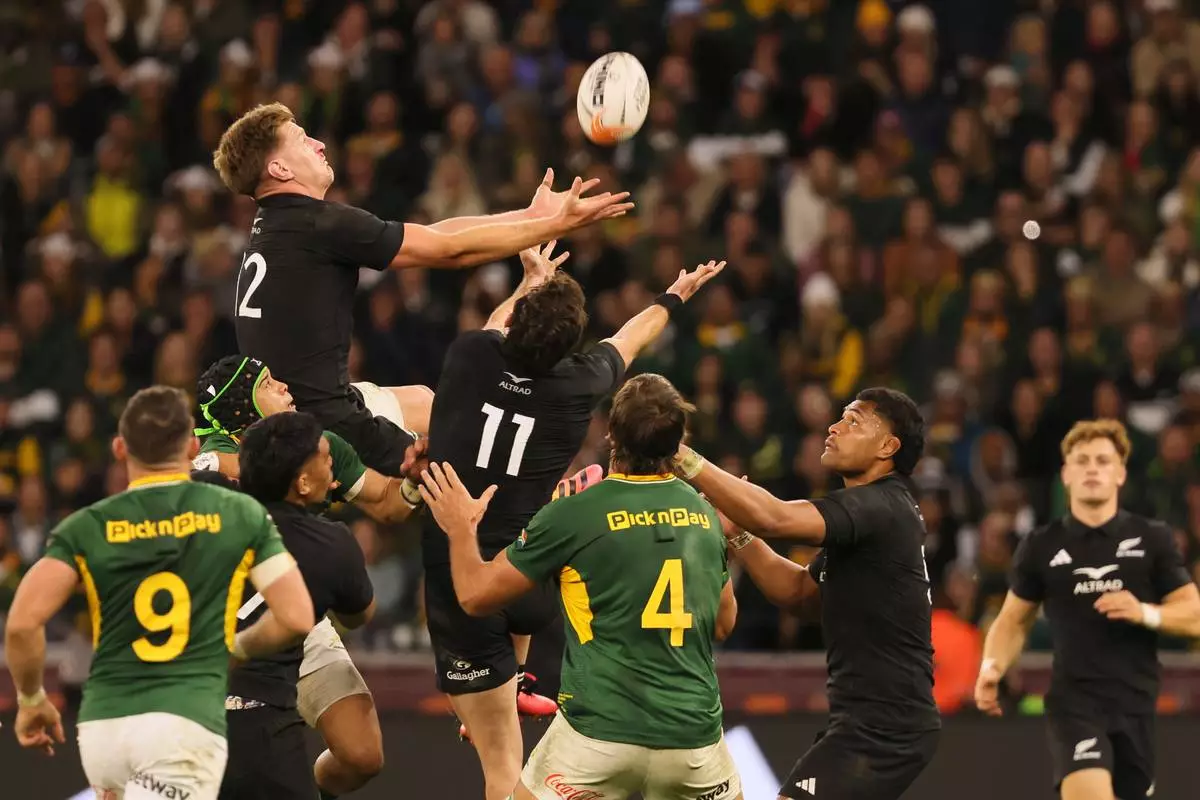
New Zealand's Jordie Barrett, top, jumps for the ball during a second Test rugby match between South Africa and New Zealand, in Cape Town, South Africa, Saturday, Aug. 29, 2026. (AP Photo/Halden Krog)
WASHINGTON (AP) — The Trump administration is proposing a new rule that would strip private schools and colleges of their tax-exempt status if they provide targeted help to students based on their race, a significant escalation in the White House's campaign to eradicate diversity programs directed at Black, Hispanic and other minority students.
The Treasury Department proposed the change Thursday in a new regulation that, if made final, would kick in after May 2027. The rule is broadly aimed at ending any policies or programs that help students because of their race, and it specifically says such benefits in admissions, scholarships and facilities “would be incompatible” with the rule.
It’s the latest attempt by the Trump administration to pressure schools and colleges to weed out diversity, equity and inclusion policies that had become common before President Donald Trump returned to the White House with a promise to end them. Trump officials have used Civil Rights-era laws to unwind the policies, saying they discriminate against white and Asian American students.
Higher education leaders criticized the proposal.
“The administration’s latest rules changes are its most blatant attack to keep working class Americans and people of color from accessing higher education and a better life,” Mike Gavin, Alliance for Higher Education president and CEO, said in a statement. “By claiming that efforts to increase fair opportunity for all students are discriminatory, the administration is trying to gaslight the American people into believing that up is down and black is white.”
Scores of universities have shut down or rebranded their DEI offices and ended scholarships and clubs designed for minority students under pressure from the White House. In a statement announcing the proposal, Treasury Secretary Scott Bessent suggested that even policies that are no longer under the banner of DEI could be targeted.
“Schools rebranding race-based preferences as equitable, inclusive, or diversity-enhancing does not change their discriminatory nature,” Bessent said.
The Treasury Department and IRS estimate that up to 18,000 private schools, colleges and other education institutions could be affected by the proposal.
America’s private universities have been exempt from many taxes for more than a century because they provide a public good. The benefit saves many universities millions of dollars every year.
Trump has seen the tax-exempt status as a lever to pull in his pressure campaign against colleges that he describes as hotbeds of “wokeness.” He threatened to cut the benefit for Harvard University last year during his battle with the nation’s oldest college. In a response, Harvard officials said there was no legal basis for doing so and argued it would force cuts to financial aid and crucial medical research.
It’s incredibly rare for the federal government to go after a college’s tax-exempt status, but there’s one notable precedent. Bob Jones University, a small Christian school in South Carolina, lost the benefit in the 1970s over a ban on interracial dating and marriage on campus. The Supreme Court upheld the IRS’s decision to deny the school its exemption. The school has since ended the ban and regained tax-exempt status in 2017.
Laws forbid the IRS from targeting individuals and organizations for ideological reasons, and federal officials are not allowed to direct IRS investigations.
To maintain nonprofit status, which allows donations to be tax-deductible, organizations must follow IRS rules on lobbying, political campaign activity and annual reporting requirements, as well as other obligations.
The Trump administration describes the new proposal as a move toward restoring merit in the nation’s education systems.
Marjorie Hass, president of the Council of Independent Colleges, said the change would most likely impact donations, which are often earmarked for scholarships.
The uncertainty around the proposal also will create challenges for schools, said Tim Powers, a vice president of the National Association of Independent Colleges and Universities.
“Our institutions are committed to complying with applicable civil rights laws and maintaining safe and supportive campuses free from discrimination,” Powers said. “However, the proposed rule may create new compliance burdens and legal uncertainties for institutions of higher education that are already operating in line with existing nondiscrimination rules.”
The Justice Department has separately opened investigations into several medical schools that it accuses of favoring Black and Hispanic students in admissions. Trump officials say any such favoritism violates Title IV of the Civil Rights Act of 1964, a federal law that forbids discrimination in education and was created to fight segregation and its impact.
A statement from IRS Chief Executive Officer Frank J. Bisignano said private schools that promote discriminatory practices will no longer be exempt from taxes.
“Today’s proposed regulations put institutions on notice and schools that continue to engage in racial discrimination should expect to lose that status,” he said.
Associated Press Education Writers Annie Ma and Heather Hollingsworth contributed to this report.
The Associated Press’ education coverage receives financial support from multiple private foundations. AP is solely responsible for all content. Find AP’s standards for working with philanthropies, a list of supporters and funded coverage areas at AP.org.
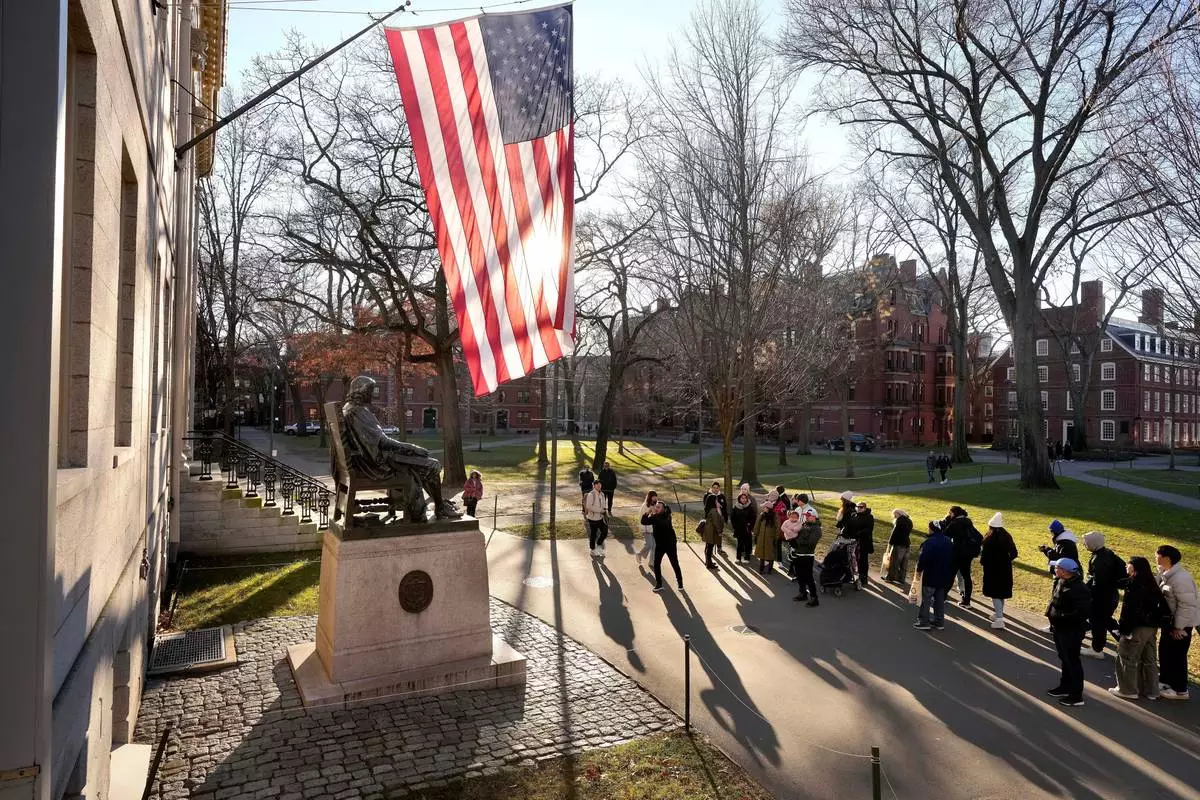
FILE - People take photos near a John Harvard statue, left, on the Harvard University campus, Jan. 2, 2024, in Cambridge, Mass. (AP Photo/Steven Senne, File)