BELGRADE, Serbia (AP) — The body of the former Bosnian Serb army commander Ratko Mladic, who died last week while serving a life sentence for genocide and other atrocities during the war in Bosnia, will be flown to Serbia on Thursday, President Aleksandar Vucic said.
Vucic told reporters that the U.N. court in The Hague, Netherlands, has released Mladic's body after he died in a hospital there.
The court confirmed in a written statement that Mladic's remains had been handed over to his next of kin at Rotterdam The Hague airport on Thursday afternoon.
Vucic said Mladic's family will announce funeral plans in the coming days. He predicted that Mladic's admirers could come to the funeral in large numbers. Many Serbs consider Mladic a hero despite his conviction for genocide, war crimes and crimes against humanity by the U.N. tribunal.
“It will be hard to secure and guarantee security to everybody,” Vucic said. He added that Serbia’s police and the state security agency predict that “tens of thousands” could attend. “It will be a demanding job for our (security) services and we will use everything at our disposal to provide security.”
Mladic was sentenced in 2017 for orchestrating the massacre of more than 8,000 Muslims in Srebrenica in 1995; the yearslong siege of Bosnian capital of Sarajevo during the 1992-95 conflict; and other war crimes, including setting up concentration camps for detained non-Serb civilians and enemy soldiers.
After Mladic died last Thursday, thousands of Serbs held vigils and marches in his honor. That drew condemnation in the volatile region that remains ethnically divided more than three decades after the war, which started when Bosnia's Serbs took control over swaths of the country's territory to form their own state.
The legacy court in The Hague, formally known as the International Residual Mechanism for Criminal Tribunals, said it stood “in solidarity with the victims, survivors and their families who suffered the crimes for which Mr. Mladic was found guilty." It condemned "any actions that glorify those convicted of war crimes, crimes against humanity and genocide by international courts.”
Families of Mladic's victims have said that his conviction by the U.N. court brought at least some justice for the brutal deaths of their loved ones.
Serbia, which backed the Bosnian Serbs during the war, is formally seeking European Union entry but remains defiant over its war role. Vucic last week accused the West and The Hague tribunal of blaming only Serbs for the crimes and bringing no justice for the Serb victims. He also accused the court of uncivilized behavior for not releasing Mladic on humanitarian grounds to die at home.
The massacre in Srebrenica was Europe’s first acknowledged genocide after World War II. A U.N. “safe haven” for Muslims, Srebrenica ended up being overrun by Serbs who forced men and boys to strip, killed them and bulldozed their bodies into mass graves.
Mladic was one of the most notorious figures of the war in Bosnia that left more than 100,000 people dead and over 1 million homeless before it ended in 1995 in a U.S.-brokered peace agreement.
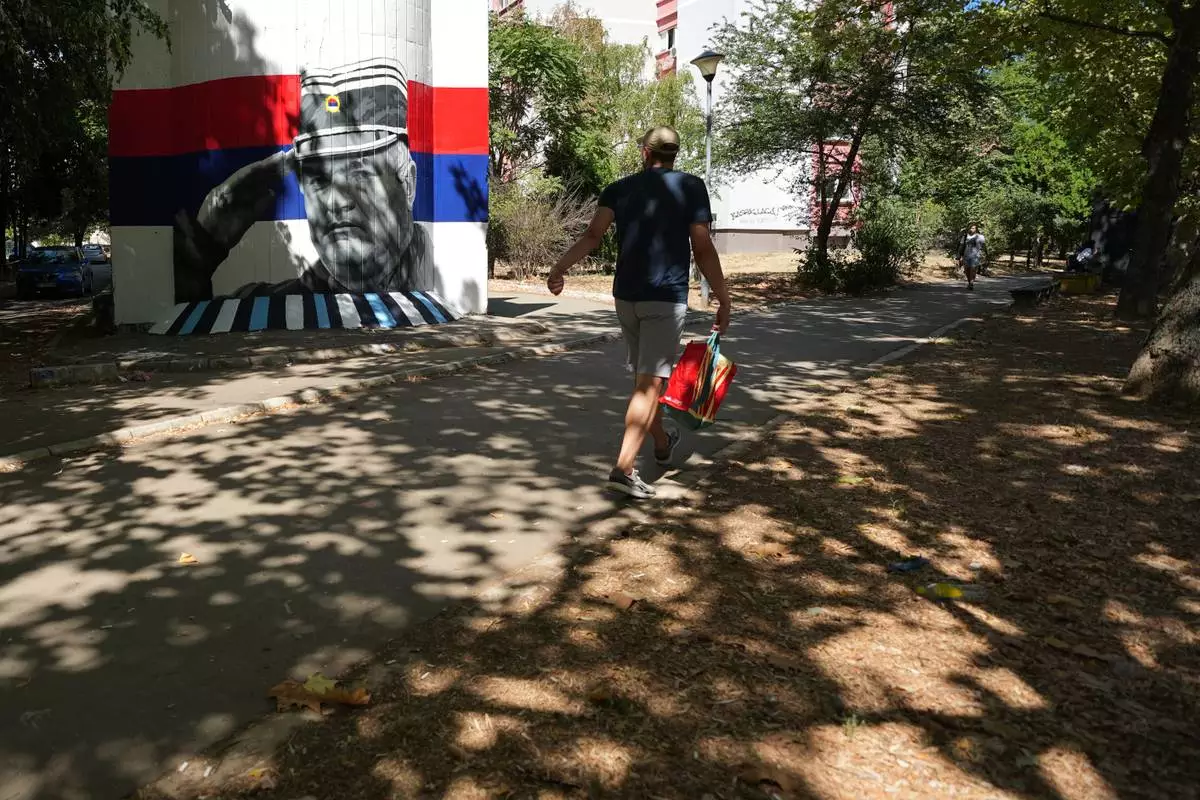
A man walks by a mural that shows former Bosnian Serb wartime general Ratko Mladic in Belgrade, Serbia, Wednesday, Sept. 2, 2026. (AP Photo/Darko Vojinovic)
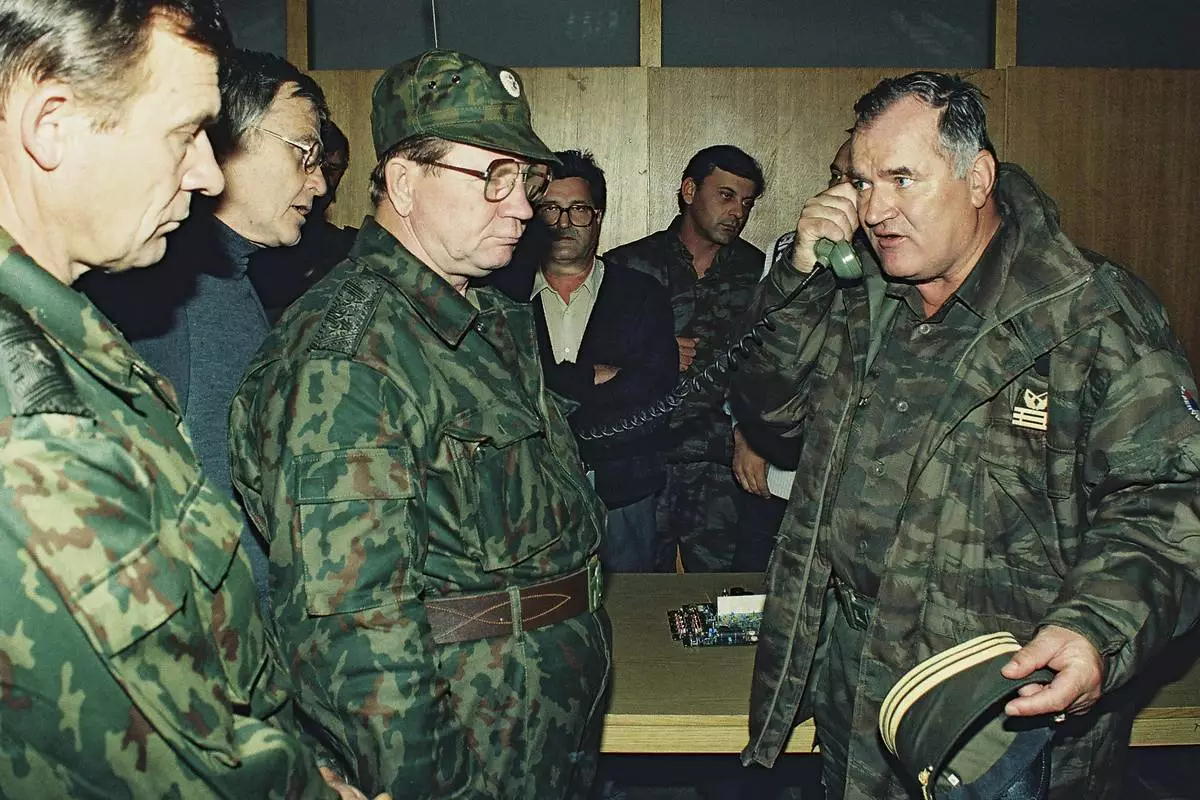
FILE - Bosnian Serb General Ratko Mladic, right, talks on the phone next to Russian Army General Vladimir Zurbenko, center, during the visit of a Russian Army delegation to the Bosnian town of Banja Luka in Oct. 1995. (AP Photo/Radivoje Pavicic, File)
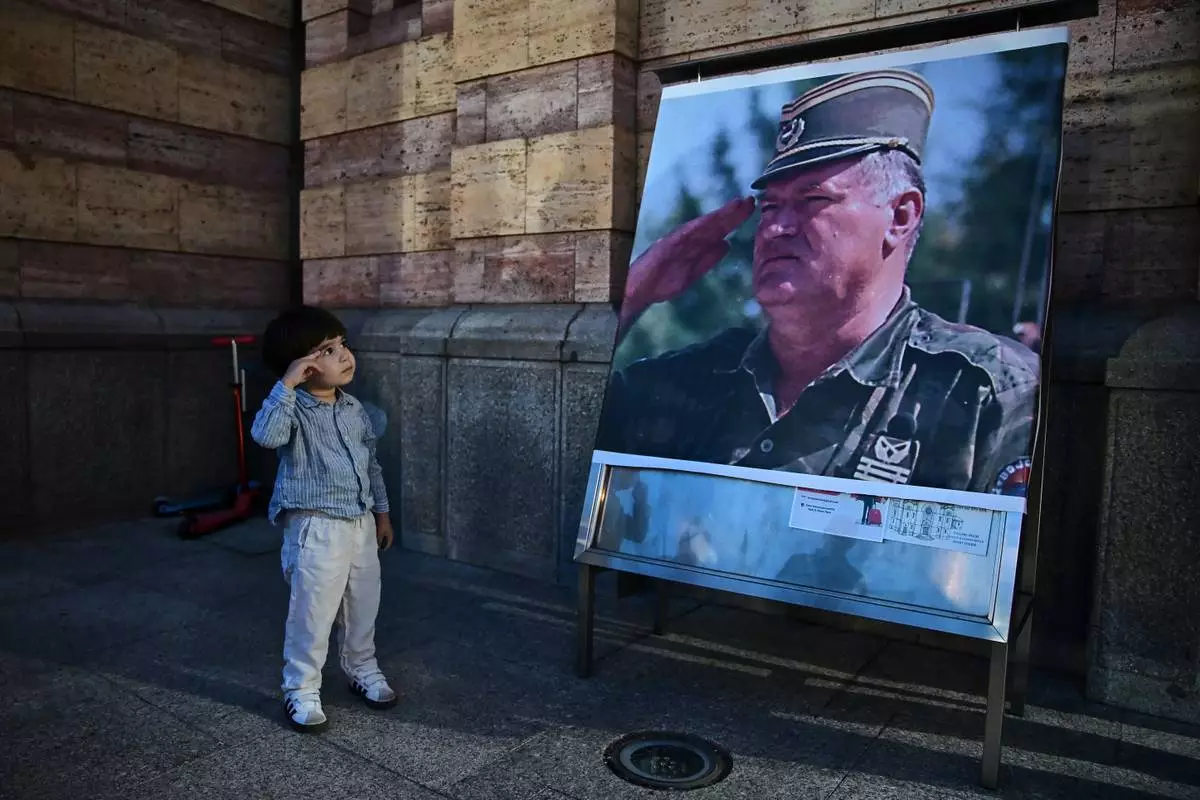
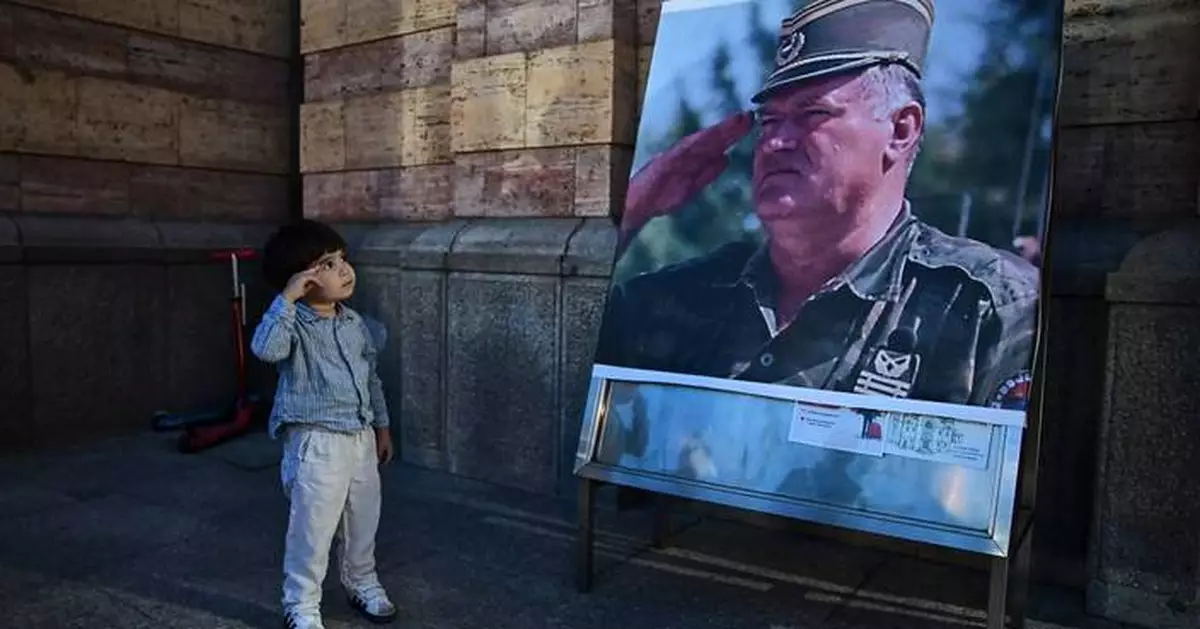
A boy salutes in front of poster of former Bosnian Serb wartime general Ratko Mladic, outside a church in Banja Luka, Bosnia-Herzegovina, Thursday, Aug. 27, 2026. (AP Photo/Radivoje Pavicic)
BEIRUT (AP) — A Lebanese man who had been held prisoner in Israel was released Thursday, the first such handover since the outbreak of the latest Israel-Hezbollah war six months ago, the International Committee of the Red Cross and Lebanese officials said.
The office of Israeli Prime Minister Benjamin Netanyahu said in a statement that Israel had agreed to release five Lebanese civilians detained by Israeli forces in southern Lebanon after Lebanon provided assistance in searching for the bodies of Lebanese Jewish leaders who were “abducted and murdered by terrorist organizations” in the 1980s, during Lebanon’s civil war.
The first released prisoner, identified as Malek Ghazi, was handed over to the Lebanese army via the Red Cross, a Lebanese security official said. A second official said they were anticipating the release of another prisoner. They spoke on condition of anonymity because they were not authorized to comment publicly.
Ghazi was handed over to the ICRC at the border crossing in the coastal town of Naqoura on Lebanon's southern frontier and was then transferred to a Lebanese army intelligence office in the city of Tyre, Lebanon’s state-run National News Agency reported.
Netanyahu's statement said the five Lebanese captives after interrogation were found not to be “members of a terrorist organization” or “involved in terrorism.”
Lebanese Prime Minister Nawaf Salam thanked the U.S. and its ambassador to Lebanon, Michel Issa, for assisting in the release.
“We will continue working until all our prisoners are released, the fate of the missing is revealed, and a complete Israeli withdrawal from Lebanese territory is achieved,” he said in a statement.
Dozens of Lebanese prisoners are believed to be held in Israeli detention centers, including civilians as well as Hezbollah militants captured during fighting in southern Lebanon.
The circumstances of Ghazi’s capture were not immediately clear, but one of the Lebanese officials said he was a civilian.
The prisoner release came as talks between Lebanese and Israeli officials had appeared to reach an impasse. Lebanon and Israel in June signed a U.S.-mediated framework deal under which Israeli forces were to withdraw from areas they are occupying in southern Lebanon in exchange for disarmament of the Iran-backed Lebanese militant group Hezbollah, but little progress has been made in implementation on the ground.
Another round of talks is expected to take place in Rome later this month.
“However difficult the negotiation process may seem, we will continue to mobilize all necessary efforts to safeguard Lebanon’s rights and the interests of the Lebanese people,” Salam's statement said.
An official involved in the negotiations said Lebanon had not made its participation in the next round of talks conditional on the prisoner release, but that the release of captives was an “integral part of the implementation” of the Lebanon-Israel agreement.
The Lebanese “are actively searching for the bodies of the Lebanese Jewish leaders,” including in Jewish cemeteries, said the official, who spoke on condition of anonymity because they were not authorized to comment publicly.
Lebanon once had a thriving Jewish community. As many as 15,000 to 22,000 Jews lived in Lebanon in the mid-1960s, but the various Arab-Israeli wars and Lebanon’s own 1975-90 civil war caused waves of emigration and today, almost none are left in the country.
While the release of the prisoners marks a step forward in the negotiations, other issues remain difficult to resolve.
Hezbollah is not a party to the Lebanon-Israel talks and has said it will not give up its weapons in any area north of southern Lebanon's Litani river. Israeli officials, meanwhile, have said they will not withdraw unless Hezbollah is disarmed throughout the country.
The Lebanese state has been reluctant to attempt to forcibly disarm the militant group, which is also a political party and social services provider with a large popular base in the country's Shiite Muslim community.
Lebanon fought a brutal civil war from 1975 to 1990, and many fear that any clash between the Lebanese army and Hezbollah could spiral into another devastating civil conflict.
Hezbollah and Israel have fought a series of wars since the militant group was founded with Iranian support in the 1980s to combat Israel's occupation of southern Lebanon at the time. Their latest war began on March 2, when Hezbollah fired missiles over the border, two days after the U.S. and Iran attacked Iran.
——-
Saeed reported from Herzliya, Israel.
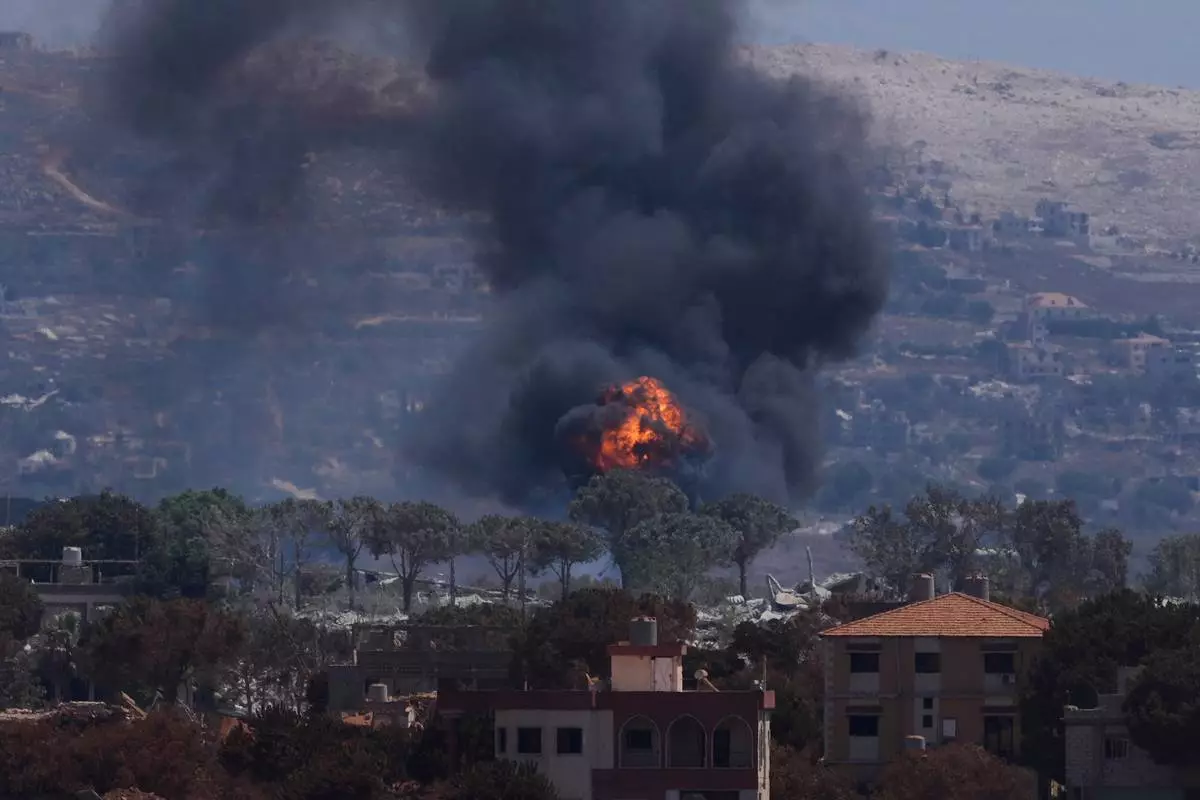
Smoke and flames rise as Israeli forces demolish homes in Zawtar al-Sharqiyah, southern Lebanon, Sunday, Aug. 23, 2026. (AP Photo/Mohammed Zaatari)
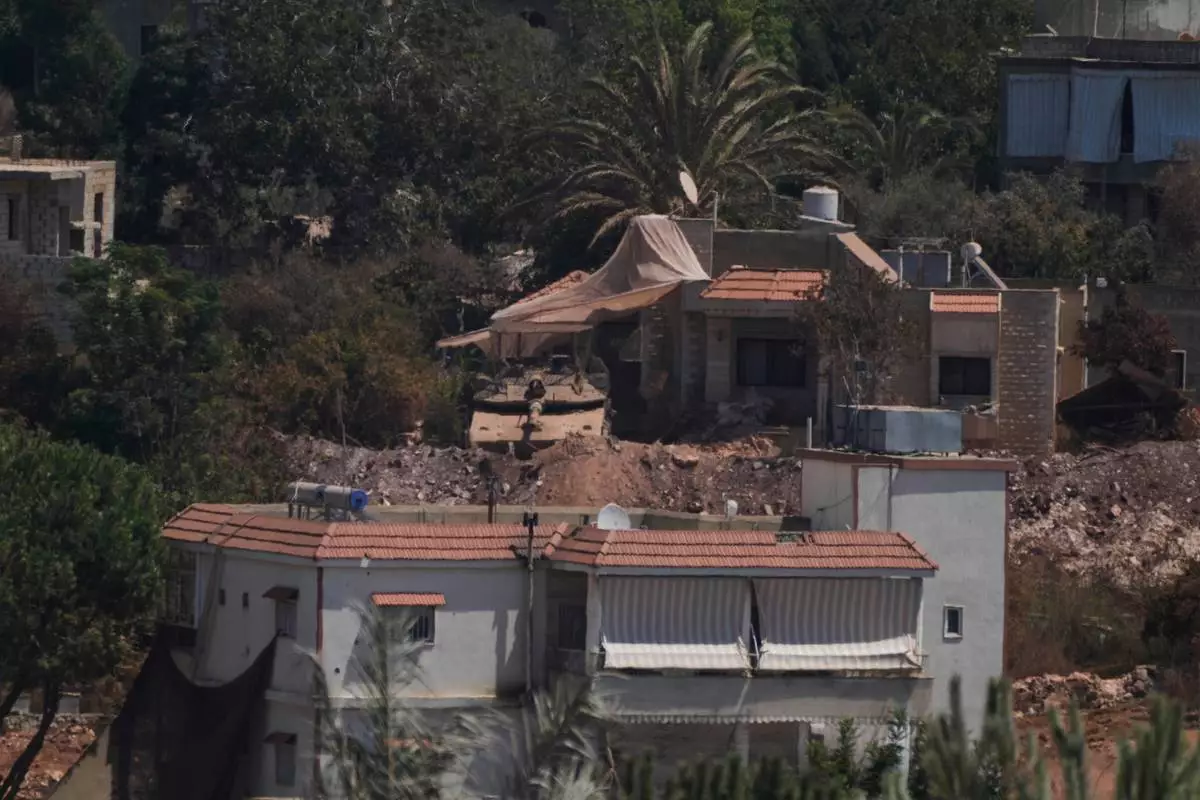
An Israeli tank takes a position in Zawtar al-Sharqiyah, southern Lebanon, Sunday, Aug. 23, 2026. (AP Photo/Mohammed Zaatari)
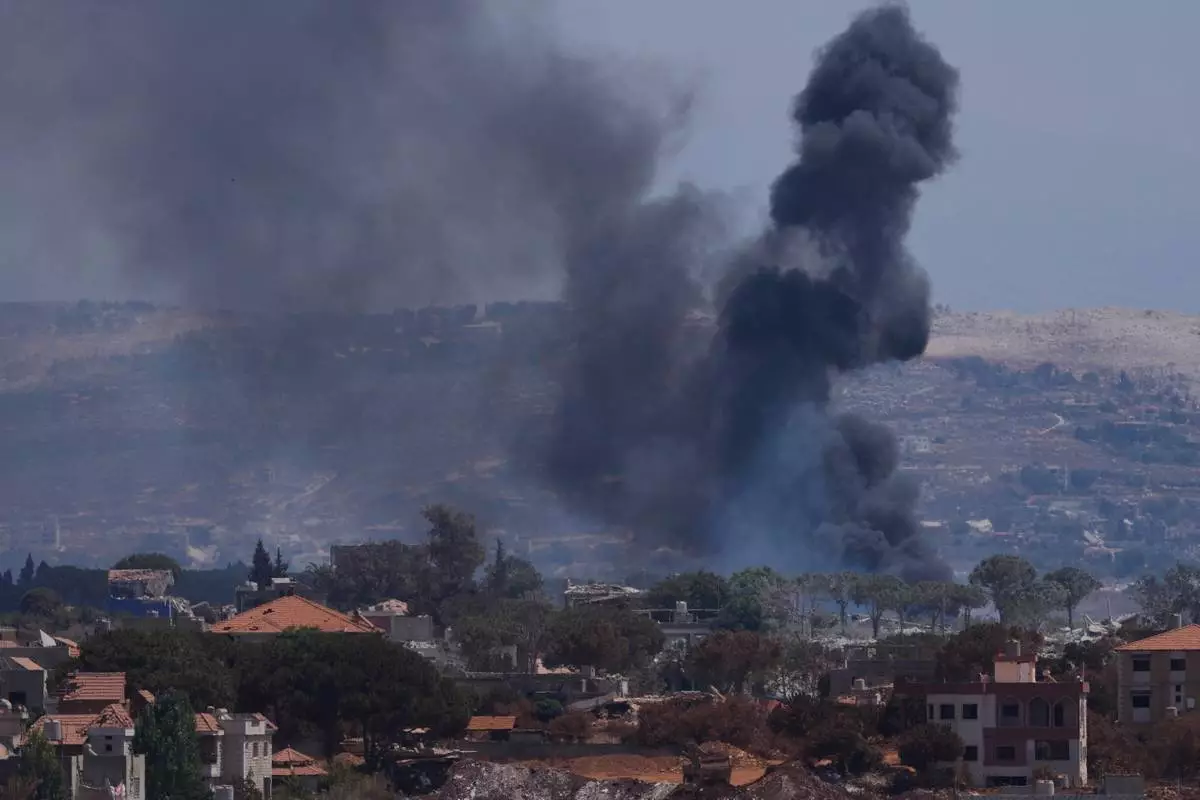
Smoke rises as Israeli forces demolish homes in Zawtar al-Sharqiyah, southern Lebanon, Sunday, Aug. 23, 2026. (AP Photo/Mohammed Zaatari)