JOHANNESBURG (AP) — More than six decades after South African apartheid police opened fire on an unarmed crowd protesting pass laws in Sharpeville, a township south of Johannesburg, survivors and relatives of the victims announced on Thursday they would launch a class-action lawsuit against the government.
At a media briefing held in Sharpeville, lawyers said the case seeks compensation and asks a court to strike down the 1961 Indemnity Act, which they say prevented victims from pursuing claims arising from the massacre and remains in force today.
Police shot at an unarmed crowd protesting apartheid pass laws on March 21, 1960, and drew international condemnation. Apartheid-era police records put the toll at 69 dead and 180 injured, while research cited by the plaintiffs says at least 91 people were killed and more than 238 wounded.
The massacre became a defining moment in the struggle against apartheid, with March 21 now observed in South Africa as Human Rights Day, a public holiday.
Before Thursday’s announcement, family members of victims retraced the protesters’ route in a silent walk of witness.
Abram Mofokeng, 87, was 20 when he was shot in the foot and back as he fled the gunfire. A bullet remains lodged in his back.
“It is not possible to forget what happened in 1960,” Mofokeng said. “I cannot go a day without thinking about how we have been affected.”
Mofokeng is one of three Sharpeville residents acting as representative plaintiffs for a wider group in the case brought by Lawyers for Human Rights. The others, Paulina Mathinye and Ishmael Poho, both lost their fathers in the massacre when they were young children.
More than 70 survivors and relatives have expressed support for or interest in joining the litigation.
The government had not yet responded to queries by the time of publication.
The fight for compensation is not new. In the aftermath of the massacre, around 258 claims were filed, but the government later enacted the Indemnity Act of 1961, shielding officials from legal liability and extinguishing the claims. Only about a third resulted in discretionary payments, totaling less than 4% of what claimants had sought.
The applicants want the legislation struck down, arguing that it violates their constitutional right of access to the courts. If they succeed, their claims for damages can proceed.
The lawyers did not give a total figure for the claim but said it would vary for each claimant and would be worked out with the help of experts.
They also said the case seeks to address gaps left by the Truth and Reconciliation Commission process, under which only 51 Sharpeville survivors were formally awarded reparations.
The Sharpeville litigation comes amid a broader push in South Africa to revisit apartheid era abuses, including reopened inquests into the deaths of anti-apartheid figures including Steve Biko, the Cradock Four and Chief Albert Luthuli.
Dan Leader, a partner at British human rights law firm Leigh Day, which is advising the South African legal team, called the case part of South Africa’s “unfinished business.”
“This is a time of reckoning for modern South Africa,” Leader said.
Charne Tracey, from Lawyers for Human Rights, said the plaintiffs hoped the case would push the government into talks with survivors and families over reparations.
“They are under no illusions that they must carry a legal stick if their voices are going to be listened to,” she said in a statement.
Poho said the case was about more than compensation, explaining that the effects of the massacre had been felt across the wider Sharpeville community.
“This is not a case for an individual as such,” he said. “It is a case for every other person who suffers an injustice.”
AP Africa news: https://apnews.com/hub/africa
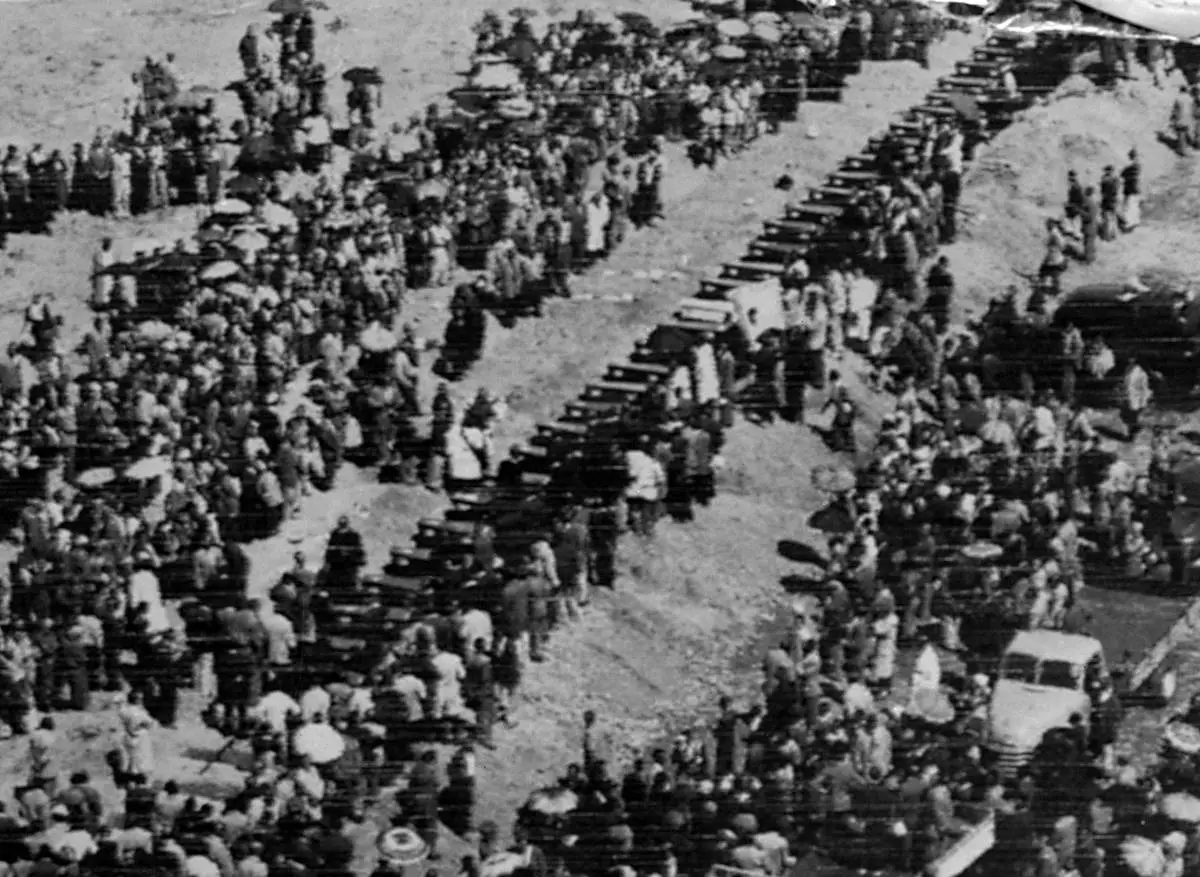
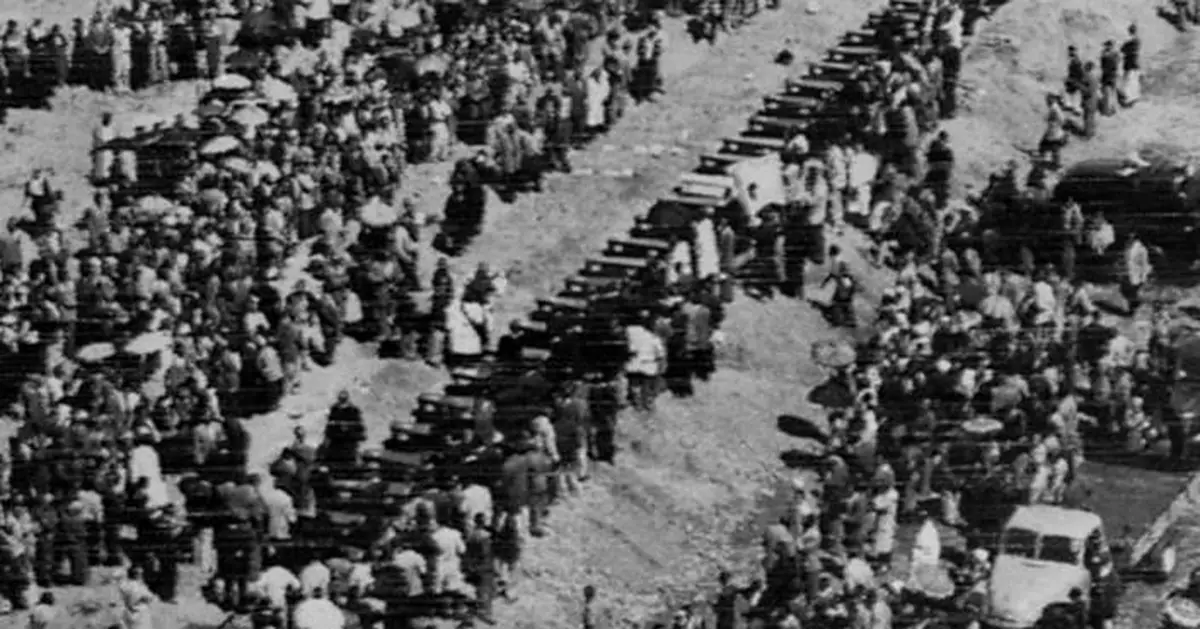
FILE - A mass funeral takes place in Sharpeville, South Africa, March 30, 1960, for victims of the Sharpeville Massacre, in which dozens of people were killed when police opened fire on demonstrators protesting against government's apartheid policies and the arrest of their leaders. (AP Photo, File)
U.S. striker Folarin Balogun pulled out of a deal to join Everton in the final minutes of European soccer’s summer transfer window because he felt uncomfortable that the English club raised doubts about his health in a medical check, Monaco’s sporting director has revealed.
In an unusually candid summary by a soccer official about an aborted transfer, Thiago Scuro held a news conference and gave — in English — a detailed, step-by-step rundown on how Balogun’s proposed move to Everton for a reported 40 million pounds ($54 million) fell apart with the clock ticking on deadline day.
According to Scuro, Balogun underwent a medical examination at Everton on Tuesday afternoon. Three hours later — and with four hours left until the deadline — Everton contacted Monaco raising questions about the results of the medical “which, for our medical staff, as well as for the player’s personal medical staff, made no sense at all,” Scuro said.
There followed discussions between the clubs and medical departments, before Everton contacted Monaco again to say it was ready to complete the signing of Balogun, according to Scuro.
“At the last moment, the player decided not to sign,” Scuro continued in the news conference held Wednesday. “And basically, the allegation of Balogun is that, ‘I’m not feeling well by the way the club treated me, I’m not feeling well by the way the medical department of Everton brought doubts about my future or my health. I have nothing (wrong with his health), so I’m not comfortable to sign a long contract here.'”
There was no immediate response from Everton about Scuro’s comments when contacted by the Associated Press. The Premier League club’s leadership — its owners are the Texas-based Friedkin Group — is being criticized by its fans for the way the Balogun deal was handled, as it leaves the team with just one senior striker — Thierno Barry — since his backup, Beto, was sold to Fiorentina on deadline day.
There has been no public comments from Balogun, either, following the latest fiasco surrounding the New York-born striker.
During the World Cup, Balogun was the star player for the U.S. team but was red-carded during the round-of-32 win over Bosnia and Herzegovina.
His one-game suspension was deferred by FIFA after U.S. President Donald Trump intervened, calling Gianni Infantino — president of soccer's world governing body — to see if the red card could be reviewed.
Balogun was, therefore, allowed to play in the round of 16 and had a forgettable performance as the U.S lost to Belgium 4-1. The intervention prompted a formal complaint to FIFA's ethics investigator and led to a general outcry in the soccer world, with Balogun later acknowledging FIFA’s decision to suspend his ban created “outside noise” that affected the U.S. team mentally.
Scuro has left open the possibility of Balogun, who has two years left on his contract at Monaco, still leaving the club, saying: “We still have markets that have the financial capacity to do something.”
Among the leagues whose transfer windows are still open are Turkey (closes on Friday) and Saudi Arabia (closes on Oct. 12).
Monaco is under pressure to sell Balogun or another of its top players because it needs to generate money to comply with the French league’s financial rules.
When it first appeared that Balogun’s move to Everton was off, Monaco began negotiating with Chelsea over the sale of midfielder Lamine Camara and they reached an agreement, Scuro said.
However, that deal was also scrapped when Everton reversed its decision on Balogun and attempted to get it over the line.
In the end, neither player moved.
“Balo leaving was the trigger for everything to be OK,” Scuro said. “Basically, our financial plan was working almost perfectly until 7 p.m. (on Tuesday).
“Now we have to face this situation and find solutions in different ways.”
Monaco is next in action on Friday, away to defending champion Paris Saint-Germain.
See AP’s full soccer coverage here
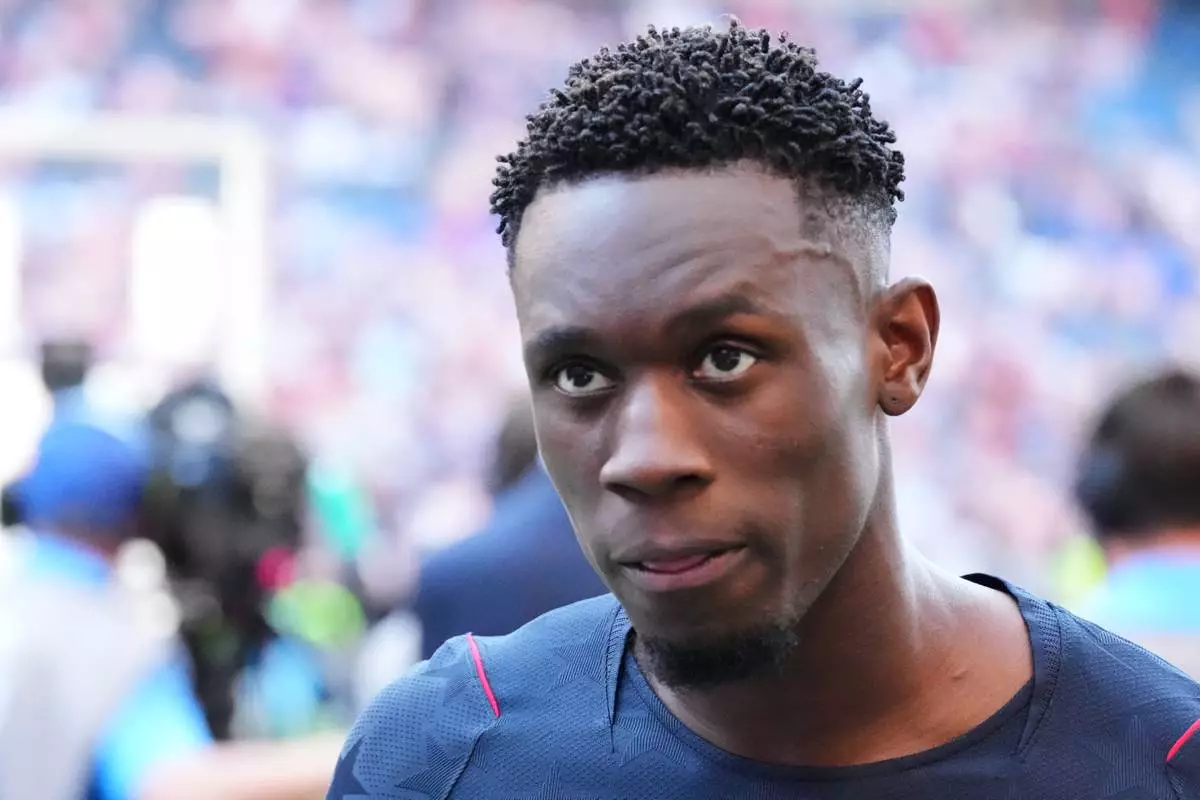
FILE - United States' Folarin Balogun (20) walks off the pitch after losing to Belgium in their World Cup round of 16 soccer match in Seattle, on July 6, 2026. (AP Photo/Ted S. Warren, File)