ABUJA, Nigeria (AP) — Authorities in eastern Congo are shifting to a village-centered approach to fight the Ebola outbreak, Africa’s top public health agency said Thursday, as the virus continues to spread faster than efforts to track and contain it.
The Africa Centers for Disease Control and Prevention said the outbreak has likely not yet peaked. Since it was declared in mid-May, it has spread from three health zones to 60, with 6,250 cases, including 3,039 deaths, government data showed, mostly fueled by insecurity, displacement and intense population movements.
Compared with the outbreak of 2014 to 2016 across West Africa — the deadliest Ebola outbreak on record with more than 11,000 deaths — the current outbreak has recorded six times as many confirmed cases and five times as many deaths, the Africa CDC said.
Here are five areas where Congo's response to the outbreak is still falling short, according to a report this week from the U.S. Centers for Disease Control and Prevention:
One major gap in the response is limited community-based surveillance to quickly investigate alerts to be able to detect, track and slow the spread of the virus, the U.S. health agency said.
Delays in detection, reluctance to report cases and inadequate community engagement are contributing to preventable deaths. At least 63% of deaths recorded in the past week occurred outside Ebola treatment centers, Africa CDC data showed.
Authorities are now using a “village-centered approach,” working with community leaders to help build trust and improve collaboration with residents, said Yap Boum, head of emergency preparedness and response at Africa CDC.
Ituri province, where the outbreak is concentrated, is also at the center of the rebel conflict in eastern Congo, complicating efforts to gain trust from residents. “Building that trust in the middle of an outbreak is quite complex," Boum said.
Quickly identifying and tracing the contacts of those who had come in contact with Ebola patients remains challenging across the six provinces affected.
Although 81% of contacts have been followed up with by surveillance teams, that figure does not reflect the full reality as it only refers to the listed contacts and doesn’t include those who have yet to be traced.
Africa CDC estimates that cases confirmed in the last three weeks should have generated 97,600 contacts, based on an average of 60 contacts per confirmed case. Only 19% of those total expected contacts have been traced.
Health data shows that treatment centers had expanded capacity to more than 1,300 beds in late August while their occupancy rate is currently at 67% with 869 patients.
However, experts have called for more treatment and isolation centers and beds in affected health zones to prepare for cases that have yet to be detected.
Many affected health zones are in areas where cases go undetected or unreported for several reasons, including distrust in health authorities.
Some health zones are also not accessible to surveillance teams or health workers trying to treat patients, said Boum.
Experts also say that laboratory testing capacity needs to be expanded in order to promptly identify cases and treat patients.
The World Health Organization said last month that several treatment and transit centres in Ituri, the outbreak's epicenter, were “saturated” while North Kivu, the second-most affected province, lacked sufficient options to refer patients to specialized facilities.
Health workers at existing treatment centers are also exhausted, said Jeannot Krikeija, who works at an Ebola treatment center in Bunia, Ituri’s capital. “Ebola is tiring us all the more because we don’t know when this scourge will end. This ordeal is unbearable for me,” Krikeija said.
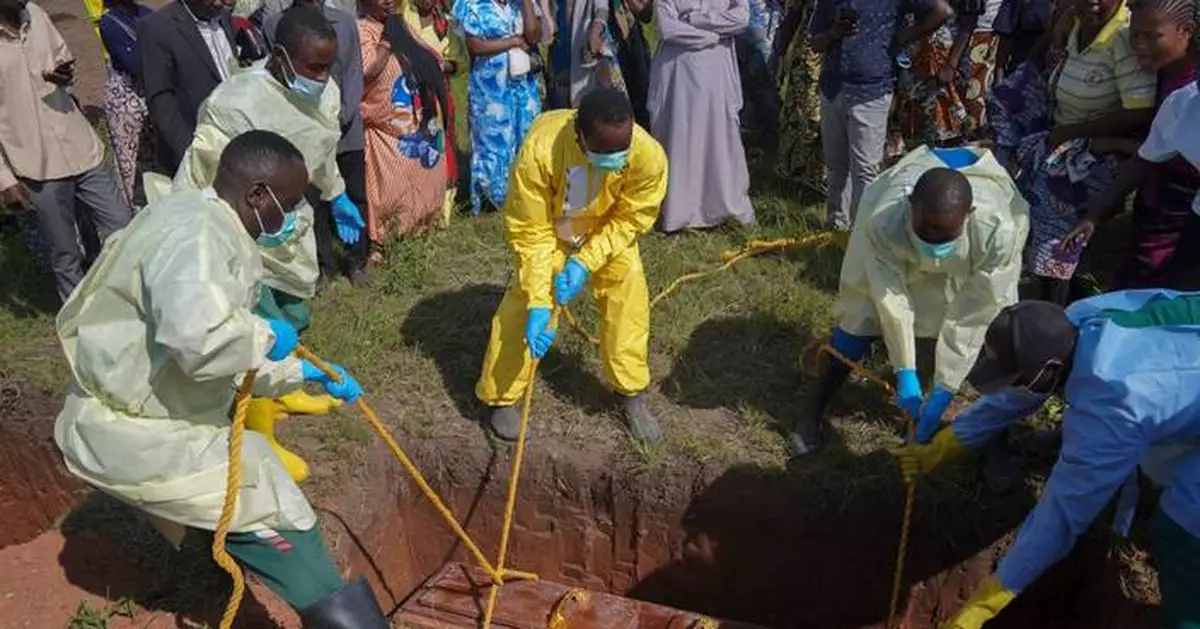
Authorities have deployed safe and dignified burial teams for the more than 3,000 people who have died from Ebola, but gaps remain in how the burials are carried out, according to the U.S. health agency.
Ebola can spread between people through direct contact with the blood or other bodily fluids of someone who is sick with or has died from Ebola, and experts have warned that bodies of victims still carry large amounts of active virus.
In Ituri and other affected areas, burial teams have been attacked on multiple occasions, often by families seeking to protect loved ones who died of Ebola. It’s also common to see people surrounding graves of Ebola victims during burials, sometimes within a few meters away from the coffins.
AP writer Constant Same Bagalwa in Bunia, Congo and Mike Stobbe in New York contributed to this report.
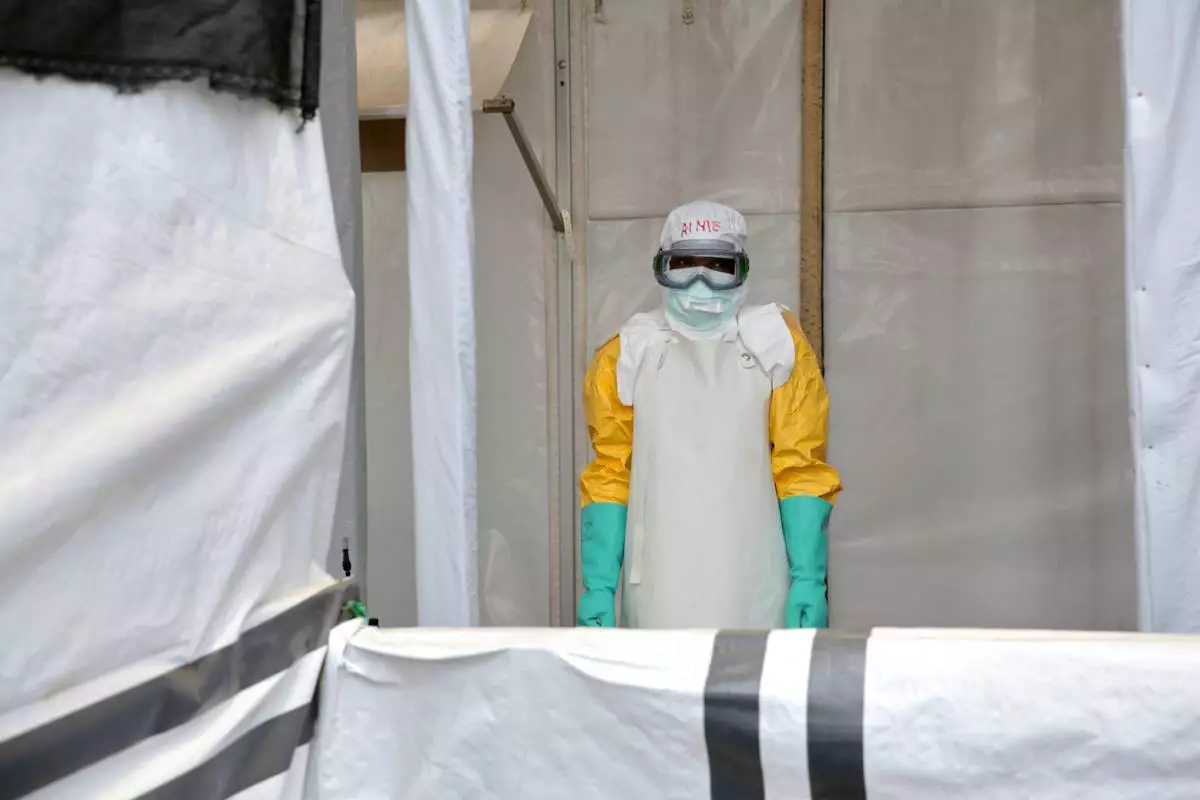
A health worker pauses after disinfecting a treatment center for Ebola patients, in Beni, North Kivu province, eastern Congo, Monday, Aug. 31, 2026. (AP Photo/Sebastien Kitsa Musayi)
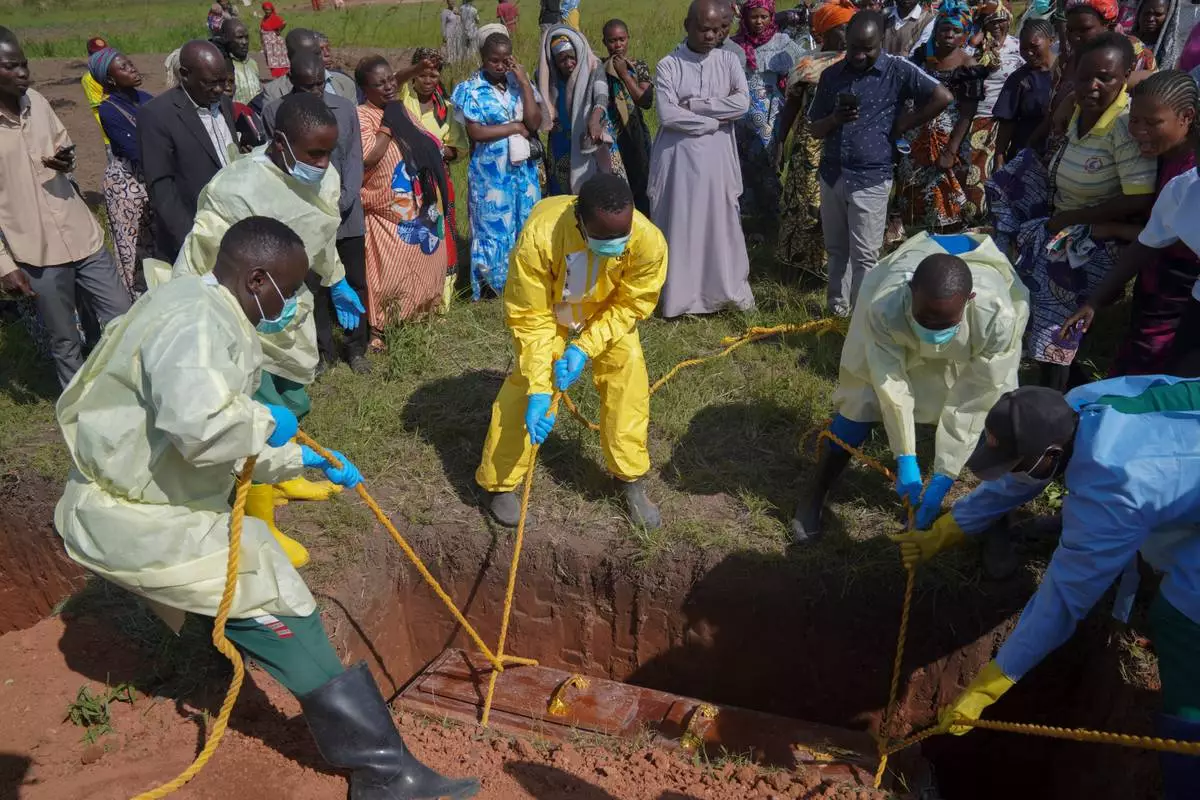
Health workers bury the coffin of Neema Minaro, a 66 year old woman who died of the Ebola virus, in Bunia, Congo, Wednesday, Sept. 2, 2026. (AP Photo/Dieudonne Dirole)
WASHINGTON (AP) — Federal prosecutors have charged a U.S. Immigration and Customs Enforcement officer with lying to investigators about the events leading up to the shooting of a Venezuelan man during the Minneapolis immigration crackdown earlier this year, a person familiar with the matter told The Associated Press.
Christian Castro, the officer who authorities say shot Julio Cesar Sosa-Celis in the leg in January, has been charged with making false statements to federal investigators, according to the person, who was not authorized to publicly discuss the investigation and spoke on condition of anonymity.
The federal charges, which remain under seal, follow Castro's release from jail last week after Texas’ governor refused to immediately sign an extradition warrant to hand him over to Minnesota authorities, who have charged him separately with assault and false reporting of a crime related to the same shooting.
Federal authorities had initially accused Sosa-Celis and another man of beating an officer with a broom handle and a snow shovel during the confrontation. But federal prosecutors dropped charges against the men after video evidence showed the officers may have lied about the encounter, and officials opened an investigation.
Castro is the first federal immigration officer to be prosecuted by the Trump administration related to actions taken during the massive Operation Metro Surge in the Twin Cities that began in January 2026. No attorney is listed for Castro in the case brought by Minnesota and it was not immediately clear if he had a lawyer to speak on his behalf.
Thousands of officers were sent to the Minneapolis and St. Paul area by the Department of Homeland Security in what was its largest immigration enforcement operation ever. The shooting deaths of U.S. citizens Renee Good and Alex Pretti by federal officers drew condemnation and raised questions over officers’ conduct, prompting changes to the operation.
Earlier this week, a federal prosecutor working on the case told lawyers for Sosa-Celis and other victims that Justice Department officials blocked the prosecutor’s push to bring a more serious civil rights charge against the officer for the shooting, ProPublica reported on Wednesday.
But the person familiar with the investigation disputed the prosecutor’s characterization, saying the civil rights probe is continuing and there has been no final decision on whether to bring additional charges. The prosecutor, Matthew Evans, was fired on Thursday and is now under investigation for alleged obstruction of a grand jury probe, the person said.
An automatic email response from Evans' Justice Department account said he was on leave. Other attempts to reach him were not immediately successful.
Castro was initially arrested in May in the Minnesota case, and he was held in custody in Brownsville, Texas, a city bordering Mexico, while Minnesota officials sought his extradition. But Texas Gov. Greg Abbott refused to immediately sign off, citing continuing investigations of fraud in government social service programs in Minnesota, which Trump used to justify his immigration crackdown there.
Minnesota officials had sought to stop the sheriff in Cameron County, Texas, from releasing Castro, out of fear that he would flee to Mexico. According to a lawsuit filed by Minnesota, Castro had a conversation with a woman, while he was incarcerated, where he spoke about marrying her and buying a house in Mexico after his release.
But Castro was released a week ago after a federal judge refused to order Texas to extradite him.
The Department of Homeland Security previously called Minnesota’s prosecution of Castro “unlawful and nothing more than a political stunt,” saying only federal authorities have jurisdiction in the case.
Castro was suspended from ICE without pay in February while federal authorities conducted the investigation.
“The men and women of ICE are entrusted with upholding the rule of law and are held to the highest standards of professionalism, integrity, and ethical conduct,” ICE's acting director at the time, Todd Lyons, said then. “Violations of this sacred sworn oath will not be tolerated. ICE remains fully committed to transparency, accountability, and the fair enforcement of our nation’s immigration laws.”
Minnesota officials alleged that Castro, 52, fired through the front door of a home and shot Sosa-Celis in the thigh.
Castro and another officer had chased a different man, Alfredo Alejandro Aljorna, to the Minneapolis apartment duplex where he and Sosa-Celis lived. Minnesota prosecutors said the officer then falsely accused Sosa-Celis and another man of attacking an ICE officer with a broom handle and a snow shovel.
Attorneys for Sosa-Celis and Aljorna didn’t immediately respond to emails Thursday from the AP.
Associated Press reporter Valerie Gonzalez in McAllen, Texas contributed to this report.
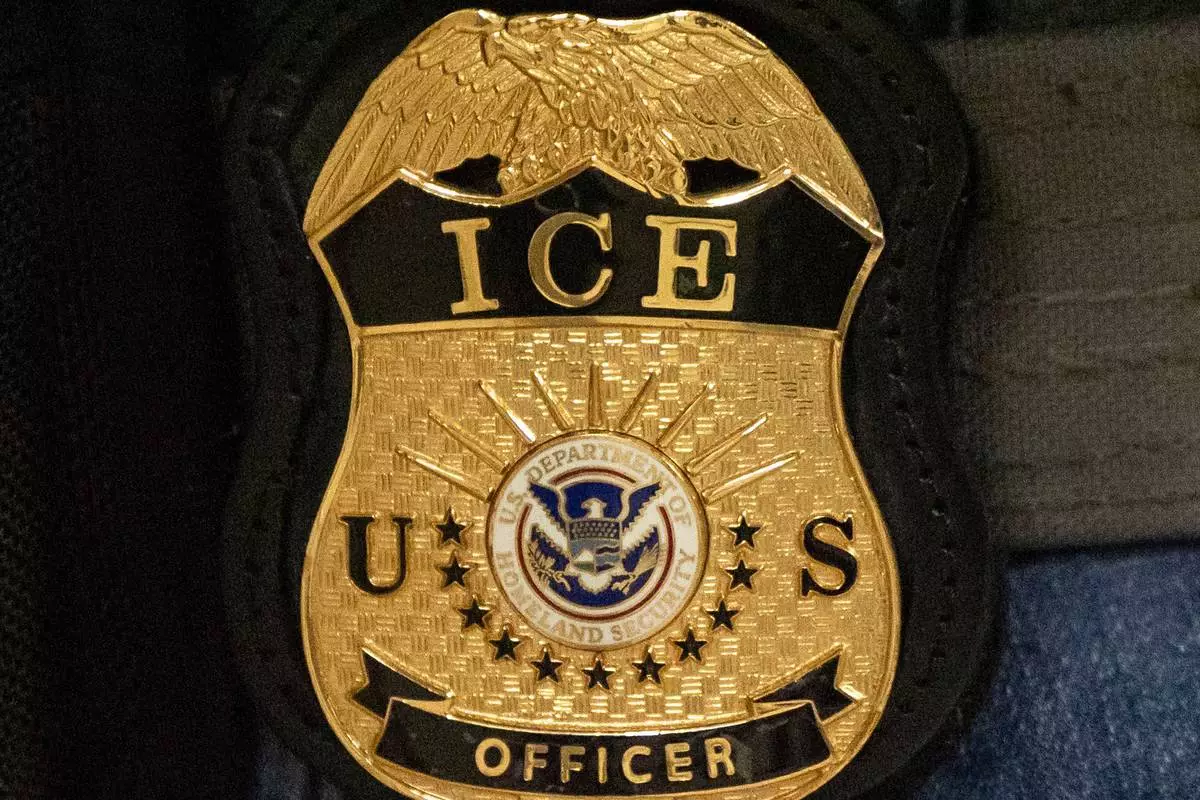
FILE - A federal agent wears an Immigration and Customs Enforcement badge in New York, June 10, 2025. (AP Photo/Yuki Iwamura, File)