BUENOS AIRES, Argentina (AP) — U.S. President Donald Trump raised doubts about whether the United States would support Britain in another conflict over the Falkland Islands in an interview with a British broadcaster aired Thursday, injecting new tension into the long-standing dispute over the British-controlled archipelago also claimed by Argentina.
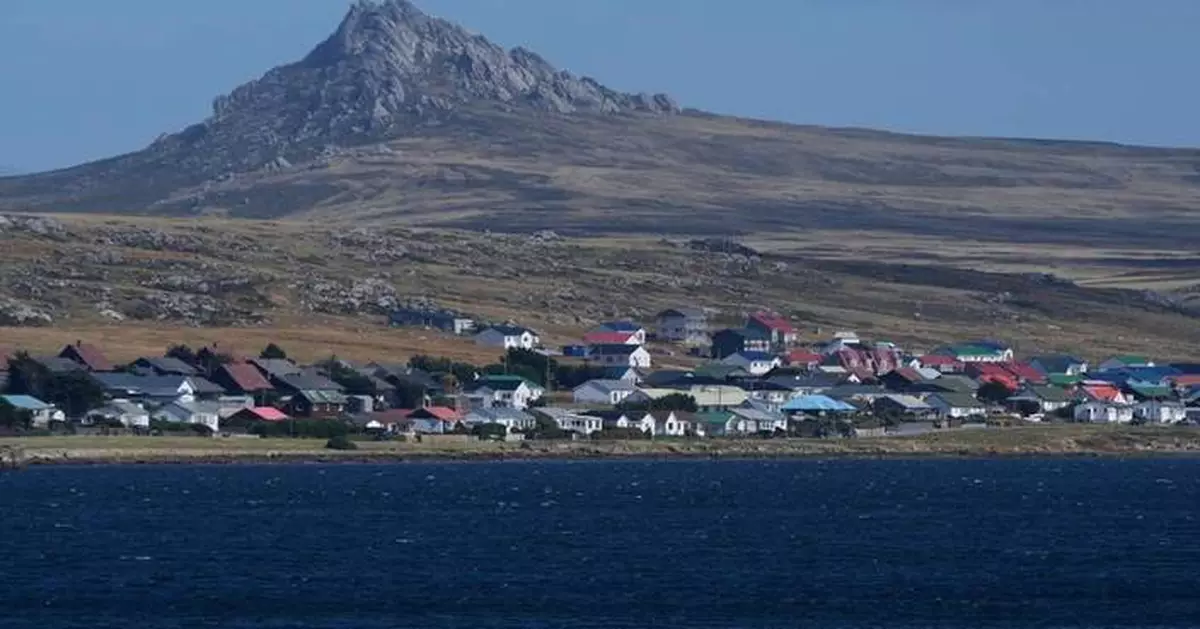
Trump's comments came as his ideological ally, Argentine President Javier Milei, prepared to deliver a televised national address about what his government has described as diplomatic progress over the islands that lie about 480 kilometers (300 miles) off Argentina’s coast in the South Atlantic.
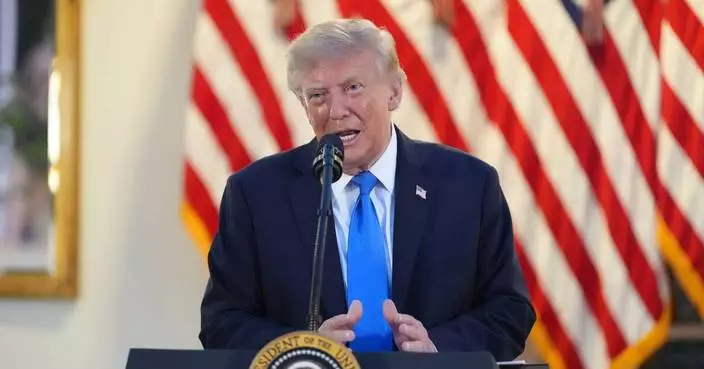
When asked in an interview with British television channel GB News whether the U.S. would “come to the aid” of Britain in a new conflict over the territory, Trump avoided answering directly.
“Well, look, I was there when they had the first war,” Trump said of the 10-week conflict that erupted in April 1982, when Argentina’s waning military dictatorship invaded the islands and then-Prime Minister Margaret Thatcher sent British naval forces across the Atlantic to retake them. The war killed 649 Argentine troops, 255 British service members and three islanders.
“That was a long time ago and I watched it so carefully, and you comported yourselves very well,” Trump added. “You took it back pretty strongly.”
He then pivoted to complaints that Britain has not provided sufficient support for the U.S.-led bombing campaign against Iran.
It wasn't the first time the Trump administration had drawn a connection between Britain’s claim to the remote islands and its refusal to participate in the U.S. war on Iran: An internal Pentagon email reported in April raised the prospect of Washington reconsidering its position on the archipelago as one possible way to punish NATO allies that declined to join the Iran war.
“Your country’s not doing well,” he said of Britain. “Your country was not there to help me.”
Trump recalled Britain’s former prime minister, Keir Starmer, telling him the country did not have ships to contribute to the campaign. “It was pretty sad, the whole thing,” he said.
For decades, successive U.S. administrations have remained neutral on the competing Argentine and British sovereignty claims over the Falklands while recognizing Britain’s de facto administration of the islands. Any departure from that position would be a major diplomatic affront and inflame already high trans-Atlantic tensions.
Trump had already fueled speculation about a possible shift in U.S. policy on Monday when asked whether his administration was reviewing its stance on the islands.
“I always review every position,” Trump replied. “That’s just one of many.”
Milei, a free-market libertarian who has struggled to prove his nationalist credentials and previously been criticized for a lack of support for the cause, welcomed Trump's comment, declaring that “something major happened regarding the most sacred cause we Argentines have.”
Asked earlier this week about Milei’s planned address, Prime Minister Andy Burnham’s spokesman, Tom Wells, said the British government’s position was “long-standing and unwavering." He pointed to a 2013 referendum in which the roughly 4,000 people living in the Falkland Islands voted overwhelmingly in favor of remaining a British overseas territory.
“Sovereignty rests with the U.K., and the islanders’ right to self-determination is paramount,” Wells said. "The U.K.’s position is clear. The islanders have repeatedly expressed their wish to remain a British overseas territory.”
Argentina maintains that it inherited sovereignty over the islands from its former colonizer, Spain, and that Britain has illegally occupied them since 1833. The Falklands, known in Argentina as the Malvinas, still carry enormous political and symbolic weight as one of the few causes that unite the deeply divided country.
Argentine patriotic fervor over the islands flared most recently during this year’s World Cup, when players celebrated their semifinal victory over England by displaying a banner declaring “Las Malvinas son Argentinas” — “The Malvinas are Argentine.”
Associated Press writers Jill Lawless in London, Zeke Miller in Washington and Isabel DeBre in Buenos Aires, Argentina, contributed to this report.
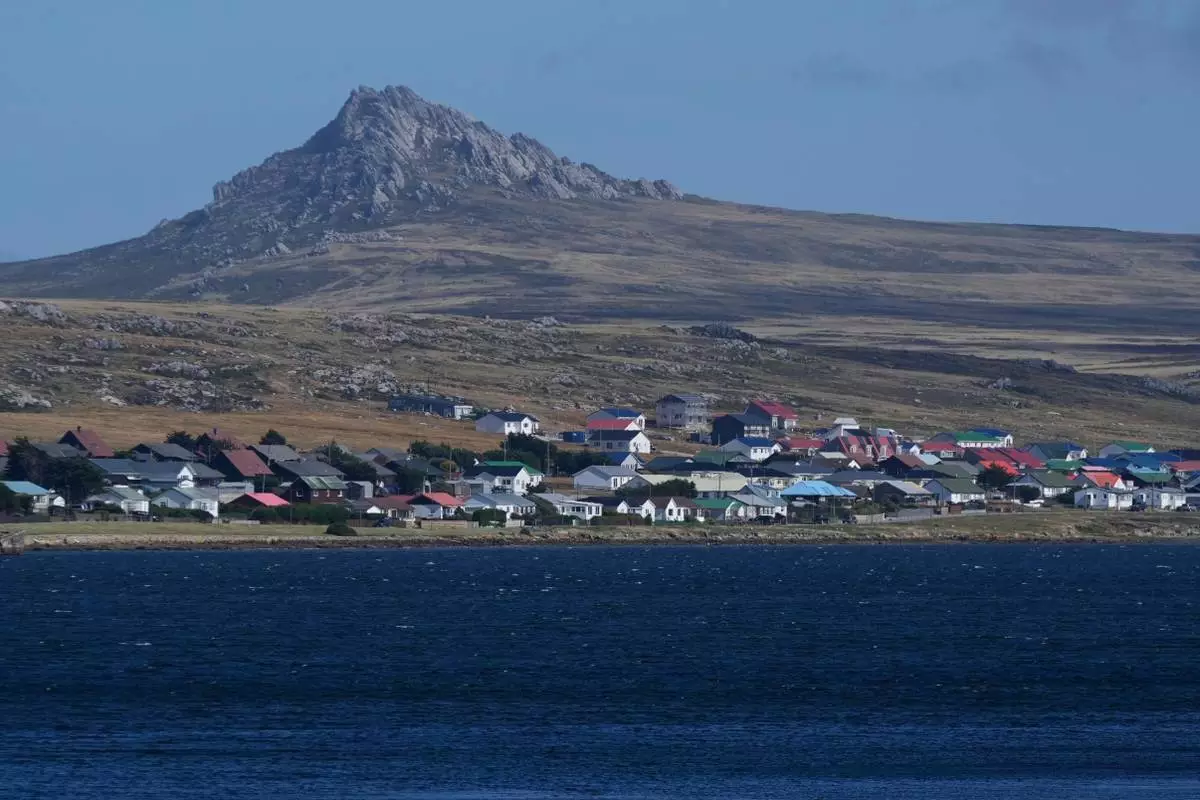
FILE - Mount Tumbledown stands tall behind Stanley on the Falkland Islands, also known as Islas Malvinas, March 16, 2026. (AP Photo/Ricardo Mazalan, File)
WASHINGTON (AP) — The Trump administration has stalled a study that would help regulators understand which industries dump harmful forever chemicals with their wastewater, according to two former agency officials who were involved in its development.
A public notice shows the first of its kind survey of wastewater treatment plants was submitted to the White House for approval nearly two years ago during the Biden administration — a far longer wait than is typical.
Many wastewater treatment plants receive PFAS-contaminated waste. A nationwide survey of hundreds of plants would help identify the source of that PFAS and could inform new regulations to limit their spread, according to Robert Wood, director of the engineering and analysis division in the EPA’s Office of Water before his retirement in 2024.
“If we can determine the top one, the top two, the top three” industries that dump PFAS, said Wood, “then we start work on the detailed studies and the regulation to get after nationwide limits on PFAS for the predominant industrial dischargers.”
Researchers have linked the family of chemicals called PFAS to increased risk of certain cancers, developmental effects in children, resistance to vaccines and other health problems. The man-made chemicals once commonly used in products like waterproof shoes and nonstick pans are also widespread in the environment and hard to remove, making them an especially challenging public health threat. Wastewater treatment plants, for example, typically aren’t equipped to separate them from waste, which means they are released back into rivers and onto soil.
The survey was submitted to the White House Office of Management and Budget, which must approve it, in October 2024.
“This is sufficiently unusual and a very long period of time that it is worth asking the question: Is OMB just sitting on it?” said Stuart Shapiro, a former OMB staffer and dean at the Edward J. Bloustein School of Planning and Public Policy at Rutgers University-New Brunswick in New Jersey. He said reviews typically take around 60 days.
The EPA and OMB did not respond to requests for comment.
The Trump administration has promised to combat PFAS. They've kept tough Biden-era limits on two common types of PFAS in drinking water and support work to find new ways to remove the chemicals from the environment.
They've also faced criticism from environmentalists and the Robert F. Kennedy Jr.-aligned “Make America Healthy Again” movement over what they see as an agency approach to chemical regulation that's too industry-friendly. Trump officials have delayed the most significant drinking water limits and scrapped a Biden-era effort to reduce PFAS in the wastewater of certain chemical manufacturers, restarting the regulatory process themselves.
The Biden-era EPA said that good data on PFAS in industrial wastewater is typically inaccessible, incomplete or inconsistent. With the new survey, officials sought to ask hundreds of wastewater treatment plants questions about their practices and to sample the industrial sources of the waste they treated.
If the work had started quickly, officials would already have some of the results, according to Betsy Southerland, a leader of the EPA’s Office of Water until 2017.
“It makes you wonder if they really want to stop PFAS — or if efforts to truly find out who is discharging is just too big a disruption for the chemical industry,” she said.
Officials also would have collected information on PFAS in biosolids, which are the treated solids water treatment plants produce in massive quantities. Those treated biosolids are often spread on farm fields as fertilizer. Officials wanted to survey biosolids to figure out the prevalence of PFAS.
Although concerns have been raised for years, officials have only recently studied the health implications of growing food on fields where PFAS-contaminated biosolids have been spread. The Biden-era EPA issued a draft report raising some concerns — a report Trump officials said had serious flaws. Agency officials, in their own draft document, said one of those flaws was that the agency had failed to conduct a national survey of PFAS in biosolids to better understand their occurrence and associated risks.
David Andrews, chief science officer at the nonprofit Environmental Working Group, said the Trump administration had created a logical paradox.
“The biosolids risk assessment was criticized by this administration for not including an EPA-run national occurrence study, and that exact survey has been sitting unapproved at OMB for nearly two years,” Andrews said.
A group representing public wastewater agencies questioned the need for the survey, saying that a lot of new data has been collected on PFAS in wastewater in recent years. That information is enough to take steps to regulate the industries that need to be addressed, and a new survey for more expensive sampling wouldn’t be useful, according to Cynthia Finley, director of regulatory affairs at the National Association of Clean Water Agencies.
“We would rather EPA look at what data is available already because there is a wealth of PFAS discharge information out there now,” said Finley.
Michigan is one of the states that has collected similar data on its own. The state had already limited the amount of certain PFAS wastewater treatment plants could dump into rivers and lakes several years ago when treatment plants started sampling the industrial waste they received.
With data in hand, “The treatment plants told their industries, 'Hey, you have to either stop discharging PFAS or reduce the amount of PFAS you are discharging to us,” to avoid violating limits on PFAS in rivers and lakes, according to Anne Tavalire, who works for the state on reducing PFAS at wastewater treatment plants.
She said the work helped achieve substantial reductions in PFAS released into the environment and in biosolids.
A “Make America Healthy Again” activist said it was good that the Trump administration had previously announced plans to tackle PFAS. But for their efforts to work, officials can't let polluters off the hook and must know where the pollution is coming from, according to Kelly Ryerson, whose social media account “Glyphosate Girl” focuses on agriculture and health.
The survey or a similar effort “is urgently needed data to help decrease toxic exposures and ultimately the chronic disease epidemic. We have no more time to waste in addressing these harmful exposures, especially on behalf of bureaucratic interests,” she said.
The Associated Press receives support from the Walton Family Foundation for coverage of water and environmental policy. The AP is solely responsible for all content. For all of AP’s environmental coverage, visit https://apnews.com/hub/climate-and-environment
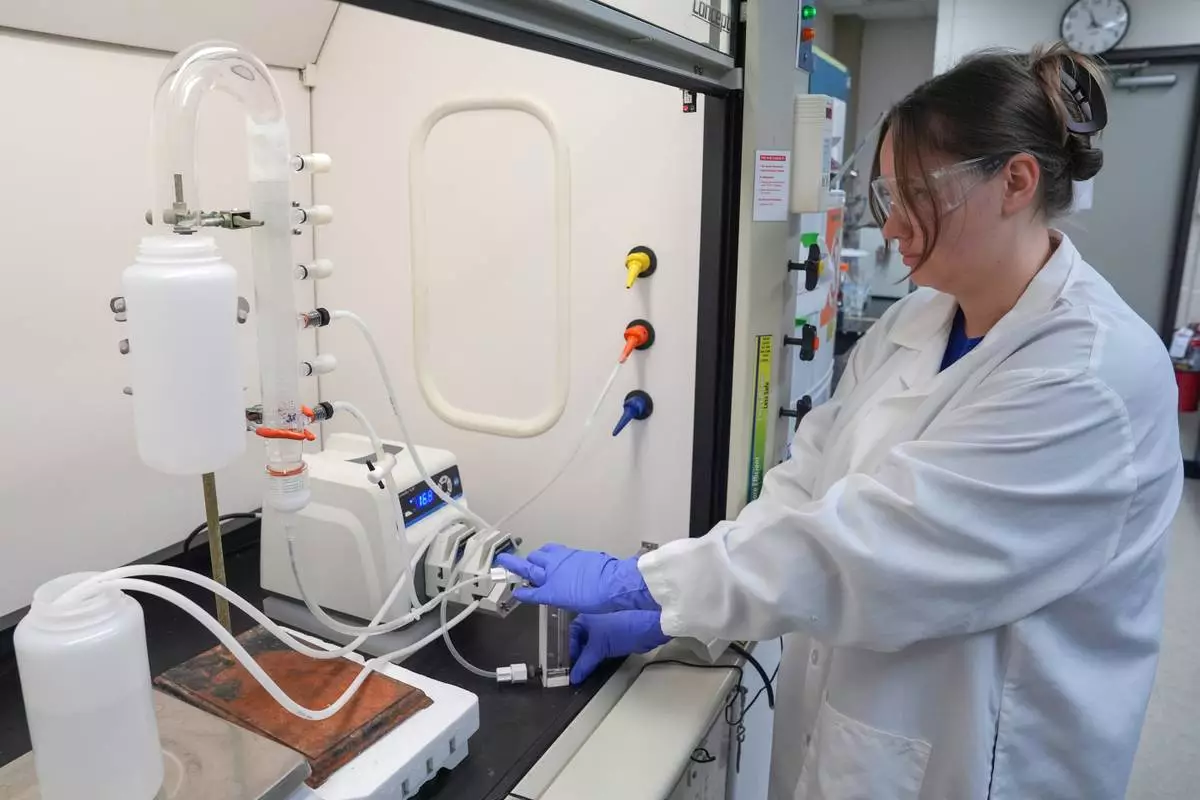
FILE - Stephanie Stoll starts a pump as part of an experiment studying the removal of PFAS from water samples, April 10, 2024, at a U.S. Environmental Protection Agency lab in Cincinnati. (AP Photo/Joshua A. Bickel, File)