The Chinese People's Liberation Army (PLA) will dispatch troops to Russia next week to participate in a multinational humanitarian mine clearance exercise, a Chinese defense ministry spokesman said on Friday.
The field training exercise is organized under the framework of the ASEAN Defense Ministers' Meeting-Plus (ADMM-Plus) Experts' Working Group on Humanitarian Mine Action.
"From Sept 7 to 12, the Chinese People's Liberation Army will send troops to Russia to participate in the field training exercise (FTX) of the Experts' Working Group (EWG) on Humanitarian Mine Action (HMA) under the ASEAN Defense Ministers' Meeting-Plus (ADMM-Plus). Set against the scenario of multinational armed forces conducting joint humanitarian clearance operations in mixed-explosive-contaminated areas, the exercise will focus on battlefield area clearance, mechanical demining, mine detection dog deployment, and clearance of improvised explosive devices. It will help promote experience sharing and capacity building in mine action among participating countries and enhance regional peace and stability," said Jiang Bin, the spokesman, at a press briefing in Beijing.
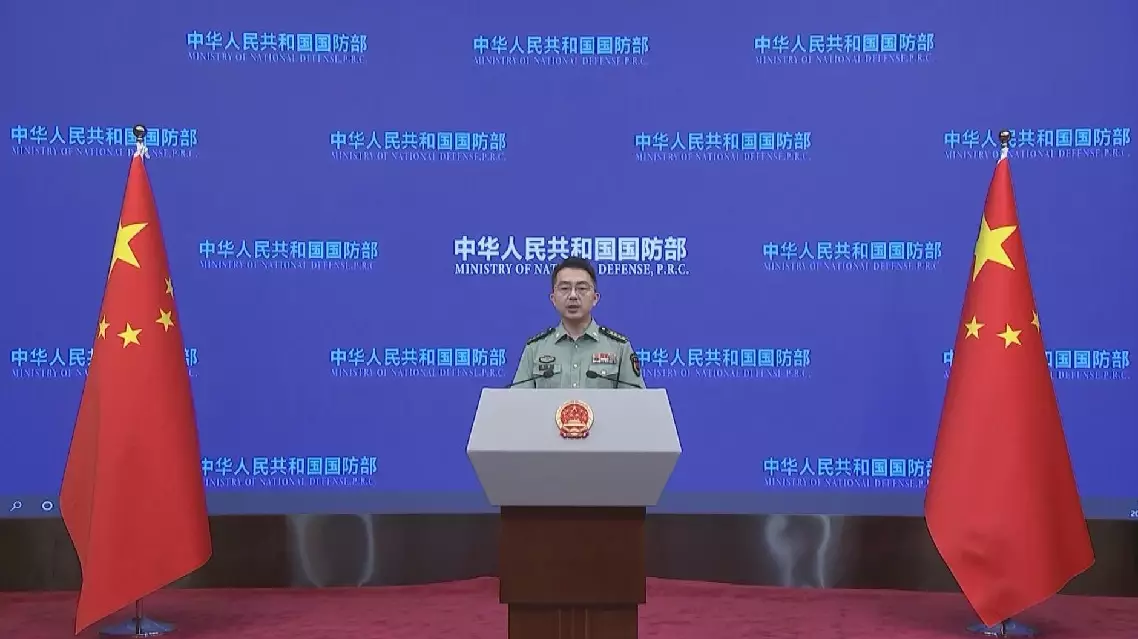
Chinese troops to join multinational humanitarian demining exercise in Russia
French protesters taking to the streets nationwide say they are growing increasingly frustrated and angry about the future as they struggle with the rising cost of living, deteriorating educational facilities and poor public services.
Nationwide demonstrations erupted in France on Oct 17, with the government estimating that approximately 550,000 people had participated across the country, while organizers claimed the figure reached 800,000.
In many cities, the protests escalated into violent unrest. In Paris, vehicles were set ablaze and shops were vandalized, while public facilities in several other cities also sustained varying degrees of damage.
The mass protests were initially triggered by students dissatisfied with a lack of educational resources and the poor condition of school facilities.
They were later joined by groups such as farmers and urban residents frustrated by rising energy prices, the high cost of living and declining public services.
Last week, protests in Marseille, France's second-largest city, descended into widespread violence.
On Oct 22, authorities in the Bouches-du-Rhone department, where Marseille is located, announced a ban on all protests across the department, including the southern port city, effective Oct 24.
High school students in Marseille say rising living costs and deteriorating school conditions are among the reasons they have taken to the streets.
"The price of gasoline and life itself have become too expensive. We have to protest, for the future, for ourselves and for our lives in the future," said Pablo Marez, a high school student.
"Overcrowding in classes, rats in classes. Walls in classes just don't stand up anymore. The heating doesn't work. During summer, it was way too hot," said Jenna, another high school student.
Observers said the protesters' demands highlight a series of governance challenges facing France, including a fiscal crisis, pressure on the welfare system and political polarization. With the 2027 presidential election approaching, some protesters say they see no candidate capable of turning the situation around.
"Currently, I don't see anyone who is capable of changing the situation in a country like France. I don't believe the answer lies in turning to the extremes or to the extremist parties -- whether it's the extreme right or the extreme left. People are becoming increasingly angry. We saw this on Saturday, October 17, and unfortunately, things are likely to get even worse in two days," said Jerome Borgeot, a social worker who works with homeless people in Marseille.
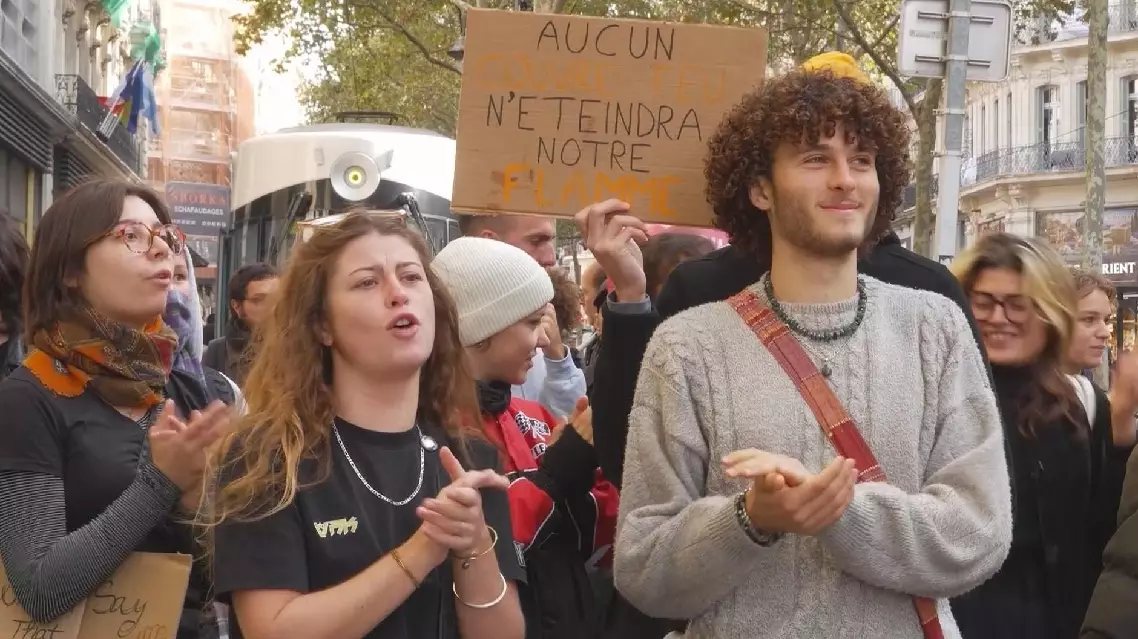
French protesters grow increasingly disillusioned about future amid nationwide demonstrations