TOKYO--(BUSINESS WIRE)--Sep 4, 2026--
NKB Inc. (Headquarters: Chiyoda-ku, Tokyo; President: Takayuki Toya; hereinafter "NKB") has produced and launched high-definition Giclée prints based on the original artwork for " Procession Spin," a large-scale ceramic relief public art piece based on an original artwork by world-renowned manga artist and film director Katsuhiro Otomo, who also supervised the project.
Each print in this exclusive collection is hand-signed and numbered by Mr. Otomo. While the total edition is limited to 250, only approximately 100 prints currently remain available for purchase. Sales will end once the remaining stock has sold out.
This press release features multimedia. View the full release here: https://www.businesswire.com/news/home/20260902236977/en/
The Concept of "Procession Spin"
"Procession Spin" depicts the grand trajectory of human creativity, weaving together diverse artistic elements ranging from pottery from the Jomon period (approximately 16,000 to 2,300 years ago) and Buddhist statues to contemporary forms and futuristic visions. The work expresses how the prayers and aspirations of each era are inherited and transformed as they flow toward the future. Mr. Otomo dedicated approximately three years to the project, from initial conception to the completion of the original artwork. The ceramic relief was crafted by NKB’s Creare Atami Yugawara Studio (Atami City, Shizuoka) and has been on public display at Tokyo Metro Ginza Station (near Exit B1, Hibiya Line) since December 2025.
Precision Giclée Technology
Giclée is a fine-art printing technique that uses high-definition digital data and archival-quality inks to faithfully reproduce the colors and minute details of original masterpieces. This method is widely utilized by prestigious museums and galleries globally.
These prints leverage the latest Giclée technology to capture every delicate line, rich hue, and texture of the original work. This release offers collectors a rare opportunity to own a piece of Mr. Otomo’s meticulously detailed and visionary world.
Sales Website
https://store.creare-art.net/products/otomo-katsuhiro-giclee
Available for purchase from overseas through Buyee.
Artist Profile: Katsuhiro Otomo
A manga artist and film director who gained international acclaim for his masterpiece AKIRA. His intricate art style and visionary storytelling have had a profound influence on creators and fans worldwide.

"Procession Spin"
CHICAGO (AP) — Diesel hit a record price in the U.S. on Friday, soaring to an average of $5.85 a gallon for the first time as the six-month war with Iran disrupts the world’s flow of fuel.
Because diesel is used for many freight and delivery networks, higher diesel prices mean higher transportation costs for a long list of everyday goods. Some businesses have already passed on costs to consumers in the form of added fees on online orders and packages in the mail. And shoppers may see more and more sticker shock trickle down to store shelves.
One of the most immediate strains is being felt in the grocery aisle, particularly with produce, meat and other perishable foods that need to be hauled in and restocked frequently — or even harvested using diesel-powered farm equipment. It can take time for all of those costs to trickle down.
Still, experts warn that price hikes could mount the longer diesel remains expensive. A range of other products are also transported by diesel trucks, trains and boats, including clothing, cosmetics and furniture.
This could add to Republicans’ political challenges ahead of November’s midterm elections, with many voters already sour on President Donald Trump’s management of the economy and fallout of the war he launched. AP-NORC polling this summer showed 2 out of 3 U.S. adults disapproved of how Trump is handling the economy.
The price for regular gasoline has also been going up, although not as fast as the price of diesel. The average price was $4.15 a gallon, compared with $3.20 at this time last year, according to motor club AAA, which says gas has never been above $4 a gallon on Labor Day.
American diesel prices are now nearly 56% more expensive than they were before the U.S. and Israel launched their war against Iran in late February, when the national average sat at about $3.76 per gallon per AAA. Prices quickly climbed as the cost of crude oil — the main ingredient in diesel, as well as gasoline — soared amid supply chain disruptions across the Middle East, notably with most tanker traffic bottlenecked in the key Strait of Hormuz.
Despite prices cooling some during hopes for peace earlier in the summer, oil has now renewed its climb as fighting once more escalates between the U.S. and Iran. Brent crude, the international standard, was trading at more than $95 a barrel Friday, up from roughly $70 before the war. Prices at the pump always follow closely behind.
The last time businesses and drivers saw sky-high fuel prices was in June 2022, when diesel reached nearly $5.82 a gallon on average months after the Ukraine war began and world leaders imposed sanctions against Russia, a leading oil producer.
When adjusted for inflation, however, prices have been higher in the past. Ahead of the 2008 financial crisis, for example, diesel hit about $4.74 a gallon — equivalent to $7.20 in 2026, according to the government’s latest data. And 2022’s record of nearly $5.82 would be about $6.56 this year when accounting for inflation.
That doesn’t take the pain away from today’s steep prices, which are already bringing ripple effects for the economy and wider costs of living. Drivers are feeling the pain with gasoline, too.
The average $4.15 for a gallon of regular unleaded is up from $2.98 before the Iran war (an over 39% jump), although still well below the 2022 peak of nearly $5.02 a gallon nationwide.
Diesel has been more expensive than gasoline in the U.S. for decades, and its price has risen at a faster pace before. Some reasons include less flexibility in demand and diesel’s position in global commerce overall. Individual households may find ways to drive less when gas prices are high, for example, but there’s fewer immediate substitutes for networks that rely on diesel to haul goods worldwide.
Diesel is integral to every part of the food supply chain. It powers farm equipment and fishing boats as well as the trains and trucks headed to grocery stores.
Fuel accounts for roughly 15% to 30% of the total cost of food, according to the Independent Grocers Alliance, a grouping of 7,500 global supermarkets. So higher diesel costs often result in more expensive groceries, although it can take a while for energy shocks to wind their way through the supply chain.
Items that need to stay refrigerated while they’re transported are often the first to see prices rise, according to David Ortega, a professor of food economics and policy at Michigan State University. In July, for example, overall U.S. grocery prices were up 2.7% compared to a year prior, but seafood prices were up 7% and fresh fruit prices were up 4.9%.
Ortega cautioned other factors can be at play, too. Lettuce also faced higher transportation costs in July, but a drop in demand due to the cyclospora outbreak caused prices to fall.
Still, consumers could feel more of a squeeze the longer diesel prices remain high.
“Early on, much of the cost increase gets absorbed along the supply chain through existing freight contracts and retailer margins,” Ortega said. “But as contracts reprice and fuel surcharges take hold, more of that cost makes its way to the grocery store.”
Back in April, e-commerce giant Amazon rolled out a temporary 3.5% fuel and logistics surcharge on some third-party sellers. United Parcel Service, FedEx and the United States Postal Service also moved to add fees on some of the packages they ship earlier in the war, citing rising costs for fuel overall.
Ajesh Kapoor, CEO and founder of trucking technology company SemiCab, said trucking and transportation can adapt to rising diesel prices — but at some point there is a limit.
“Diesel price has a very, very direct impact on everything that moves on pretty much any mode,” Kapoor said.
The ramifications extend beyond consumer goods. Some public transit buses and trains also run on diesel. And diesel generators are often used for backup or emergency power, if not central electricity sources in some remote parts of the world.
Experts warn the consequences could continue to deepen, particularly in African and Asian countries, which rely more on Middle East imports and have already been hit the hardest by energy shocks.
According to the latest data from Global Petrol Prices, diesel prices in Nigeria have surged 90% since late February — followed by nearly 87% in Indonesia and 77% in Lebanon. Price tags vary widely between countries, due to factors ranging from fuel taxes to local economic conditions more broadly. Diesel prices in Nigeria ended August at $4.91 per gallon (1,730 naira per liter) on average. Meanwhile, the highest sticker price reported by Global Petrol Prices was in Hong Kong, where diesel costs have jumped over 25% during the war and averaged at $17.73 a gallon (nearly 37 Hong Kong dollars per liter) Monday.
At a weekly briefing with Lloyd’s List Intelligence, Neil Atkinson, energy analyst and senior fellow at the National Center for Energy Analytics, said products like diesel are becoming more expensive while physical stocks dwindle. He pointed to the strain on the global refining system.
“This cannot go on forever," he said.
Associated Press writers Dee-Ann Durbin in Detroit, Mae Anderson in New York and Bill Barrow in Atlanta contributed to this report.
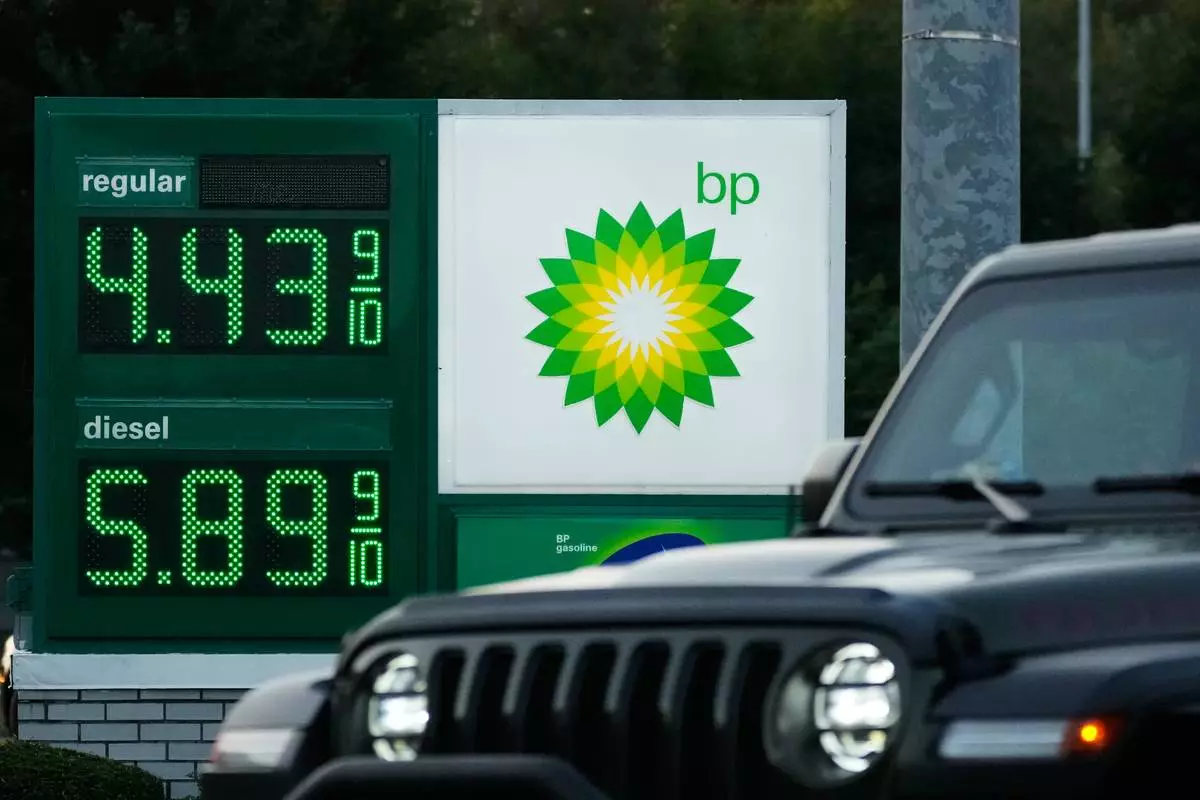
Gas prices are displayed at a gas station in Mount Prospect, Ill., Thursday, Sept. 3, 2026. (AP Photo/Nam Y. Huh)
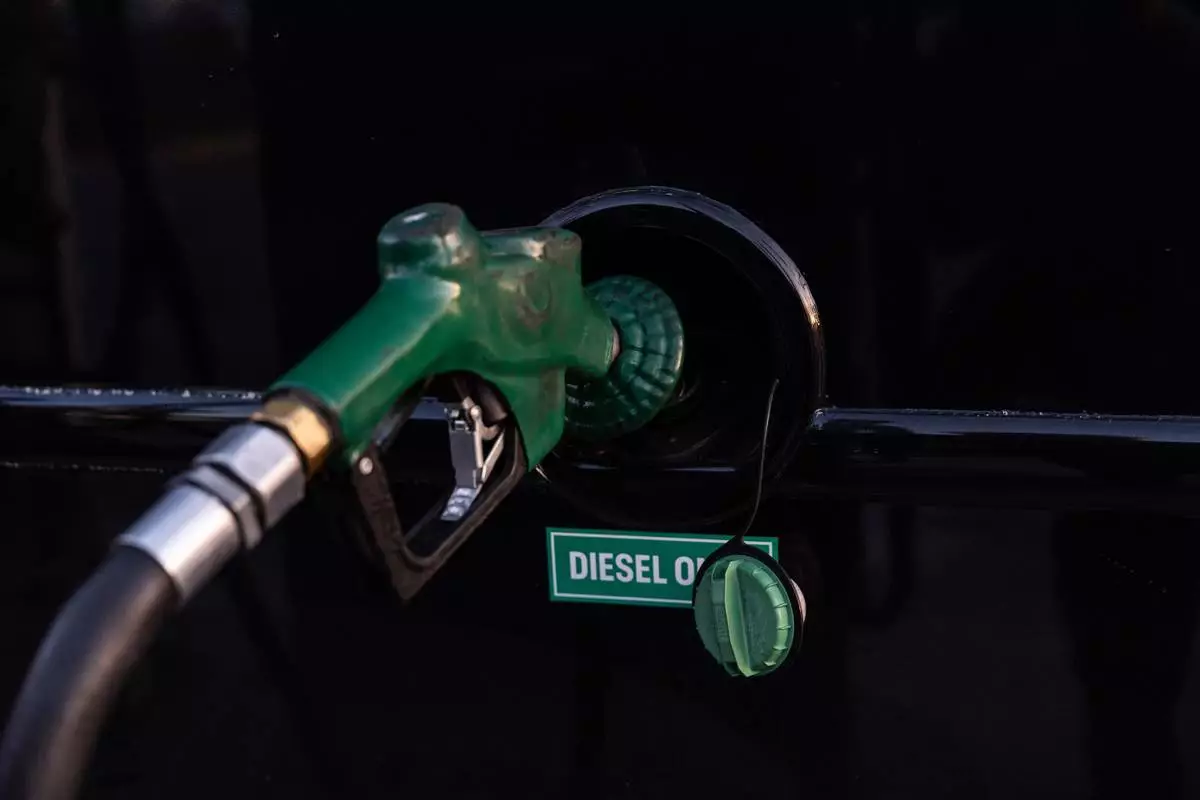
FILE - A nozzle pumps diesel into the fuel tank of bus in Orange, Calif., Tuesday, April 7, 2026. (AP Photo/Jae C. Hong, File)