Skip to Content Facebook Feature Image

Trump administration scrubs data on gender-based bullying from school civil rights survey

News

Trump administration scrubs data on gender-based bullying from school civil rights survey
News

News

Trump administration scrubs data on gender-based bullying from school civil rights survey

2026-09-05 00:10 Last Updated At:00:20

The Trump administration this week quietly released an update to a major survey on civil rights in schools that was scrubbed of all data related to nonbinary students or bullying based on gender identity.

The numbers come from the Education Department's Civil Rights Data Collection, a federal survey of nearly every public school in the nation. The release this week covers the 2023-2024 school year, when the survey included “nonbinary” as a gender category alongside male and female.

However, an Associated Press analysis shows that in every column for information related to gender identity, the numbers were replaced with a code indicating “Suppressed in Compliance with Executive Order.” That refers to an executive order that President Donald Trump signed on his inauguration day calling for the federal government to define sex as only male or female.

The government also suppressed the number of allegations of harassment or bullying on the basis of gender identity in schools, information about whether the districts had written policies prohibiting such harassment, and any links to those policies.

Those questions in the data collection are designed to capture the experiences of transgender and nonbinary students — whether they experience harassment, participate in sports or face overly harsh discipline, said Seth Galanter, a senior fellow at the Edley Center on Law and Democracy and a former attorney with the Education Department's Office for Civil Rights under the Biden and Obama administrations.

Only school districts that already collected data on trans and nonbinary students were required to report it to the federal government, Galanter said, and roughly 1,800 out of the more than 13,000 U.S. school districts reported data in the last collection.

“We're losing the granular experience of those kids,” Galanter said. “They exist in the world, their schools acknowledge their existence, but we now no longer have any way to have any kind of local, state or national picture about these kids and what their school experience is like.”

The Education Department did not immediately respond to a request for comment.

The data suppression reflects the Trump administration’s wider efforts to target protections for transgender and nonbinary students in schools. The White House has repeatedly clashed with schools and colleges over accommodations for transgender students, with the Justice Department this week announcing a federal lawsuit against the school system in Kansas City, Kansas, over its policies on transgender students.

It's also one of many instances in which the administration has removed data related to gender from government resources.

The Williams Institute, an LGBTQ+ law and policy research center based at the UCLA School of Law, has identified around 360 cases where the Trump administration removed information related to sexual orientation or gender identity from federal data collections, ranging from Medicare surveys that asked about discrimination in doctors’ offices to data on homeless youth.

The author of the Williams Institute’s report, Lauren Bouton, said the Office for Civil Rights could have used the data to identify schools that have a problem with bullying of nonbinary students and then require them to follow an action plan to improve.

The Civil Rights Data Collection is one of the country’s most important and comprehensive sources of data related to educational opportunity in public schools. As required by federal law, the Office for Civil Rights collects information from every school in the country on topics like discipline, corporal punishment, bullying and harassment, and access to advanced coursework.

The lack of transparency around the most recent update could erode public trust the government has worked to build for its civil rights data, said Ivy Morgan, director of research and data at EdTrust, a Washington, D.C.-based think tank that advocates for educational equity.

“The way this data was released is part of a long-standing pattern that we have observed for the last two years,” Morgan said. “This administration just does not care about data, doesn’t care about research, doesn’t care about evidence. And it particularly doesn’t care about that information when it is helping us understand the experiences of students and people who are marginalized in our society.”

Preparations for the latest data collection began under President Joe Biden’s administration, and Morgan said the attempt to gather data on nonbinary and trans students was one of the most comprehensive efforts to date from the federal government. The survey went out to schools a month before Trump was inaugurated.

While Trump had previously announced his administration would remove questions related to gender identity, it was unclear whether that would affect the 2024 data or only future surveys.

The last time that the data collection was updated, under the Biden administration, it came with a detailed report on trends in educational equity and opportunity, including findings that Black and Latino students were far more likely than white students to attend schools where the majority of teachers were not certified and were far less likely to have access to advanced math courses in high school.

This year, the new data came out with no accompanying report. There was no official announcement from the Education Department that new data had arrived. The only indication of the change was a single row added to the department’s list of data tables. As of Friday, the homepage of the data collection website listed 2021-2022 data under the heading “What’s New?”

The Associated Press’ education coverage receives financial support from multiple private foundations. AP is solely responsible for all content. Find AP’s standards for working with philanthropies, a list of supporters and funded coverage areas at AP.org.
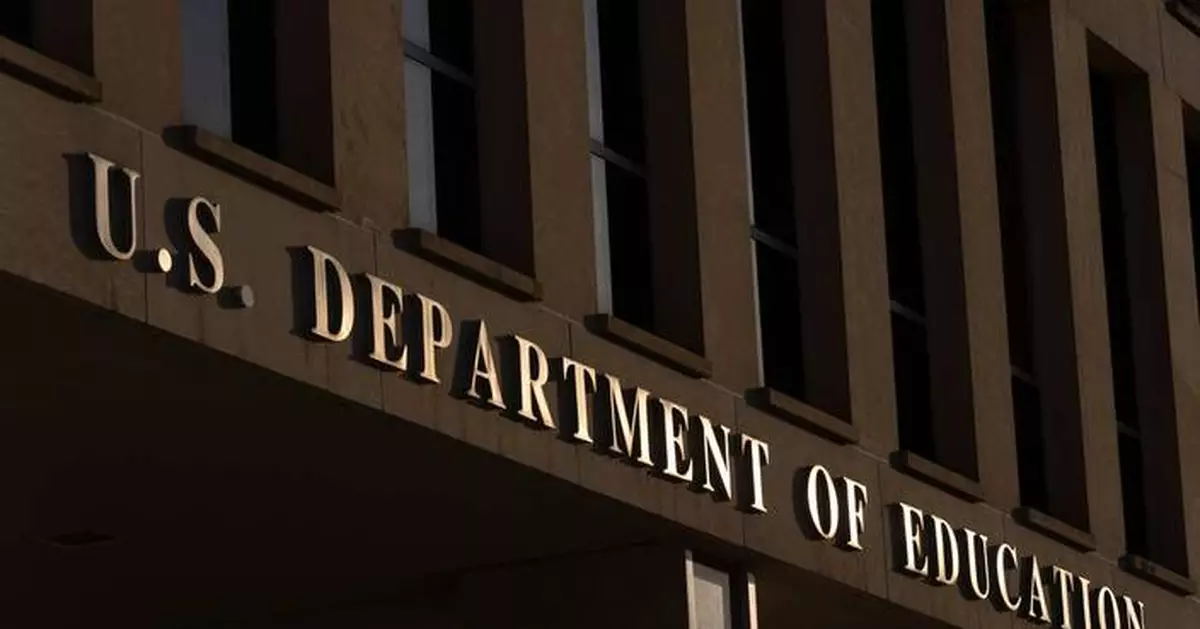
FILE - The headquarters of the U.S. Department of Education, March 12, 2025, in Washington. (AP Photo/Mark Schiefelbein, File)

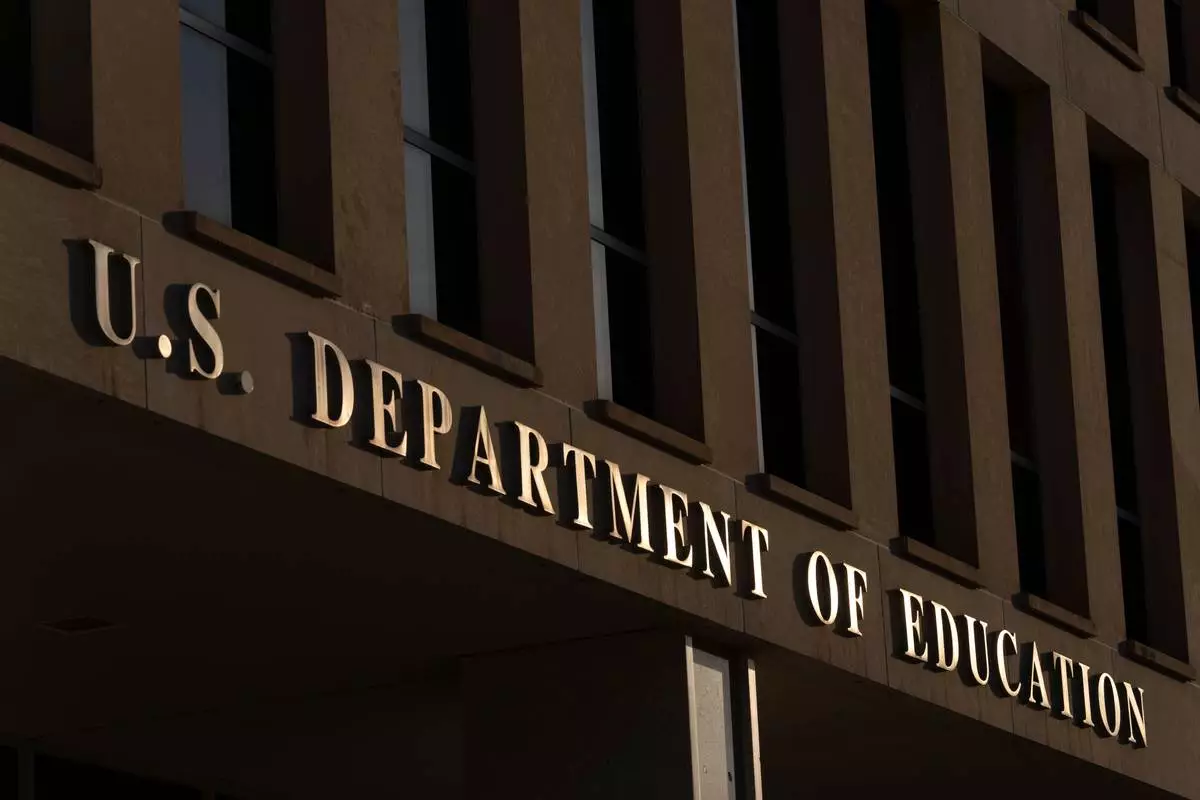
FILE - The headquarters of the U.S. Department of Education, March 12, 2025, in Washington. (AP Photo/Mark Schiefelbein, File)
Israel has released to Lebanese authorities four prisoners who had been detained by its forces in southern Lebanon. Ship traffic remains low on the Strait of Hormuz days after the U.S. and Iran exchanged attacks for the first time in a month. And fighting has intensified in Yemen between Iran-backed rebels and government forces.

Here’s a look at the latest developments in the Iran war and the wider Middle East. Full coverage can be found here.

Israel released four prisoners to Lebanese authorities on Friday as part of a deal between the countries, a day after the first was freed. All had been detained by Israeli forces in southern Lebanon, where troops now occupy a large swath in the wake of new fighting with Hezbollah that began two days after the U.S. and Israel attacked Iran.

Israel on Thursday said it had agreed to release them after Lebanon provided assistance in searching for the bodies of Lebanese Jewish leaders who went missing in the 1980s during Lebanon’s civil war.

Officials said the release comes as a result of U.S. mediation and negotiations between Israel and Lebanon. Another round of talks is expected in Rome later this month.

Those released Friday included two Lebanese citizens and two Syrians who had been captured in Lebanon, according to two Lebanese officials who spoke on condition of anonymity because they were not authorized to comment publicly. Hundreds of thousands of Syrian refugees and workers live in Lebanon. It was not clear if the released detainees would be sent back to Syria.

By Fadi Tawil in Tyre, Lebanon, and Abby Sewell in Beirut

Ship traffic through the Strait of Hormuz remained low after the renewed U.S. attacks on targets in Iran earlier this week and Iran's retaliatory attacks in the region, including firing at U.S. Gulf ally Kuwait on Thursday.

Fuel prices are again affected. Diesel hit a record price in the U.S. on Friday, soaring to an average of $5.85 a gallon for the first time ever.

The benchmark U.S. crude price rose above $91 a barrel with the new wave of uncertainty around traffic on the strait, which Iran continues to use as leverage after six months of war with the U.S.

Iran’s Army spokesperson said Friday that recent strikes carried out by Iran “had both a deterrent aspect and a preemptive aspect.”

In an interview with Iran’s state TV, Brig. Gen. Mohammad Akramnia said that since the 12-day war in 2025, Iran has been moving in the direction of preemptive warfare and acting for deterrence, which he said is “permissible” under the United Nations Charter.

“In several cases, before they attacked us and committed aggression, we acted for deterrence, in order to genuinely deter them from aggression,” he said of the United States.

The Islamic Republic has repeatedly stated that it carries out retaliatory strikes on its neighboring Gulf countries to target U.S. facilities and interests in the region, and in response to U.S. strikes.

Fighting intensified overnight between Iran-backed Houthi rebels and Yemeni government forces along Yemen’s west coast near an important supply route.

An official with the internationally recognized government's health ministry told The Associated Press there were an unspecified number of casualties on both sides in the fighting in mountainous Taiz province. The official spoke on condition of anonymity because he wasn’t authorized to speak with the media. A military official, who also spoke on condition of anonymity because he wasn’t authorized to brief the media, confirmed casualties on both sides.

Jabal Nu’man overlooks a major supply route for Yemeni government forces between Taiz province and Mokha, a port city heavily targeted by the Houthis in recent weeks.

The Houthis’ expansion of attacks in these areas appears to indicate an effort to gain full control of the Bab el-Mandeb strait, the southern gateway to the Red Sea, according to Mohamed Abdelrahman, a Taiz province spokesperson.

Ahmed Nagi, a senior analyst on Yemen at the International Crisis Group, told the AP that the Houthis want to take control of the mountains overlooking the coast.

— Ahmed al-Haj in Aden, Yemen, and Fatma Khaled in Cairo

This story has been corrected to show that the name of the Iranian Army spokesperson is Mohammad Akramnia instead of Akrami Nia. The story was also corrected to show that Abdelrahman’s first name is Mohamed, not Moahmed.

This report will be updated throughout the day as new developments emerge.

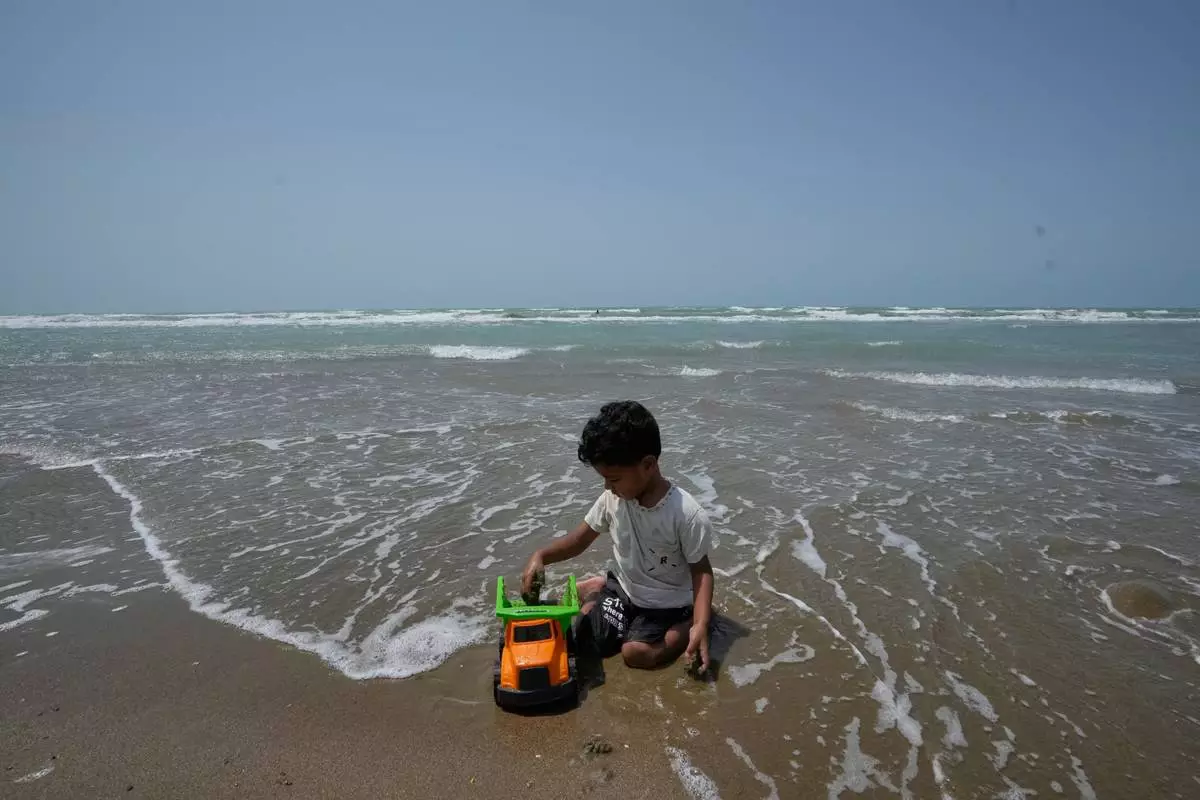
A boy plays with a toy truck on a beach along the Strait of Hormuz in Kuhestak, Iran, Friday, Sept. 4, 2026. (AP Photo/Vahid Salemi)

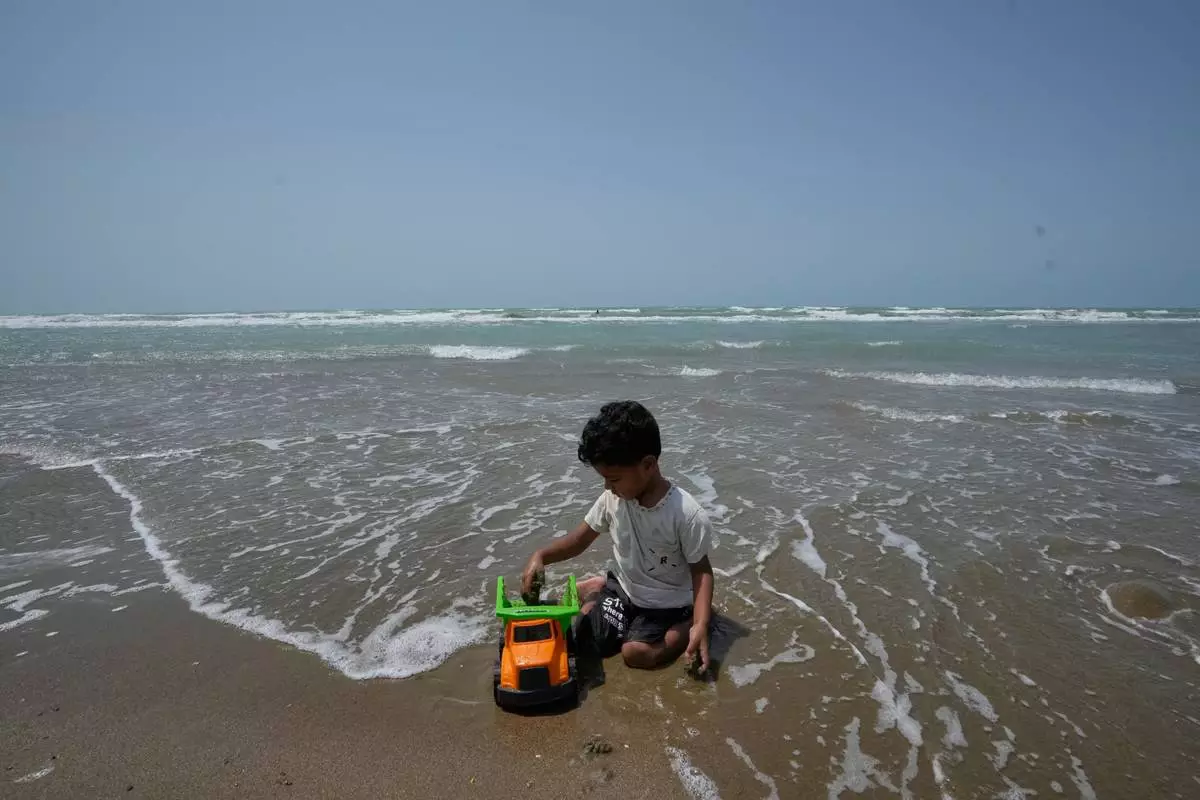
A boy plays with a toy truck on a beach along the Strait of Hormuz in Kuhestak, Iran, Friday, Sept. 4, 2026. (AP Photo/Vahid Salemi)

A boy plays with a toy truck on a beach along the Strait of Hormuz in Kuhestak, Iran, Friday, Sept. 4, 2026. (AP Photo/Vahid Salemi)

A boy plays with a toy truck on a beach along the Strait of Hormuz in Kuhestak, Iran, Friday, Sept. 4, 2026. (AP Photo/Vahid Salemi)

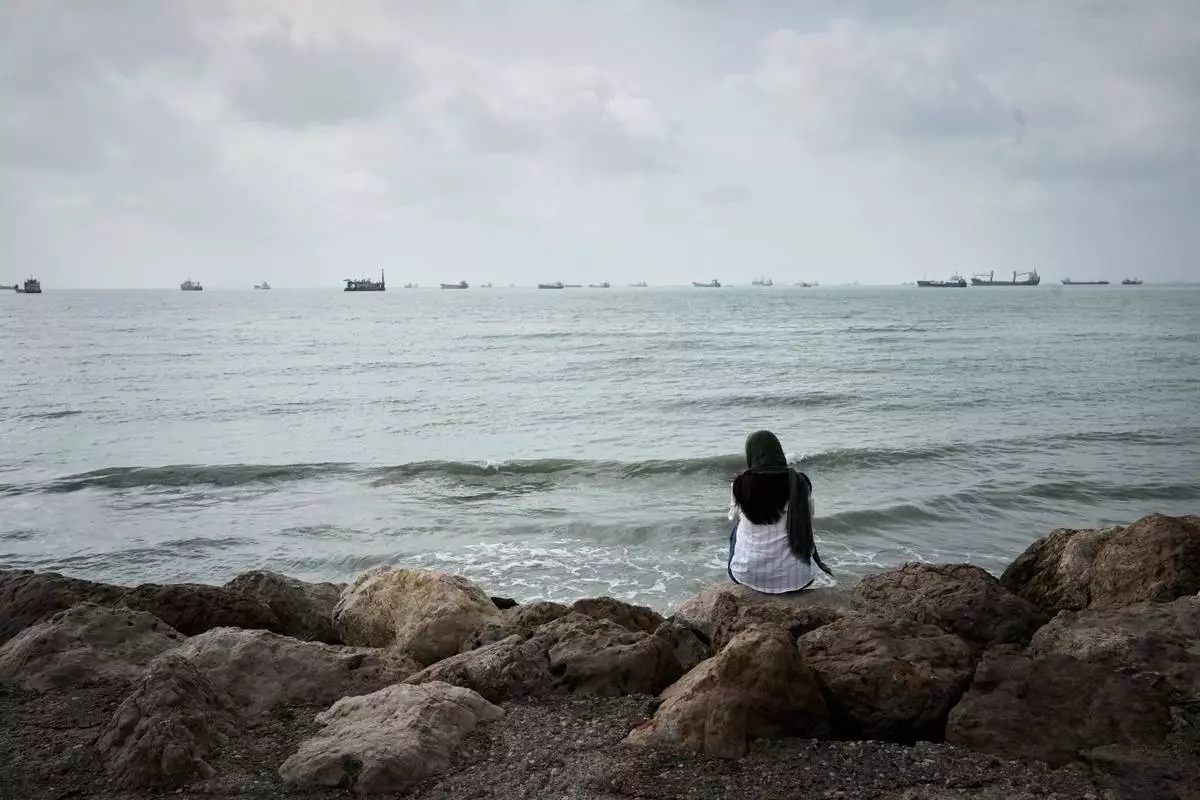
A woman relaxes along the rocky shoreline as commercial vessels lie anchored off Bandar Abbas, Iran, Friday, Sept. 4, 2026. (AP Photo/Vahid Salemi)

A woman relaxes along the rocky shoreline as commercial vessels lie anchored off Bandar Abbas, Iran, Friday, Sept. 4, 2026. (AP Photo/Vahid Salemi)

Commercial vessels lie anchored in the Strait of Hormuz off Bandar Abbas, Iran, Friday, Sept. 4, 2026. (AP Photo/Vahid Salemi)

Commercial vessels lie anchored in the Strait of Hormuz off Bandar Abbas, Iran, Friday, Sept. 4, 2026. (AP Photo/Vahid Salemi)

A man, woman and boy ride a motorcycle along the waterfront as commercial vessels lie anchored in the Strait of Hormuz off Bandar Abbas, Iran, Friday, Sept. 4, 2026. (AP Photo/Vahid Salemi)

A man, woman and boy ride a motorcycle along the waterfront as commercial vessels lie anchored in the Strait of Hormuz off Bandar Abbas, Iran, Friday, Sept. 4, 2026. (AP Photo/Vahid Salemi)

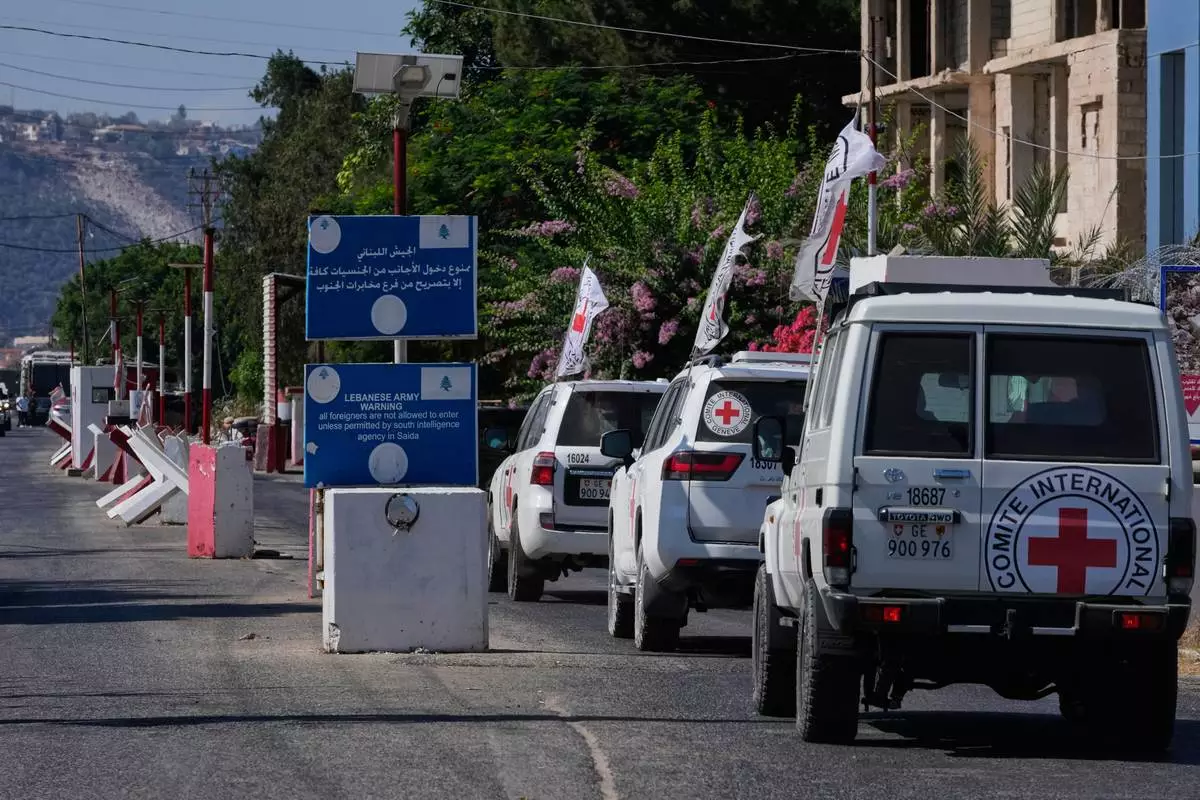
A Red Cross convoy passes a Lebanese checkpoint near the border with Israel in the southern village of Mansouri, Lebanon, Friday, Sept. 4, 2026. (AP Photo/Mohammed Zaatari) CORRECTION: A Red Cross convoy, instead of U.N. peacekeeper convoy

A Red Cross convoy passes a Lebanese checkpoint near the border with Israel in the southern village of Mansouri, Lebanon, Friday, Sept. 4, 2026. (AP Photo/Mohammed Zaatari) CORRECTION: A Red Cross convoy, instead of U.N. peacekeeper convoy

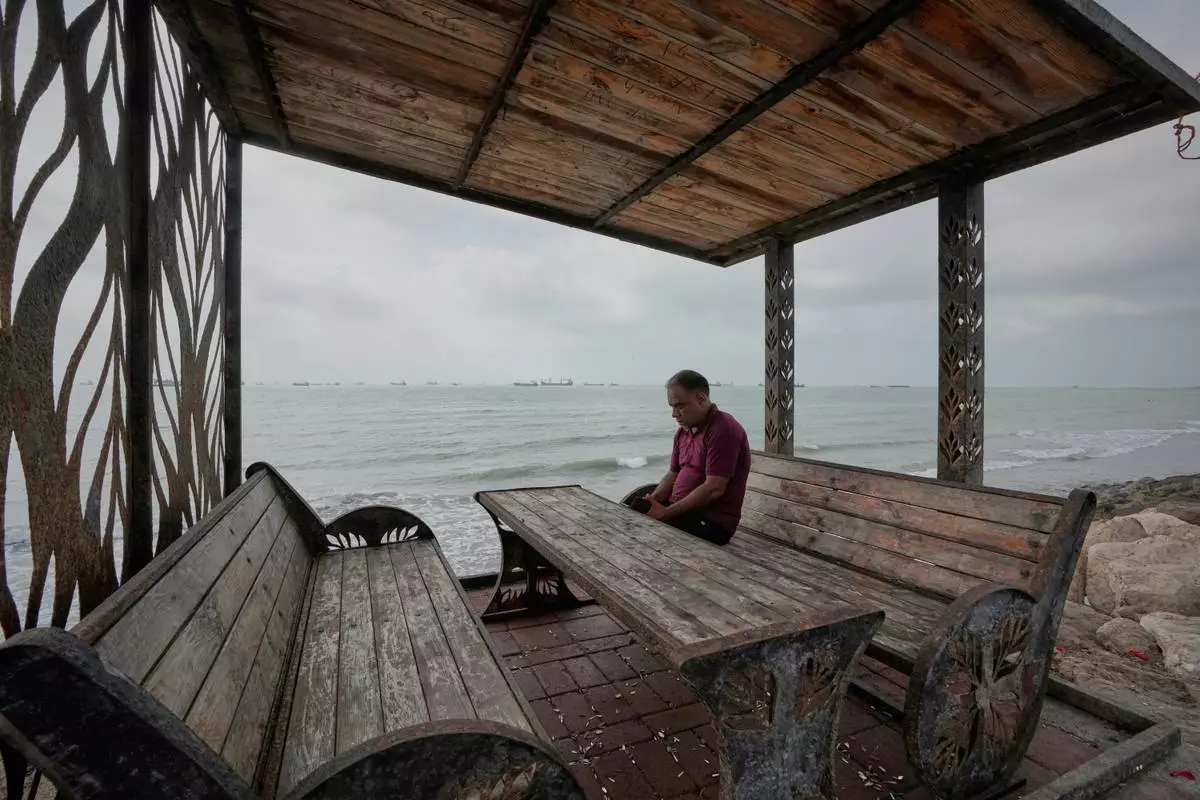
A man rests at a waterfront shelter as commercial vessels lie anchored in the Strait of Hormuz off Bandar Abbas, Iran, Friday, Sept. 4, 2026. (AP Photo/Vahid Salemi)

A man rests at a waterfront shelter as commercial vessels lie anchored in the Strait of Hormuz off Bandar Abbas, Iran, Friday, Sept. 4, 2026. (AP Photo/Vahid Salemi)

Recommended Articles