VIENNA (AP) — The United States, Britain, France and Germany have drafted a resolution for possible consideration by the Board of Governors of the U.N. nuclear watchdog that seeks to refer Iran to the U.N. Security Council for failure to comply with its nuclear nonproliferation obligations, diplomats say.
Under those obligations, which are part of the Nuclear Non-Proliferation Treaty, Iran is legally bound to declare all nuclear material and activities and allow inspectors of the Vienna-based International Atomic Energy Agency to verify that none of it is being diverted from peaceful uses.
The diplomatic move has been under consideration since June 2025 when the IAEA board found Iran officially in noncompliance with its nonproliferation obligations for the first time in 20 years — one day before the U.S. and Israel launched attacks against Iran’s nuclear sites.
The possible referral of Iran to the U.N. Security Council shifts the responsibility to a higher authority that is able to enact further legally binding measures, including sanctions or asset freezes.
But specific punitive measures by the U.N. are unlikely in this case since Iran’s allies Russia and China hold a veto power on the U.N. Security Council.
The draft resolution, which was seen by The Associated Press and reported earlier by Reuters, requests the IAEA director general Rafael Grossi “to transmit this resolution and the previously adopted resolutions … to all Members of the Agency and to the Security Council and the General Assembly of the United Nations, in accordance with the relevant provisions of the IAEA Statute.”
The resolution also “stresses its support for a diplomatic solution to the challenges posed by the Iranian nuclear programme and its implications for regional peace and stability leading to an agreement that addresses all international concerns related to Iran’s nuclear activities, and encourages all parties to constructively engage in diplomacy.”
Diplomats say that the resolution is still under negotiation and has not yet been formally submitted to the board. The text of the draft resolution may therefore still change, as board members still have the opportunity to suggest amendments.
Once formally submitted, it will be put to a vote during next week’s IAEA Board of Governors meeting in Vienna.
Referring Iran to the U.N. Security Council had been stalled to allow a final push for diplomacy, according to a senior Western diplomat, who wasn’t authorized to comment about the sensitive matter and spoke on condition of anonymity. The IAEA board now has to follow its mandate and act because not only has Iran not cooperated, but even communication is no longer happening, the official said.
Since Israel and the U.S. struck Iran’s nuclear sites during the 12-day war in June 2025, Iran hasn’t given IAEA inspectors access to nuclear sites that were affected by the strikes — even though Tehran is legally obliged to cooperate with the watchdog under the Nuclear Nonproliferation Treaty.
The agency also has been unable to verify the status of the stockpile of near weapons-grade uranium since the June bombing. Of course, that has been made much more difficult by more than six months of war that the U.S. and Israel launched against Iran on Feb. 28, including strikes that have been carried out by both Washington and Tehran this week.
The IAEA warned in Tuesday’s confidential report, seen by the AP, that continued denial by Iran to allow IAEA inspectors access to its nuclear sites and to verify the nuclear material constitutes a “proliferation risk” that needed to be “addressed with the utmost urgency.”
According to the IAEA, Iran maintains a stockpile of 440.9 kilograms (972 pounds) of uranium enriched up to 60% purity — a short, technical step away from weapons-grade levels of 90%.
That stockpile could allow Iran to build as many as 10 nuclear bombs, should it decide to weaponize its program, IAEA chief Grossi warned in an interview last year with the AP. He said that it doesn’t mean that Iran has such a weapon.
The IAEA also reported in its confidential report on Tuesday that there has been no progress in its long-running investigation into uranium traces detected by inspectors at various undeclared sites in Iran.
Western officials suspect that the uranium traces could provide further evidence that Iran had a secret nuclear weapons program until 2003.
Iran says that it’s not pursuing nuclear weapons, and its program is entirely peaceful.
—- The Associated Press receives financial support from multiple private foundations. AP is solely responsible for all content. Find AP’s standards for working with philanthropies, a list of supporters and funded coverage areas at AP.org.
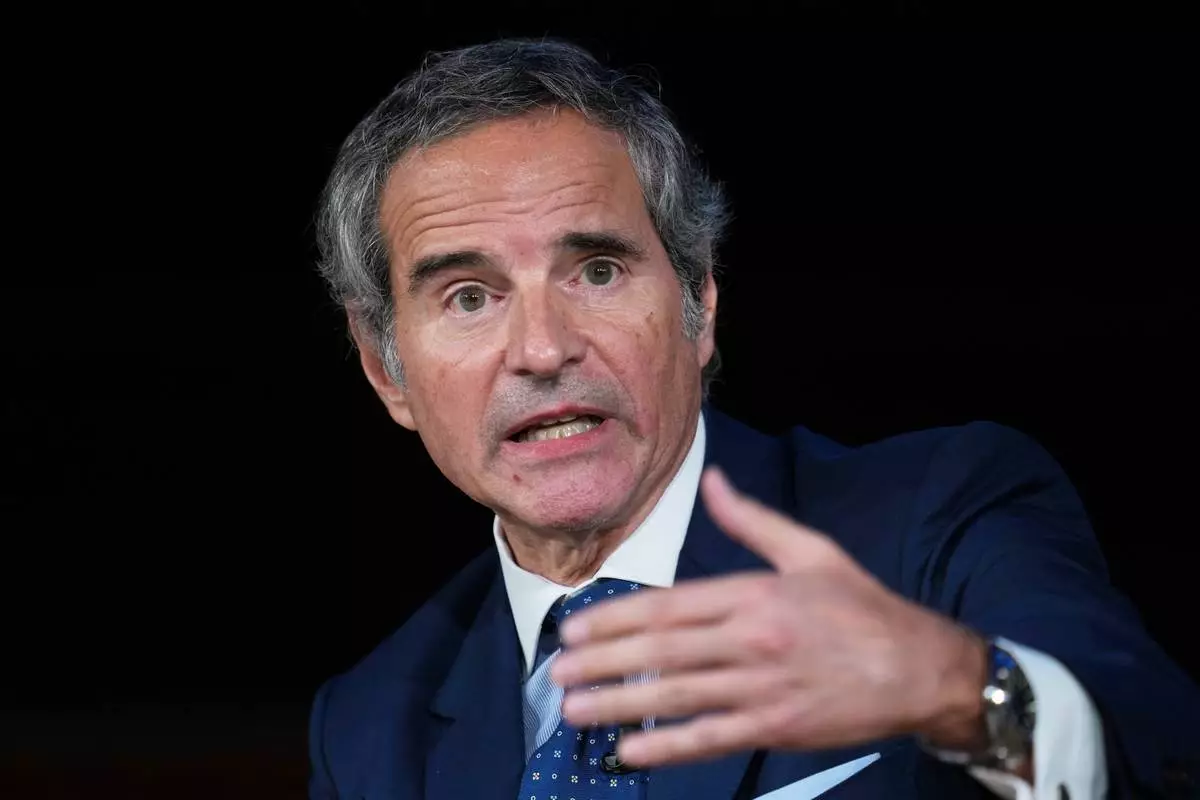
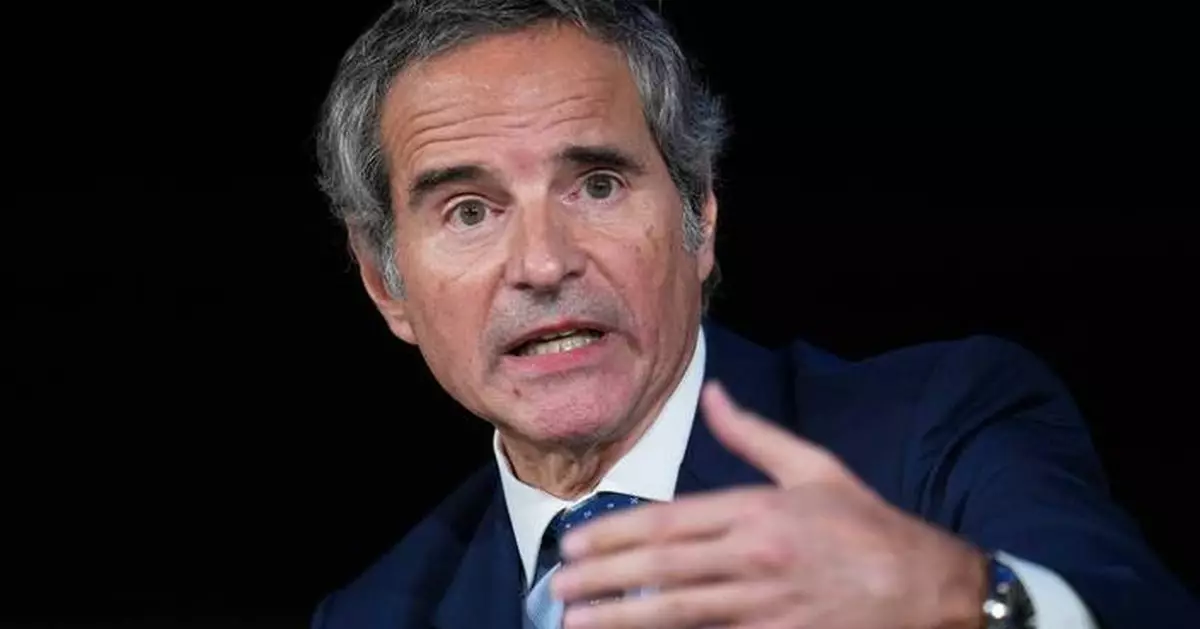
FILE - Rafael Grossi, one of the four candidates for the next UN Secretary-General, attends an event, "The Leader the UN Needs: Choosing the Next Secretary-General," in London on May 28, 2026. (AP Photo/Kin Cheung, File)
Russia must be allowed to return to the ice hockey world championships, the Court of Arbitration for Sport ruled on Friday, overturning an exclusion in place since the full-scale invasion of Ukraine in 2022.
The ruling is a major win for Russia against efforts to bar it from international sports due to the war in Ukraine. Russian President Vladimir Putin is a noted hockey fan who has previously played exhibition games with former stars.
CAS overturned IIHF decisions which excluded Russia from events in the 2026-27 season including the men’s and women’s world championships. Russia also missed the Olympics tournaments this year.
Russia's return throws into uncertainty how the men's world championship will work next year in Germany, given that Ukraine has also qualified.
In a brief statement, CAS cited a lack of sufficient evidence to support the IIHF’s security concerns.
CAS said its ruling did not address issues such as whether Russia should be required to play without national symbols as a team of neutral athletes, as in some other Olympic sports, or other “organizational consequences.”
The IIHF expressed disappointment with the ruling and said it “maintains that its decisions were necessary to protect the safety and security of all participants and safeguard the integrity of its competitions."
“While the IIHF respects the authority of CAS and will act in accordance with its ruling, the outcome does not remove the concerns that informed its assessments.”
Russian Sports Minister Mikhail Degtyaryov wrote on the Telegram social media app that CAS “recognized the demands of the Russian Hockey Federation on key points as justified.”
The ruling is an immediate challenge for new IIHF President Franz Reindl, whose home country of Germany hosts the men's world championship next year.
The German hockey federation chairman Frank H. Lutz said on Friday that Germany remains opposed to letting Russia take part and that “allowing Russia in has significant security, political and financial consequences for us as hosts.”
It's not clear how Russia would fit back in, since the draw has already been made.
Adding an extra team would make for uneven groups and an even longer tournament to fit in more games.
Kicking out a qualified team to make way for Russia would risk a backlash, especially if that team is Ukraine. It was last to qualify for the men's worlds, ending a 20-year wait, and is ranked lowest among the 16 teams currently taking part.
The Ukrainian Hockey Federation said it disagreed with the ruling and argued that security concerns had only intensified since 2022. Ukraine didn't indicate how it would approach the world championship.
The IIHF signaled “practical arrangements” would be decided after it has assessed the ruling.
The national hockey federations in Sweden, Finland and the Czech Republic all said they were disappointed by the ruling, but Swedish Ice Hockey Association chairman Anders Larsson told Swedish news agency TT that “a boycott is not on the table.” Finland indicated individual players could opt out of tournaments which include Russia.
The first tournament where Russia could return is the men's world junior championship in Edmonton and Red Deer, Canada, starting on Dec. 26.
Other events covered by the ruling are the women's world championship in Canada in November 2027, the men's under-18 world championship starting in April in Minnesota, and women's under-18 world championship in the Czech Republic in January.
A Russian team playing under its national flag, rather than as neutrals, could have political repercussions in the Czech Republic.
“As the president has stated several times in the past, as long as Russian aggression continues he considers it appropriate to ban the participation of athletes under the Russian and Belarusian flags," a spokesperson for Czech President Petr Pavel said.
The women's worlds starting next week in Denmark are not covered by the ruling. That competition was originally part of the 2025-26 season but moved to November so it wasn't back-to-back with the Olympics.
In the history of the men’s worlds, Russia’s or the Soviet Union’s 27 titles are second only to Canada’s 28. Russia last won the gold medal in 2014. Russia's best result at the women's worlds is bronze.
Since 2022, Russia has organized exhibition games with developmental rosters, mostly against neighbors Belarus and Kazakhstan. The IIHF has also excluded Belarus, citing the same concerns as it did for Russia. There was no mention of Belarus in the CAS ruling on Friday.
While the CAS ruling has no effect on the NHL, league officials have said they would follow the lead of the international community when it comes to Russian participation.
The NHL and NHL Players’ Association are running the 2028 World Cup of Hockey without the IIHF and national federations.
Asked about Russia last month, Deputy Commissioner Bill Daly said: “I think we know what our thinking is on World Cup of Hockey. We don’t need to make that decision yet, and the more information you have to make any decision, the better the decision will be.”
The hockey win at CAS is part of a broader shift in the Olympic movement toward reintegrating Russia, which had only small squads of “neutral athletes” at the 2024 Paris Olympics and this year's Milan Cortina Winter Olympics.
Swimming and volleyball allowed Russia to compete under its national flag this year. The International Olympic Committee eased its approach too, with a Russian team at the Youth Olympics this week.
Russia's next focus could be soccer, where its national teams and clubs remain excluded from major competitions.
Russian soccer federation general secretary Maxim Mitrofanov said it should be “one rule for all” in comments reported by state news agency Tass.
FIFA and European governing body UEFA have barred Russian teams from World Cup qualifying and the Champions League since 2022, when FIFA told CAS that boycott threats by Russia's upcoming opponents risked making the World Cup “chaotic.”
FIFA allowed a Russia boys' team to play under its national flag in the inaugural Under-15 World Cup and Festival in Azerbaijan, which began last week and ends on Saturday.
The Russian track and field federation said on Friday the hockey decision gave it “confidence” in its own CAS case against World Athletics, the last big Olympic sport with a blanket ban on Russian athletes.
Stephen Whyno in New York and Karel Janicek in Brno, Czech Republic, contributed to this report.
See AP’s full sports coverage here
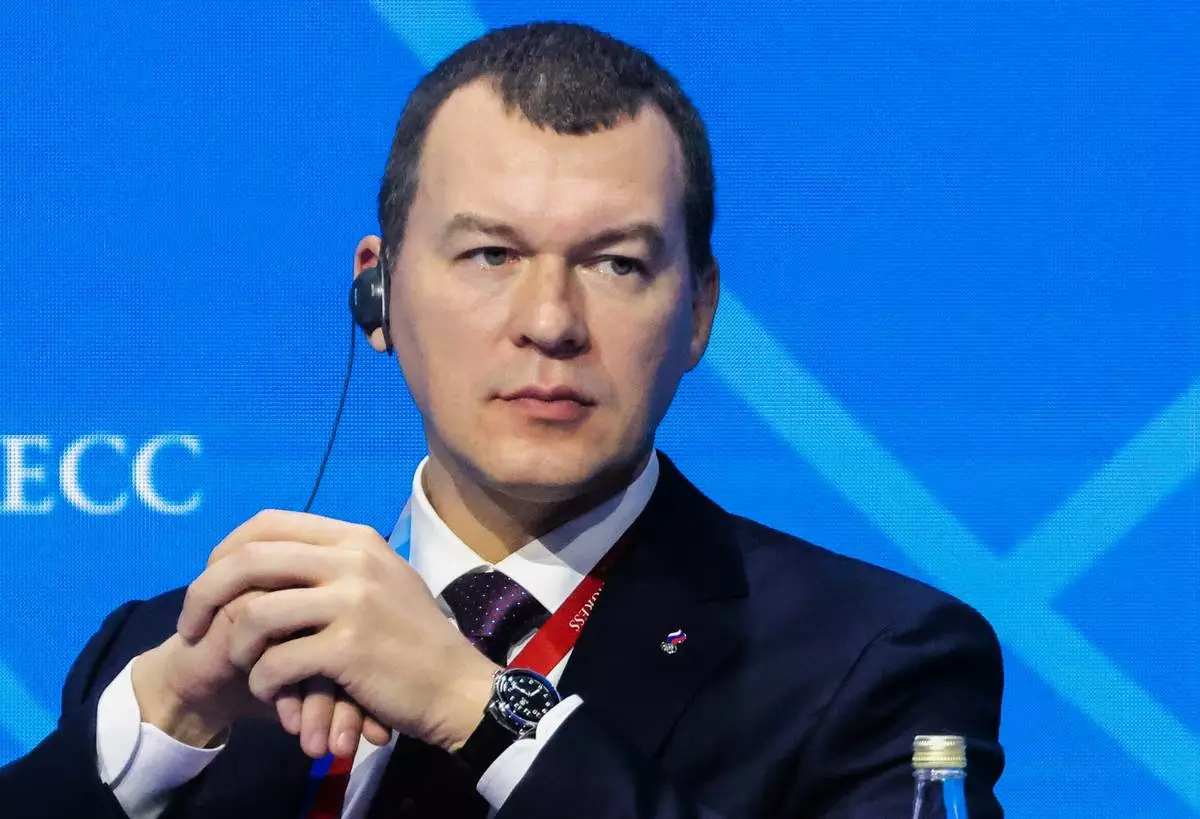
FILE - Russian Sports Minister Mikhail Degtyarev attends the plenary session of the 'Russia is The Country of Sports' forum in Samara, Russia, Thursday, Nov. 6, 2025. (Sergei Karpukhin, Sputnik, Kremlin Pool Photo via AP, File)
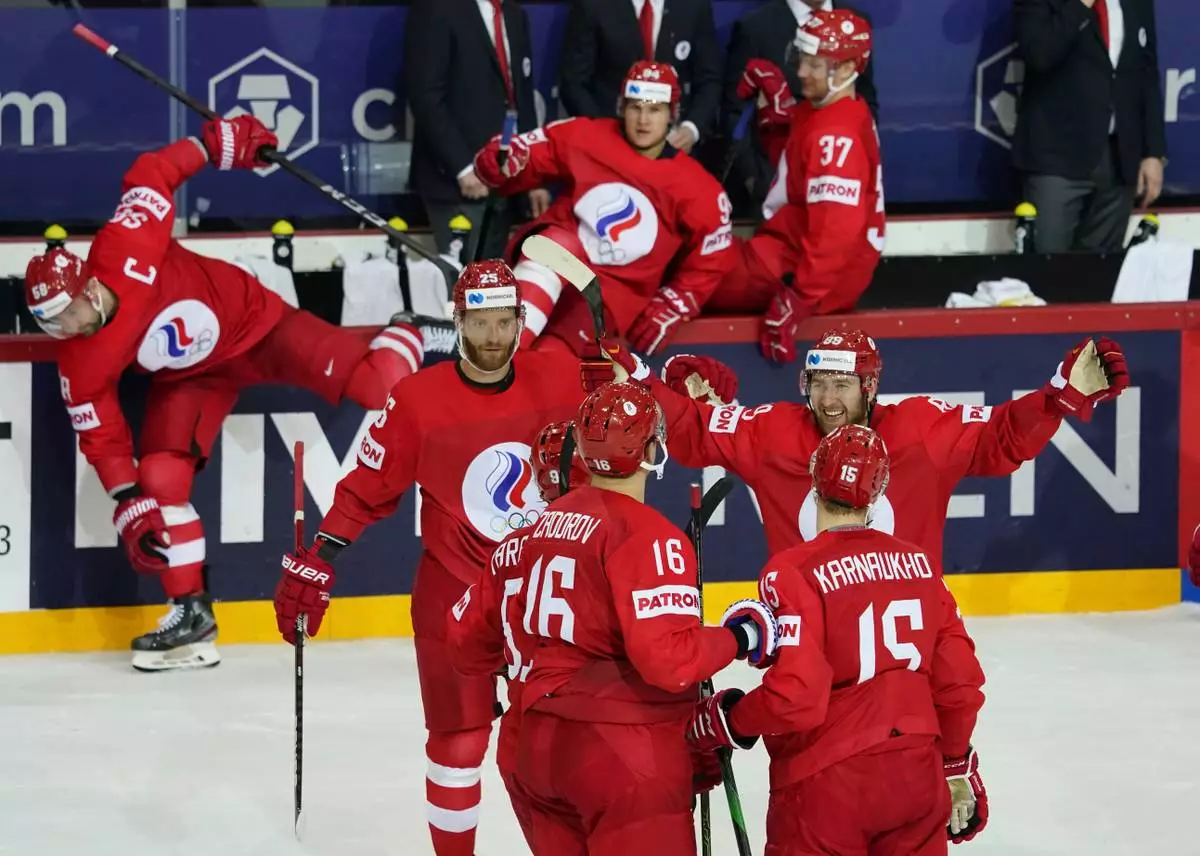
FILE - Russia players celebrate during the Ice Hockey World Championship group A match between the Russia and Sweden in Riga, Latvia, May 31, 2021. (AP Photo/Roman Koksarov, File)