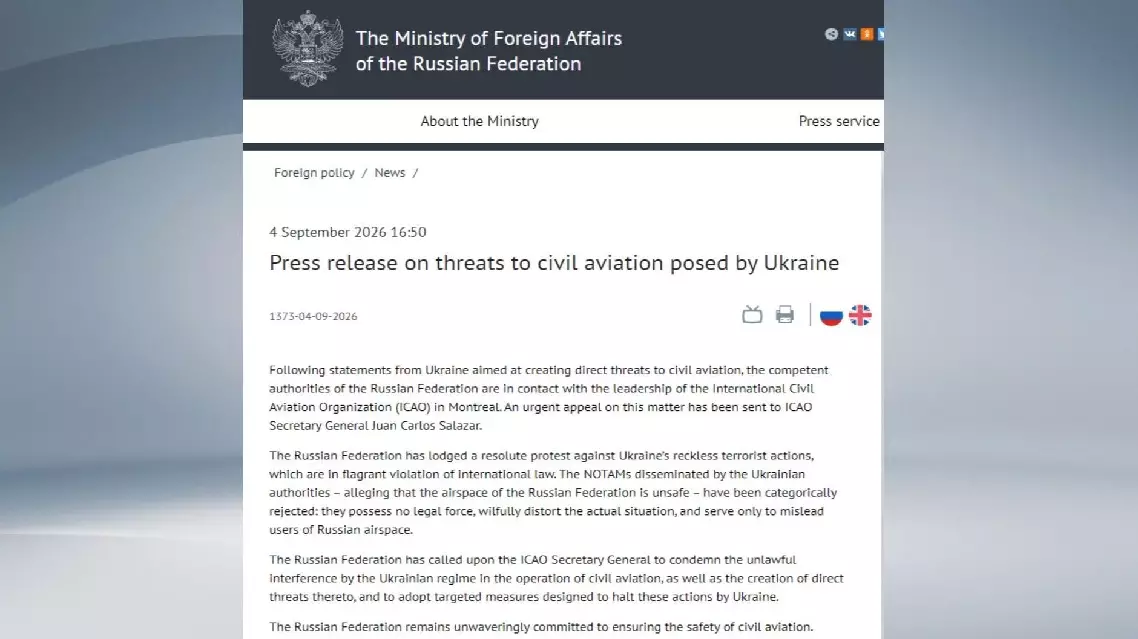
The Russian Foreign Ministry said on Friday that the notice issued by Ukraine claiming that Russian airspace was not safe for civilian aviation distorts facts, misleads users of Russian airspace and carries no legal force.
In a statement on its official website, the ministry said Russia had lodged a resolute protest against Ukraine's "reckless terrorist acts that run counter to international law".
The ministry stated that the Ukrainian side's remarks pose a direct threat to civil aviation. Relevant Russian authorities are in contact with the International Civil Aviation Organization (ICAO) and have sent an urgent appeal to the ICAO secretary-general.
Russia remains unwavering in safeguarding civil aviation safety, the ministry added.
On Tuesday, Ukrainian President Volodymyr Zelensky warned international airlines that Russian airspace is becoming "completely unsafe" as Ukraine responds to an "escalation" in missile and drone attacks.
Russia rejects Ukraine's warning over Russian airspace safety
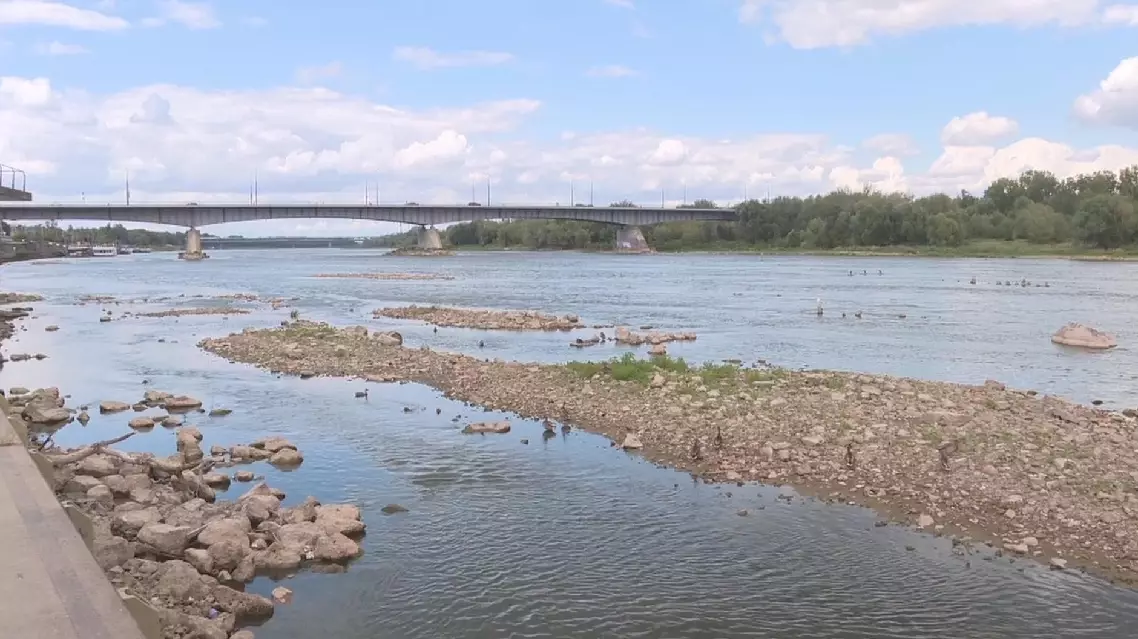
Representatives from the agricultural and food departments of Visegrad countries -- Poland, Hungary, the Czech Republic, and Slovakia -- have called on the European Union to take immediate, unified action and introduce necessary measures to alleviate the impact of the severe drought on farmers.
At the meeting held in Nitra, Slovakia from Thursday to Friday, the representatives discussed issues about the drought and the dairy industry crisis in Europe.
Data released at the meeting showed that Poland's crop output has dropped by at least 20 percent this year, while the Czech Republic has suffered its worst harvest failure in nearly 15 years. The feed shortage caused by reduced crop yields will severely impact the breeding industry.
The representatives stated that it is necessary to take consistent measures across the continent to mitigate the impact of drought and ensure the stability of the European agricultural and food supply systems. They also called for a focus on the issue of drought at the upcoming informal meeting of EU agriculture ministers.
In February 1991, Poland, Hungary and former Czechoslovakia held a meeting at Visegrad Castle in Hungary to enhance cooperation, and established the Visegrad Group. After Czechoslovakia was divided into the Czech Republic and Slovakia in 1993, the number of member states of the group increased from three to four.
Visegrad countries call on EU for unified drought-relief actions