Shanghai has long been known for its landmarks and cuisine, but this summer, a growing number of international tourists are adding something unexpected to their itineraries: prescription glasses.
With competitive prices, a vast selection of styles, and turnaround times as fast as a few dozen minutes, the city's eyewear industry is going viral on overseas social platforms and emerging as a fresh driver of inbound tourism spending.
At the city's glasses markets, international shoppers are now a common sight, browsing frames and consulting staff about lenses, many holding up photos on their phones for reference.
"The glasses are more expensive in our country, like twice the price. We saw that they have pretty quality lenses also," said an American tourist.
Mr. Wang, who has worked as an optometrist for nearly 50 years, said that there have been a growing number of international customers since the beginning of this year.
Wang, an optometrist with nearly 50 years of experience, said he has clearly felt the surge in demand.
"This year, the number of inbound tourists has increased by around 40 percent from previous years, especially during the weekend. Many of them got multifocal lenses so that they can can see both far and near," said Wang.
"Glasses are more expensive in our country, like twice the price," said an American tourist. "We saw that they have pretty quality lenses, too."
The rising footfall is even more visible on the shop floor. In recent days, a store that has operated for 20 years received three or four groups of foreign tourists within a single hour.
"In the past we mainly serve foreign enterprises. Now, most of the visitors are tourists. The number of inbound visitors this year is three to four times higher than in previous years," said Tong Qingying, owner of the store.
Beyond affordability - most glasses sell for between 300 and 800 yuan (roughly 40 U.S. dollars to 110 U.S. dollars ) - speed is a major draw. After a customer completes an eye exam and picks a frame, staff retrieve the appropriate lenses from inventory, then cut and assemble them on-site. Thanks to Shanghai's mature industrial ecosystem and abundant supply chains, a finished pair can be ready in as little as 30 minutes.
An Italian tourist marveled at the efficiency: "Sometimes they took about one week to prepare one glasses, and here, in just 30 minutes, you're ready. That's great!"
The word has spread rapidly through social media.
"Some bloggers will post on TikTok. International guests will write good comments. Maybe big data thus forms, and our reputation is quite good," said Tong.
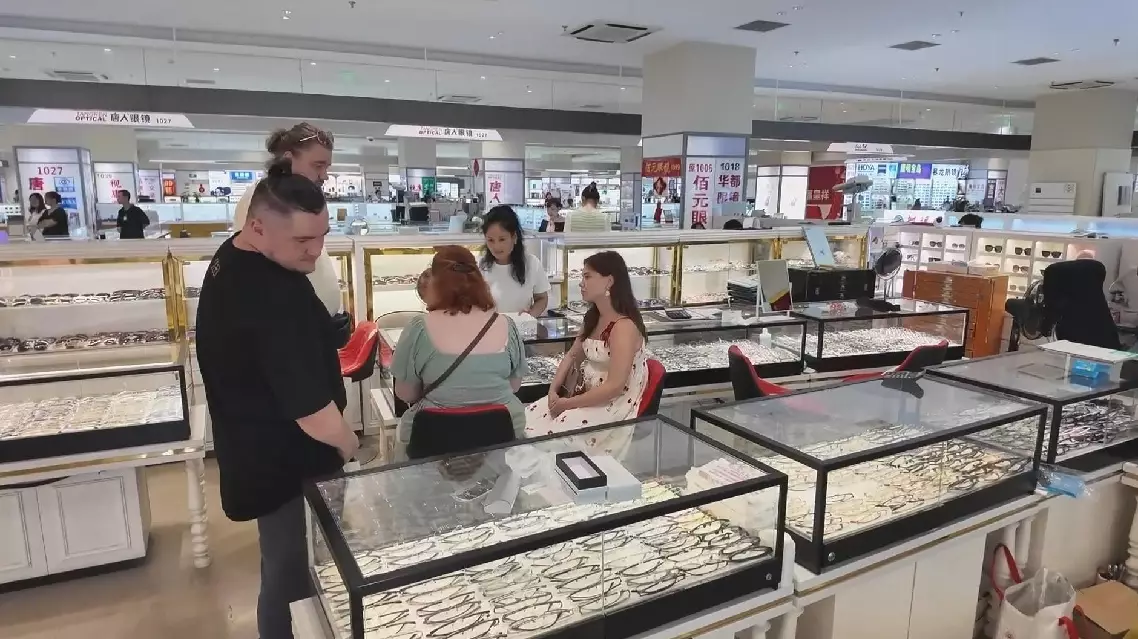
Shanghai's speedy, affordable eyewear services become hit with int'l tourists
The 21st China International Small and Medium Enterprises Fair (CISMEF) concluded on Sunday in Guangzhou, south China’s Guangdong Province, offering a dedicated platform for participants from APEC member economies to explore artificial intelligence (AI) innovation and cooperation.
The event was held alongside the just‑ended 32nd APEC Small and Medium Enterprises Ministerial Meeting.
This year's fair this year attracted more than 2,000 companies from 43 countries and regions presenting their latest innovative achievements at over 3,700 booths on site. Exhibits spanned a wide range of cutting-edge sectors, including artificial intelligence (AI), new energy, new material and biomedicine.
The international pavilion brought together 510 enterprises from 43 countries, regions and international organizations, and for the first time featured a dedicated exhibition area for APEC member economies. Many exhibitors shared a common goal of seeking partners to drive digital and intelligent transformation.
"We've been to many different shows through China, and we often talk to people involved in artificial intelligence (AI) and robotics and how we can integrate with them. You could have a sensor in our cushion. So AI might cause the seat to have a little electronic motors that move the shape. So it's better for that person's posture," said Brian Jamieson, president and CEO of Vigurus Technologies Inc., a Canadian company located in Toronto.
A Russian exhibitor highlighted the company’s interest in forging partnerships at the fair.
"There are many companies, big and small companies who produce AI solutions. And we found a lot of companies who would like to cooperate with us. So now we are going to create new program that can indicate the fire when it just starts and people can just get notification in their phones," said a project manager of the AFES, a Russian company.
Chinese exhibitors highlighted advanced AI applications at the fair, showcasing how embodied intelligence is being applied in industrial settings.
"Its flexibility, precision, and the entire long-sequence task -- these are difficult challenges to overcome in the embodied AI field. In current real application scenarios, we are focusing on industrial settings related to automotive wiring harnesses and assembly. We previously set a Guinness World Record for assembling the most wiring harnesses, over 100 within one hour. This technology can be integrated into different industrial scenarios of small and medium-sized companies, helping them achieve digital transformation and AI transformation in the future," said Cui Dacheng, brand marketing manager of TARS, or Tashi Zhihang Technology Co., Ltd., based in Shanghai.
Themed with "AI Empowering SMEs," this edition of the fair ran for four days, and set a major focus on how AI is accelerating transformation among small and medium enterprises.
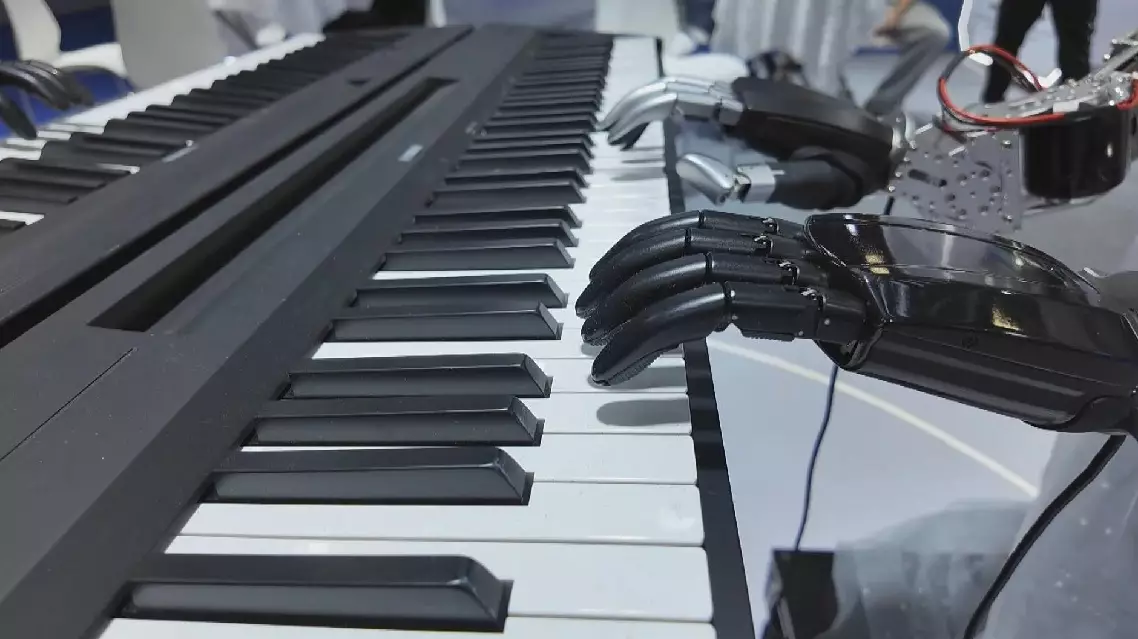
Guangzhou fair helps APEC economies to explore AI innovation