China saw 3.707 million vehicles traded in for newer models in the first half of this year under the government's vehicle trade-in program, fueling a nationwide surge in scrap car disposal and resource recovery.
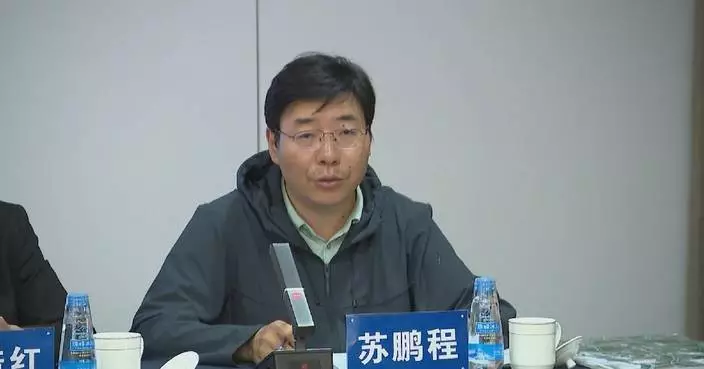
"For vehicles that meet the requirements, a Certificate of Scrap Motor Vehicle Recycling will be issued. Vehicle owners who scrap their old vehicles and purchase new energy vehicles can enjoy a subsidy of 12 percent of the vehicle price, with a maximum of 20,000 yuan (about 2,980 U.S. dollars). If they purchase fuel-powered vehicles, they can enjoy a subsidy of 10 percent of the vehicle price, with a maximum of 15,000 yuan," said Zhang Ying, secretary-general of the Commercial Vehicle Full Life Cycle Management Branch of the All-China Federation of Industry and Commerce Automobile Dealer Chamber.
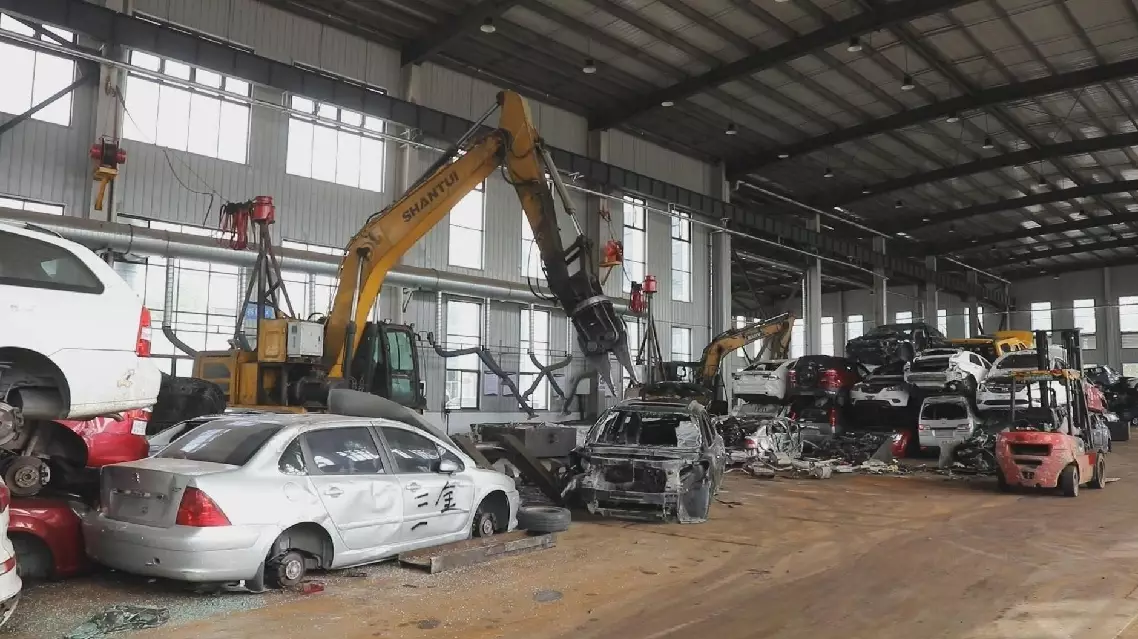
Upon entering a dismantling plant, a scrap vehicle's identity information, including the vehicle identification number and engine number, is first verified against its registration certificate. Only after this information is confirmed can the vehicle proceed to the dismantling stage.
As professional equipment operates, a scrap vehicle is quickly taken apart piece by piece, with engines, seats, wiring harnesses, and plastic components removed and sorted into separate categories. In no time, only the vehicle frame remains.
In another workshop, compressors press the frame and other metal parts into neat square metal bales, which are then transported to steel mills to be smelted into new steel products. Meanwhile, more than a dozen types of hazardous waste, including storage batteries, waste engine oil, and coolant, are all handed over to licensed professional enterprises for recycling and disposal.
Through such meticulous dismantling, an ordinary household passenger car can yield dozens of types of industrial raw materials.
"In roughly a little over a year, we have recovered approximately 5,000 tons of scrap steel resources and about 1,000 tons of non-ferrous metals. Waste plastics, tires and rubber, and other materials have all been transferred and disposed of in compliance with regulations. It is expected that this year we should be able to increase our production capacity by 20 percent," said Ma Houlong, head of the Nanjing Chengkuang Resource Recycling Technology Company.
China's trade-in program sees 3.7 mln vehicles replaced in H1
China's trade-in program sees 3.7 mln vehicles replaced in H1