Eight central financial enterprises, including the Industrial and Commercial Bank of China (ICBC), unveiled plans on Sunday to replenish their core Tier 1 capital.
The eight institutions are set to raise or receive a combined 360 billion yuan (about 53.11 billion U.S. dollars).
Experts said the capital replenishment is a forward-looking policy measure that is expected to further strengthen the financial institutions' sound operations, enhance their ability to withstand risks, and improve their capacity to serve the real economy.
The Agricultural Bank of China (ABC) and the ICBC announced plans to raise up to a combined 260 billion yuan through A-share issuances to designated investors to replenish their core Tier 1 capital.
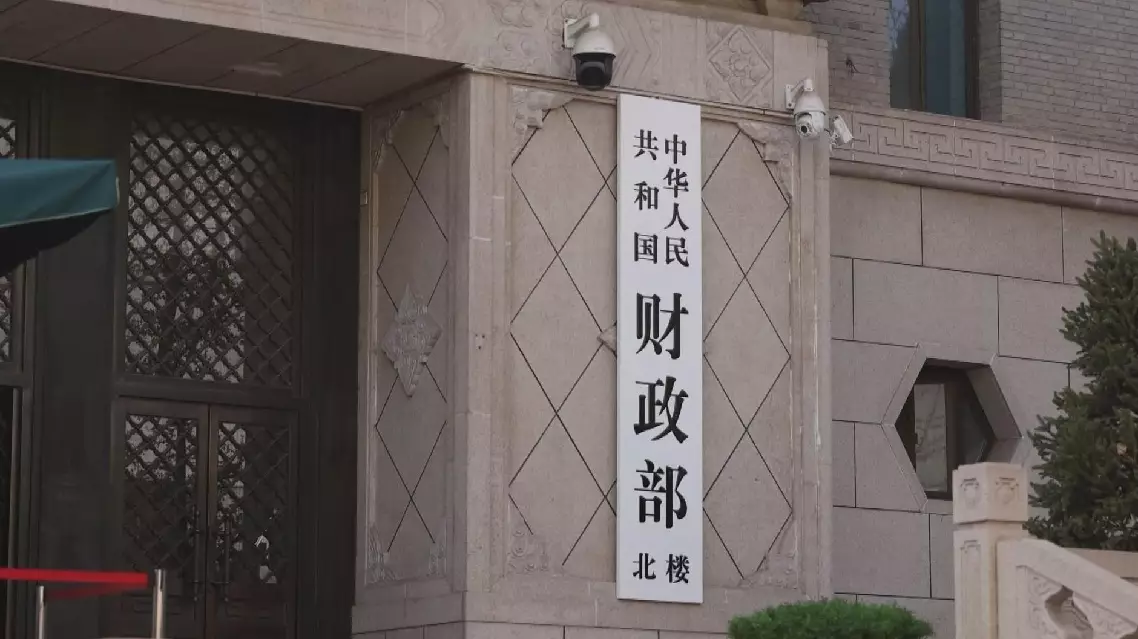
The ABC said in a filing with the Shanghai Stock Exchange that it plans to issue A-shares to China's Ministry of Finance (MOF), China National Tobacco Corporation and its relevant subsidiaries, with total proceeds amounting to 160 billion yuan.
After deducting issuance expenses, the bank will use all proceeds to replenish its core Tier 1 capital. The final fundraising amount will depend on the issuance plan approved by regulatory authorities, according to the ABC.
The ICBC said separately that it plans to raise up to 100 billion yuan via an A-share issuance to the MOF, China National Tobacco Corporation and related subsidiaries.
The bank said it will use the net proceeds entirely to replenish its core Tier 1 capital. The capital increase will be implemented after the bank completes the required internal and external approval procedures.
Core Tier 1 capital, the highest-quality form of bank capital used to absorb losses, serves as a key buffer against financial risks. If a bank raises more core Tier 1 capital, it generally has more room to expand lending while maintaining regulatory capital ratios.
Also on Sunday, the Export-Import Bank of China said the MOF will inject 30 billion yuan into the bank to better support its policy-finance mandate and serve major national strategies, while China Export and Credit Insurance Corporation said it will receive a 10 billion yuan capital injection.
China's finance ministry will provide fresh capital to four major Chinese insurers in moves aimed at strengthening their capital positions, solvency and risk resilience, according to statements released Sunday.
The People's Insurance Company (Group) of China (PICC) said it plans to raise up to 15 billion yuan through an A-share issuance to the Ministry of Finance, which will subscribe in cash. The net proceeds will be used entirely to replenish capital.
The capital replenishment will help the PICC further strengthen its capital base, enhance operational resilience and ability to withstand risks, and better leverage the insurance sector's role as an economic shock absorber and social stabilizer, according to the PICC.
China Life Insurance (Group) Company said the ministry will inject 35 billion yuan (about 5.2 billion U.S. dollars) into the group to strengthen its operational resilience and risk-bearing capacity while supporting its core businesses and corporate governance.
China Taiping Insurance Group said the ministry will inject 7 billion yuan into the company to strengthen its risk resilience, maintain sound solvency indicators, and support sustainable development.
China Reinsurance (Group) Corporation announced plans to issue domestic shares to the ministry for 3 billion yuan in cash.
The planned capital replenishment comes as China has been moving to strengthen the capital base of major state-owned financial institutions. The MOF said in August that it would issue 300 billion yuan in special treasury bonds to support the capital replenishment.
"Financing demands in areas such as technological innovation, industrial upgrading and expanding domestic demand remain strong, requiring stable support from the financial institutions," said Yu Xiang, chief analyst of policy research at CITIC Securities.
The capital replenishment is not simply about "refueling" financial institutions, but about strengthening their capital base to better serve the real economy, Yu said.
The replenishment is also expected to strengthen the risk resilience of central financial enterprises, thereby fostering a stable financial environment for economic development during the 15th Five-Year Plan (2026-2030) period, experts said.
The latest capital replenishment follows a similar move last year. The MOF issued 500 billion yuan in special treasury bonds in 2025 to support the capital replenishment of major state-owned commercial banks.
Compared with last year's measure, the scope of institutions covered by the latest capital increase has been expanded to include policy financial institutions and state-owned commercial insurers.
"The broader scope of the capital increase reflects the different roles of various types of financial institutions. With diversified funding sources, they can work in concert to provide stronger support for the real economy," Yu said.
The 300-billion-yuan core Tier 1 capital replenishment is expected to leverage an asset expansion of about 4 trillion yuan, enabling banks to step up credit support for key areas of the real economy, noted Zeng Gang, president of the Tianfu Liyan Financial Research Institute.
The increased capital strength of state-owned banks and insurers will help further enhance their operational stability, boost investor confidence, and improve the stability of the capital market, said Li Qiusuo, chief domestic strategy analyst with the Research Department at China International Capital Corporation (CICC).
Eight central financial enterprises unveil plans to bolster capital, support economy