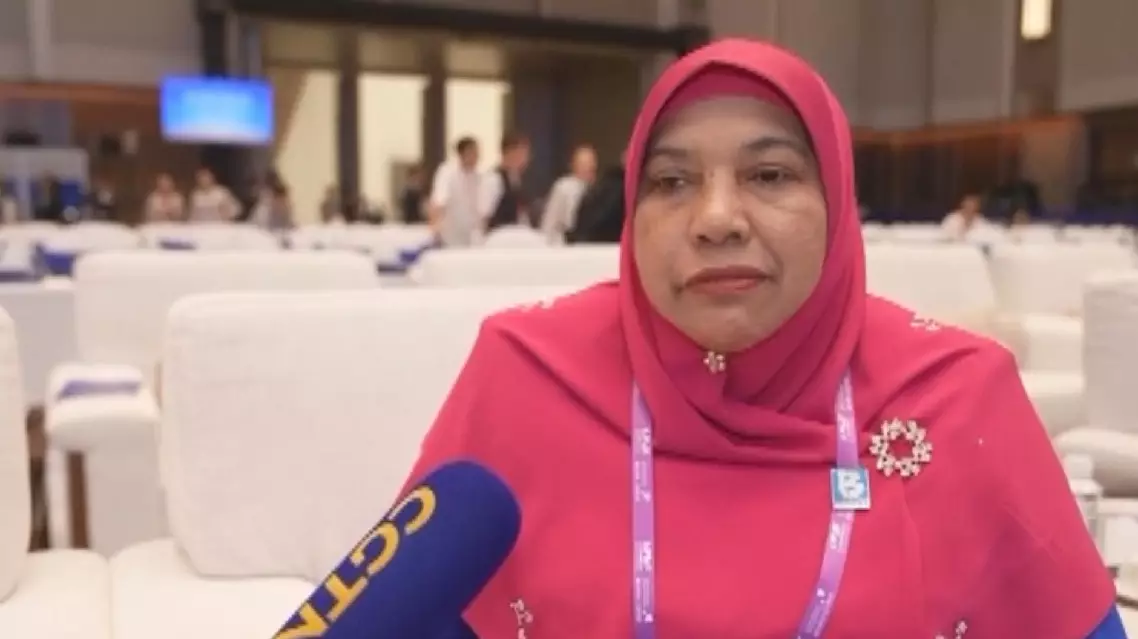
Journalists must exercise caution when using artificial intelligence (AI) to ensure it strengthens rather than undermines the core values of their profession, a senior Malaysian media executive said Saturday at the Asia‑Pacific Media Forum in south China's Shenzhen.
Datin Paduka Nur‑ul Afida Kamaludin, chief executive officer of the Malaysian National News Agency Bernama, stressed that accuracy, balance, fairness,transparency and human accountability must remain at the heart of journalism.
The forum brought together more than 400 representatives from media, think tanks and government sectors across 42 countries and regions, as well as United Nations agencies and other international organizations.
While AI offers journalists an efficient tool, it also carries the risk of generating misinformation and deepfakes on an unprecedented scale, Nur‑ul Afida Kamaludin told the forum.
She later highlighted the same point in an interview with China Global Television Network (CGTN), stressing the need for caution in adopting the technology.
"AI is bringing very rapid transformation to the media world, and especially among us, the journalists, but at the same time, despite using it as a tool to ease the process of our daily work, I believe that the journalists should also be extra careful using AI in their work," she said.
Looking ahead to the 53rd anniversary of establishing diplomatic relations between China and Malaysia next year, Nur-ul Afida called on the media to play a greater role in strengthening people-to-people ties.
"From a media perspective, I believe we need to focus more on the people-to-people relations. We have to produce more stories on the ordinary people, because that is the human interest stories that will attract our readers, our audiences. Let's look forward for a better relationship among the people and between the government, as well as companies between China and Malaysia," she said.
Malaysian National News Agency CEO calls for responsible AI use
The 4th AI Capacity Building Workshop, hosted by China's Ministry of Foreign Affairs, opened at Peking University in Beijing on Monday, bringing together nearly 40 high-level officials from the founding members of the World Artificial Intelligence Cooperation Organization (WAICO).
This workshop is part of China's commitment to provide developing countries with 5,000 opportunities for AI training and seminars over the next five years, a pledge made at the 2026 World Artificial Intelligence Conference and High-Level Meeting on Global AI Governance held in Shanghai, in July.
Over the course of six days, participants will engage in in-depth discussions on AI governance and applications, among other topics.
During the opening ceremony, Liu Bin, Assistant Minister of Chinese Foreign Affairs, emphasized the immense opportunities presented by AI, as well as the formidable challenges. He noted that China has positioned itself as a pioneer in AI capacity-building.
In 2024, China facilitated the UN General Assembly's consensus on a resolution on "Enhancing International Cooperation on Capacity-Building of Artificial Intelligence." Since then, the country has introduced several initiatives, including the "China's AI Capacity-Building Action Plan for Good and for All," the "AI plus International Cooperation Initiative, and the establishment of the WAICO.
Liu said that these efforts aim to deepen international cooperation in AI capacity-building and to promote inclusive and beneficial AI development globally.
"We are committed to the principles of extensive consultation, joint contribution, and shared benefits. By leveraging the platform of the World Artificial Intelligence Cooperation Organization, we seek to enhance mutual trust, build consensus, and strengthen cooperation. Our goal is to deliver tangible outcomes that address practical needs, bridge the AI gap, and continually unlock the benefits of AI, making it a vital force for enhancing human well-being and promoting the progress of human civilization," said Liu.
China's AI capacity-building workshops have won praise from international delegates for promoting shared development and global cooperation.
"We cannot accept a world where only a few control AI. We need cooperation. This is why initiatives like WAICO and United Nations programs matter. They share knowledge and train where they are most needed. They help bridge the digital divide. By sharing open source, AI models and knowledge through training and partnership, China helps others build their own capacity. This openness is a model for us," said Renan Mendes Gaya Lopes Dos Santos, director of the Public Data Infrastructure Department under Brazil's Ministry of Management and Innovation in Public Services.
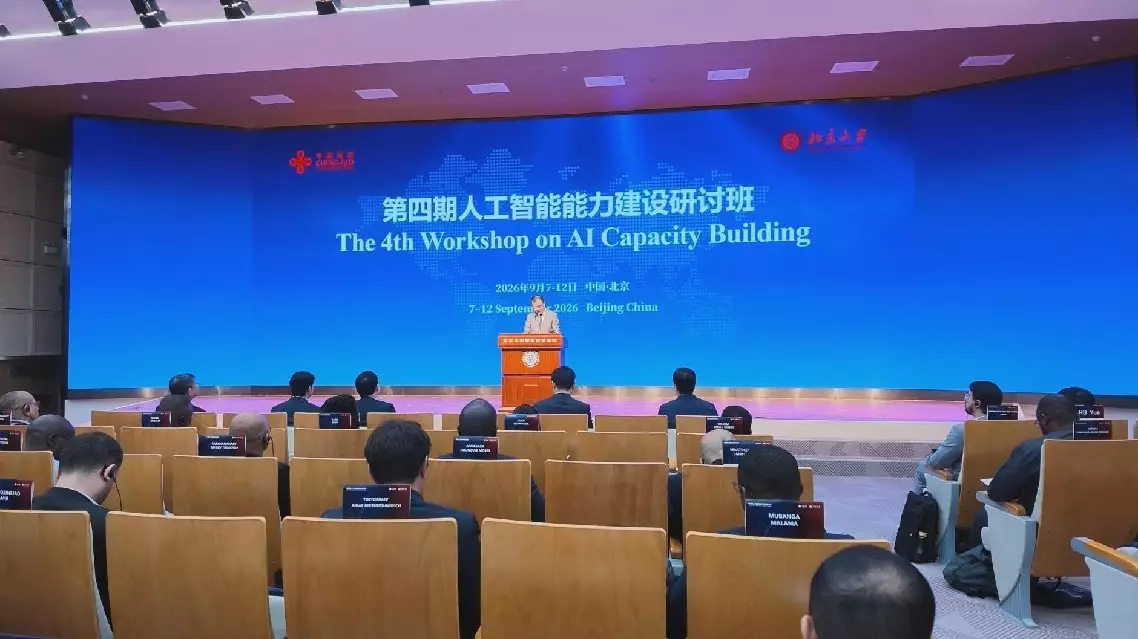
4th AI capacity building workshop opens in Beijing