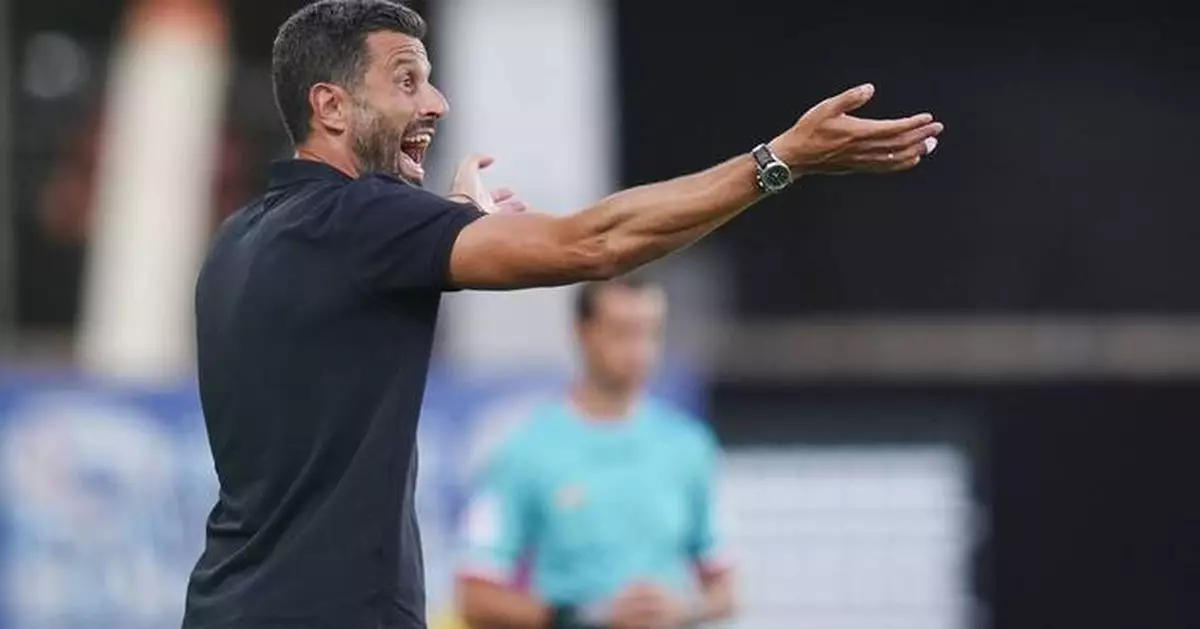
FLORENCE, Italy (AP) — Fabio Grosso at Fiorentina became the first head coach fired in Europe’s five biggest soccer leagues this season after an 0-3 start in Serie A for the Tuscan club — which is celebrating its 100th anniversary.
"ACF Fiorentina confirm that Fabio Grosso has today been relieved of his duties as First Team Head Coach,” the club said late Sunday — a day after a 2-1 home loss to Torino.
A new coach was not immediately named.
Grosso, who converted the decisive penalty in Italy’s shootout victory over France in the 2006 World Cup final, had been hired in June after Paolo Vanoli coached Fiorentina to a 15th-place finish last season.
Grosso is the first head coach fired this campaign in the top leagues of Italy, England, France, Spain and Germany.
After beating Serie B side Benevento in the first round of the Italian Cup, Fiorentina was routed 4-0 by Roma in its Serie A opener then lost 3-0 to promoted Frosinone in its home league debut.
In Serie A, Fiorentina has scored one goal and conceded nine.
The poor results have come amid several celebrations for Fiorentina’s centennial. The club was founded in 1926.
Fiorentina owner Rocco Commisso died in January and the club is now run by his son, Giuseppe Commisso.
Fiorentina next visits promoted Venezia on Friday, followed by an Italian Cup derby with Pisa next week.
See AP’s full soccer coverage here

Fiorentina's Joao Mario, right, fights for the ball with Torino's Rolando Mandragora during the Serie A soccer match between Fiorentina and Torino at the Artemio Franchi Stadium in Florence, Italy, Saturday, Sept. 5, 2026. (Massimo Paolone/LaPresse via AP)
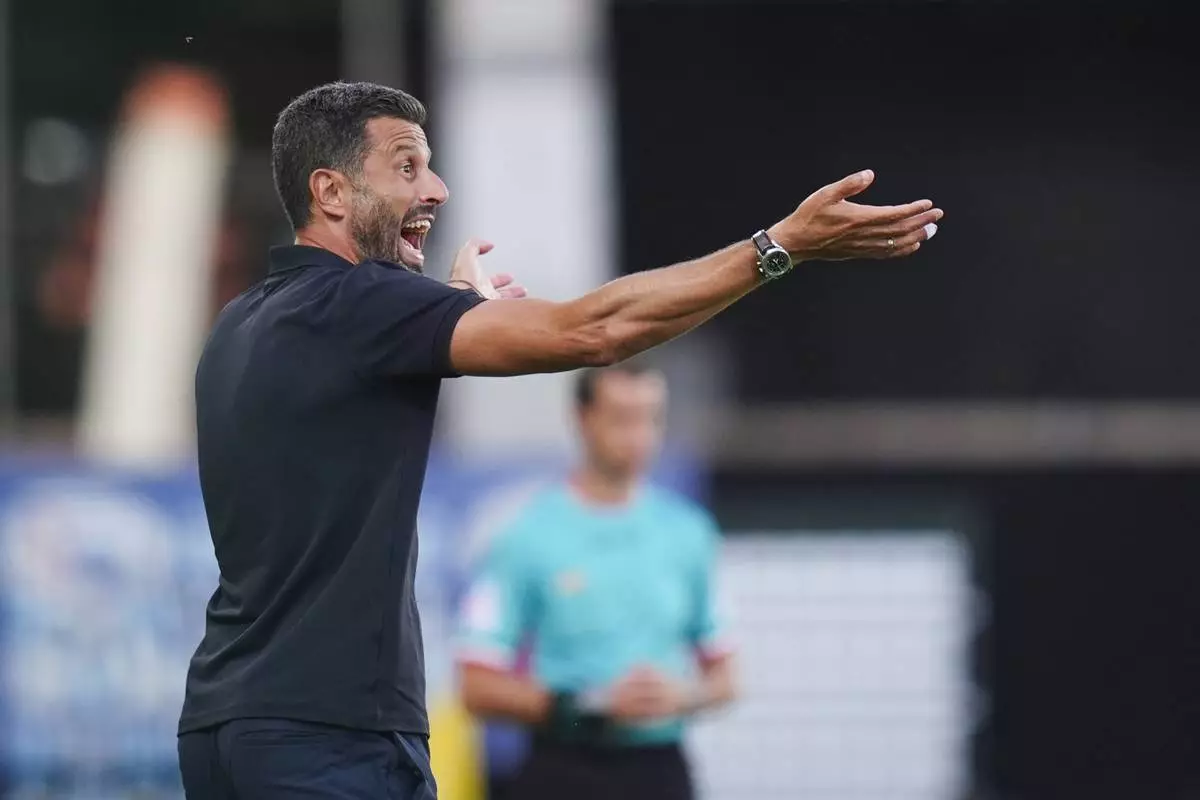
Fiorentina's head coach Fabio Grosso shouts instructions to his players during the Serie A soccer match between Fiorentina and Frosinone, in Florence, Italy, Saturday, Aug. 29, 2026. (Massimo Paolone/LaPresse via AP)
BELGRADE, Serbia (AP) — The body of Ratko Mladic, the Bosnian Serb commander who died while serving a life sentence for war crimes, lay in state on Monday as Serbia defied European Union warnings against paying public homage to the man found guilty of the continent’s first case of genocide since World War II.
Thousands of mourners arrived early at the small Serbian Orthodox Church of St. Luke in Belgrade to honor Mladic, who is still viewed as a hero by many Serbs. His military officer's cap and saber rested on the coffin, which was flanked by men in fatigues.
Pro-government media in Serbia reported that Mladic will receive full military honors while the head of the Serbian Orthodox Church, Patriarch Porfirije, will lead the funeral service.
Mladic “was a man who gave everything in his life for the Serbian people,” said Milan Dobric, a mourner who traveled from Kosovo for the funeral. “I am glad that this morning people are coming to pay special respect.”
Mladic died at 84 on Aug. 27 in The Hague, Netherlands, while serving a life sentence for genocide, war crimes and crimes against humanity his troops committed during the Bosnian war in 1992-95.
While the funeral arrangements were formally made by Mladic's family, the Serbian government sent a plane last week to bring his remains to Belgrade, and soldiers carried his coffin wrapped in the national flag. A military commemoration was held Saturday at an official Serbian army venue.
Serbia is a candidate nation for European Union membership and has faced strong criticism for honoring Mladic after his death.
Marta Kos, the enlargement commissioner for the bloc, canceled an upcoming visit to Serbia in protest, arguing that “the glorification surrounding his death is incompatible with the values on which the EU path is built.”
A number of other European officials joined the criticism, along with regional leaders and relatives of Mladic's victims from the war in Bosnia. The conflict left more than 100,000 people dead and over 1 million homeless before it ended in 1995 in a U.S.-brokered peace agreement.
Serbia’s populist President Aleksandar Vucic, a former extreme nationalist who supported Serbia’s expansionist policies during the war, has dismissed EU criticism, accusing Kos of “lying.” Vucic, who is not attending the funeral, has stepped up his anti-Western rhetoric ahead of a high-stakes early parliamentary election expected next month.
Mladic was sentenced in 2017 for orchestrating the massacre of more than 8,000 Muslims in Srebrenica in 1995; the yearslong siege of the Bosnian capital of Sarajevo and other war crimes, including setting up concentration camps for detained non-Serb civilians and enemy soldiers.
Serbia, which backed Bosnian Serb forces during the war, remains defiant over its wartime role and accuses the West of anti-Serb bias. Since Mladic died, his nationalist admirers have held vigils, painted a series of murals with his image in Belgrade and lit flares in his honor.
Serbia has refused to recognize that genocide was committed in Srebrenica, calling the massacre a “horrific crime” instead. Last year, Serbia buried another convicted war criminal, the former army chief of staff Nebojsa Pavkovic, with full military honors at a cemetery for distinguished individuals.
The Balkan nation's EU bid has stalled due to democratic backsliding and Vucic’s refusal to join international sanctions against Russia over the invasion of Ukraine.
A U.N. “safe haven” for Bosniaks (Bosnian Muslims), Srebrenica ended up being overrun by Serbs who forced men and boys to strip, killed them and bulldozed their bodies into mass graves. The war started after the breakup of the former Yugoslavia when ethnic Serbs in Bosnia took control over swaths of Bosnian territory to form a country of their own and unite it with Serbia.
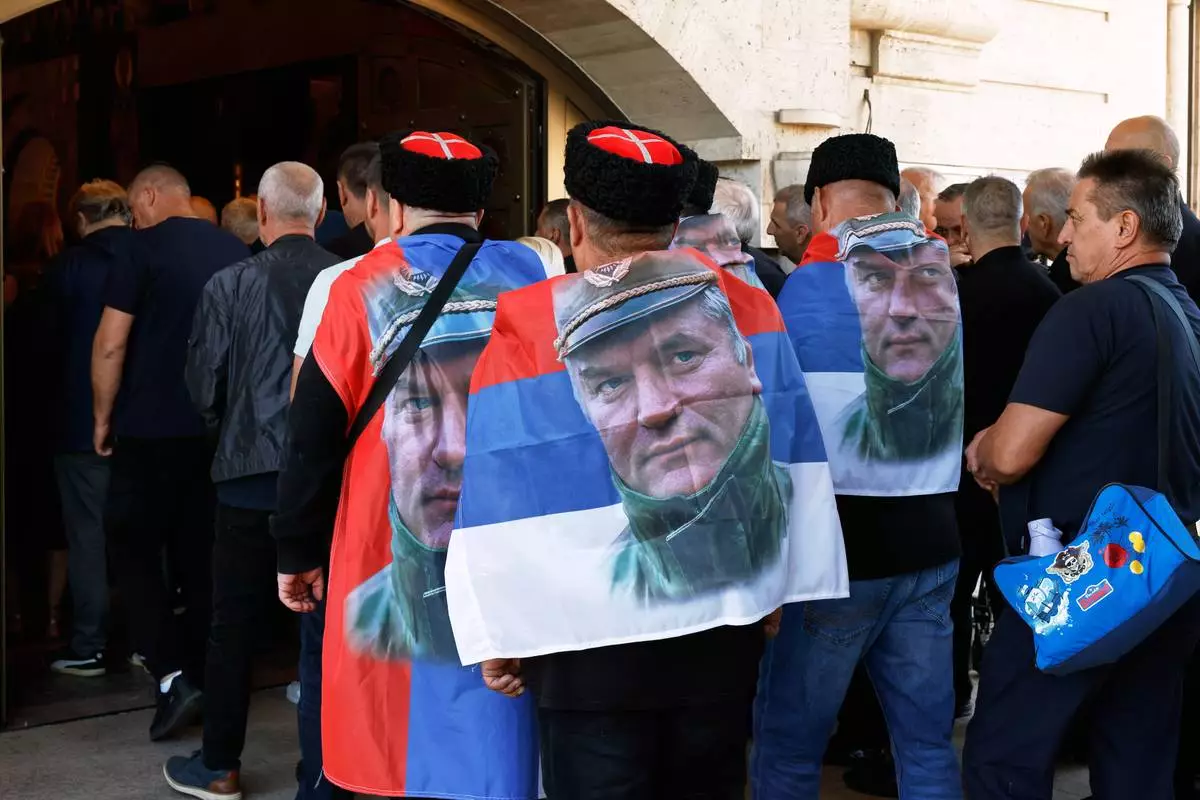
People line up to pay their respects to the former Bosnian Serb army commander Ratko Mladic, seen on the flags, who died last week while serving a life sentence for genocide and other atrocities during the war in Bosnia, at the St. Luka Church, in Belgrade, Serbia, Monday, Sept. 7, 2026. (AP Photo/Marko Drobnjakovic)
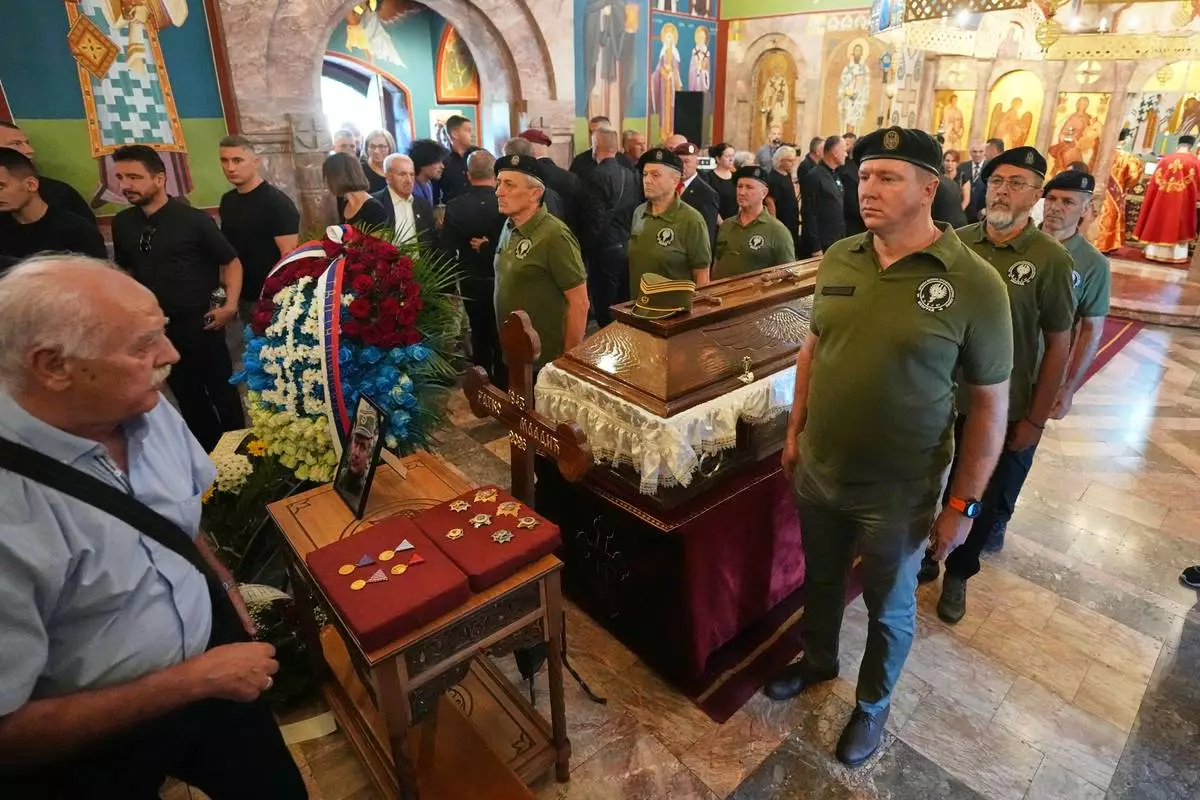
People line up to pay their respects as Serbian war veterans stand around the coffin of the former Bosnian Serb army commander Ratko Mladic, who died last week while serving a life sentence for genocide and other atrocities during the war in Bosnia, at the St. Luka Church, in Belgrade, Serbia, Monday, Sept. 7, 2026. (AP Photo/Darko Vojinovic)
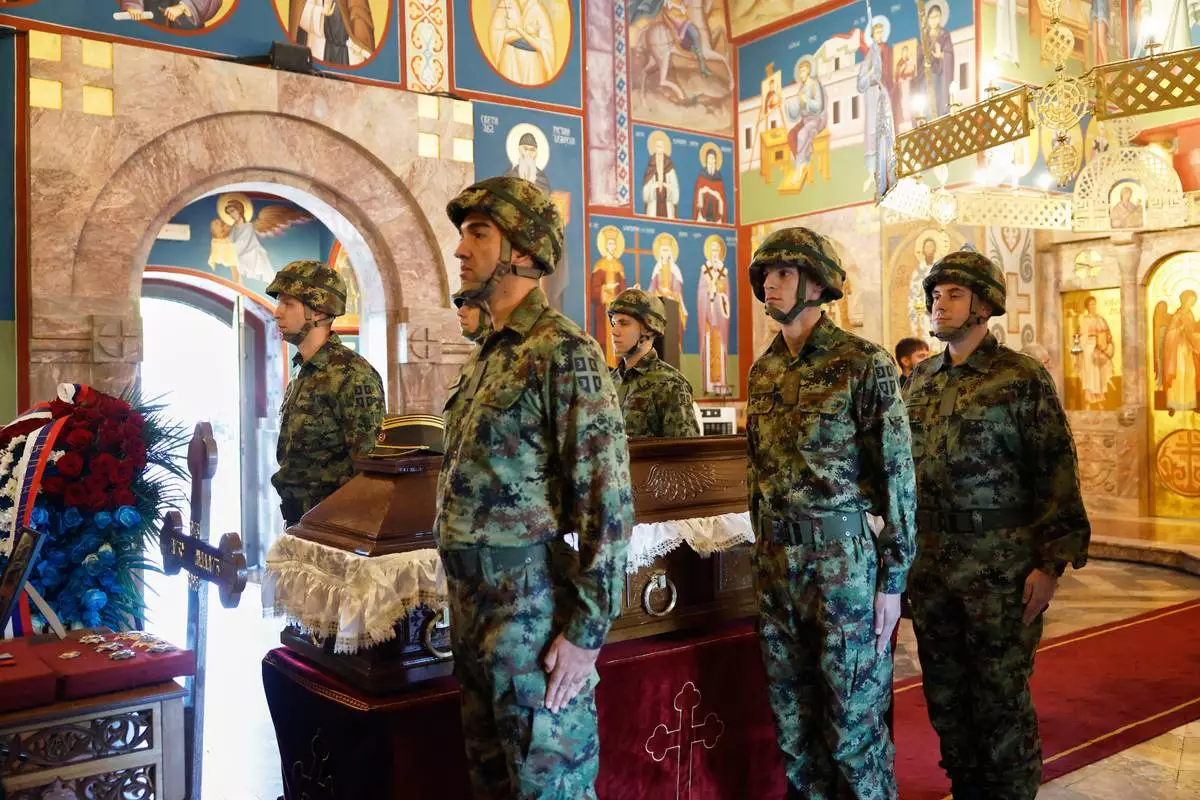
Serbian national military servicemen stand around the coffin of the former Bosnian Serb army commander Ratko Mladic, who died last week while serving a life sentence for genocide and other atrocities during the war in Bosnia, at the St. Luka Church, in Belgrade, Serbia, Monday, Sept. 7, 2026. (AP Photo/Marko Drobnjakovic)
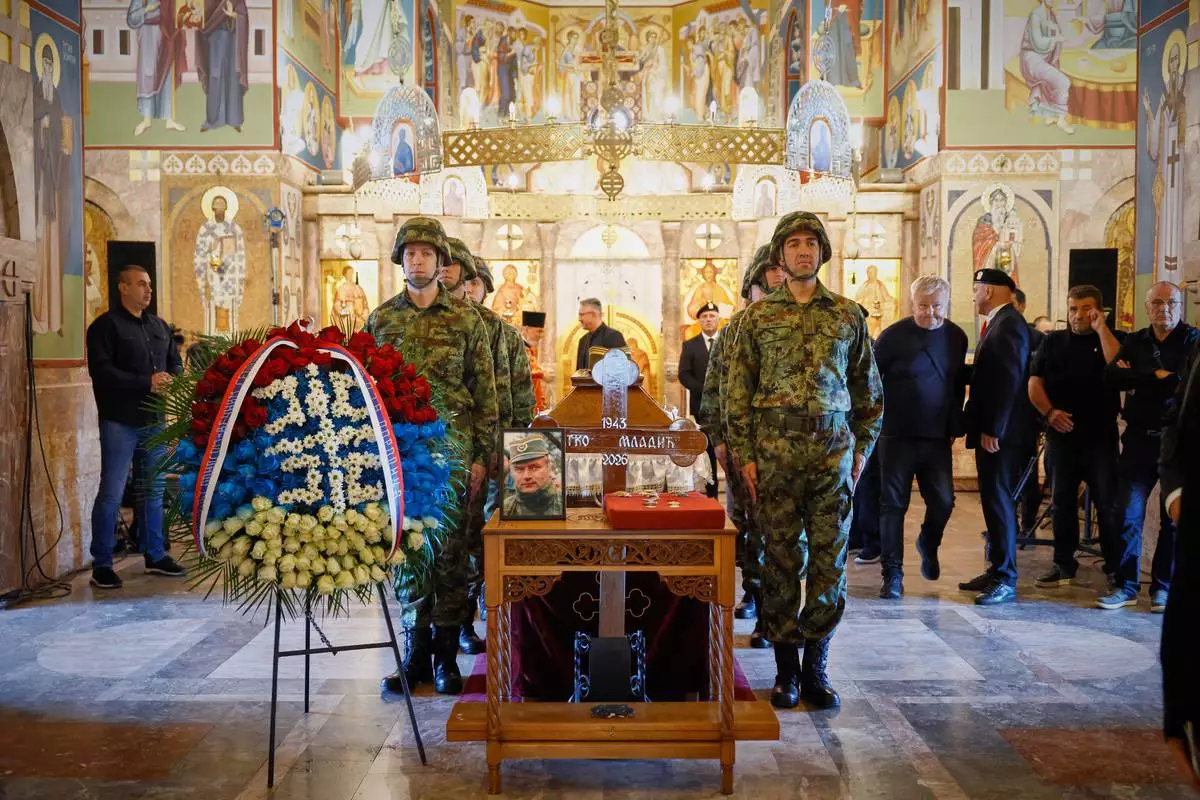
A man touches the cross as Serbian national military servicemen stand around the coffin of the former Bosnian Serb army commander Ratko Mladic, who died last week while serving a life sentence for genocide and other atrocities during the war in Bosnia, at the St. Luka Church, in Belgrade, Serbia, Monday, Sept. 7, 2026. (AP Photo/Marko Drobnjakovic)
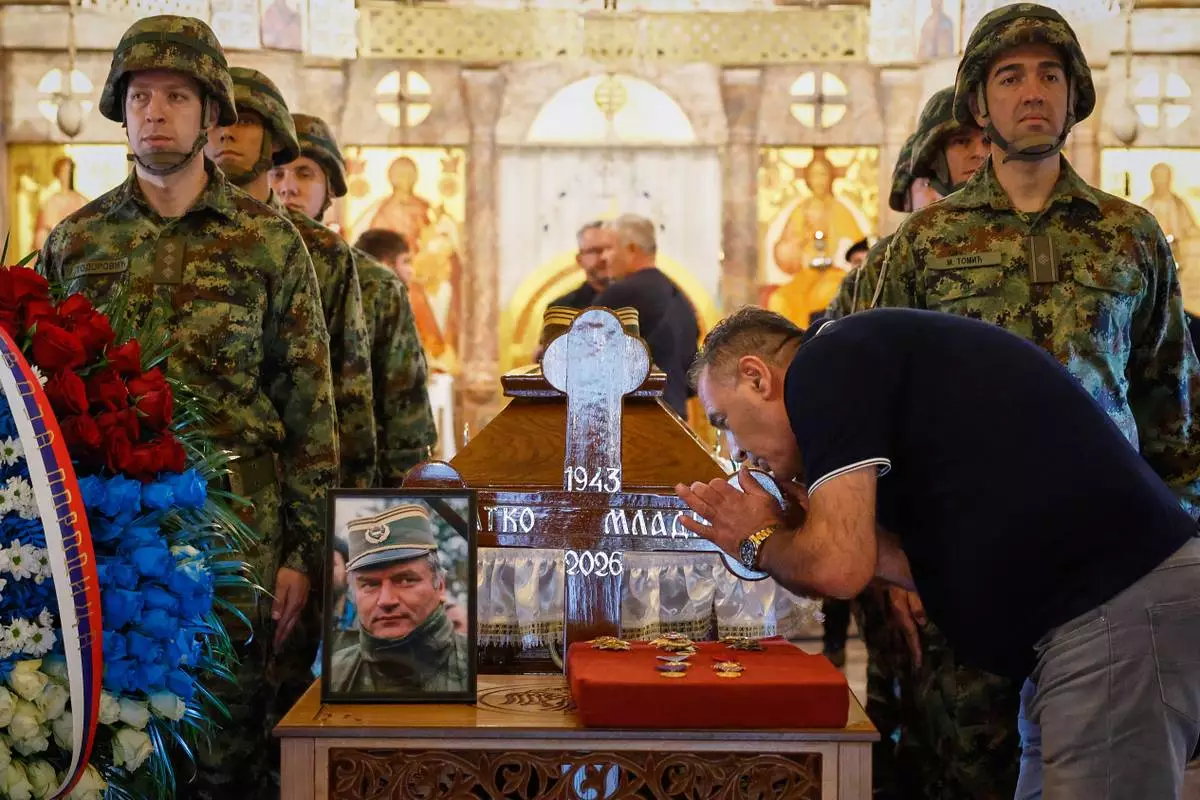
A man touches the cross as Serbian national military servicemen stand around the coffin of the former Bosnian Serb army commander Ratko Mladic, who died last week while serving a life sentence for genocide and other atrocities during the war in Bosnia, at the St. Luka Church, in Belgrade, Serbia, Monday, Sept. 7, 2026. (AP Photo/Marko Drobnjakovic)