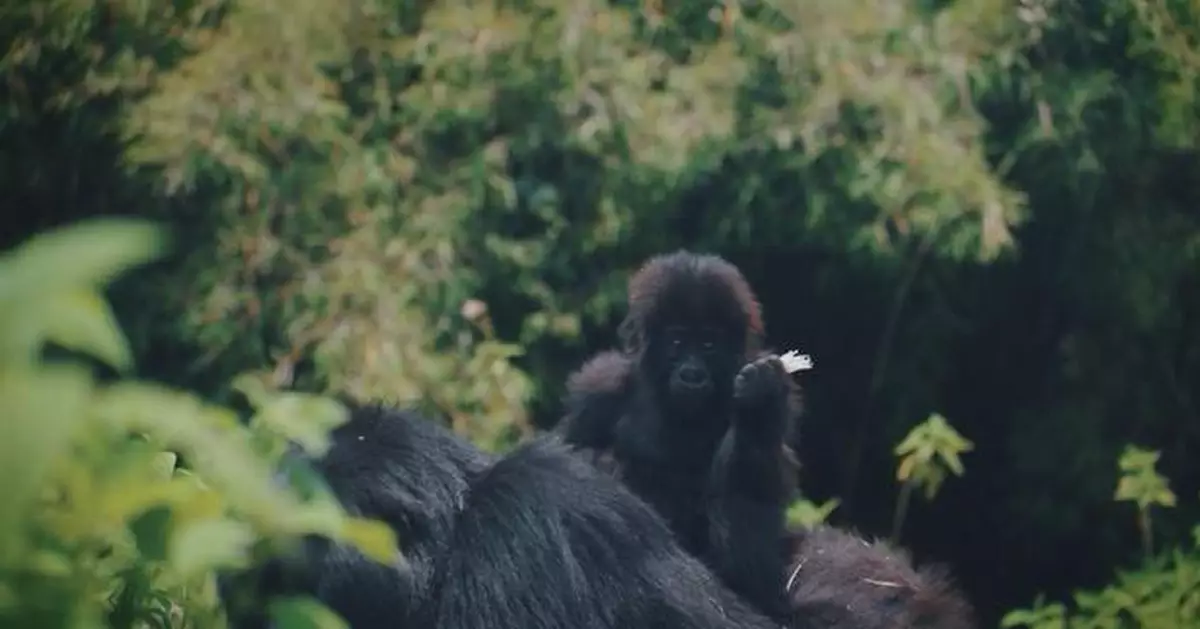
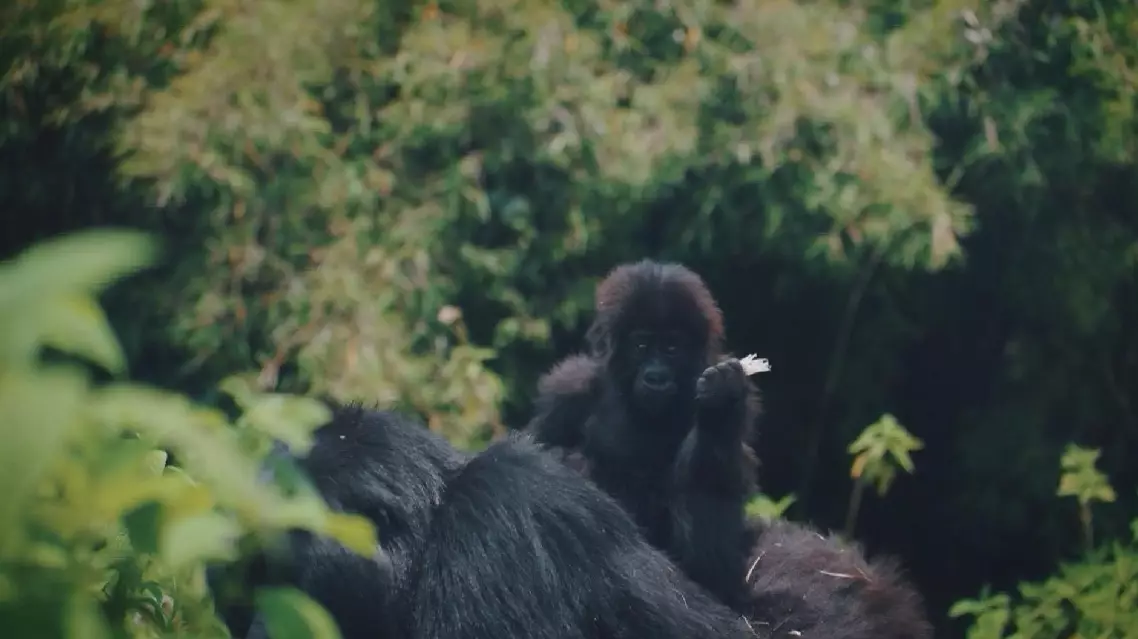
Rwanda is moving to make a significant expansion to its Volcanoes National Park after the recovery of the once-critically endangered mountain gorilla has created an unexpected challenge of giving the growing gorilla population more room to thrive.
The park, located in Rwanda's northern Musanze District, sees about 50,000 visitors each year, bringing millions of dollars to surrounding communities and supporting local jobs and industries.
One of the main attractions of the park are the famous mountain gorillas, which have even drawn some celebrity interest, with former Manchester United and France football captain Patrice Evra heading into the forest for his first encounter with the impressive primates.
"So I'm really excited. I feel blessed and grateful. And I can't wait. I can't wait to see them. And I hope I won't be too much stubborn and listening to the rules. I know you can't look at them in the eyes," Evra said.
Evra was guided by veteran ranger Gentil Torero, who has worked at the park since 2015. He said tourism has reshaped local communities amid greater awareness of the need to protect the precious gorilla species, with former poachers now working as porters and in other tourism roles.
"When we go to the porters, most of them, the old ones, they used to be poachers back in the past because they were doing so many illegal activities in this national park before some serious measures have been taken into conservation. And now they benefit a lot from tourism because instead of benefiting from the bush meat and collecting firewood and other stuff, they are now benefiting out of tourism," he said.
Last Friday saw the park conduct its annual 'Kwita Izina' gorilla-naming ceremony. First held in 2005, it has become a major conservation and tourism event, highlighting Rwanda's efforts to protect mountain gorillas while linking wildlife conservation to tourism, community development and sustainable economic growth.
As part of his visit, Evra was on hand to name one of the 22 new arrivals at the park, choosing the name "Muganura" for one of the young gorillas, which pays homage to Rwanda's traditional harvest and thanksgiving celebration.
Over the two decades, the park has named more than 400 mountain gorillas, pointing to a healthy and steadily increasing population.
As the number of gorillas grows, Rwanda plans to restore and expand the Volcanoes National Park by more than 3,700 hectares to accommodate the animals, while also developing new housing, infrastructure and livelihoods for affected communities.
Speaking at Friday's naming ceremony, Jean-Guy Afrika, CEO of the Rwanda Development Board, briefed attendees on the expansion plan.
"The expansion will provide more habitats for growing mountain gorilla families. At the same time, it will support neighboring communities through better housing, infrastructure, services and new economic opportunities," he said.
The project is as much an economic investment as it is about promoting conservation. Patrick Nsabimana, the Rwanda country director for the African Wildlife Foundation, said the expansion could lift community income and create sustainable jobs while also further raising the local mountain gorilla population.
"If everything is done well and according to our plan, we are expecting an increase in income by 30 percent from the community around, creation of sustainable jobs, and also we are expecting -- in terms of conservation -- an increase in the mountain gorilla population around 10 to 15 percent, and also an increase in the gorilla experience and tourism as an outcome of this program," he said.
Rwanda park plans expansion to accommodate growing gorilla population