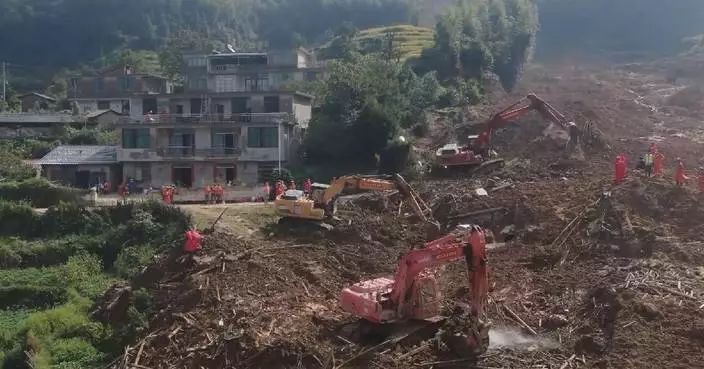
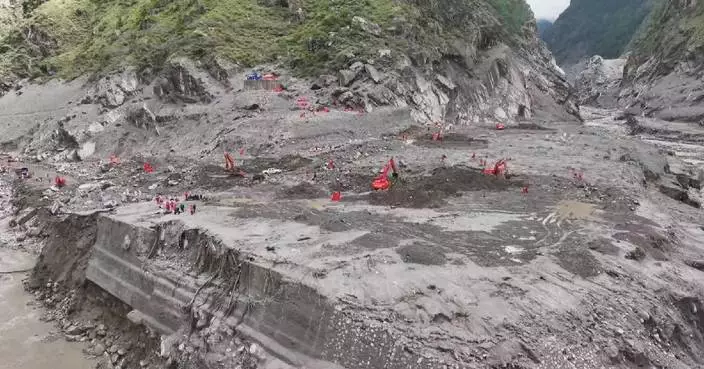
A fast-moving chain mudslide, triggered by a high-altitude glacier collapse in Nepal, struck both Nepal's border areas and the Gyirong Port in southwest China's Xizang Autonomous Region on August 26, leaving tens of thousands of people dead and even more people missing as rescue operations continue.
The deadly disaster has prompted scientists to investigate the causes and issue warnings about a warming Qinghai-Xizang Plateau.
Since the disaster, the second Qinghai-Xizang Plateau scientific expedition team and the Department of Science and Technology of Xizang have carried out joint research to figure out the reason for the glacier collapse.
Yao Tandong, an academician of the Chinese Academy of Sciences and leader of the scientific expedition mission, noted the plateau's greater sensitivity to climate change, which leads to quick glacier melting and increasingly frequent ice avalanches in the area.
"Climate change has an amplification effect in extremely high-altitude areas, especially those above 5,000 meters, meaning the magnitude of temperature rise increases with elevation. Currently, the Qinghai-Xizang Plateau is warming at twice the global average rate. At altitudes above 5,000 meters, there are already findings that suggest the rate can reach three times of the average. This rapid warming accelerates glacial melting, causing meltwater to seep through surface crevasses down to the glacier's base. If the glacier rests on a bed of loose material, the structure may collapse, and if it rests on bedrock, it may slide. Either scenario can trigger an ice avalanche," Yao said.
The Qinghai-Xizang Plateau and its surrounding areas constitute the largest glacier distribution region outside the polar regions. This water tower has nearly 110,000 glaciers, covering an area of about 98,000 square kilometers, with a total ice volume of 10,100 cubic kilometers, according to the latest data released by the second Qinghai-Xizang Plateau scientific expedition team on March 21 last year.
However, the data also showed that the total ice volume had decreased by 20 percent over the past five decades, and the glacier area had shrunk by 18 percent.
China's glaciers can be broadly categorized into two types: continental glaciers and maritime glaciers, and the fractured glacier on the north slope of Langtang Lirung in Nepal falls into the latter category, which features higher rates of accumulation and ablation, higher ice temperatures, faster movement, and greater sensitivity to climate change, according to Yao.
"The defining characteristic of maritime glaciers is that they have both high accumulation and high ablation. As a result, the disaster-causing consequences of maritime glaciers are more severe than those of continental glaciers, and their frequency and intensity are also greater. Another factor is that maritime glacier regions are generally at very high altitudes, so the magnitude of temperature increase at these high elevations is also larger, and the warming process is more pronounced," Yao said.
The academician warned that maritime glaciers are becoming increasingly unstable amid global warming.
"The collapse of maritime glaciers have become normal. As global warming proceeds, the frequency of glacier collapses is already on the rise," Yao said.
According to the data released by the World Meteorological Organization (WMO), there are more than 275,000 glaciers worldwide. However, these ice formations are rapidly retreating due to climate change.
In efforts to call for global action to protect these essential water towers, the UNESCO and the WMO have proclaimed 2025 as the International Year of Glaciers' Preservation, declared 2025–2034 as the Decade of Action for Cryospheric Sciences, and designated March 21 as the World Day for Glaciers.
Yao stressed that strengthening glacier and glacial lake surveys, dynamic monitoring and early warning systems, as well as enhancing international cooperation on the prevention and control of ice avalanche disasters, are top priorities in disaster prevention, mitigation, and relief efforts under the current context of global climate warming.
"At the United Nations level, the first is to survey and monitor, followed by model building to assess risks in various spheres, including the atmosphere, hydrosphere, cryosphere, as well as the biosphere and the anthroposphere. And then, we need to figure out how to address these risks," Yao said.
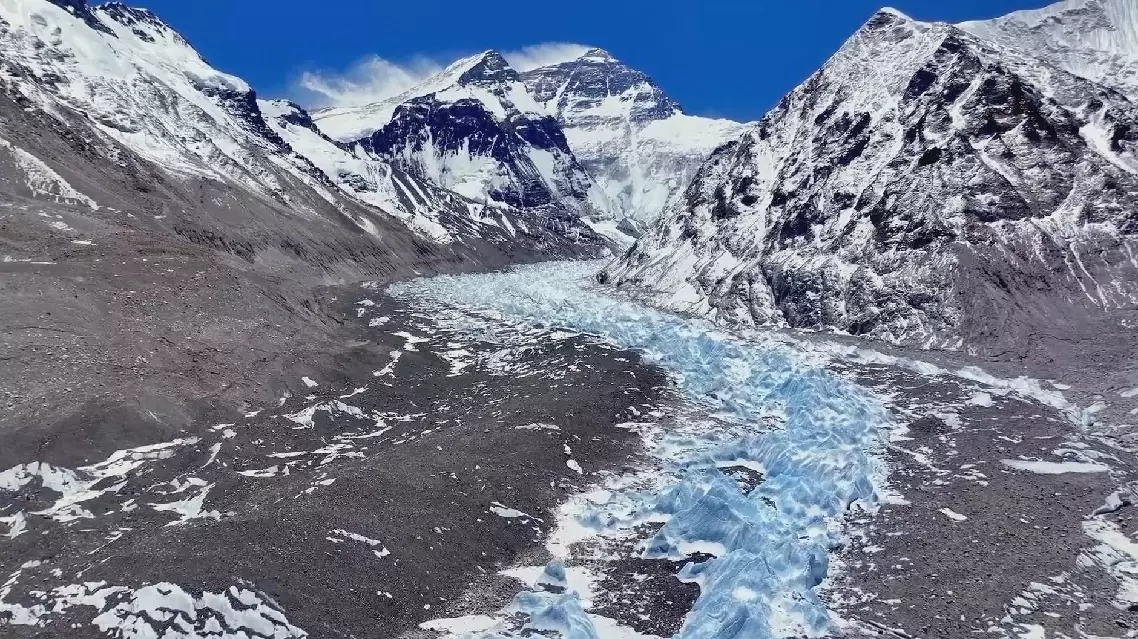
Glacier collapse disaster on China-Nepal border highlights growing climate risks: expert