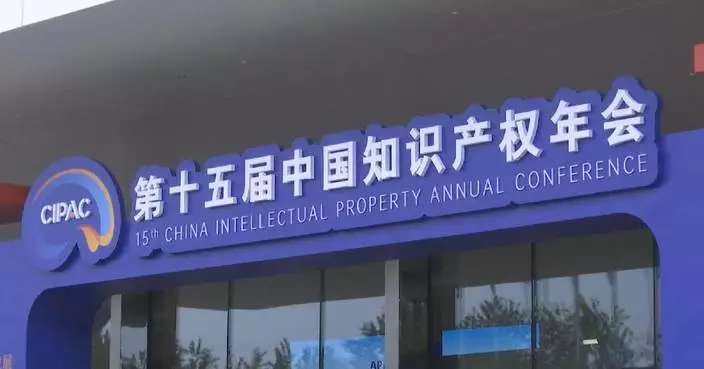
The 26th China International Fair for Investment and Trade (CIFIT) opened in the coastal city of Xiamen in east China's Fujian Province on Tuesday, drawing international exhibitors and delegations to connect global investors with key Chinese markets.
The four-day fair has brought together over 1,200 government agencies and business delegations from 129 countries and regions, which includes 48 of the world's top 50 economies by GDP, while 30 international organizations are also participating.
This year's event marks the biggest ever edition of the long-running trade fair, with the total exhibition space expanding to some 200,000 square meters. It also features 14 specialized exhibition zones, showcasing investment opportunities in various promising sectors including China's "new quality productive forces", an economic strategy which stresses high-tech innovation as a new growth driver, as well as the "Silk Road Maritime" initiative, which looks to resurrect ancient sea trading routes.
Addressing the opening ceremony, Zhou Zuyi, secretary of the Fujian Provincial Committee of the Communist Party of China, said Fujian will step up efforts to establish new mechanisms for a more open economy.
"We will keep expanding institutional opening-up and actively aligning with high-standard global trade rules. We're seizing the opportunity from the pilot program to expand services trade. We're also upgrading our free trade zones, focusing on tech innovation, green development, and digital economy. All to build a more open economy, faster," Zhou said.
This year's edition has also introduced a "dual guest countries of honor" mechanism for the first time, with Finland and Saudi Arabia jointly assuming the role. Two Chinese guest provinces have also been named, with the southern Guangdong and the northwestern Qinghai Province given the honor. The fair is structured around three core thematic sections, namely "Invest in China," "China's Outbound Investment," and "International Investment," and will also see more than 40 key investment promotion events, along with nearly 100 supporting activities being held.
Speaking at the opening ceremony, Pedro Manuel Moreno, the Acting Secretary General of the United Nations Conference on Trade and Development (UNCTAD), emphasized that increasing investment in key strategic fields is essential, saying the trade fair offers a valuable platform for exchanges.
"Strategic sectors, like AI, semiconductors, critical minerals, or clean energy now account for almost half of the value of all new investment projects. This is why I believe gatherings like CIFIT matter more than ever, because the central challenge today is no longer only to mobilize more capital. It is to connect capital to the right projects, in the right places," he said.
First launched in 1997, the CIFIT, organized by the Chinese Ministry of Commerce, has become an important platform for boosting investment and facilitating global development.
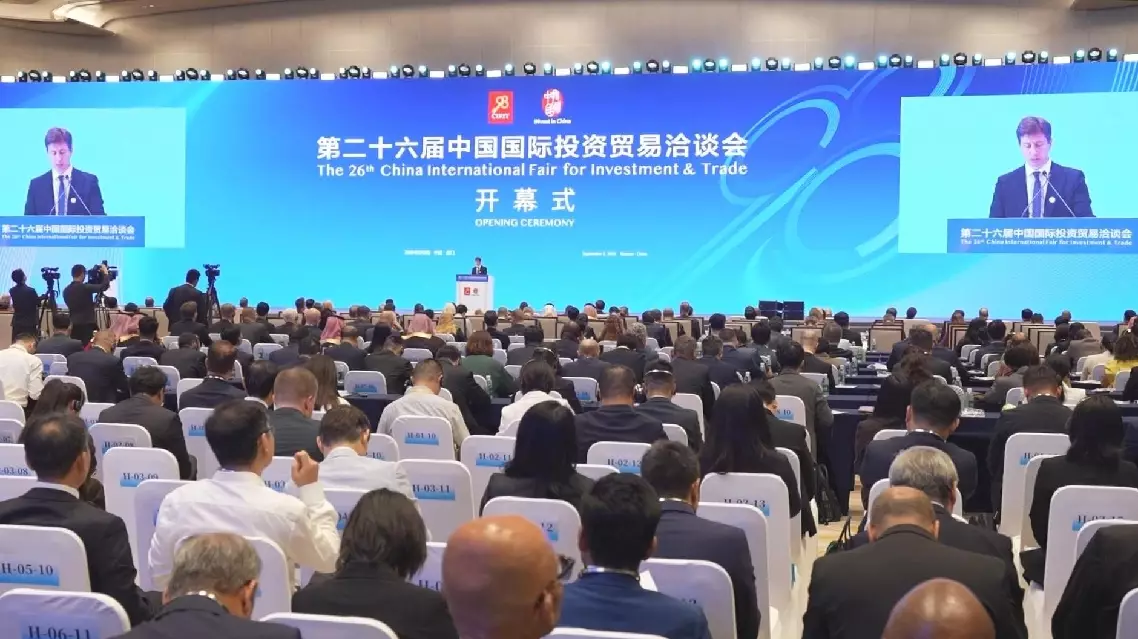
Global investors, business leaders gather in Xiamen for int'l investment, trade fair
China's Supreme People's Court on Monday unveiled guidelines specifically addressing AI-related disputes, in a bid to keep pace with the rapid evolution of artificial intelligence.
The guidelines, released by the Supreme People's Court (SPC), address a range of emerging disputes, including AI deepfakes and voice cloning, algorithmic price discrimination and AI-generated false information.
The new rules come as AI-generated impersonation becomes increasingly easy to create and difficult to distinguish from authentic content. A handful of photographs or a short voice recording can provide enough material to produce a convincing digital replica.
The guidelines, comprising 5 parts and 24 articles, precisely focus on issues of widespread social concern, including AI face-swapping and voice cloning, infringements caused by AI hallucinations, big data-enabled price discrimination, autonomous driving, and AI model training.
"In practice, the most strongly felt concern is AI deepfakes. For example, AI face-swapping can exploit anyone's likeness indiscriminately, making ordinary people potential targets of deepfakes. AI voice cloning can 'steal' someone's voice for just a few yuan, creating synthetic results that sound convincingly real. To respond to public concerns and guide judicial practice, the guideline sets forth differentiated provisions for different types of conduct involving the misuse and malicious use of AI technology that violate personality rights," said Si Yanli, deputy head of the Supreme People's Court's research office, at a press conference held in Beijing.
The guidelines make clear that people cannot use AI to create or distribute recognizable digital replicas of others without their consent, including cloned faces and voices. Such use constitutes an infringement of individuals' rights, while using AI-generated faces or voices to spread false claims or damage someone's reputation can also result in legal liability.
The guidelines also address algorithmic discrimination against consumers. Businesses that use algorithms to offer different prices or other transaction terms for the same goods or services without reasonable justification may be held liable if the practice causes harm to consumers.
Another challenge is that generative AI systems can produce false or inaccurate information, commonly known as "AI hallucinations."
AI service providers can be held liable if they are notified that their systems have generated content that infringes a person's rights but fail to take timely action.
Users, too, can be held responsible for how they use AI. Anyone who deliberately uses prompts or other methods to induce an AI system to generate infringing content that harms others can be held liable.
"It is impossible to require AI service providers to predict, review, and intercept in advance, on a case-by-case basis, whether the content they generate will infringe upon rights. However, when AI generates infringing content due to AI hallucinations or malicious inducement by users, upon notification by the rights holder, the generative AI service provider should and is able to take necessary measures to protect the rights holder's interests," said Zhou Jiahai, head of the research office of the SPC.
The guidelines also provide a way for people to seek swift protection when AI-generated content threatens to cause serious and irreversible harm. For example, someone whose face has been digitally altered and used to spread false and defamatory sexual claims may ask a court for an injunction if waiting to act could cause harm that would be difficult to repair later.
As AI advances, governments worldwide are grappling with the challenge of encouraging innovation while also protecting people from potential harm. China has taken a series of steps to address the challenges posed by AI. In September 2025, it put into effect measures governing the labeling of AI-generated and synthesized content. The SPC's latest guidelines set out how courts should handle AI-related disputes, adding to China's evolving legal framework for AI.
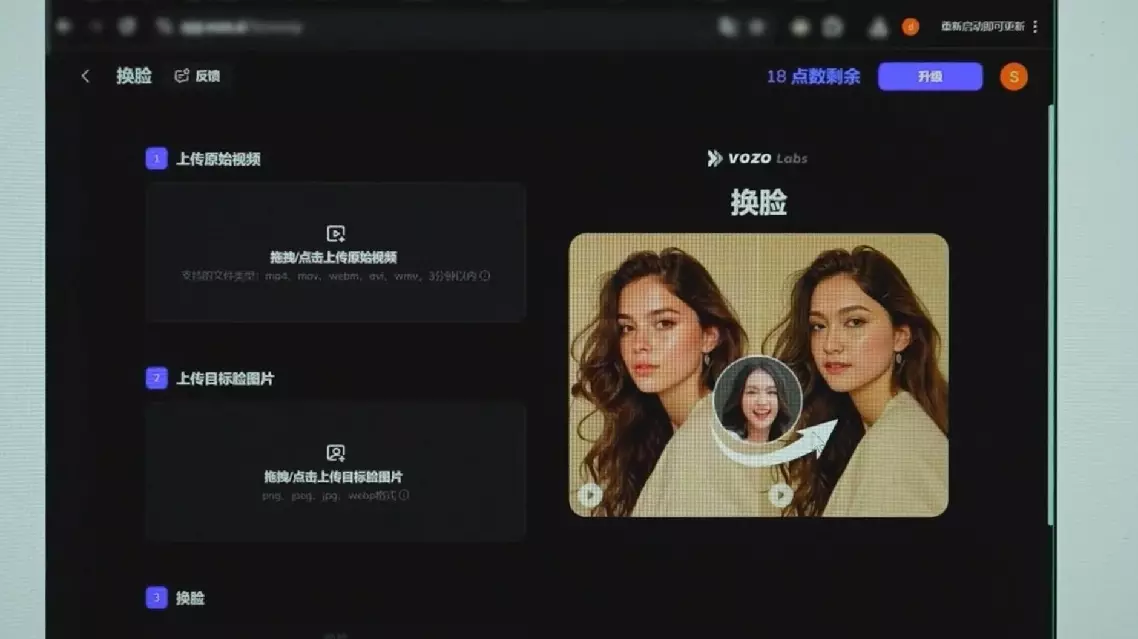
China's top court sets rules for AI related disputes