Japan is developing tactical AI satellites to reduce its reliance on U.S. intelligence for long-range strikes and gain greater operational autonomy, said a Chinese military expert.
The Nikkei reported on Friday that Japan's Defense Ministry is developing satellites equipped with artificial intelligence (AI) to process surveillance data collected from other satellites in space. The data would then be transmitted to the ground to accelerate decision-making.
According to the report, the system would enhance the operational capability of long-range missiles and bolster what Japan calls its "counterstrike capability."
"At present, for Japanese long-range missiles to strike targets over a thousand kilometers away, they must rely on U.S. military space-based sensors, reconnaissance aircraft, and intelligence networks to provide targeting data. Exercises have already rehearsed the model of 'U.S. reconnaissance, Japanese launch and strike,' which essentially means that Japan 'has the missiles in hand, but its eyes are on the U.S.' Japan is naturally unwilling to leave the switch of its 'counterstrike capability' in American hands. The purpose of developing tactical AI satellites is to establish a domestically controllable, space-based rapid intelligence chain, enabling Japan to independently complete the detection, identification, and coordinate output of targets, rather than waiting for U.S.-delivered intelligence at every turn. This would reduce the risk of bottlenecks and secure greater operational autonomy within the alliance," said Shao Yongling, a military expert.
Shao pointed out that Japan is dismantling its post-war security constraints and remilitarizing, posing the greatest threat to Asia-Pacific stability. "The underlying constraints on Japan's post-war security policy comes from a series of institutional and political red lines: Article 9 of the Constitution of Japan, the defense-oriented principle, the peaceful use of outer space, 'three principles on transfer of defense equipment and technology', and the unwritten convention of keeping its defense spending below 1 percent of GDP. These boundaries have now been gradually eroded and rewritten. The defense-oriented principle has been instrumentalized and its substantive meaning hollowed out. The institutional boundary for the 'peaceful use of space' no longer exists, as the militarization of space is advancing in an organized manner. The geographical and functional boundaries of Japan's defense forces are being broken, and the Japan Self-Defense Forces are transitioning from a 'territorial defense force' to one capable of conducting strikes overseas. These cumulative changes have driven the entire post-war security framework to loosen, and Japan has already embarked on a path of remilitarization, becoming the greatest threat to peace and stability in the Asia-Pacific region," Shao said.
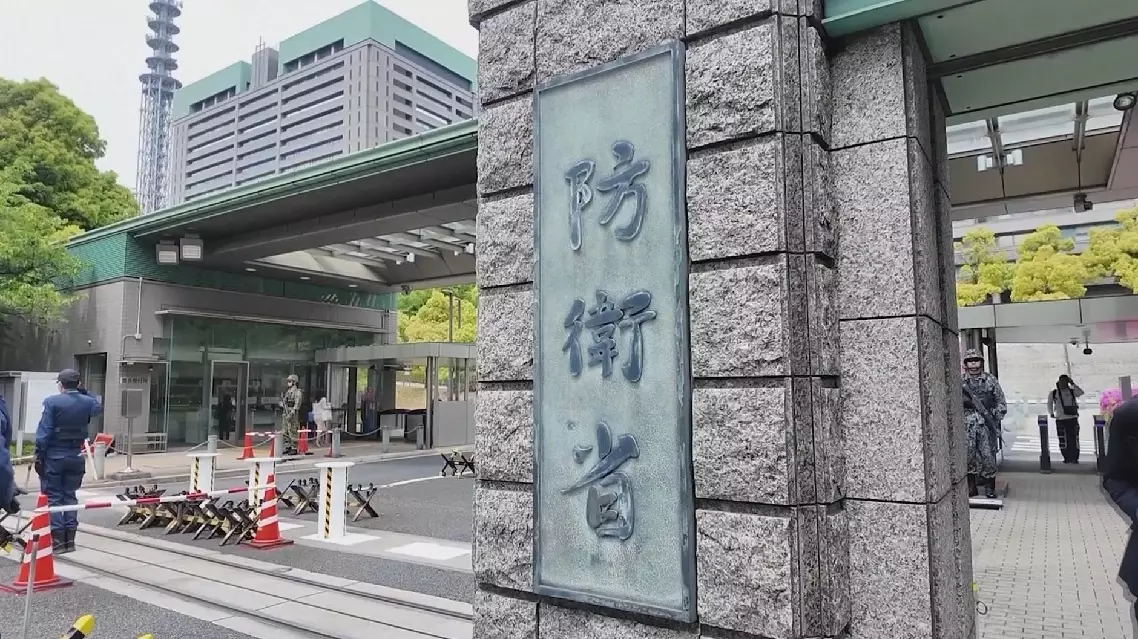
Japan develops tactical AI satellites to reduce US intelligence dependence: Chinese expert