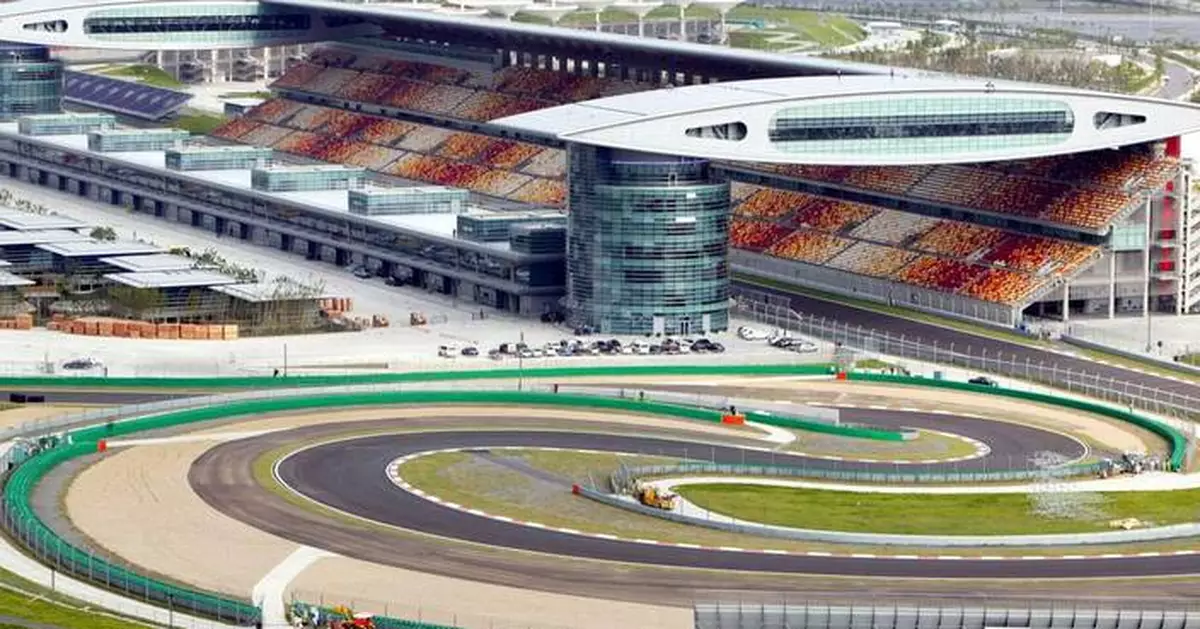
SHANGHAI (AP) — A car racing team whose injured driver was rescued by another competitor after a horrific crash in Shanghai on Saturday has called the organizers “grossly negligent in the safety response” and said it is withdrawing from future events in China.
The car of British driver Ollie Millroy exploded into flames in a GT race at the Shanghai International Circuit. And it was another driver, Loek Hartog, who stopped his car and, armed with a fire extinguisher, pulled Millroy out of the burning wreckage.
“I am still alive tonight, entirely thanks to one man. Loek Hartog stopped instantly with no flag marshals or fire crews in sight and risked his own life to get me out of the car,” Millroy wrote on his Instagram account. “I don’t remember anything between 30 seconds before the crash and 1 hour after it, but I will remember his incredible act of bravery for the rest of my life.”
Hartog responded with humility to the praise.
“You have nothing to thank me for,” he said. “I wish to live in a world where this would not be considered as bravery — but as the instinct of others, too. I am so grateful to have been at the place I needed to be.”
According to his Instagram account, Millroy sustained six broken ribs, a broken collarbone, a broken hand, and a punctured lung. He underwent a four-hour operation in a Shanghai hospital to insert plates and screws into the broken bones. Doctors also inserted a drain line into his abdomen to release gas and fluid leaking from his lung.
Millroy's team, AAI Motorsports, in a long statement was scathing about the conduct of Chinese organizers.
“The event organizer was grossly negligent in its emergency response and safety rescue arrangements, with serious deficiencies in the rescue response that nearly resulted in a tragedy,” the team wrote.
“Even more outrageously, during the live broadcast of the accident, event staff failed to verify the on-site situation and hastily reported that the driver had left the wrecked vehicle on his own. In fact, the driver of our No. 91 car was pulled out of the burning car by Loek Hartog, driver of the No. 79 car of Phantom Team who risked his own life to carry out the rescue.”
AAI Motorsports called for a “comprehensive investigation” and public disclosure around the accident, track safety, and the emergency response. It said it would withdraw from all GT events in China until its demands were met.
“We will not return until the event organizing committee conducts a comprehensive, independent and transparent investigation into every aspect of the incident, including the failures in the rescue response, and provides our team with an official response.”
In a statement, event organizers apologized for the “incident and the distress” it caused and offered “sincere sympathy” to the injured driver.
But organizers also defended some of the conduct.
“According to our preliminary review, the event’s overall staffing and resources met the standards required for a national-level motorsport event, although there remains room for improvement in detailed operational management,” organizers wrote.
“We will conduct a further review and investigation into the accident and develop more comprehensive plans to address shortcomings in race organization, support arrangements, emergency response, rescue operations and medical services.”
See AP’s full auto racing coverage here
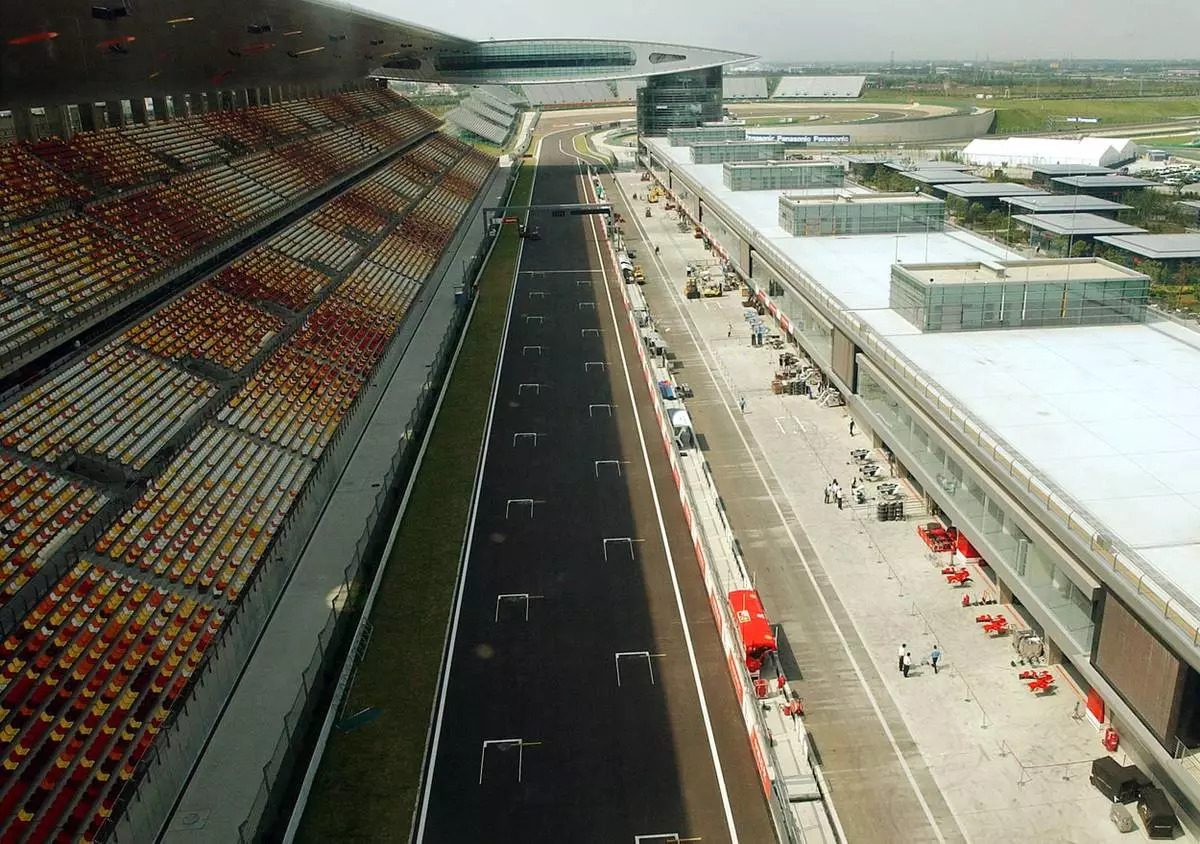
A general view of Shanghai International Circuit, on Sept. 22, 2004 in Shanghai, China. (AP Photo/Eugene Hoshiko, File)
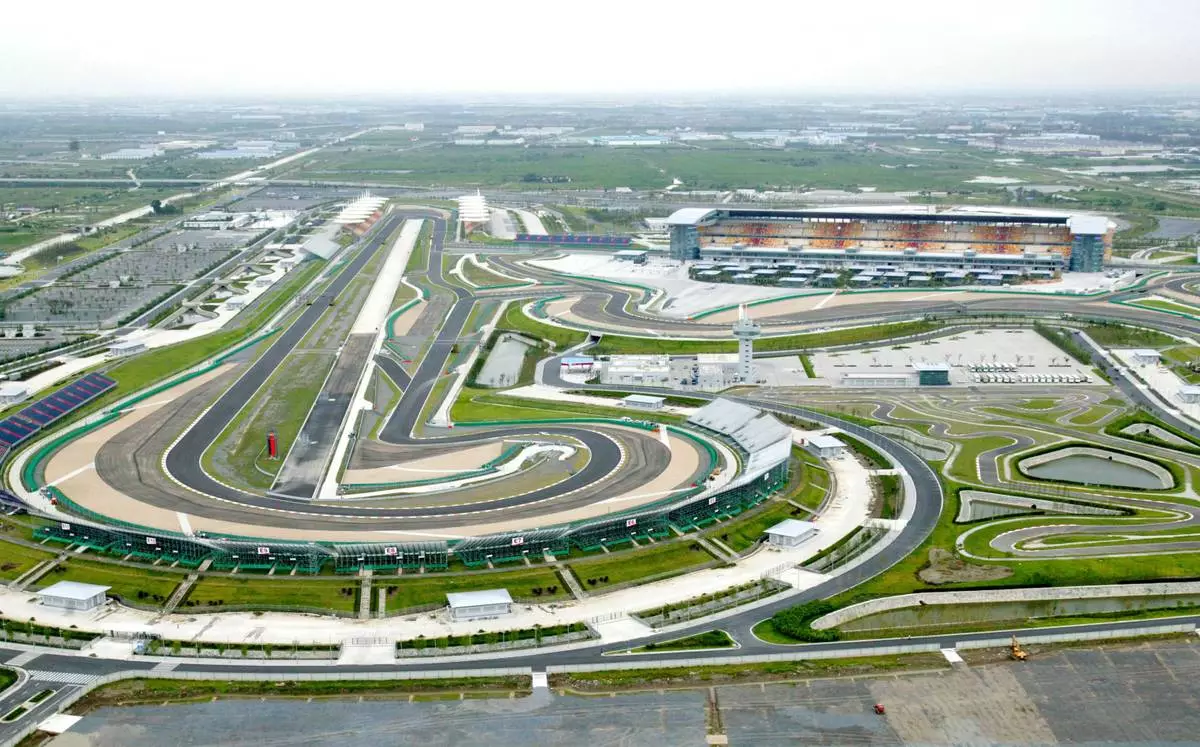
An aerial view of the Shanghai International Circuit on Sep. 12, 2004. (Chinatopix via AP)
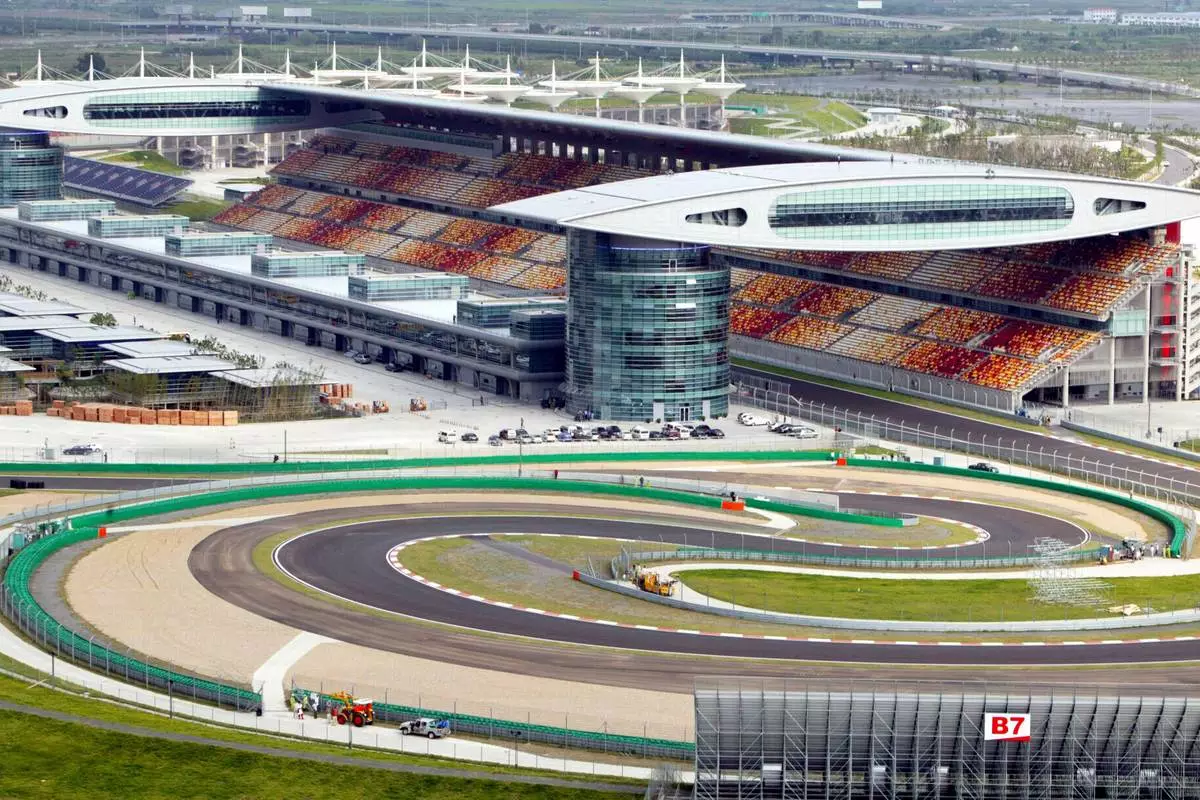
An aerial view of the Shanghai International Circuit on Sep. 12, 2004. (Chinatopix via AP)
CAIRO (AP) — Rescuers in Yemen pulled more bodies from the rubble Wednesday of a prison run by Iran-backed Houthi rebels that was hit in a deadly airstrike earlier this week, as an escalation between the rebels and a Saudi-led coalition threatened Yemen's fragile ceasefire.
The renewed fighting is also threatening global oil shipments as the Houthis target shipping and oil infrastructure that’s helping keep oil flowing through the Red Sea while the U.S.-Iran war has throttled shipments through the key Strait of Hormuz on the opposite side of the Arabian Peninsula.
The prison in Hazm, the Jawf provincial capital, collapsed on Monday when coalition strikes hit the area, killing at least 23 people, including the four whose bodies were found on Wednesday.
It wasn't immediately known how many people were in the prison at the time of the strikes, which also left seven people injured.
Following the strike on Monday, the Houthis retaliated on Tuesday with attacks on southern Saudi cities. The coalition early Wednesday responded with more strikes on rebel-held areas. The Saudi-backed government forces advanced in the eastern part of Hazm on Wednesday, cutting off supply routes to the Houthis, the military’s media office said.
The rebels reported 48 airstrikes over 12 hours in the provinces of Jawf, Marib, Hodeida, Taiz, Bayda and Saada, the rebels’ stronghold on the border with Saudi Arabia.
Hassan Saboula, director of Jawf's civil defense agency, said a child was among the 23 killed on Monday and that rescue teams were still searching for seven missing from the attack.
The identities of those killed have yet to be determined, al-Masirah satellite news channel cited Saboula as saying. Among the seven injured was a woman who was visiting her husband, said Anees al-Asbahi, a spokesman for the Houthi-run health ministry.
In a statement Wednesday, Houthi military spokesman Brig. Gen. Yahya Saree claimed the prison strike was carried out by an F-15SA Saudi aircraft. He said the aircraft took off from King Khalid Air Base in Khamis Mushait, the kingdom's fifth-largest city, at 4:30 p.m. on Monday, hit the prison and returned to the base 15 minutes later.
The Saudi government didn’t immediately respond to a request for comment. The rebels said they targeted the base on Tuesday as part of their strikes on several cities in southern Saudi Arabia.
Yemen plunged into civil war in 2014, when the Houthis descended from their northern stronghold and seized the capital, Sanaa, forcing the internationally recognized government to flee southward and then into exile in Saudi Arabia.
A Saudi-led coalition entered the Yemen war the following year in an attempt to restore the government. The war has killed at least 150,000 people, according to U.N. estimates, and at times pushed the country to the brink of famine.
The escalation between the rebels and the coalition started when the Houthis attempted in July to fly a plane from Tehran, Iran's capital, to Sanaa, the rebel-controlled Yemeni capital, challenging a decade-long air and naval blockade by the coalition. The coalition struck the runway in Sanaa, preventing the flight from landing.
The Houthis have since targeted Saudi Arabia and attacked Saudi shipping in the Red Sea. On Tuesday, they hit several Saudi oil facilities in southern Saudi Arabia where some operations have since been temporarily suspended, according to the Saudi Energy Ministry. The kingdom sounded sirens multiple times on Wednesday across several southern Saudi cities, warning residents to take shelter for fear of potential attacks.
Also, the rebels have been attacking Saudi-allied government forces on multiple fronts within Yemen. However, government forces turned the tide earlier this month, striking Houthi positions on the Red Sea, on Yemen’s western coast.
Before the Jawf prison strike, the violence in Yemen killed at least 194 people between Aug. 23 and Sept. 5, and wounded over 880, according to the World Health Organization. More than 21,000 people have been displaced.
The escalation shattered a four-year truce that had largely halted the fighting in the civil war.
In another development, supporters of the now-dismantled separatist group in southern Yemen blocked a convoy of Gen. Taher al-Aqili, the defense minister of the internationally recognized government, in the province of Dhale, according to residents.
The separatists set fire to a number of vehicles, said residents Khaled Saleh and Hamoud Nasser. Security forces quickly dispersed the separatists, they said.
The Southern Transitional Council dissolved itself in January after weeks of clashes with government forces across southern Yemen. The STC was an umbrella organization for groups that seek to restore southern Yemen as an independent state. The group was backed by the United Arab Emirates.
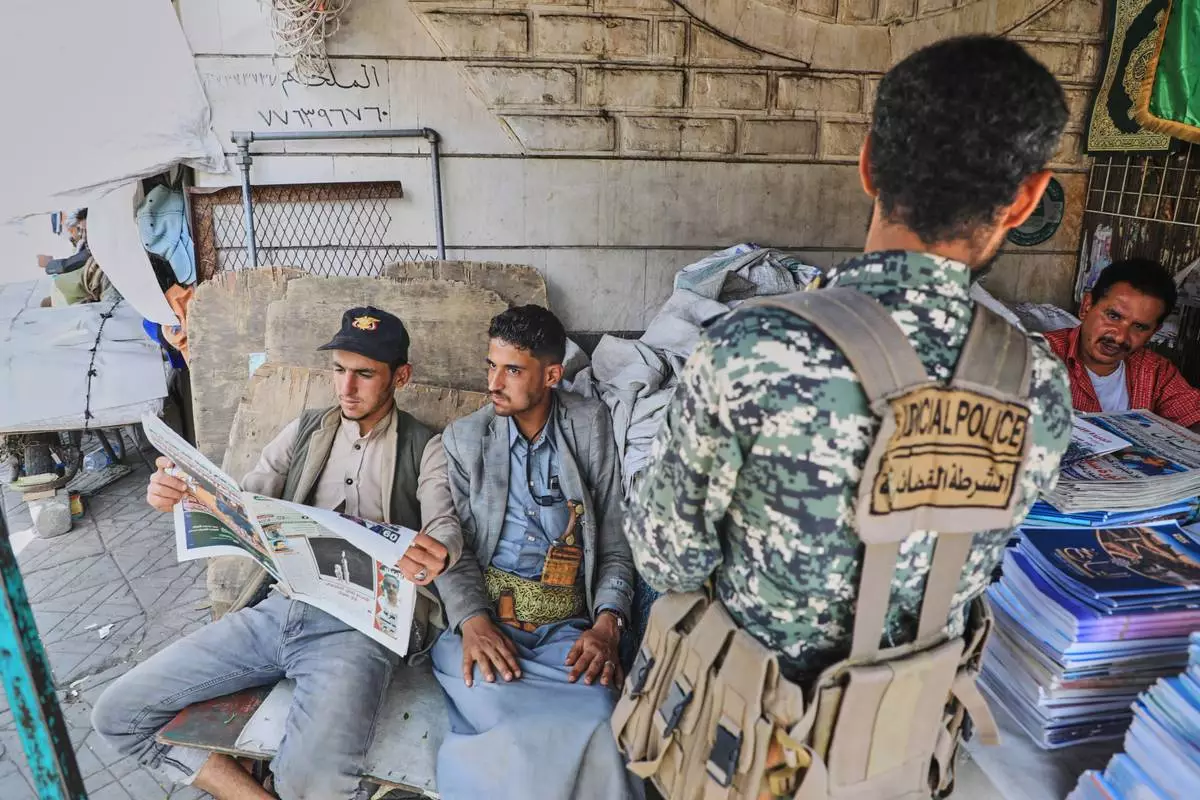
People read a newspaper to follow the war news at a shop in Sanaa, Yemen, Tuesday, Sept. 8, 2026. (AP Photo/Osamah Abdulrahman)
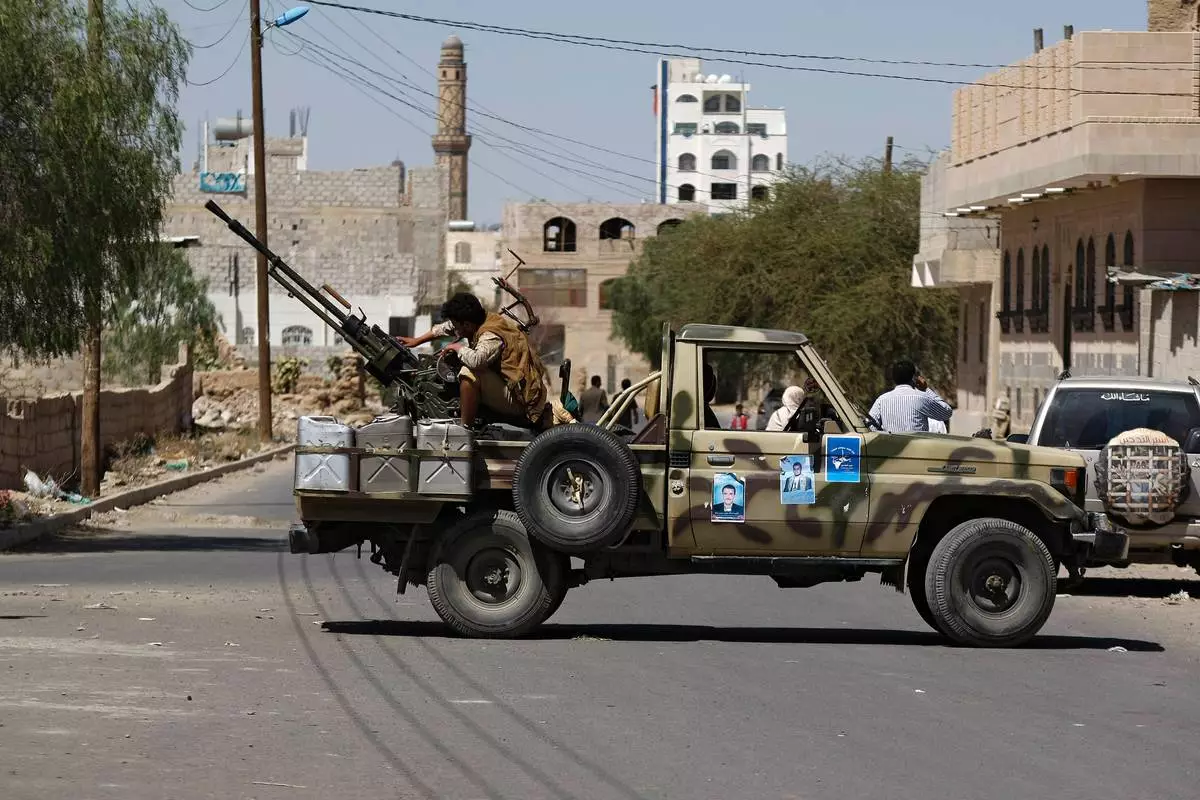
FILE - A Houthi Shiite rebel mans a machine gun mounted on a military truck in Sanaa, Yemen, Monday, Oct. 20, 2014. (AP Photo/Hani Mohammed, File)