RALEIGH, N.C.--(BUSINESS WIRE)--Sep 9, 2026--
Nine in ten EV drivers will detour to reach a charger someone else vouched for. That's the headline finding from new research by Driivz, a Vontier (NYSE: VNT) company and leading global software supplier to electric vehicle (EV) charging operators and service providers, and it points to a shift reshaping how drivers choose where to plug in.
This press release features multimedia. View the full release here: https://www.businesswire.com/news/home/20260908894683/en/
The survey of more than 3,000 EV drivers across North America and Europe found that 91% would make a detour to charge at a location recommended by another EV driver, and 76% would avoid a charging network entirely based on a warning from friends or family. More than half (55%) said they'd travel more than five minutes out of their way for a recommended spot.
Put simply: recommendations aren't a nice-to-have anymore. They're routing traffic.
"EV charging has become much more than a question of where the nearest charger is located," said Shiri Levi-Laor, CEO of Driivz. "Drivers are no longer just asking 'where is a charger?' They're asking 'is there a charger I can rely on?' and increasingly, they're trusting each other for the answer rather than relying on traditional navigation tools."
When drivers need to find an unfamiliar charging location, they trust specialist charging apps (33%) and recommendations from EV-driving friends and family (32%) more than satellite navigation and mapping apps (27%).
The split runs deeper than a simple preference. Among drivers who trust specialist apps, 81% don't also count navigation tools among their most trusted sources, and among those who trust word of mouth, 76% say the same. The findings suggest these are not simply overlapping habits; they're two distinct sources of charging intelligence operating alongside traditional navigation.
For charge point operators, the research makes one thing clear: a single session no longer stays a single session. Drivers talk, and increasingly, they talk in public, trackable ways.
The upside for charge point operators (CPOs) is significant. Drivers are nearly as vocal about good experiences as bad ones: 42% say they're most likely to talk about a charging session that exceeded expectations, versus 39% who are more likely to talk about one that fell short. Reliability isn't just about avoiding complaints anymore; it's a direct lever for earning advocacy.
"Reliable charging experiences build trust, and trust increasingly drives recommendations, reviews and future charging decisions," Levi-Laor said. "For operators, that creates a direct line from operational performance to customer loyalty, and ultimately, to long-term network utilization and profitability."
The findings track closely with Driivz's 2026 State of EV Charging Network Operators Report, which found operators are already shifting investment toward the fundamentals that drive this kind of trust: 24/7 network availability (47%) and seamless authentication (43%) rank as the top priorities for improving the charging experience.
The business logic behind that shift is telling: 59% of CPOs now say charger utilization, not expansion, is their primary driver of profitability, compared with just 15% who point to network growth.
Read together, the two reports describe an interesting industry transition. As charging infrastructure matures, the competitive edge is shifting from how many chargers you have to how many drivers vouch for the ones you've already built.
The research also surfaced a split in how drivers evaluate their options. Younger drivers are the early adopters of this social layer and are more likely to explore new networks, lean on specialist charging apps and follow peer recommendations. Older drivers, by contrast, tend to stick with networks they've already trusted, favoring loyalty over discovery.
That gap matters for operators thinking about the next five years, not just the next fiscal quarter: the behavior driving the ‘social layer’ today is the default behavior of tomorrow's largest driver segment.
Charger availability and speed got the industry this far. What comes next may be decided somewhere else entirely: in the reviews, warnings and recommendations drivers exchange with each other before they ever plug in. The networks that win won't just be the ones with the most chargers. They'll be the ones drivers are already telling their friends about.
About Driivz
Driivz, a Vontier (NYSE: VNT ) company, is a leading global software supplier to EV charging operators and service providers, accelerating the plug-in EV industry's dynamic and continuous transformation. The company's intelligent, cloud-based platform spans EV charging operations, energy management, advanced billing capabilities and driver self-service tools. Driivz's team of EV experts serves customers in 36 countries, including global industry players such as EVgo, Shell, Circle K, Volvo Group, Recharge, St1, ESB, Mer, Francis Energy, Ennet Corporation, Element and eMobility Power. The Driivz platform currently supports over 3M Ports and has processed over 70M transactions for millions of EV drivers in North America, Europe and APAC. For more information, please visit www.driivz.com.
About Vontier
Vontier (NYSE: VNT) is a global industrial technology company uniting productivity, automation and multi-energy technologies to meet the needs of a rapidly evolving, more connected mobility ecosystem. Leveraging leading market positions, decades of domain expertise and unparalleled portfolio breadth, Vontier enables the way the world moves – delivering smart, safe and sustainable solutions to our customers and the planet. Vontier has a culture of continuous improvement and innovation built upon the foundation of the Vontier Business System and embraced by colleagues worldwide. Additional information about Vontier is available on the Company’s website at www.vontier.com.
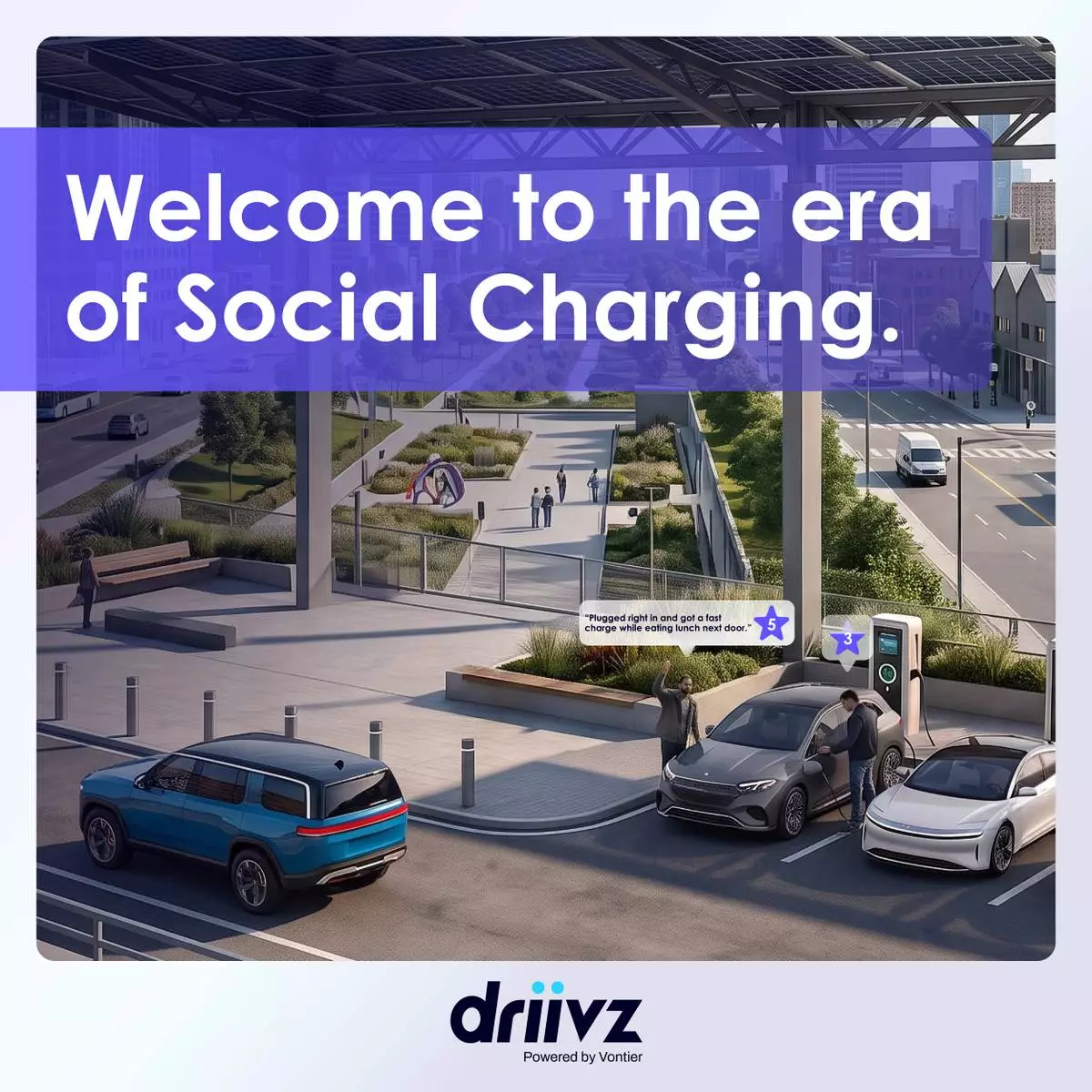
New global research reveals a ‘social layer’ now shaping EV charging decisions, where word of mouth carries more weight than traditional navigation tools. More than 3,000 EV drivers across North America and Europe found that 91% would make a detour to charge at a location recommended by another EV driver, and 76% would avoid a charging network entirely based on a warning from friends or family.